By William M. Arkin for ‘The Los Angeles Times’ (March 10, 2002) 

April 2, 2002

A secret policy review of the nationís nuclear policy puts forth chilling new contingencies for nuclear war.

WASHINGTON – The Bush administration, in a secret policy review completed early this year, has ordered the Pentagon to draft contingency plans for the use of nuclear weapons against at least seven countries, naming not only Russia and the “axis of evil”–Iraq, Iran, and North Korea–but also China, Libya and Syria.

In addition, the U.S. Defense Department has been told to prepare for the possibility that nuclear weapons may be required in some future Arab-Israeli crisis. And, it is to develop plans for using nuclear weapons to retaliate against chemical or biological attacks, as well as “surprising military developments” of an unspecified nature.

These and a host of other directives, including calls for developing bunker-busting mini-nukes and nuclear weapons that reduce collateral damage, are contained in a still-classified document called the Nuclear Posture Review (NPR), which was delivered to Congress on Jan. 8.

Like all such documents since the dawning of the Atomic Age more than a half-century ago, this NPR offers a chilling glimpse into the world of nuclear-war planners: With a Strangelovian genius, they cover every conceivable circumstance in which a president might wish to use nuclear weapons–planning in great detail for a war they hope never to wage.

In this top-secret domain, there has always been an inconsistency between America’s diplomatic objectives of reducing nuclear arsenals and preventing the proliferation of weapons of mass destruction, on the one hand, and the military imperative to prepare for the unthinkable, on the other.

Nevertheless, the Bush administration plan reverses an almost two-decade-long trend of relegating nuclear weapons to the category of weapons of last resort. It also redefines nuclear requirements in hurried post-Sept. 11 terms.

In these and other ways, the still-secret document offers insights into the evolving views of nuclear strategists in Secretary Donald H. Rumsfeld’s Defense Department.

While downgrading the threat from Russia and publicly emphasizing their commitment to reducing the number of long-range nuclear weapons, Defense Department strategists promote tactical and so-called “adaptive” nuclear capabilities to deal with contingencies where large nuclear arsenals are not demanded.

They seek a host of new weapons and support systems, including conventional military and cyber warfare capabilities integrated with nuclear warfare. The end product is a now-familiar post-Afghanistan model–with nuclear capability added. It combines precision weapons, long-range strikes, and special and covert operations.

But the NPR’s call for development of new nuclear weapons that reduce “collateral damage” myopically ignores the political, moral and military implications–short-term and long–of crossing the nuclear threshold.

Under what circumstances might nuclear weapons be used under the new posture? The NPR says they “could be employed against targets able to withstand nonnuclear attack,” or in retaliation for the use of nuclear, biological, or chemical weapons, or “in the event of surprising military developments.”

Planning nuclear-strike capabilities, it says, involves the recognition of “immediate, potential or unexpected” contingencies. North Korea, Iraq, Iran, Syria and Libya are named as “countries that could be involved” in all three kinds of threat. “All have long-standing hostility towards the United States and its security partners. All sponsor or harbor terrorists, and have active WMD [weapons of mass destruction] and missile programs.”

China, because of its nuclear forces and “developing strategic objectives,” is listed as “a country that could be involved in an immediate or potential contingency.” Specifically, the NPR lists a military confrontation over the status of Taiwan as one of the scenarios that could lead Washington to use nuclear weapons.

Other listed scenarios for nuclear conflict are a North Korean attack on South Korea and an Iraqi assault on Israel or its neighbors.

The second important insight the NPR offers into Pentagon thinking about nuclear policy is the extent to which the Bush administration’s strategic planners were shaken by last September’s terrorist attacks on the World Trade Center and the Pentagon. Though Congress directed the new administration “to conduct a comprehensive review of U.S. nuclear forces” before the events of Sept. 11, the final study is striking for its single-minded reaction to those tragedies.

Heretofore, nuclear strategy tended to exist as something apart from the ordinary challenges of foreign policy and military affairs. Nuclear weapons were not just the option of last resort, they were the option reserved for times when national survival hung in the balance–a doomsday confrontation with the Soviet Union, for instance.

Now, nuclear strategy seems to be viewed through the prism of Sept. 11. For one thing, the Bush administration’s faith in old-fashioned deterrence is gone. It no longer takes a superpower to pose a dire threat to Americans.

“The terrorists who struck us on Sept. 11th were clearly not deterred by doing so from the massive U.S. nuclear arsenal,” Rumsfeld told an audience at the National Defense University in late January.

Similarly, U.S. Undersecretary of State John R. Bolton said in a recent interview, “We would do whatever is necessary to defend America’s innocent civilian population …. The idea that fine theories of deterrence work against everybody … has just been disproven by Sept. 11.”

Moreover, while insisting they would go nuclear only if other options seemed inadequate, officials are looking for nuclear weapons that could play a role in the kinds of challenges the United States faces with Al Qaeda.

Accordingly, the NPR calls for new emphasis on developing such things as nuclear bunker-busters and surgical “warheads that reduce collateral damage,” as well as weapons that could be used against smaller, more circumscribed targets–“possible modifications to existing weapons to provide additional yield flexibility,” in the jargon-rich language of the review.

It also proposes to train U.S. Special Forces operators to play the same intelligence gathering and targeting roles for nuclear weapons that they now play for conventional weapons strikes in Afghanistan. And cyber-warfare and other nonnuclear military capabilities would be integrated into nuclear-strike forces to make them more all-encompassing.

As for Russia, once the primary reason for having a U.S. nuclear strategy, the review says that while Moscow’s nuclear programs remain cause for concern, “ideological sources of conflict” have been eliminated, rendering a nuclear contingency involving Russia “plausible” but “not expected.”

“In the event that U.S. relations with Russia significantly worsen in the future,” the review says, “the U.S. may need to revise its nuclear force levels and posture.”

When completion of the NPR was publicly announced in January, Pentagon briefers deflected questions about most of the specifics, saying the information was classified. Officials did stress that, consistent with a Bush campaign pledge, the plan called for reducing the current 6,000 long-range nuclear weapons to one-third that number over the next decade. Rumsfeld, who approved the review late last year, said the administration was seeking “a new approach to strategic deterrence,” to include missile defenses and improvements in nonnuclear capabilities.

Also, Russia would no longer be officially defined as “an enemy.”

Beyond that, almost no details were revealed.

The classified text, however, is shot through with a worldview transformed by Sept. 11. The NPR coins the phrase “New Triad,” which it describes as comprising the “offensive strike leg,” (our nuclear and conventional forces) plus “active and passive defenses,”(our anti-missile systems and other defenses) and “a responsive defense infrastructure” (our ability to develop and produce nuclear weapons and resume nuclear testing). Previously, the nuclear “triad” was the bombers, long-range land-based missiles and submarine-launched missiles that formed the three legs of America’s strategic arsenal.

The review emphasizes the integration of “new nonnuclear strategic capabilities” into nuclear-war plans. “New capabilities must be developed to defeat emerging threats such as hard and deeply-buried targets (HDBT), to find and attack mobile and re-locatable targets, to defeat chemical and biological agents, and to improve accuracy and limit collateral damage,” the review says.

It calls for “a new strike system” using four converted Trident submarines, an unmanned combat air vehicle and a new air-launched cruise missile as potential new weapons.

Beyond new nuclear weapons, the review proposes establishing what it calls an “agent defeat” program, which defense officials say includes a “boutique” approach to finding new ways of destroying deadly chemical or biological warfare agents, as well as penetrating enemy facilities that are otherwise difficult to attack. This includes, according to the document, “thermal, chemical or radiological neutralization of chemical/biological materials in production or storage facilities.”

Bush administration officials stress that the development and integration of nonnuclear capabilities into the nuclear force is what permits reductions in traditional long-range weaponry. But the blueprint laid down in the review would expand the breadth and flexibility of U.S. nuclear capabilities.

In addition to the new weapons systems, the review calls for incorporation of “nuclear capability” into many of the conventional systems now under development. An extended-range conventional cruise missile in the works for the U.S. Air Force “would have to be modified to carry nuclear warheads if necessary.” Similarly, the F-35 Joint Strike Fighter should be modified to carry nuclear weapons “at an affordable price.”

The review calls for research to begin next month on fitting an existing nuclear warhead into a new 5,000-pound “earth penetrating” munition.

Given the advances in electronics and information technologies in the past decade, it is not surprising that the NPR also stresses improved satellites and intelligence, communications, and more robust high-bandwidth decision-making systems.

Particularly noticeable is the directive to improve U.S. capabilities in the field of “information operations,” or cyber-warfare. The intelligence community “lacks adequate data on most adversary computer local area networks and other command and control systems,” the review observes. It calls for improvements in the ability to “exploit” enemy computer networks, and the integration of cyber-warfare into the overall nuclear war database “to enable more effective targeting, weaponeering, and combat assessment essential to the New Triad.”

In recent months, when Bush administration officials talked about the implications of Sept. 11 for long-term military policy, they have often focused on “homeland defense” and the need for an anti-missile shield. In truth, what has evolved since last year’s terror attacks is an integrated, significantly expanded planning doctrine for nuclear wars.
Related Posts

LONDON – So far so good, at least on the wider level. While internally Iraq seems on the edge of chaos, the much heralded clash of civilizations between the Muslim and Judaeo-Christian worlds has yet to become apparent. We have anger and despair aplenty in the Arab and Muslim worlds. But very little rushing to the standard and there was no great pilgrimage of warriors to join the fight, as happened when the Soviet Union invaded Afghanistan twenty years ago, and then, having driven the Red Army out, were left to ferment in that mountainous redoubt. With the armaments supplied by the CIA the mujahidin were transformed into Al Qaeda that became, for a relatively brief moment as these things go, ‘the greatest threat to the homeland that America has ever known.’ Nevertheless a ‘Cold War’ between much of the Muslim world and the West is certainly in full swing. Winston...
The Challenge of Nuclear Weaponsin the Twenty-first CenturyA Path Forward The peoples and governments of the world face an urgent challenge relating to weaponry of mass destruction and particularly to nuclear weaponry.  At the crossroads of technology, terrorism, geopolitical ambition, and policies of preemption are new and potent dangers for humanity. Despite ending the nuclear standoff of the Cold War era, nuclear weaponry is again menacing the peoples of the world with catastrophic possibilities.  We recognize the need for any government to pursue its security interests in accordance with international law; and further, we recognize that distinctive threats to these interests now exist as a result of an active international terrorist network having declared war on the United States and its allies. Nonetheless, we reject the assessment of the current US administration that upgrading a reliance on nuclear weapons is in any sense justified as a response. We find it...
By Karin Wegestal MP, the Social Democratic Partyon behalf of the Swedish Committee for Solidarity with the Yugoslav People During the last decade, the Federal Republic of Yugoslavia has received more than 500,000 refugees from Croatia and Bosnia, and another 300,000 internally displaced persons, mainly from the province Kosovo and Metohia. For a country with about ten million inhabitants, such an influx of homeless people is obviously a very heavy burden – even under peaceful conditions. But in addition to that, the Federal Republic of Yugoslavia has been the subject to sanctions from the western powers for close to ten years and its infrastructure was badly hurt through Nato’s intense bombardment during 78 days in 1999. The result of all this is that Yugoslavia, once the most developed industrial country in Eastern Europe, is today the poorest country in Europe. In Serbia excluding Kosovo, with about ten million inhabitants and...

Recent Articles

Tony Robinson October 4, 2026 Violence is easy to recognise when someone is being beaten, shot or killed. It becomes more difficult when nobody is holding a weapon. Poverty, discrimination, exploitation and repression can restrict a human life just as effectively, although they do so in very different ways and with very different consequences. Simply adding more categories to an ever-growing list of forms of violence does not really solve the problem. The more interesting question is what all these different situations have in common and why it makes sense to describe them using the same word. Human beings do not simply react to what happens around them. They remember the past, imagine things that do not yet exist, make plans and undertake projects. Workers organise because they imagine different working conditions; people migrate because they imagine another life somewhere else; social movements emerge because people refuse to accept the...
It’s a matter of principles, courage, vision and pulling together – while the militarist world is falling apart… Peter Langille October 3, 2026 “Here, then, is the problem which we present to you, stark and dreadful and inescapable: Shall we put an end to the human race; or shall mankind renounce war?”The Bertrand Russell—Albert Einstein Manifesto, July 9, 1955 ⁕ The forecast for what’s ahead is worrisome. The sharp rise in armed conflicts over the past three years is adding to what was already the highest level in over seventy years. Genocides, which should be prevented are supported. A shared climate emergency that jeopardises survival is ignored. Diverse polls now suggest that people are war-weary, worried and interested in a more effective United Nations. And, there are viable policy options for a more secure world! Yet governments are doubling-down, betting on more war and investing heavily. If current trends persist,...
Johan Galtung 1930-2024October 2015 Published here on October 3, 2026 Let us focus on Civilization for conflict analysis and remedies. Major forms of disorder use violence; war is state organized violence. The most belligerent states are the United States of America and Israel, both with civilization roots. National Evangelism, the US Protestant Christian civilization– more national than evangelical–justifies US warfare as exceptionalism of a people chosen by God, with a manifest destiny to run the world. Orthodox Judaism justifies Israeli warfare to conquer and expand from Nile to Euphrates as a religious right and duty to the Eternal One. The third most belligerent country, the UK, no longer believes it is God-chosen but chosen by the USA; not quite the same but something. But the root cause of global disorder lies in the Occident–with Islam–seeing itself as the single, universal civilization valid for all at all times, all others being...

TFF on Substack

Discover and subscribe to more peace materials on TFF Substack

Most Popular

Tony Robinson October 4, 2026 Violence is easy to recognise when someone is being beaten, shot or killed. It becomes more difficult when nobody is holding a weapon. Poverty, discrimination, exploitation and repression can restrict a human life just as effectively, although they do so in very different ways and with very different consequences. Simply adding more categories to an ever-growing list of forms of violence does not really solve the problem. The more interesting question is what all these different situations have in common and why it makes sense to describe them using the same word. Human beings do not simply react to what happens around them. They remember the past, imagine things that do not yet exist, make plans and undertake projects. Workers organise because they imagine different working conditions; people migrate because they imagine another life somewhere else; social movements emerge because people refuse to accept the...
It’s a matter of principles, courage, vision and pulling together – while the militarist world is falling apart… Peter Langille October 3, 2026 “Here, then, is the problem which we present to you, stark and dreadful and inescapable: Shall we put an end to the human race; or shall mankind renounce war?”The Bertrand Russell—Albert Einstein Manifesto, July 9, 1955 ⁕ The forecast for what’s ahead is worrisome. The sharp rise in armed conflicts over the past three years is adding to what was already the highest level in over seventy years. Genocides, which should be prevented are supported. A shared climate emergency that jeopardises survival is ignored. Diverse polls now suggest that people are war-weary, worried and interested in a more effective United Nations. And, there are viable policy options for a more secure world! Yet governments are doubling-down, betting on more war and investing heavily. If current trends persist,...
Johan Galtung 1930-2024October 2015 Published here on October 3, 2026 Let us focus on Civilization for conflict analysis and remedies. Major forms of disorder use violence; war is state organized violence. The most belligerent states are the United States of America and Israel, both with civilization roots. National Evangelism, the US Protestant Christian civilization– more national than evangelical–justifies US warfare as exceptionalism of a people chosen by God, with a manifest destiny to run the world. Orthodox Judaism justifies Israeli warfare to conquer and expand from Nile to Euphrates as a religious right and duty to the Eternal One. The third most belligerent country, the UK, no longer believes it is God-chosen but chosen by the USA; not quite the same but something. But the root cause of global disorder lies in the Occident–with Islam–seeing itself as the single, universal civilization valid for all at all times, all others being...
Read More
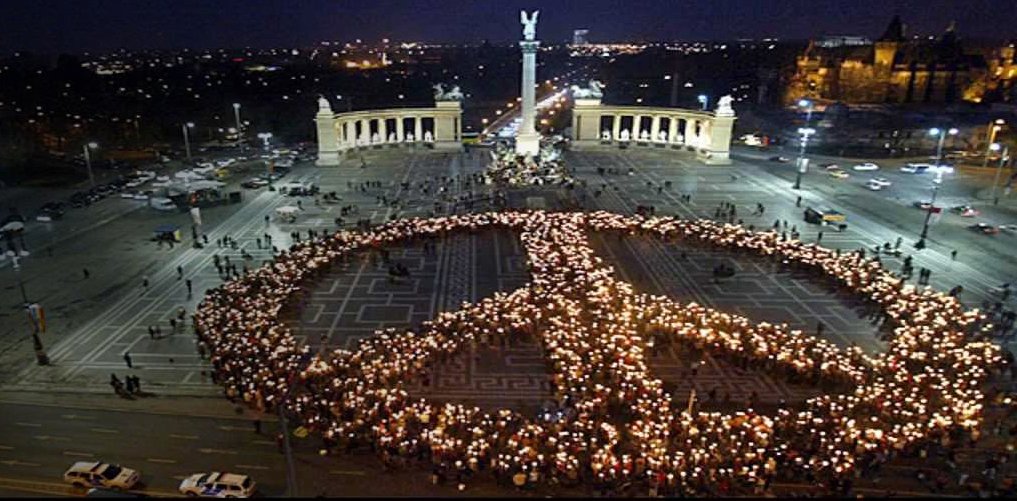
Living-Peace-Sign-Budapest-copy
Tony Robinson October 4, 2026 Violence is easy to recognise when someone is being beaten, shot or killed. It becomes more difficult when nobody is holding a weapon. Poverty, discrimination, exploitation and repression can restrict a human life just as effectively, although they do so in very different ways and with very different consequences. Simply adding more categories to an ever-growing list of forms of violence does not really solve the problem. The more interesting question is what all these different situations have in common and why it makes sense to describe them using the same word. Human beings do not simply react to what happens around them. They remember the past, imagine things that do not yet exist, make plans and undertake projects. Workers organise because they imagine different working conditions; people migrate because they imagine another life somewhere else; social movements emerge because people refuse to accept the...
b54a1f10-8c65-4f0b-9dd5-4abc0a7d04cc_2659x2659
It’s a matter of principles, courage, vision and pulling together – while the militarist world is falling apart… Peter Langille October 3, 2026 “Here, then, is the problem which we present to you, stark and dreadful and inescapable: Shall we put an end to the human race; or shall mankind renounce war?”The Bertrand Russell—Albert Einstein Manifesto, July 9, 1955 ⁕ The forecast for what’s ahead is worrisome. The sharp rise in armed conflicts over the past three years is adding to what was already the highest level in over seventy years. Genocides, which should be prevented are supported. A shared climate emergency that jeopardises survival is ignored. Diverse polls now suggest that people are war-weary, worried and interested in a more effective United Nations. And, there are viable policy options for a more secure world! Yet governments are doubling-down, betting on more war and investing heavily. If current trends persist,...
010
Johan Galtung 1930-2024October 2015 Published here on October 3, 2026 Let us focus on Civilization for conflict analysis and remedies. Major forms of disorder use violence; war is state organized violence. The most belligerent states are the United States of America and Israel, both with civilization roots. National Evangelism, the US Protestant Christian civilization– more national than evangelical–justifies US warfare as exceptionalism of a people chosen by God, with a manifest destiny to run the world. Orthodox Judaism justifies Israeli warfare to conquer and expand from Nile to Euphrates as a religious right and duty to the Eternal One. The third most belligerent country, the UK, no longer believes it is God-chosen but chosen by the USA; not quite the same but something. But the root cause of global disorder lies in the Occident–with Islam–seeing itself as the single, universal civilization valid for all at all times, all others being...
Screenshot 2026-10-02 011738
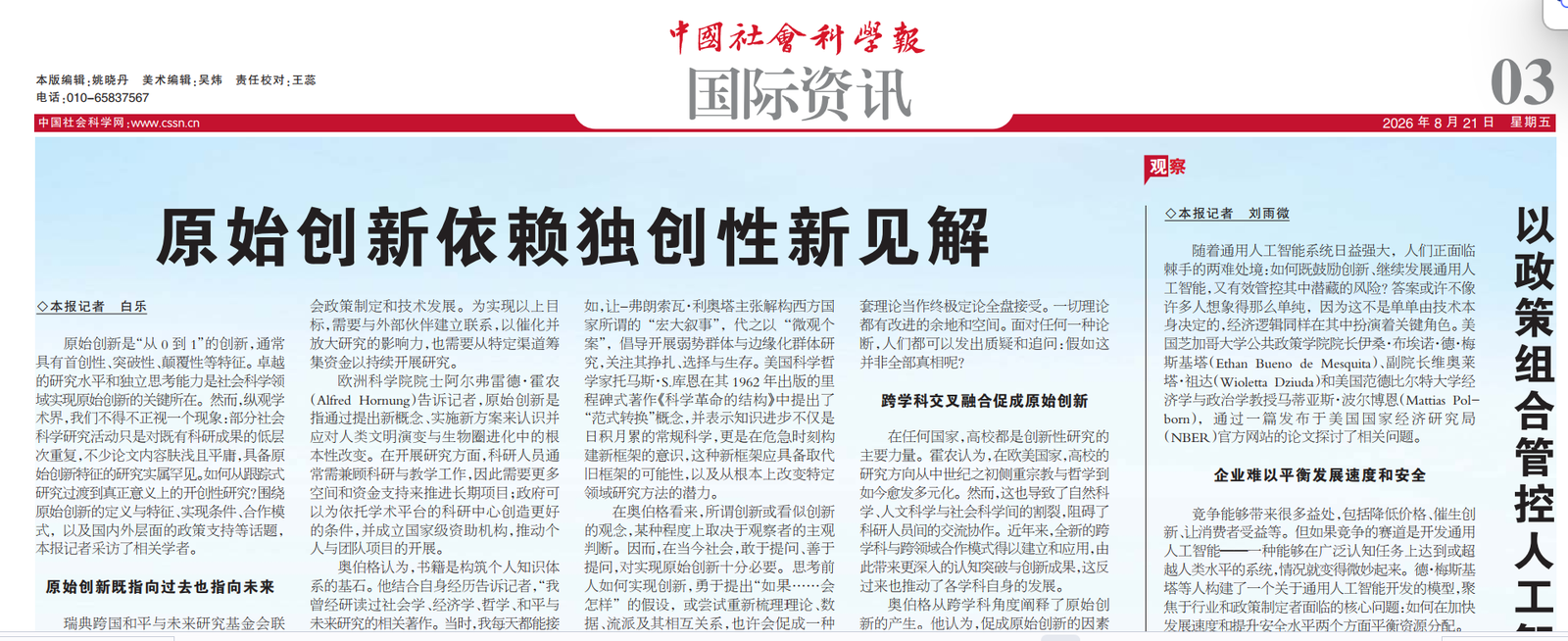
Jan ObergPhD, director, The Transnational Foundation for Peace and Future Research, TFFLund, Sweden October 2, 2026 This is my full original manuscript. The Chinese Academy of Social Science, CASS, makes two publications out if it. 1. China’s Five-year plan emphasized the capabilities of basic research and original innovation. It is regarded as the goal of the future social development, which, as required, should be significantly enhanced. Can you comment on the importance of original innovation in research and academic study? I believe it is easier to define “original innovation” in the natural sciences than in social sciences. The breaking points of what constitutes something new, or innovative, are not quite as sharp in the latter. But in both fields it is about opening up something that was closed, unseen, unexplored before – making manifest what was earlier latent. Innovations come in many forms and shapes – naming something that was not...
arctic-circle-map
The agreement is catastrophic both because of what it says and what it doesn’t mention. It reduces further the major asset of security policies: Freedom of action. Jan Oberg TFF director September 25, 2026 A couple of hours before the agreement was signed on September 22, 2026, I published the following 13 hypotheses about what it would most likely contain on TFF Substack (in English). I was wrong on only the first point. Contrary to what Trump had written on his Truth Social platform, it does not appear to come into force immediately. In fact, it turned out to be worse than even I had anticipated. After these hypotheses now come a number of reflections in light of what the agreement actually contains, and does not contain, as well as the way in which it has generally been presented by major media outlets and by the public-service broadcaster DR. My...
girl-5894831_1280
Below are TFF-related media mentions, comments, videos and social media posts published elsewhere but not on this homepage. We happen to catch and list only a fraction. Regarding video comments and debates, we recommend that you go to the TFF Video Channel on Substack where many of them are reproduced. Jan Oberg is a contributor to China Daily – 52 million daily clicks – and Global Times, CGTN and CCTV (the national television), China Investment, Xinhua News Agency and several others. Articles and videos on these media very often multiply into countless Chinese (and Western media) that re-post them from these main media. Thanks to The China Academy, his analyses, interviews and comments are frequently posted on YouTube channels such as Thinkers Forum and Wave Media. These videos are often re-posted on Bilibili (China’s YouTube), the China Content Center on TikTok, and on the Chinese edition of TikTok, Douyin.com. This means reaching hundreds of millions of viewers worldwide over a year. While there are too many to catch on all these...