
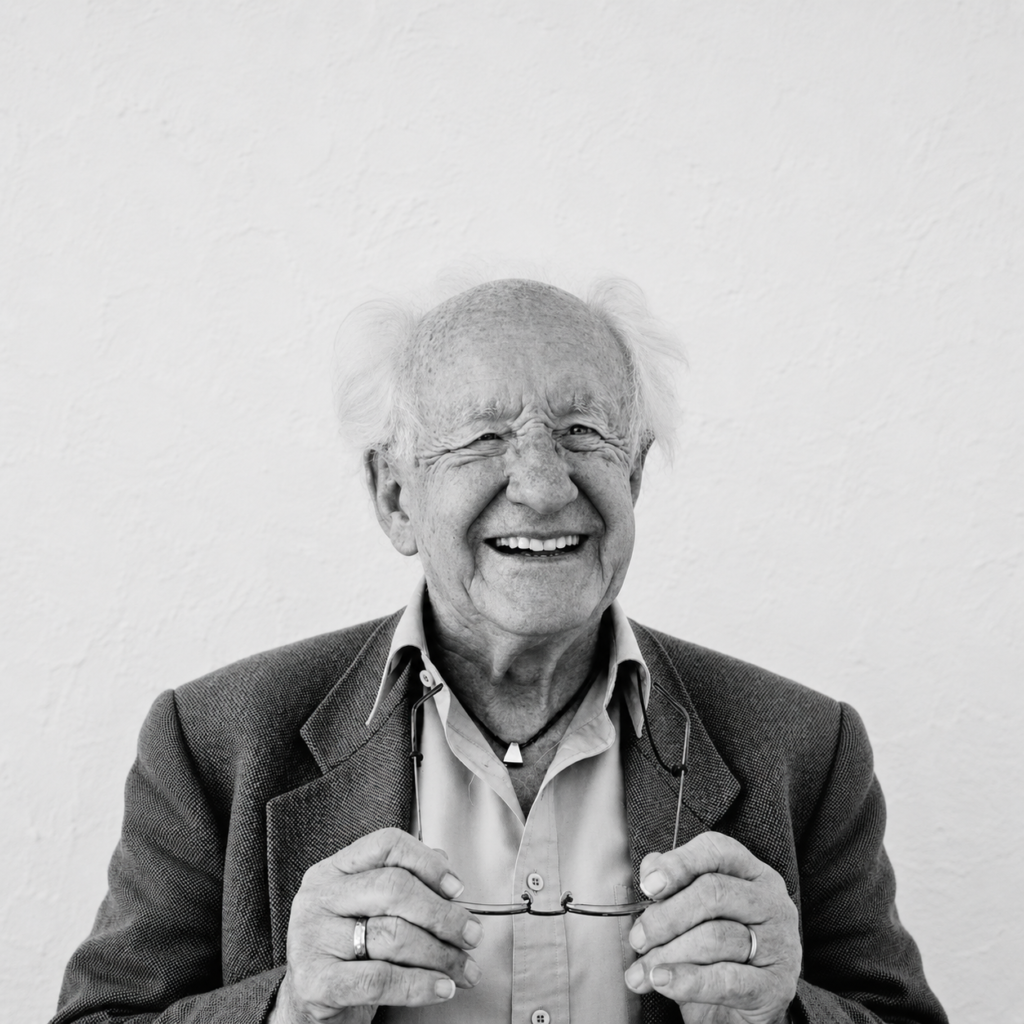
School mediation - problems and solutions

The world wave of mediation has reached school systems all over; in some countries less, in others more. Like in Spain, as evidenced by this heavily oversubscribed seminar on school mediation. When asked to express what they want to see happen in schools, the most frequent answer was convivencia, living togetherness. In one word, not as a composite concept. Like in Japanese, the one word is kyosei.

What does it mean, concretely? I would interpret it as positive peace at school. Something behavioral: cooperation for mutual and equal benefit. Equity. Something attitudinal, emotional resonance, I enjoy your joy, I suffer your suffering: Empathy. Harmony.

But the school is a big, holistic place. Not only children, but also adults, teachers and staff. And parents. Positive togetherness within and between all these four groups? A huge order.

Many simplify this to togetherness among children, and not positive, only less negative. Less bullying, to protect victims – parents demand that – and to use teacher time for teaching, not keeping discipline–the staff demands that. However, it all hangs together.

In addition, simplification runs against another big world wave of two values: diversity and equality, against homogeneity-verticality. Giant forces hitting our daily family, school, work life. Patriarchy yields to more parity between genders and generations. At work, the company run by a Board/CEO will be yielding to relations that are more cooperative.

What about at school? The school and nation-state systems emerged together. The state used schools to discipline all children in space and time, with classrooms and intervals, teaching the idiom and religion-faith of the dominant nation. The state imposed homogeneity all over the country with one school system. Plus, imposed verticality from the ministry down to the child with the poorest grade.

It is inconceivable that there should be no revolts. Nevertheless, there are.

My own experience with bullying around the world indicates that much is directed against the school system; often, a strong school hater bullying a weaker child suspected of being a school-lover.

The higher levels blame the lower ones–the teacher blames the bullies and their families, the rector blames the teachers–and lower levels the higher–bullies and parents blaming teachers and rectors. Much blame is flowing, few solutions. Yet zero tolerance for bullying is in.

Enters mediation within and between all groups. In SABONA (Zulu for I see you; I take you in) the opening question is “what does a good class, a good school look like?” aiming at solutions, the dream, the ideal. Followed by “what is reality, what happens?” and then the nostalgia, “was it better in the past?” and the nightmare, “what is the worst that could happen?” And once again, all four. For richer, deeper answers, from one at the time. Incredibly much is articulated.

The big wave for diversity and equality is based on human rights for the former and democracy for the latter. Mediation and solutions should use that trend, not work against it. Mediation is mutual questioning for solutions through dialogue, meaning through the word. Freud’s talking method. Ideally children and adults should arrive at solutions themselves, but mediators may softly–with ?, not with !–indicate ways of thinking, perspectives for diverse solutions.

The two values point to schools using participatory group work, much horizontal student-student learning, and not only vertical teacher-student teaching. Rooms for projects and for disciplines rather than classes, more freedom of choice. Computers and books, internet and teachers, concrete problems explored, using the needed resources.

Better build on the trend. A school can experiment with projects attracting students from different classes and dialogue among them. They may learn to disagree about answers to problems and to use dialogue to arrive at better answers, including with the teachers.

And why not involve parents in such dialogues, opening for more generation diversity? Asking parents to talk about their work and experiences, opening for social perspectives beyond one’s own family? Making the school a big convivencia, fostering equity and empathy.

If violence occurs, physical, verbal, symbolic, use mediation to identify unsolved conflicts and unconciled traumas, wounds from the violence of the past. Solve conflicts to avoid future aggression or apathy, concile traumas to avoid vengeance, revenge. Based on equity in mutual questioning, What If?, softly proposing, not imposing.

Space and time have to be made available for conflict work. The last hour on Friday for the week’s cases, with students and teachers–staff and parents?–preparing themselves. Maybe using a Round Table to see issues from many angles? Like breakfast table in the family? A general assembly at work? Or that glittering approach, Polynesian ho’o ono pono? Trying not to psychologize individuals, but to focus on problematic relations and structures to improve them; more horizontality, less exploitation-fragmentation-marginalization.

One simple formula is “conflict hygiene”, like showers, washing hands, brushing teeth for the body. Awareness of own goals and goals of others, of the clashes, and creative bridging of legitimate goals–meaning goals compatible with human rights and democracy. Use the councils of students, PTAs, staff meetings–and bring them together.

One experience: anecdotes, stories, narratives, of successful mediation may communicate better than principles; but both are needed.

Another experience: mediation uses mapping of conflicts (parties, their goals, the clashes); exploring the legitimacy of the goals, ends and means and creativity to bridge legitimate goals in a new reality. Questioning; knowledge of some law-human rights-basic needs of the body-mind-spirit; creativity–where are those skills taught? Hitch it on to the growing trend of university peace studies all over the world!

Originally published by Transcend Media Service here.
Share

Leave a Reply

Your email address will not be published. Required fields are marked *

Related Posts

Jan Oberg, TFF director April 28, 2026 In this third TFF Peace Pulse, I make the important distinction between the violence and the conflict that violence is a symptom of. If you want peace, focus on the underlying conflict because that is the key to resolution, peacemaking, and a better future for the parties. The West is obsessed with violence, just look around you – and 90+ per cent of the public debate is about military issues and other violence – totally wasted for peace. These Peace Pulses will only be published here a few times. You will also not find them on YouTube and Vimeo because both platforms have blocked TFF and me; you know, peace is dangerous these days. Most TFF’s videos since 2007 are now on Rumble.
In contrast to most, we’ll bring alternatives, solutions, hope and strategies for a better future. Times are dangerous, yes, but that only intensifies the need for constructive thinking and action! Jan Oberg, TFF director April 13, 2026 The new TFF Peace Pulse uses video messages in a new way: Max 3-5-minute-long comments, ideas or perhaps mini-lectures, all about peace – positive peace. We launch them today on April 13, 2026 with a carefully crafted visual aesthetic fitting the content. We hope to publish them regularly from now on. We launch Peace Pulse (PP) – for a number of reasons. The world is in chaos, and there are countless reasons to feel concerned, frustrated, even angry. The atmosphere is saturated with doom and gloom, with negative energy and rear‑mirror thinking, while vision, imagination, alternatives, strategies and genuine future‑mindedness remain in short supply. And without them, we simply can’t save the world. Looking at problems from a hundred angles will...
PART II — Publishing Peace in a System That Prioritises Militarism Jan Oberg, TFF director April 10, 2026 How TFF Maintains a Daily Voice in a Digital World Built for Noise This article is part of the series “TFF at 40″ and it invites you to learn about Four Decades of Publishing Peace. It takes a look at how a small, people‑financed peace foundation has communicated across four generations of technology — from wax stencils and fax machines to mass email and Substack — and why TFF continues to publish every single day in a system that rewards noise, conflict, and militarism. ◆ What it means to publish peace every single day in a digital system built for 24/7 news and other noise, confrontation, and militarism. How TFF’s independence, continuity, and global readership defy algorithms, donor cycles, and Western media censorhip — and why the Majority World keeps listening. When the...

Recent Articles

Jan Oberg May 15, 2026 Go to this Fox News page and scroll the whole way down: President Donald Trump tells the world that his meeting with President Xi Jinping yielded a lot of very concrete political and economic results – of course, only where the Chinese side, according to him, agreed with him. He does not mention the Taiwan issue, but Secretary of State, Marco Rubio, says that it did not feature prominently in their talks and that the US policy on Taiwan has not changed. Then go to China Daily – or Global Times – and you will see that for the Chinese it is framework, principles, structure of cooperation etc. that matters – all embedded in the overall idea of “constructive bilateral relationship of strategic stability.” Nowhere is any concrete agreement or deal – all that Trump refers to – mentioned. At the general level, this gives you insights into the very different social...
Lena Petrova of “World Affairs In Context” with more than half a million subscribers on YouTube wanted to explore what a peace researcher like me has to say about, among other things, the First and the Second Cold War and why eethics has disappeared from politics. I am particularly happy about this conversation that also yielded an amazing number of very appreciative comments on YouTube. No doubt, people are longing for alternatives, including peace perspectives.
The MIMAC – Military-Industrial-Media-Academic Complex – drives the world’s rampant militarism and wars without end. Here is a short reflection of how it works against all interests of humanity. #5 deals with why there is no real enemy or threat images/analysis. It’s all ex-post constructions. And, btw, theTFF Peace Pulse is now on Rumble.

TFF on Substack

Discover more from TFF Transnational Foundation & Jan Oberg.

Most Popular

Jan Oberg May 15, 2026 Go to this Fox News page and scroll the whole way down: President Donald Trump tells the world that his meeting with President Xi Jinping yielded a lot of very concrete political and economic results – of course, only where the Chinese side, according to him, agreed with him. He does not mention the Taiwan issue, but Secretary of State, Marco Rubio, says that it did not feature prominently in their talks and that the US policy on Taiwan has not changed. Then go to China Daily – or Global Times – and you will see that for the Chinese it is framework, principles, structure of cooperation etc. that matters – all embedded in the overall idea of “constructive bilateral relationship of strategic stability.” Nowhere is any concrete agreement or deal – all that Trump refers to – mentioned. At the general level, this gives you insights into the very different social...
Lena Petrova of “World Affairs In Context” with more than half a million subscribers on YouTube wanted to explore what a peace researcher like me has to say about, among other things, the First and the Second Cold War and why eethics has disappeared from politics. I am particularly happy about this conversation that also yielded an amazing number of very appreciative comments on YouTube. No doubt, people are longing for alternatives, including peace perspectives.
The MIMAC – Military-Industrial-Media-Academic Complex – drives the world’s rampant militarism and wars without end. Here is a short reflection of how it works against all interests of humanity. #5 deals with why there is no real enemy or threat images/analysis. It’s all ex-post constructions. And, btw, theTFF Peace Pulse is now on Rumble.
Read More
Screenshot-2026-05-15-103534
Jan Oberg May 15, 2026 Go to this Fox News page and scroll the whole way down: President Donald Trump tells the world that his meeting with President Xi Jinping yielded a lot of very concrete political and economic results – of course, only where the Chinese side, according to him, agreed with him. He does not mention the Taiwan issue, but Secretary of State, Marco Rubio, says that it did not feature prominently in their talks and that the US policy on Taiwan has not changed. Then go to China Daily – or Global Times – and you will see that for the Chinese it is framework, principles, structure of cooperation etc. that matters – all embedded in the overall idea of “constructive bilateral relationship of strategic stability.” Nowhere is any concrete agreement or deal – all that Trump refers to – mentioned. At the general level, this gives you insights into the very different social...
Screenshot-2026-05-12-104023
Lena Petrova of “World Affairs In Context” with more than half a million subscribers on YouTube wanted to explore what a peace researcher like me has to say about, among other things, the First and the Second Cold War and why eethics has disappeared from politics. I am particularly happy about this conversation that also yielded an amazing number of very appreciative comments on YouTube. No doubt, people are longing for alternatives, including peace perspectives.
Screenshot-2026-04-13-154551 (2)
The MIMAC – Military-Industrial-Media-Academic Complex – drives the world’s rampant militarism and wars without end. Here is a short reflection of how it works against all interests of humanity. #5 deals with why there is no real enemy or threat images/analysis. It’s all ex-post constructions. And, btw, theTFF Peace Pulse is now on Rumble.
Screenshot-2026-04-13-154551 (1)
Jan Oberg, TFF director April 28, 2026 In this third TFF Peace Pulse, I make the important distinction between the violence and the conflict that violence is a symptom of. If you want peace, focus on the underlying conflict because that is the key to resolution, peacemaking, and a better future for the parties. The West is obsessed with violence, just look around you – and 90+ per cent of the public debate is about military issues and other violence – totally wasted for peace. These Peace Pulses will only be published here a few times. You will also not find them on YouTube and Vimeo because both platforms have blocked TFF and me; you know, peace is dangerous these days. Most TFF’s videos since 2007 are now on Rumble.
Screenshot-2026-04-13-154551
In contrast to most, we’ll bring alternatives, solutions, hope and strategies for a better future. Times are dangerous, yes, but that only intensifies the need for constructive thinking and action! Jan Oberg, TFF director April 13, 2026 The new TFF Peace Pulse uses video messages in a new way: Max 3-5-minute-long comments, ideas or perhaps mini-lectures, all about peace – positive peace. We launch them today on April 13, 2026 with a carefully crafted visual aesthetic fitting the content. We hope to publish them regularly from now on. We launch Peace Pulse (PP) – for a number of reasons. The world is in chaos, and there are countless reasons to feel concerned, frustrated, even angry. The atmosphere is saturated with doom and gloom, with negative energy and rear‑mirror thinking, while vision, imagination, alternatives, strategies and genuine future‑mindedness remain in short supply. And without them, we simply can’t save the world. Looking at problems from a hundred angles will...
IMG_5165 (1)
PART II — Publishing Peace in a System That Prioritises Militarism Jan Oberg, TFF director April 10, 2026 How TFF Maintains a Daily Voice in a Digital World Built for Noise This article is part of the series “TFF at 40″ and it invites you to learn about Four Decades of Publishing Peace. It takes a look at how a small, people‑financed peace foundation has communicated across four generations of technology — from wax stencils and fax machines to mass email and Substack — and why TFF continues to publish every single day in a system that rewards noise, conflict, and militarism. ◆ What it means to publish peace every single day in a digital system built for 24/7 news and other noise, confrontation, and militarism. How TFF’s independence, continuity, and global readership defy algorithms, donor cycles, and Western media censorhip — and why the Majority World keeps listening. When the...


