PressInfo #154 – Sanktionerna mot Irak och konsekvenserna av Olja för Mat-Programmet

Två veckor i Irak ger inte tillräcklig kunskap för att förmedla en genomgripande analys av de där rådande förhållanden. Men tillräckligt länge för att kunna verifiera den bild som så kraftfullt framförs av de individer och organisationer som dagligen upplever och brottas med mänskliga problem som annars tillkommer de mest åsidosatta utvecklingsländerna. Det är heller inte min mening att med känsloladdade uttryck försöka påverka en opinion utan mera förmedla några av de sakskäl som föreligger.

Lite sanktionshistoria

I mer än ett decennium har FN drivit sanktionerna gentemot Irak. Under de senaste åren har tre av FN:s högsta företrädare i Irak lämnat sina poster som protest mot orimligheten i sanktionsprogrammet. Samtliga organisationer (FN-organisationer och andra) involverade i det s.k. Oil-for-Food programmet har på olika sätt uttryckt sin negativa inställning till sanktionerna samt krävt att de snarast upphävs eller utformas på ett annat sätt. Varför?

Mot bakgrunden av Iraks invasion av Kuwait beslutade FN:s Säkerhetsråd att under Kapitel VII av FN Stadgan införa sanktioner mot Irak. Detta innebär i princip att de ekonomiska och diplomatiska förbindelser samt all trafik (sjö, land, luft och tele) avbröts. För att sanktionerna skall upphöra anger det av Säkerhetsrådets fattade beslutet från 1991 (UNSCR 687) i korthet: förstöring av massförstörelsevapen; löfte om att inte utveckla eller anskaffa sådana i framtiden; samt genom samarbete med FN:s vapeninspektionsprogram verifiera att dessa vapen inte finns och heller ej utvecklas. Till detta kommer att Irak skall förbinda sig: att erkänna det internationella gränsavtalet från 1963 med Kuwait; att inte stödja eller utföra internationell terrorism; att repatriera alla Kuwaitier samt andra länders medborgare till deras resp. hemland; att återlämna Kuwaitisk egendom; samt att kompensera de som lidit förluster eller skador orsakade av invasionen.

Till stora delar har Irak fullföljt Säkerhetsrådets beslut, men främst frågan avseende massförstörelsevapen har inte lösts på ett för FN tillfredsställande sätt. Politiskt och medialt har detta visat sig vara den mest inflammerade frågan.

Olja för Mat-Programmet: ger inte Irak några inkomster

Även om FN redan 1991 med två resolutioner föreslog ett hjälpprogram accepterade inte Irak utan först 1996 kunde ett sådant implementeras grundat på föregående års beslut (UNSCR 986). Resolutionen bygger på att Irak tillåts exportera en viss mängd olja för vars inkomster Irak tillåts köpa mat och andra “humanitära förnödenheter”. För den första sex månaders mandatperioden uppgick denna export till ett värde av 2.000 miljoner USD samt under 2001 (två mandatperioder) till ca 11.000 miljoner. USD.

Tyvärr är detta inte hela sanningen. Av “inkomsten” för den försålda oljan allokeras endast 53 procent till den del av Irak som står under regeringens kontroll d.v.s till ca 20 miljoner invånare medan resten är reserverat till dels kompensation (30%) till de som led förluster och skador under Iraks invasion av Kuwait, dels (13%) till de tre nordliga provinserna ( 3.5 miljoner kurder) samt dels (4%) till FN:s operativa kostnader för det s.k. “Oil-for-Food Programme” (OFFP). Således kunde Irak under 2001 disponera ca 6.000 miljoner USD för inköp av livsmedel och andra väsentliga förnödenheter.

Med andra ord: för en fjärdedel av svenska statens årliga kostnad för sociala utgifter skall Iraks regering försörja och svara för välfärden av en befolkning dubbelt så stor som den svenska.

Inkomsten för den Irakiska oljan sätts in på ett särskilt FN konto varifrån FN ersätter utländska leverantörer av varor och tjänster. Irak förfogar således inte över inkomsten i likvida medel utan handeln kan liknas vid en forna tiders byteshandel. Irak levererar olja och FN levererar mat m.m.. (Oil-for-Food).

Listan över varor som Irak inte kan få är oändlig

Inom detta system anger och sänder Irak till FN sitt samlade behov för en kommande sexmånaders period. Genom den s.k. sanktionskommittén granskar FN att de av Irak angivna och behövliga varorna ej strider mot innebörden i sanktionerna, d.v.s. att varor och materiel ej kan utnyttjas för militära ändamål. Svårigheten ligger i att högteknologisk materiel är en nödvändighet i ett normalt samhälle för att ekonomisk tillväxt och annan utveckling skall bli en realitet. Sådan materiel användes idag av de flesta länder såväl inom den civila som den militära strukturen – men således ej tillåtet för Irak att importera.

Listan över till Irak förbjuden materiel som eventuellt kan användas för militärt ändamål är oändlig och, tyvärr, patetisk i sin detaljutformning av tekniska detaljer. Rigiditeten är omfattande varför t.ex. klor – ett av WHO rekommenderat medel för rening av dricksvatten – inte är tillåtet att importera m.h.t. ett eventuellt merutnyttjande (dual purposes) som del i kemiska stridsmedel. Vid en genomläsning av listan med dess tusentals artiklar ställs man därför osökt inför frågan om syftet är att förhindra ett militärt utnyttjande av denna materiel eller förhindra en suverän stats utveckling – eller kanske än värre – överlevnad.

Ett välfärdssamhälle under av-veckling

Huvuddelen av det som skapar ett lands välstånd och konkurrenskraft är således förvägrat Irak. Man kan tyvärr endast konstatera att vi nu bevittnar en av-veckling (de-development) och retardering av ett samhälle som för 15 år sedan räknades som ett av de mest progressiva med fri hälso- och sjukvård samt en blomstrande industri.

För den enskilde individen har sanktionerna varit förödande vilket samstämmigt speglas det stora antalet rapporter. Även om vissa (som alltid i förbudssituationer) lever relativt väl så lever huvuddelen under oacceptabla förhållanden – men inte så att kilokalorier fattas. Genom ett omfattande matdistributionsprogram erhåller varje familj det antal kalorier som erfordras för att överleva (2.472 kkal/dag/individ samt 60.2 gram protein/dag/individ!!). FN har således genom den nuvarande utformningen av Oil-for-Food programmet skapat ett beroende som är fullständigt unikt.

Detta beroende skall ses mot bakgrunden av att mellan 1991-1998 delade World Food Program (WFP) ut totalt 500.000 ton livsmedel medan idag under FN programmet livsmedelsdistributionen omfattar 350.000 ton per månad. Med andra ord – i ett land som äger den näst största oljetillgången i världen är man näst intill totalt beroende av en tilldelning av livsmedel som annars är förbehållet för de mest behövande utvecklingsländerna. I sanning absurt.

Innebörden för vanliga människor

För en inkomsttagare i medelklassen (om man ens kan tala om denna grupp idag) – säg lärare – utgör detta matpaket 83% av hans/hennes totala månatliga inkomst. I reella termer utgörs lönen för en lärare av 30 USD varav 25 USD utgörs av tilldelad mat. Resultat är en bl.a. en ökad svarta börs- handel, emigration och, beklagligtvis, prostitution. Eftersom FN tillser att den enskilde medborgaren erhåller tillräckligt med de nödvändiga kilokalorierna överlever individen men en tidigare väl utbildad medelklass har decimerats till den grad att det kommer att påverka samhället i generationer.

Förhållandet beror på att pengar finns i mycket begränsad utsträckning. “Oil-for-Food” programmet är som tidigare nämnts en naturahandel och även om det innehåller en s.k. “cash componenet” så har denna av politiska skäl ej realiserats. Med en inflation av den Irakiska dinaren (ID) från 1 ID mot 3 USD 1985 till 2.000 ID mot 1 USD av idag samt bristen på likvida medel förekommer knappast löner i den bemärkelsen vi menar. Arbetslösheten har således tagit orimliga proportioner och uppgår till 40-50%.

Sanktionernas värsta konsekvenser är “dolda”

Löner kan ej utbetalas till bl.a. lärare – och elever har ej möjlighet att betala kostnader för studier (som tidigare var fria). Således har undervisningen mätt i antal elever drastiskt sjunkit, både vad gäller den allmänna som vid universitet. Man talar idag om en redan förlorad generation. Konsekvensen av detta kommer att påverka hela samhället inom de närmaste 20-30 åren.

Rapporterna från olika FN-organ, människorättsorganisationer, hjälporganisationer, parlamentariker och forskare talar alla samma språk: sanktionsprogrammet är fullständigt förödande. Undernäring och otjänligt dricksvatten har gett en negativ förändring av den allmänna hälsoprofilen. Detta tillsammans med bristande sjukvårdsresurser har resulterat i en ökad mortalitet och minskad nativitet och där främst den dramatiska ökningen av barnadödligheten i kalla siffror talar sitt tydliga språk. Antalet elever vid samtliga läroanstalter har minskat och bortfallet av kvinnliga elever är signifikativt. Ökad könssegregering och en minskad sekularisering är andra klart påvisbara tecken på en förändrad samhällsstruktur. Samtidigt sker en intellektuell utarmning beroende dels på avsaknad av läromedel och lärare, dels den emigration av medelklassen som har skett och fortfarande sker. Till detta kommer avsaknaden av ekonomiska medel och materiella resurser vilket omöjliggör vidmakthållandet av den industriella, ekonomiska och sociala infrastrukturen.

Som medeltidens svält-och krigspolitik

Kort sagt har FNs sanktioner gentemot Irak under 10 år förvandlat ett nästan fullt utvecklat industriland till ett utvecklingsland. Oil-for-Food programmet har inte blivit lösningen på ett problem – det har blivit ett problem.

Att fritt spekulera i framtiden är ett nöje förbehållit politiker och ekonomer. För Irak kan frågan om ett eventuellt krig tyckas vara avgörande. Så är det inte – inte för den enskilde medborgaren. Han/hon har nog med sin vardag – att överleva – att finna en utkomst. Med ett totalt beroende av de 350.000 ton mat som månatligen delas ut överlever man dagen men med ett eventuellt krig där den av FN och Irakiska myndigheter utomordentligt väl fungerande distributionsmekaniken slås sönder blir frågan helt annorlunda.

I ett historiskt perspektiv är Irak en intressant studie. För att uppnå sina syften roade sig medeltidens härskare med att omringa och belägra befästningar. När svälten och utarmningen nått tillräckligt långt anföll man, slog sönder det som fanns kvar och delade därefter bytet med sina lierade. Har vi inte nått längre i utvecklingen?
© TFF 2002

Related Posts

The agreement is catastrophic both because of what it says and what it doesn’t mention. It reduces further the major asset of security policies: Freedom of action. Jan Oberg TFF director September 25, 2026 A couple of hours before the agreement was signed on September 22, 2026, I published the following 13 hypotheses about what it would most likely contain on TFF Substack (in English). I was wrong on only the first point. Contrary to what Trump had written on his Truth Social platform, it does not appear to come into force immediately. In fact, it turned out to be worse than even I had anticipated. After these hypotheses now come a number of reflections in light of what the agreement actually contains, and does not contain, as well as the way in which it has generally been presented by major media outlets and by the public-service broadcaster DR. My...
Below are TFF-related media mentions, comments, videos and social media posts published elsewhere but not on this homepage. We happen to catch and list only a fraction. Regarding video comments and debates, we recommend that you go to the TFF Video Channel on Substack where many of them are reproduced. Jan Oberg is a contributor to China Daily – 52 million daily clicks – and Global Times, CGTN and CCTV (the national television), China Investment, Xinhua News Agency and several others. Articles and videos on these media very often multiply into countless Chinese (and Western media) that re-post them from these main media. Thanks to The China Academy, his analyses, interviews and comments are frequently posted on YouTube channels such as Thinkers Forum and Wave Media. These videos are often re-posted on Bilibili (China’s YouTube), the China Content Center on TikTok, and on the Chinese edition of TikTok, Douyin.com. This means reaching hundreds of millions of viewers worldwide over a year. While there are too many to catch on all these...
Jan Oberg May 15, 2026 Go to this Fox News page and scroll the whole way down: President Donald Trump tells the world that his meeting with President Xi Jinping yielded a lot of very concrete political and economic results – of course, only where the Chinese side, according to him, agreed with him. He does not mention the Taiwan issue, but Secretary of State, Marco Rubio, says that it did not feature prominently in their talks and that the US policy on Taiwan has not changed. Then go to China Daily – or Global Times – and you will see that for the Chinese it is framework, principles, structure of cooperation etc. that matters – all embedded in the overall idea of “constructive bilateral relationship of strategic stability.” Nowhere is any concrete agreement or deal – all that Trump refers to – mentioned. At the general level, this gives you insights into the very different social...

Recent Articles

Tony Robinson October 4, 2026 Violence is easy to recognise when someone is being beaten, shot or killed. It becomes more difficult when nobody is holding a weapon. Poverty, discrimination, exploitation and repression can restrict a human life just as effectively, although they do so in very different ways and with very different consequences. Simply adding more categories to an ever-growing list of forms of violence does not really solve the problem. The more interesting question is what all these different situations have in common and why it makes sense to describe them using the same word. Human beings do not simply react to what happens around them. They remember the past, imagine things that do not yet exist, make plans and undertake projects. Workers organise because they imagine different working conditions; people migrate because they imagine another life somewhere else; social movements emerge because people refuse to accept the...
It’s a matter of principles, courage, vision and pulling together – while the militarist world is falling apart… Peter Langille October 3, 2026 “Here, then, is the problem which we present to you, stark and dreadful and inescapable: Shall we put an end to the human race; or shall mankind renounce war?”The Bertrand Russell—Albert Einstein Manifesto, July 9, 1955 ⁕ The forecast for what’s ahead is worrisome. The sharp rise in armed conflicts over the past three years is adding to what was already the highest level in over seventy years. Genocides, which should be prevented are supported. A shared climate emergency that jeopardises survival is ignored. Diverse polls now suggest that people are war-weary, worried and interested in a more effective United Nations. And, there are viable policy options for a more secure world! Yet governments are doubling-down, betting on more war and investing heavily. If current trends persist,...
Johan Galtung 1930-2024October 2015 Published here on October 3, 2026 Let us focus on Civilization for conflict analysis and remedies. Major forms of disorder use violence; war is state organized violence. The most belligerent states are the United States of America and Israel, both with civilization roots. National Evangelism, the US Protestant Christian civilization– more national than evangelical–justifies US warfare as exceptionalism of a people chosen by God, with a manifest destiny to run the world. Orthodox Judaism justifies Israeli warfare to conquer and expand from Nile to Euphrates as a religious right and duty to the Eternal One. The third most belligerent country, the UK, no longer believes it is God-chosen but chosen by the USA; not quite the same but something. But the root cause of global disorder lies in the Occident–with Islam–seeing itself as the single, universal civilization valid for all at all times, all others being...

TFF on Substack

Discover and subscribe to more peace materials on TFF Substack

Most Popular

Tony Robinson October 4, 2026 Violence is easy to recognise when someone is being beaten, shot or killed. It becomes more difficult when nobody is holding a weapon. Poverty, discrimination, exploitation and repression can restrict a human life just as effectively, although they do so in very different ways and with very different consequences. Simply adding more categories to an ever-growing list of forms of violence does not really solve the problem. The more interesting question is what all these different situations have in common and why it makes sense to describe them using the same word. Human beings do not simply react to what happens around them. They remember the past, imagine things that do not yet exist, make plans and undertake projects. Workers organise because they imagine different working conditions; people migrate because they imagine another life somewhere else; social movements emerge because people refuse to accept the...
It’s a matter of principles, courage, vision and pulling together – while the militarist world is falling apart… Peter Langille October 3, 2026 “Here, then, is the problem which we present to you, stark and dreadful and inescapable: Shall we put an end to the human race; or shall mankind renounce war?”The Bertrand Russell—Albert Einstein Manifesto, July 9, 1955 ⁕ The forecast for what’s ahead is worrisome. The sharp rise in armed conflicts over the past three years is adding to what was already the highest level in over seventy years. Genocides, which should be prevented are supported. A shared climate emergency that jeopardises survival is ignored. Diverse polls now suggest that people are war-weary, worried and interested in a more effective United Nations. And, there are viable policy options for a more secure world! Yet governments are doubling-down, betting on more war and investing heavily. If current trends persist,...
Johan Galtung 1930-2024October 2015 Published here on October 3, 2026 Let us focus on Civilization for conflict analysis and remedies. Major forms of disorder use violence; war is state organized violence. The most belligerent states are the United States of America and Israel, both with civilization roots. National Evangelism, the US Protestant Christian civilization– more national than evangelical–justifies US warfare as exceptionalism of a people chosen by God, with a manifest destiny to run the world. Orthodox Judaism justifies Israeli warfare to conquer and expand from Nile to Euphrates as a religious right and duty to the Eternal One. The third most belligerent country, the UK, no longer believes it is God-chosen but chosen by the USA; not quite the same but something. But the root cause of global disorder lies in the Occident–with Islam–seeing itself as the single, universal civilization valid for all at all times, all others being...
Read More
Living-Peace-Sign-Budapest-copy
Tony Robinson October 4, 2026 Violence is easy to recognise when someone is being beaten, shot or killed. It becomes more difficult when nobody is holding a weapon. Poverty, discrimination, exploitation and repression can restrict a human life just as effectively, although they do so in very different ways and with very different consequences. Simply adding more categories to an ever-growing list of forms of violence does not really solve the problem. The more interesting question is what all these different situations have in common and why it makes sense to describe them using the same word. Human beings do not simply react to what happens around them. They remember the past, imagine things that do not yet exist, make plans and undertake projects. Workers organise because they imagine different working conditions; people migrate because they imagine another life somewhere else; social movements emerge because people refuse to accept the...
b54a1f10-8c65-4f0b-9dd5-4abc0a7d04cc_2659x2659
It’s a matter of principles, courage, vision and pulling together – while the militarist world is falling apart… Peter Langille October 3, 2026 “Here, then, is the problem which we present to you, stark and dreadful and inescapable: Shall we put an end to the human race; or shall mankind renounce war?”The Bertrand Russell—Albert Einstein Manifesto, July 9, 1955 ⁕ The forecast for what’s ahead is worrisome. The sharp rise in armed conflicts over the past three years is adding to what was already the highest level in over seventy years. Genocides, which should be prevented are supported. A shared climate emergency that jeopardises survival is ignored. Diverse polls now suggest that people are war-weary, worried and interested in a more effective United Nations. And, there are viable policy options for a more secure world! Yet governments are doubling-down, betting on more war and investing heavily. If current trends persist,...
010
Johan Galtung 1930-2024October 2015 Published here on October 3, 2026 Let us focus on Civilization for conflict analysis and remedies. Major forms of disorder use violence; war is state organized violence. The most belligerent states are the United States of America and Israel, both with civilization roots. National Evangelism, the US Protestant Christian civilization– more national than evangelical–justifies US warfare as exceptionalism of a people chosen by God, with a manifest destiny to run the world. Orthodox Judaism justifies Israeli warfare to conquer and expand from Nile to Euphrates as a religious right and duty to the Eternal One. The third most belligerent country, the UK, no longer believes it is God-chosen but chosen by the USA; not quite the same but something. But the root cause of global disorder lies in the Occident–with Islam–seeing itself as the single, universal civilization valid for all at all times, all others being...
Screenshot 2026-10-02 011738
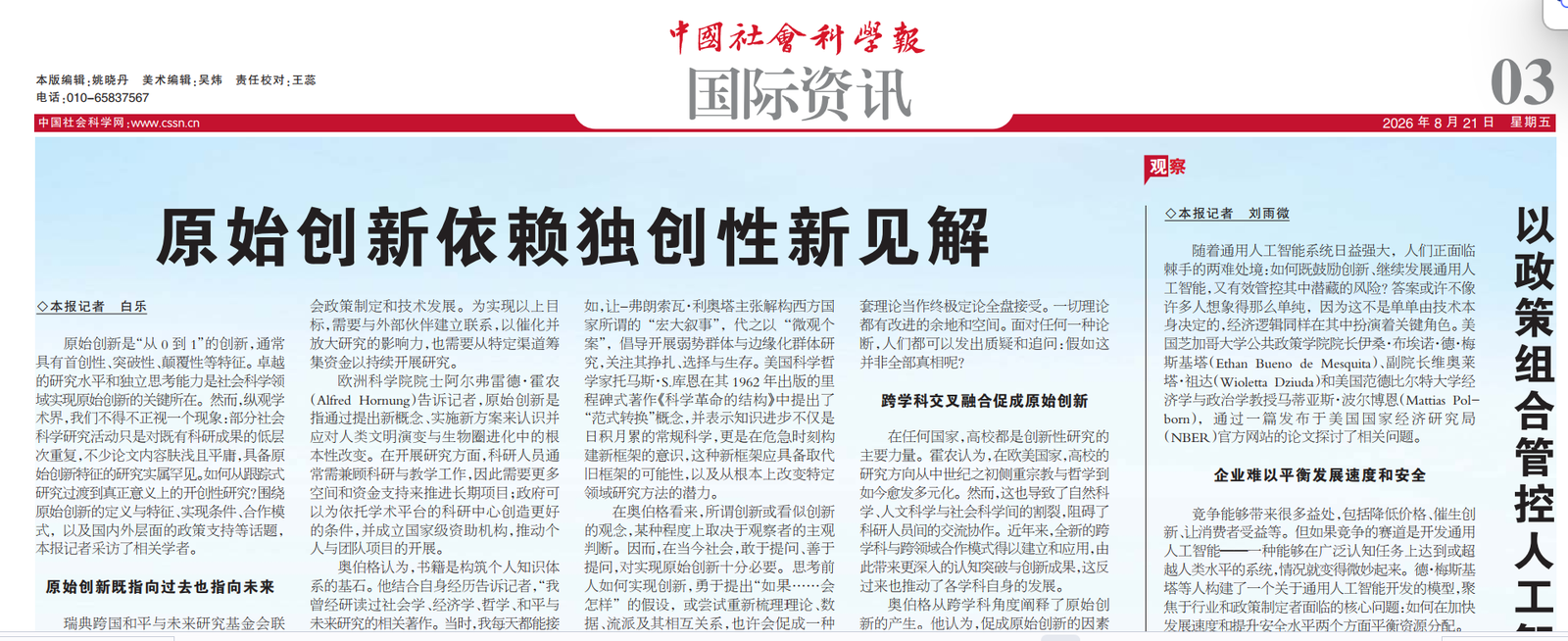
Jan ObergPhD, director, The Transnational Foundation for Peace and Future Research, TFFLund, Sweden October 2, 2026 This is my full original manuscript. The Chinese Academy of Social Science, CASS, makes two publications out if it. 1. China’s Five-year plan emphasized the capabilities of basic research and original innovation. It is regarded as the goal of the future social development, which, as required, should be significantly enhanced. Can you comment on the importance of original innovation in research and academic study? I believe it is easier to define “original innovation” in the natural sciences than in social sciences. The breaking points of what constitutes something new, or innovative, are not quite as sharp in the latter. But in both fields it is about opening up something that was closed, unseen, unexplored before – making manifest what was earlier latent. Innovations come in many forms and shapes – naming something that was not...
arctic-circle-map
The agreement is catastrophic both because of what it says and what it doesn’t mention. It reduces further the major asset of security policies: Freedom of action. Jan Oberg TFF director September 25, 2026 A couple of hours before the agreement was signed on September 22, 2026, I published the following 13 hypotheses about what it would most likely contain on TFF Substack (in English). I was wrong on only the first point. Contrary to what Trump had written on his Truth Social platform, it does not appear to come into force immediately. In fact, it turned out to be worse than even I had anticipated. After these hypotheses now come a number of reflections in light of what the agreement actually contains, and does not contain, as well as the way in which it has generally been presented by major media outlets and by the public-service broadcaster DR. My...
girl-5894831_1280
Below are TFF-related media mentions, comments, videos and social media posts published elsewhere but not on this homepage. We happen to catch and list only a fraction. Regarding video comments and debates, we recommend that you go to the TFF Video Channel on Substack where many of them are reproduced. Jan Oberg is a contributor to China Daily – 52 million daily clicks – and Global Times, CGTN and CCTV (the national television), China Investment, Xinhua News Agency and several others. Articles and videos on these media very often multiply into countless Chinese (and Western media) that re-post them from these main media. Thanks to The China Academy, his analyses, interviews and comments are frequently posted on YouTube channels such as Thinkers Forum and Wave Media. These videos are often re-posted on Bilibili (China’s YouTube), the China Content Center on TikTok, and on the Chinese edition of TikTok, Douyin.com. This means reaching hundreds of millions of viewers worldwide over a year. While there are too many to catch on all these...