Russia, the Eurasian Triangle, and the Soleiman Assassination

By Gordon M. Hahn

January 30, 2020

The apparent overreaction by the U.S. to Iranian provocations represented by the assassination of Revolutionary Guards Corps Commander Qassem Soleiman is one of the stronger blows to hit one of the most important nails in the coffin of U.S.-Russian relations: the revival of Russian-Western geopolitical competition outside Russia’s immediate central Eurasian sphere of influence.

At the same, time it is also one of the most important turning points in the formation of an anti-Western Eurasian axis that will shape the 21st century’s geopolitics.

The outcome of the political struggle may well rest on Europe and whether or not it decides to stick to its American ally in the latter’s efforts to stave off the end of its unipolar hegemony through greater NATO and EU expansion or abandon at least the former project and positively contribute to the reordering of the international system in the post-Cold War era.

A multipolar or, more likely, bipolar restructuring of the system — shaped by China’s rise, America’s alienation of Russia, and its failure to draw India into a tripartite US-Russian-Indian strategic hegemonic alliance in order to contain or at least guide and manage Beijing’s rise and thus prevent a qualitative or at least abrupt or chaotic structural change to the international system — now appears inevitable.

Originally published at gordonhahn.com

Several years ago, in a period when US-Russian relations were still more or less easily salvageable, I wrote that one day US-Iranian relations would force Moscow to decide with whom it will sand: the West or Iran.

That decision came and went with little fanfare, as Moscow was finally and irrevocably driven into a new, if asymmetrical ‘cold war’ of sorts by Western actions in Ukraine, consolidating the trend driven by American revolutionism and democracy promotion’s ‘color revolutions.’

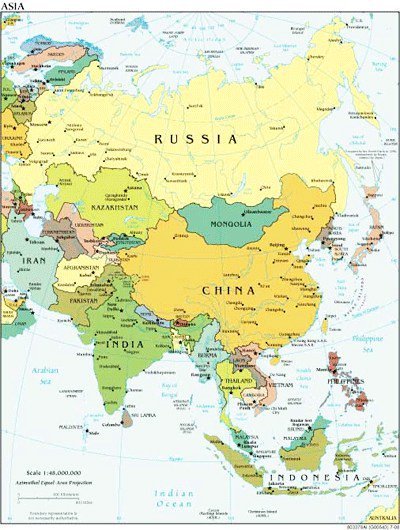
The Soleiman assassination and the resulting crisis, perhaps even war in southwestern Eurasia’s Persian Gulf periphery are bound to solidify Russia’s Eurasian pivot and its emerging alliance with China and Iran.

In addition, Russia’s ties to Tehran will be strengthened cautiously, continuing the formation of an ‘Eurasian Triangle’ designed to resist the U.S. efforts to maintain its dwindling hegemony.

More weapons sales, including S-400s, from Moscow to Tehran certainly can be expected. A more accommodating position on Ukraine and increased courting of Turkey than otherwise are also likely results.

Both Russia and China can be expected to step up efforts to pare off Europeans from their deep ties with Washington.

The U.S. strategy of seeking to prolong a hegemony it actually no longer enjoys is painting Washington and Brussels into a corner in Eurasia from which soon there may be no way out.

In order to continue NATO expansion, the spearhead of American hegemony in western Eurasia, Washington has turned Russia into an embittered foe, if not yet into a determined outright enemy.

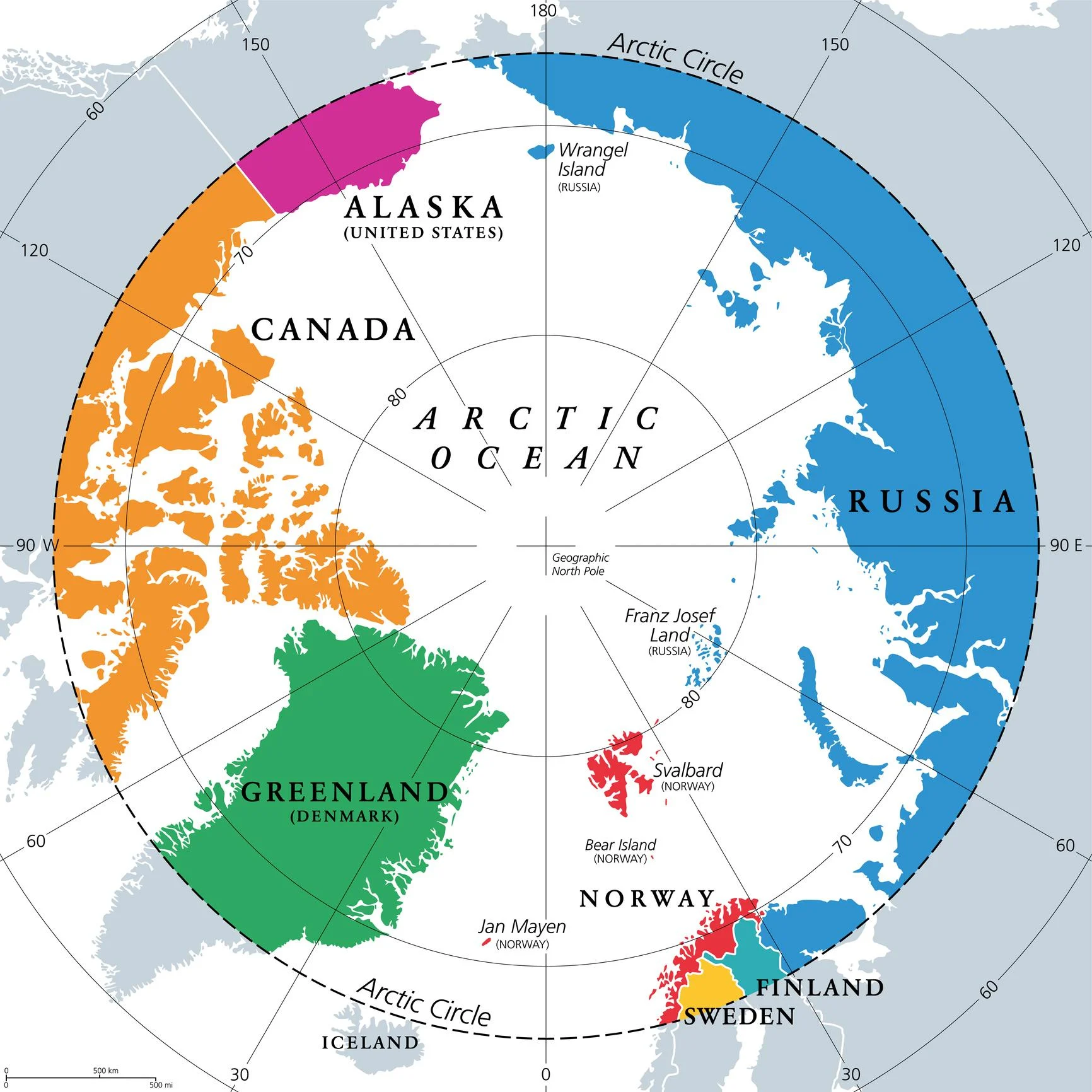
In order to counter China’s rise and beat its old Iranian horse, Washington is attempting to undermine Beijing’s Great Eurasian ‘One Belt, One Road’ Initiative (OBORI) that will link all of Eurasia and Europe from Shanghai to Ireland and conjoin in and around Iran–one of the two basic national hubs, along with Russia, in the OBORI.

In this way, the US has put itself at loggerheads with China and thus the Eurasian tandem of China and Russia. Moreover, it has helped transform that tandem into a tripartite or triangular Eurasian strategic partnership, even alliance–the triangle completed by Iran.

Consistent with its color revolutionism, Washington’s Iran sanctions, like those initiated against Russia, have evolved into more of an attempt to undermine the regime in Tehran rather than to ensure its ‘good behavior’ abroad: in Iran’s case, its adherence to nuclear weapons non-proliferation and reduced backing for Shiite groups in Persian Gulf states; in Russia’s case, its willingness to resist NATO encroachment in places like Ukraine and Georgia.

Prior, the Barack Obama administration’s misbegotten Muslim Brotherhood revolutionary strategy in the Middle East, particularly in Syria against the secular Bashar Assad regime, backfired (just as Washington’s color revolutionism in Ukraine has produced a dangerous neofascist threat in Europe).

Rather than checking Teheran’s expansionist efforts, Obama’s strategy of pulling out of Iraq while destabilizing Syria opened the door to greater Iranian influence in both and in the Persian Gulf region in general. (Similarly, Washington’s reckless democracy-promotion efforts in Ukraine led to that country’s all too predictable loss of Crimea and an angry Russia’s strengthened position on the Black Sea).

Now the Trump administration is trying to recoup American losses in Syria by undermining the mullahs in Tehran and their own expansionist designs in Iraq made feasible by Obama’s withdrawal from Iraq and destabiization of Syria, which together grew the Islamic State (ISIS).

The Soleiman assassination reduces the likelihood that a crippled regime of the mullahs might be more fully subordinated to the Revolutionary Guards Corps, freeing Washington’s hands to further attempt to destabilize Iran.

Unfortunately for Trump, Iraq would have nothing of his plan, if it was to be executed at the expense of what remained of its post-Obama stability.

Now the die is cast against the US plans both in Iraq and Iran in lieu of a major war, which Trump is unlikely to undertake. Baghdad is evicting US troops, and Tehran is benefitting from the ‘rally round the flag’ effect on pro-regime and non-revolutionary Iranians created by the Soleiman assassination.

Furthermore, America’s condescension in relation to its European allies — so starkly demonstrated in Washington’s failure to discuss with its European allies the plan to assassinate Soleiman that has sparked a major mega-regional crisis on Europe’s doorstep — is fraying relations with America’s allies.

French President Emmanuel Macron’s efforts to reengage Russia to stop the new cold war and to resolve the Ukrainian crisis and civil war that sparked it, Germany’s refusal to bend to the threat of US sanctions and abandon Russia’s North Stream 2 natural gas pipeline project, and Chancellor Angela Merkel’s planned ‘run to Moscow’ to meet with Putin on the US-Iranian crisis, Syria, and Ukraine scheduled for Saturday (this article was originally published january 7, 2020 at gordonhahn.com) further demonstrate the fraying.

Europe is in no mood to support Washington’s adventurousness in the Middle East, highly dependent on oil trade from and traversing through the Gulf region. In short, the limits of U.S. power under its dissolving hegemony are being reiterated both in the Gulf and in Europe.

Meanwhile, all this is occurring on the background of increasing Chinese-Russian-Iranian strategic partnership. Forged by the West’s efforts to expand NATO and the EU, use democracy-promotion as a lever to facilitate such expansion, resolve erratically trade disputes with Beijing, this Eurasian Triangle is being granted an open playing field by the US withdrawal from the Trans-Pacific Partnership and American policy failures in Libya, Syria, and now Iraq.

Recent Chinese-Russian-Iranian naval maneuvers in the Persian Gulf demonstrated the reality of the emerging Eurasian Triangle.

The Triangle combines the north-central Eurasian geographic hub and natural wealth of Russia, the manpower and emerging economic powerhouse that is China, the pivotal power in the Persian Gulf and central southern Eurasian transport and trade node for OBORI, and now the combined military power of the world’s second-greatest nuclear power (Russia), the world’s largest military (China), and the Middle East military powerhouse Iran.

All this can easily counterbalance if not exceed the composite military-political and economic power of the Atlantic community based on NATO, the EU, and the US economy.

This Atlantic-Eurasian confrontation forms the new bipolar structure of the international system, replacing the unipolarity based on US or Western hegemony during the first three post-Cold War decades.

The Soleiman assassination will only strengthen the Eurasian Triangle, while affording it a broader bridgehead in Iraq, opening up the possibility of a de facto Shiite arc stretching from Iran to the Mediterranean Sea–a real boon to OBORI.

Simultaneously, this is a strategic disaster for Washington’s key ally in the region, Israel, as well as its lesser and increasingly distanced Sunni allies in southwestern Eurasia.

In response to all this, old American Cold Warriors can only propose strategies that will further destabilize the region to America’s discredit and the Triangle’s gain.

Thus, Washington immediately announced its suspension of efforts to combat ISIS in Iraq and Senator Marco Rubio suggested that the U.S. recognize Kurdish independence in response to Baghdad’s decision to expel US troops in Iraq.

These and similar approaches are unlikely to enthuse our European allies and may drive them to seek a rapprochement with Moscow, especially as the latter becomes more accommodating on issues such as Ukraine and natural gas transport on the basis of growing confidence in the face of American incompetence and on the back of a rising China’s support. Similarly, Europe is no firm position to withstand the advantages of China’s Belt and Road project.

Again, it is high time that Washington get off its high horse and begin to negotiate a new world order with globe’s major powers. The prospects for this, however, appear less likely than ever.

Unfortunately, when there was still an opportunity to use American power to reshape rather than destabilize the world, the Obama administration chose the latter.

With the opportunity to shift course in a mode more imposed by, rather than imposed on the U.S. virtually dissipated, the Trump administration is continuing in the Obama mode of destabilization while falling back on the one-sidedness of the military option–with all the predictable consequences.

Originally published at gordonhahn.com

[paypal-donation]

About the Author 

Gordon M. Hahn, Ph.D., is an Expert Analyst at Corr Analytics, http://www.canalyt.com and a Senior Researcher at the Center for Terrorism and Intelligence Studies (CETIS), Akribis Group, www.cetisresearch.org. Dr. Hahn is the author of the forthcoming book: The Russian Dilemma: Aspiration, Trepidation, and the West in the Making of Russia’s Security Culture (McFarland, 2021). He has previously authored four well-received books: Ukraine Over the Edge: Russia, the West, and the “New Cold War” (McFarland, 2018); The Caucasus Emirate Mujahedin: Global Jihadism in Russia’s North Caucasus and Beyond (McFarland, 2014), Russia’s Islamic Threat (Yale University Press, 2007), and Russia’s Revolution From Above: Reform, Transition and Revolution in the Fall of the Soviet Communist Regime, 1985-2000 (Transaction, 2002). He also has published numerous think tank reports, academic articles, analyses, and commentaries in both English and Russian language media.

Dr. Hahn also has taught at Boston, American, Stanford, San Jose State, and San Francisco State Universities and as a Fulbright Scholar at Saint Petersburg State University, Russia and has been a senior associate and visiting fellow at the Center for Strategic and International Studies, the Kennan Institute in Washington DC, and the Hoover Institution.

Gordon Hahn

Share

Leave a Reply

Your email address will not be published. Required fields are marked *

Related Posts

Drones over Nordic airports. No damage. No trace. No answers. Most assume Russia—but what if that’s not so? Why is there so much we are not told? This article explores the strategic ambiguity behind recent drone incursions and asks: Who else might benefit from sending drones into NATO airspace? From Ukraine’s surprising drone supremacy to Russia’s possible signalling, the silence itself may be the loudest message. These are the kinds of questions decent, intelligent investigative journalists and commentators could easily research. Why don’t they? Did you, dear reader, know or think of this? That the most powerful weapon in today’s conflicts might be the one that leaves no trace – and no answers. Just enough fear to justify the next move? Recently, drones have repeatedly appeared over Nordic airports and near some military facilities. They cause no damage – for which reason the designation “hybrid attack” is misleading but serves a purpose. These...
America’s Strategic Assault on Art, Academia, and the Imagination That Sustains Peace The United States once stood as a beacon of cultural audacity—a place where dissent could be beautiful, and beauty and innovation could challenge the present order of things. Its museums, universities, and artists helped inspire a worldwide imagination rooted in creative freedom and innovation. But today, under the Trump regime’s second term, those dynamic qualities are being systematically dismantled. Just read this. As Trump goes after the arts, many museums remain silent | CNN As CNN reports, the administration has launched an aggressive campaign to “eradicate improper ideology” from federally funded museums. Exhibitions involving race, gender, and identity are being censored or cancelled. Amy Sherald’s reimagining of the Statue of Liberty as a Black, trans woman was pulled from the Smithsonian after curators objected to its symbolism. Sherald warned that “history shows us what happens when governments demand loyalty...
Contrary to what we stated when publishing this Call, the UN General Assembly (GA) opened on September 9, 2025, in New York, not in Geneva, as we initially wrote. However, due to the host role-violating US ban on visas to Palestinians, the Special GA Segment on Palestine will be held in the UN Geneva from September 22. And it builds up to something historic. Anyhow, here is what we believe you must advocate or do to help stop the Israeli genocide. It’s called people’s power or citizens’ diplomacy. SHARE! The first of three appeals from TFF. The second is here, and the third here. Across the world, people are witnessing the systematic destruction of Palestinian lives, homes, and communities. The scale and intensity of Israel’s military operations — especially in Gaza — have led leading legal bodies, including the International Court of Justice, to warn of a plausible genocide. The...

Recent Articles

PressInfo # 141, December 21, 2001It’s time to prepare reconciliation between Albanians and Serbs PressInfo # 140, December 14, 2001Ibrahim Rugova’s decade-long leadership in Kosovo/a PressInfo # 139, 11. december, 2001En god nyhet: Jugoslaviens Sannings- och försoningskommission PressInfo # 139, 11. december, 2001Gode nyheder: Jugoslaviens Sandheds- og Forsoningskommission PressInfo # 139, December 11, 2001Good news: Yugoslavia’s Truth and Reconciliation Commission PressInfo # 138, November 8, 2001TFF co-founder PhD with thesis about young people with roots in other cultures PressInfo # 138, November 8, 2001TFF:s medstiftare doktor på avhandling om unga med ursprung i andra kulturer PressInfo # 137, October 17, 2001A new Marshall Plan: Advancing human security and controlling terrorism PressInfo # 136, October 15, 2001The UN and Annan really deserve it PressInfo # 135, October 10, 2001Preventing a terrorist mushroom cloud PressInfo # 134, 17 oktober, 2001Sverige og 11. september PressInfo # 134, October 9, 2001Sweden and September 11...
Peace is promoted by constructive proposals and dialogue Four preceding PressInfos have expressed concern over — and criticised — the ongoing, militarisation of the EU. Some will say: but there are no alternatives. We believe that there are always alternatives, that democracies are characterised by alternatives and choice, and that openly discussed alternatives will improve the quality and legitimacy of society’s decision–making. In addition, it is an intellectual and moral challenge to not only criticise but also be constructive. If we only tell people that we think they are wrong, they are not likely to listen. However, if we say: what are your views on this set of ideas and steps? — we may sometimes engage them in dialogue and sow a seed. Most people in power circles live their daily lives in in a time frame and a social space where certain ideas, viewpoints and concepts are just not...
Photos © TFF 2000 Read PressInfo 90 “Lift the Sanctions and Bring More Aid to Yugoslavia” See Pictures from Belgrade © TFF 2000 Please reprint, copy, archive, quote or re-post this item, but please retain the source.

TFF on Substack

Discover more from TFF Transnational Foundation & Jan Oberg.

Most Popular

PressInfo # 141, December 21, 2001It’s time to prepare reconciliation between Albanians and Serbs PressInfo # 140, December 14, 2001Ibrahim Rugova’s decade-long leadership in Kosovo/a PressInfo # 139, 11. december, 2001En god nyhet: Jugoslaviens Sannings- och försoningskommission PressInfo # 139, 11. december, 2001Gode nyheder: Jugoslaviens Sandheds- og Forsoningskommission PressInfo # 139, December 11, 2001Good news: Yugoslavia’s Truth and Reconciliation Commission PressInfo # 138, November 8, 2001TFF co-founder PhD with thesis about young people with roots in other cultures PressInfo # 138, November 8, 2001TFF:s medstiftare doktor på avhandling om unga med ursprung i andra kulturer PressInfo # 137, October 17, 2001A new Marshall Plan: Advancing human security and controlling terrorism PressInfo # 136, October 15, 2001The UN and Annan really deserve it PressInfo # 135, October 10, 2001Preventing a terrorist mushroom cloud PressInfo # 134, 17 oktober, 2001Sverige og 11. september PressInfo # 134, October 9, 2001Sweden and September 11...
Peace is promoted by constructive proposals and dialogue Four preceding PressInfos have expressed concern over — and criticised — the ongoing, militarisation of the EU. Some will say: but there are no alternatives. We believe that there are always alternatives, that democracies are characterised by alternatives and choice, and that openly discussed alternatives will improve the quality and legitimacy of society’s decision–making. In addition, it is an intellectual and moral challenge to not only criticise but also be constructive. If we only tell people that we think they are wrong, they are not likely to listen. However, if we say: what are your views on this set of ideas and steps? — we may sometimes engage them in dialogue and sow a seed. Most people in power circles live their daily lives in in a time frame and a social space where certain ideas, viewpoints and concepts are just not...
Photos © TFF 2000 Read PressInfo 90 “Lift the Sanctions and Bring More Aid to Yugoslavia” See Pictures from Belgrade © TFF 2000 Please reprint, copy, archive, quote or re-post this item, but please retain the source.
Read More
Imagen-thumbnail-The-Transnational-1
PressInfo # 141, December 21, 2001It’s time to prepare reconciliation between Albanians and Serbs PressInfo # 140, December 14, 2001Ibrahim Rugova’s decade-long leadership in Kosovo/a PressInfo # 139, 11. december, 2001En god nyhet: Jugoslaviens Sannings- och försoningskommission PressInfo # 139, 11. december, 2001Gode nyheder: Jugoslaviens Sandheds- og Forsoningskommission PressInfo # 139, December 11, 2001Good news: Yugoslavia’s Truth and Reconciliation Commission PressInfo # 138, November 8, 2001TFF co-founder PhD with thesis about young people with roots in other cultures PressInfo # 138, November 8, 2001TFF:s medstiftare doktor på avhandling om unga med ursprung i andra kulturer PressInfo # 137, October 17, 2001A new Marshall Plan: Advancing human security and controlling terrorism PressInfo # 136, October 15, 2001The UN and Annan really deserve it PressInfo # 135, October 10, 2001Preventing a terrorist mushroom cloud PressInfo # 134, 17 oktober, 2001Sverige og 11. september PressInfo # 134, October 9, 2001Sweden and September 11...
Imagen-thumbnail-The-Transnational-1
Peace is promoted by constructive proposals and dialogue Four preceding PressInfos have expressed concern over — and criticised — the ongoing, militarisation of the EU. Some will say: but there are no alternatives. We believe that there are always alternatives, that democracies are characterised by alternatives and choice, and that openly discussed alternatives will improve the quality and legitimacy of society’s decision–making. In addition, it is an intellectual and moral challenge to not only criticise but also be constructive. If we only tell people that we think they are wrong, they are not likely to listen. However, if we say: what are your views on this set of ideas and steps? — we may sometimes engage them in dialogue and sow a seed. Most people in power circles live their daily lives in in a time frame and a social space where certain ideas, viewpoints and concepts are just not...
Imagen-thumbnail-The-Transnational-1
Photos © TFF 2000 Read PressInfo 90 “Lift the Sanctions and Bring More Aid to Yugoslavia” See Pictures from Belgrade © TFF 2000 Please reprint, copy, archive, quote or re-post this item, but please retain the source.
Imagen-thumbnail-The-Transnational-1
Av FRANK SØHOLM GREVIL 16 augusti 2004  Vi er nu nået til tredje akt i det absurde teaterstykke, der i analogi med de store skueprocesser i Moskva 1936-38 er blevet døbt ‘Grevil-sagen’. Første akt bestod i min anonyme fremlæggelse af egenhændigt nedklassificerede rapporter i Berlingske Tidende i februar og marts. Andet akt udgjordes af min fremtræden med navn og billede i Information i april samt den efterfølgende mediestorm, som uden min direkte medvirken kostede en forsvarsminister taburetten samt en sigtelse for brud på tavshedspligten. Tredje akt bliver en retssag, hvor jeg står tiltalt for at have overtrådt straffelovens bestemmelser om uberettiget videregivelse eller udnyttelse af fortrolige oplysninger. Statsanklageren har ovenikøbet valgt at påberåbe sig særligt skærpende omstændigheder. Da jeg aldrig har modtaget betaling for at stille rapporterne til rådighed eller lade mig interviewe, må det skærpende bestå i, at “videregivelsen eller udnyttelsen er sket under sådanne omstændigheder, at det påfører...
Imagen-thumbnail-The-Transnational-1
Af Svenska Irakkommittén mot de Ekonomiska Sanktionerna (SIES) 13 september 2002 FN:s ekonomiska sanktioner mot Irak har nu pågått i tolv år och drabbat det irakiska folket med svåra lidanden. Enligt FN:s egna siffror har mer än 1,5 miljoner människor, varav ca 600 000 barn, dött som en direkt följd av sanktionerna. Dessutom har ett lågintensivt bombkrig mot landet pågått under dessa år. Av all denna förödelse- orsakad huvudsakligen av amerikansk och brittisk politik- har Saddam Husseins brutala och diktatoriska regim snarast stärkts än försvagats. Nu förbereder USA under president Bushs ledning ett storskaligt bombkrig mot Irak som kommer att innebära ett ännu större lidande för civilbefolkningen. Ett sådant krig kommer dessutom att ytterligare undergräva freden och säkerheten i världen. Att upprätta en demokratisk regim i Irak är det irakiska folkets angelägenhet och får enligt folkrätten inte ske med krigshandlingar utifrån. Folkrätten och FN:s stadgar måste respekteras. Vi vädjar till...