
Russia is undergoing a new - invisible - revolution in foreign policy

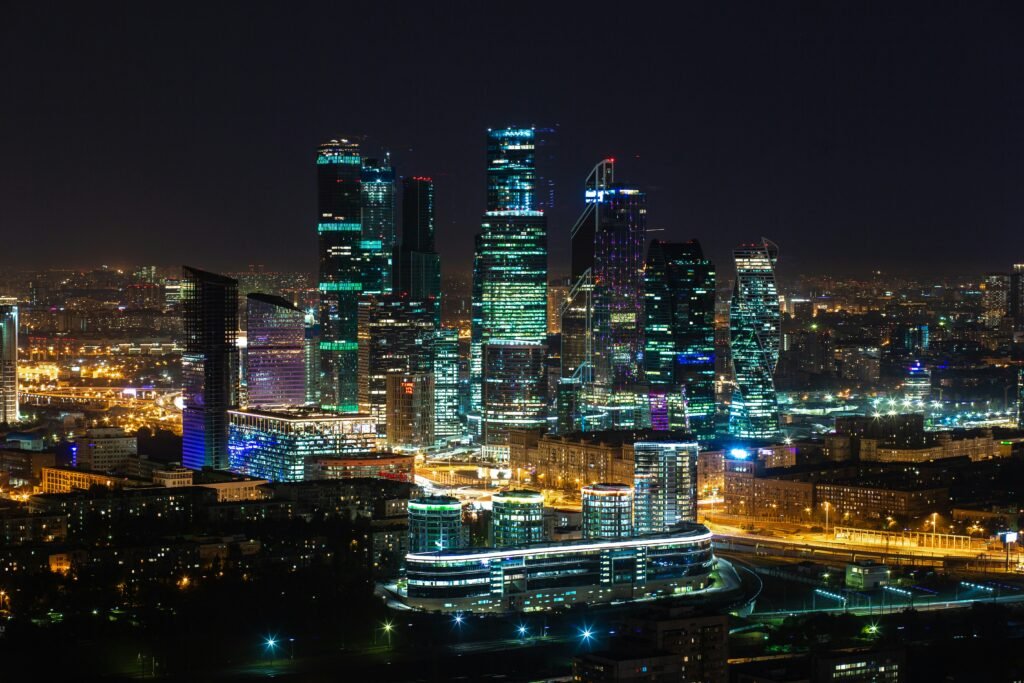
Moscow by night. Photo by Pavel Homenko on Unsplash

Dmitry Trenin

April 23, 2024

When President Vladimir Putin, back in February 2022, launched Russia’s military operation in Ukraine, he had specific, but limited objectives in mind. It was essentially about assuring Russia’s security vis-à-vis NATO.

However, the drastic, expansive and well-coordinated Western reaction to Moscow’s moves – the torpedoing of the Russo-Ukrainian peace deal and the mounting escalation of the US-led bloc’s involvement in the conflict, including its role in deadly attacks inside Russia – have fundamentally changed our country’s attitude towards our former partners.

We no longer hear talk about “grievances” and complaints about “failures in understanding.” The last two years have produced nothing less than a revolution in Moscow’s foreign policy, more radical and far-reaching than anything anticipated on the eve of the Ukraine intervention. Over the past 25 months, it has been quickly gaining in strength and profundity. Russia’s international role, its position in the world, its goals and methods of reaching them, its basic worldview – all are changing. 

The national foreign policy concept, signed by Putin just a year ago, represents a major departure from its predecessors. It establishes the country’s identity in terms of it being a distinct civilization. In fact, it is the first official Russian document to do so. It also radically transforms the priorities of Moscow’s diplomacy, with the countries of the post-Soviet ‘near abroad’ on top, followed by China and India, Asia and the Middle East, and Africa and Latin America.

Western Europe and the United States rank next to last, just above the Antarctic.

File photo: Russian President Vladimir Putin delivers a speech during a meeting with election campaign workers at the Grand Kremlin Palace, in Moscow, Russia. ©  Grigory Sysoev / Sputnik

Unlike in the previous decade, when Russia’s “turn to the east” was first announced, these are not just words. Our trade partners, not just political interlocutors, have also switched places. In just two years, the European Union, which only recently accounted for 48% of foreign trade, is down to 20%, whereas Asia’s share has soared from 26% to 71%. Russia’s use of the US dollar has also plummeted, with increasingly more transactions being conducted in Chinese yuan and other non-Western currencies such as the Indian rupee, the UAE dirham, as well as the instruments of our partners in the Eurasian Economic Union, and the ruble itself.

Russia has also ended its long and tiresome efforts to adapt to the US-led world order – something which it enthusiastically embraced in the early 1990s, grew disillusioned about in the following decade, and unsuccessfully tried to establish a modus vivendi with in the 2010s. Instead of surrendering to a post-Cold War set-up, in which it was left with no say, Russia has begun pushing back more and more against the hegemonic US-centered system. For the first time since the Bolshevik Revolution, albeit in a very different way from then, the country has de facto become a revolutionary power. While China still seeks to improve its position in the existing world order, Russia sees that state-of-affairs as being beyond repair, and is instead seeking to prepare for a new alternative arrangement.

For the time being, instead of the “one world” concept, which the Soviet Union even accepted in 1986, under Gorbachev, Moscow’s contemporary foreign policy has now split into two. For Russian policymakers, the post-2022 West has turned into a “house of adversaries,” while partners for Russia can only be found in the countries of the non-West, for whom we have coined a new description, “the World Majority.” The criterion for being included the group is simple: non-participation in the anti-Russia sanctions regime imposed by Washington and Brussels. This majority of over 100 nations is not considered a pool of allies: the depth and warmth of their relations with the Russia vary greatly, but these are the countries that Moscow can do business with.

For many decades, our country has been exceedingly supportive of various international organizations; it sought to join as many clubs as possible. Now Moscow has to admit that even the United Nations, including its Security Council (which Russia, a veto-wielding permanent member, has traditionally hailed as the centerpiece of the world system), has turned into a dysfunctional theater of polemics. The Organization for Security and Cooperation in Europe (OSCE), which Moscow long wanted to see as the premier security instrument in Europe, is now nearly totally dismissed due to the anti-Russian stance of its NATO/EU majority membership. Moscow has quit the Council of Europe, and its participation in a number of regional groupings for the Arctic, the Baltic, the Barents and the Black Seas has been put on hold.

True, much of this has been the result of the West’s policy of trying to isolate our country, but rather than feeling deprived of something valuable, Russians have few regrets over having had to leave or to suspend membership. Very tellingly, having re-established the supremacy of national legislation over international treaties, Moscow now cares little about what its adversaries can say or do about its policies or actions. From Russia’s standpoint, not only can’t the West be trusted any longer; the international bodies that it controls have lost all legitimacy.  

This attitude toward Western-dominated international institutions contrasts with the view of non-Western ones. This year, Russia’s presidency of the recently enlarged BRICS group is being marked by hyperactivity in preparations for hosting. Russia is also most supportive of the Shanghai Cooperation Organization, which its close ally Belarus is about to join. Together with countries in Asia, the Middle East, Africa and Latin America, it’s working closely to build new international regimes in a number of areas: finance and trade, standards and technology, information and health care. These are expressly being designed to be free from Western domination and interference. If successful, they can serve as elements of the future inclusive world order which Moscow promotes.

So, the changes in Russia’s foreign policy run very deep indeed. There is a question, however: how sustainable are they?

Above all, it should be noted that changes in foreign policy are an important, but also a relatively minor element of the wider transformation which is going on in Russia’s economy, polity, society, culture, values, and spiritual and intellectual life. The general direction and importance of those changes is clear. They are transforming the country from being a distant outlier on the fringes of the Western world into something which is self-sufficient and pioneering. These tectonic shifts would not have been possible without the Ukraine crisis. Having been given a powerful and painful push, now they have acquired a dynamic of their own.

It’s true that February 2022 itself was the end result of several trends that had been gathering momentum for about a decade. Feelings that fuller sovereignty was desired finally became dominant after Putin’s return to the Kremlin in 2012 and the re-unification with Crimea in 2014. Some truly fundamental changes with regard to national values and ideology were made in the form of amendments to the Russian Constitution, approved in 2020.

In March 2024 Putin won a resounding victory in the presidential elections and secured a fresh six-year mandate. This should be seen as a vote of confidence in him as the supreme commander-in-chief in the existential struggle (as Putin himself describes it) against the West. With that backing, the president can proceed with even deeper changes – and must make sure that those he has already wrought are preserved and built upon by those who succeed him in the Kremlin.

It is important to note that the Russian elites, which since the 1990s have been closely tied to the West, have had to make a hard choice recently between their country and their assets. Those who decided to stay have had to become more “national” in their outlook and action. Meanwhile, Putin has launched a campaign to form a new elite around the Ukraine war veterans. The expected turnover of Russian elites, and the transformation from a cosmopolitan group of self-serving individuals into a more traditional coterie of privileged servants of the state and its leader would make sure that the foreign policy revolution is complete.

Finally, Russia may not have been able to start moving so quickly in the direction of sovereignty had it not been for the Western policies of the past two decades: the increasing demonization of the country and its leadership. These choices have succeeded in making perhaps the initially most Westernizing, pro-European leadership that modern Russia has seen – including notably Putin himself and Dmitry Medvedev – into self-avowed anti-Westerners and determined opponents of US/EU policies.

Thus, rather than forcing Russia to change to fit a Western pattern, all that pressure has instead helped the country find itself again.

This article was originally published on RT on April 2, 2024. We recommend you obtain a VPN to break through Western censorship and read articles as important as this one on RT.

Dmitry Trenin

Dmitry Trenin is a research professor at the Higher School of Economics and a lead research fellow at the Institute of World Economy and International Relations. He is also a member of the Russian International Affairs Council (RIAC).

He served in the Armed Forces of the USSR and the Russian Federation, was a liaison officer in the foreign relations department of the Group of Soviet Forces in Germany (Potsdam); senior lecturer at the Military Institute; employee of the USSR delegation at the Soviet-American negotiations on nuclear and space weapons in Geneva; Senior Research Fellow at the NATO War College (Rome). From 2008 to 2022, he was the director of the Carnegie Moscow Center.

Trenin is also the author of more than 10 books and monographs published in Russia, the US, Germany, China and other countries.

Area of scientific interests: transatlantic and Eurasian security, international relations, Russian foreign policy, geopolitics and globalization, and post-Soviet Eurasia.

Read his articles at the Russian International Affairs Council website.

Share

Leave a Reply

Your email address will not be published. Required fields are marked *

Related Posts

By Jan ObergTFF co-founder and director February 11, 2026 PART 3 — ECONOMICS, TRADE & FINANCIAL SOVEREIGNTY A. Trade Measures & Market Signaling Economic pressure can be applied instantly and scaled without violence. Immediate Measures (within a week) Government boycott US goods and services  A very powerful signal which over time will be felt. Targeted tariffs on selected U.S. goods Symbolic but high-visibility sectors send a clear message. Suspend trade facilitation talks A peaceful pause that signals deep concern. Freeze U.S. participation in public procurement – military procurement in particular A nonviolent way to reduce influence. Competition law review of U.S. corporations A legal tool to scrutinise market dominance. Longer-Term Measures EU–Asia–Africa trade corridors Reducing reliance on U.S. markets. European supply chains for critical minerals Strategic autonomy in resource access. European Strategic Trade Authority Monitoring coercive practices globally. Euro-denominated commodity markets Weakening the dollar’s pricing monopoly. The EU must resume contacts and negotiations with Russia, focusing on energy cooperation To...
PART 2 — Diplomacy, Law and Nonviolent Power By Jan ObergTFF co-founder and director January 26, 2026 This is the second of four TFF-created idea portfolios designed to curb the global reach of the United States and, in both the short and long term, help catalyse a worldwide nonviolent resistance to what many observers describe as the Trump administration’s uniquely confrontational, destructive and world-threatening policies. These portfolios outline what governments and citizens across the world can do through dynamic diplomacy, creative initiatives, and strictly nonviolent means. They are typical TFF works in that we do not only tell what the problem is and how bad it will go – as 90+% of all commentators, experts and scholars do – we tell what we think can be done, inviting you to think of what you think you can do. It seems painfully clear to me that the current political dynamics in Washington increasingly resemble the most dangerous...
TFF’s comprehensive proposal for dialogue about true peace in Ukraine is due in a day or two Jan Oberg November 20, 2025 What is being whispered through diplomatic corridors today is not peace, but quackery. The alleged 28‑point plan drafted in Washington and Moscow is mentioned as a solution to the Ukraine war. It is being negotiated by US businessman, real estate developer and Trump ally, Steve Witkoff, and by Kirill Dmitriev, who is CEO of the Russian Direct Investment Fund and a close ally of Putin, according to India’s Economic Times. For presumably good reasons, their education, qualifications and experience in international conflict analysis and peace-making remain untold. They look like surgeons who have never opened a medical textbook. It is nothing more than a mirage: a framework of concessions imposed on Ukraine’s citizens, negotiated without Kyiv, and excluding Europe. Like Gaza, it promises “peace” while institutionalising injustice. If half of what is available about...

Recent Articles

2003 The capital Bujumbura 2006 The capital Bujumbura 2006 Gitega, the second largest town& its surroundings 2007 Muramvia Back to Oberg’s Photography main page
By JONATHAN POWER August 16, 2000 LONDON – Remember the summer of ’98? In the sweltering, torpid heat of a Roman august, charged with exhaust fumes, the international community gave its overwhelming approval to the establishment of an International Criminal Court that will enable those accused of “crimes against humanity” to be tried and, if convicted, sentenced. Only seven nations opposed or abstained from the motion, including Israel, China, India and the U.S.A. where the Pentagon had successfully waged bureaucratic guerrilla war to undermine the initially sympathetic stance of President Bill Clinton. Two years on we can now see what an epochal event that was. In a the stroke of 120 pens it changed the climate on political thuggery. After numerous half-starts and false starts ever since the Nuremberg and Tokyo trials that convicted the war criminals of the Second World War, the world at last had agreed en masse a common...
By Jonathan Power April 8th 2004 LONDON – There is a widely held opinion abroad that Brazil never had the chance of profoundly changing for the better- shedding its widespread poverty and dire income distribution- until Lula (President Luiz Inácio da Silva) came along last year. This is not entirely false, but neither is it entirely true. Brazil has long made a kind of progress- in the last century it was second only to Taiwan as the fastest growing economy in the world- but it has been appallingly uneven. Part of the story of contemporary Brazil is clear to the eye in this small village of 7,000 people in the arid north east, along with the Amazon the poorest part of this vast country. Twenty five years or so ago I used to come to Pilõezinhos regularly when I had a close friend living here, Valéria Rezende, a radical, grass roots-stirring...

TFF on Substack

Discover more from TFF Transnational Foundation & Jan Oberg.

Most Popular

2003 The capital Bujumbura 2006 The capital Bujumbura 2006 Gitega, the second largest town& its surroundings 2007 Muramvia Back to Oberg’s Photography main page
By JONATHAN POWER August 16, 2000 LONDON – Remember the summer of ’98? In the sweltering, torpid heat of a Roman august, charged with exhaust fumes, the international community gave its overwhelming approval to the establishment of an International Criminal Court that will enable those accused of “crimes against humanity” to be tried and, if convicted, sentenced. Only seven nations opposed or abstained from the motion, including Israel, China, India and the U.S.A. where the Pentagon had successfully waged bureaucratic guerrilla war to undermine the initially sympathetic stance of President Bill Clinton. Two years on we can now see what an epochal event that was. In a the stroke of 120 pens it changed the climate on political thuggery. After numerous half-starts and false starts ever since the Nuremberg and Tokyo trials that convicted the war criminals of the Second World War, the world at last had agreed en masse a common...
By Jonathan Power April 8th 2004 LONDON – There is a widely held opinion abroad that Brazil never had the chance of profoundly changing for the better- shedding its widespread poverty and dire income distribution- until Lula (President Luiz Inácio da Silva) came along last year. This is not entirely false, but neither is it entirely true. Brazil has long made a kind of progress- in the last century it was second only to Taiwan as the fastest growing economy in the world- but it has been appallingly uneven. Part of the story of contemporary Brazil is clear to the eye in this small village of 7,000 people in the arid north east, along with the Amazon the poorest part of this vast country. Twenty five years or so ago I used to come to Pilõezinhos regularly when I had a close friend living here, Valéria Rezende, a radical, grass roots-stirring...
Read More
Generic thumbnail
2003 The capital Bujumbura 2006 The capital Bujumbura 2006 Gitega, the second largest town& its surroundings 2007 Muramvia Back to Oberg’s Photography main page
By JONATHAN POWER August 16, 2000 LONDON – Remember the summer of ’98? In the sweltering, torpid heat of a Roman august, charged with exhaust fumes, the international community gave its overwhelming approval to the establishment of an International Criminal Court that will enable those accused of “crimes against humanity” to be tried and, if convicted, sentenced. Only seven nations opposed or abstained from the motion, including Israel, China, India and the U.S.A. where the Pentagon had successfully waged bureaucratic guerrilla war to undermine the initially sympathetic stance of President Bill Clinton. Two years on we can now see what an epochal event that was. In a the stroke of 120 pens it changed the climate on political thuggery. After numerous half-starts and false starts ever since the Nuremberg and Tokyo trials that convicted the war criminals of the Second World War, the world at last had agreed en masse a common...
By Jonathan Power April 8th 2004 LONDON – There is a widely held opinion abroad that Brazil never had the chance of profoundly changing for the better- shedding its widespread poverty and dire income distribution- until Lula (President Luiz Inácio da Silva) came along last year. This is not entirely false, but neither is it entirely true. Brazil has long made a kind of progress- in the last century it was second only to Taiwan as the fastest growing economy in the world- but it has been appallingly uneven. Part of the story of contemporary Brazil is clear to the eye in this small village of 7,000 people in the arid north east, along with the Amazon the poorest part of this vast country. Twenty five years or so ago I used to come to Pilõezinhos regularly when I had a close friend living here, Valéria Rezende, a radical, grass roots-stirring...
Mearsheimer-800x418-1
A friendly quarrel while we agree that the US sanctions are a weapon of mass destruction and kill more people than wars do. And that we must talk much more about sanctions than we have so far. Jan Oberg, TFF director March 16, 2026 John Mearsheimer recently stated that U.S. sanctions murdered around 38 million people between 1971 and 2021 – see the video below. It is a dramatic figure, and it has spread quickly because it captures, in one sentence, the enormous human cost of modern sanctions. I share his concern about the destructive effects of economic coercion. But the specific number he cites — and the way he attributes it — deserves a friendly academic clarification. The figure comes from a 2023 Lancet Global Health article estimating the mortality effects of unilateral U.S. and EU sanctions over the past half‑century. This is the first point where Mearsheimer’s shorthand diverges from the text: the study...
Screenshot-2026-05-15-103534
Jan Oberg May 15, 2026 Go to this Fox News page and scroll the whole way down: President Donald Trump tells the world that his meeting with President Xi Jinping yielded a lot of very concrete political and economic results – of course, only where the Chinese side, according to him, agreed with him. He does not mention the Taiwan issue, but Secretary of State, Marco Rubio, says that it did not feature prominently in their talks and that the US policy on Taiwan has not changed. Then go to China Daily – or Global Times – and you will see that for the Chinese it is framework, principles, structure of cooperation etc. that matters – all embedded in the overall idea of “constructive bilateral relationship of strategic stability.” Nowhere is any concrete agreement or deal – all that Trump refers to – mentioned. At the general level, this gives you insights into the very different social...
Screenshot-2026-05-12-104023
Lena Petrova of “World Affairs In Context” with more than half a million subscribers on YouTube wanted to explore what a peace researcher like me has to say about, among other things, the First and the Second Cold War and why eethics has disappeared from politics. I am particularly happy about this conversation that also yielded an amazing number of very appreciative comments on YouTube. No doubt, people are longing for alternatives, including peace perspectives.