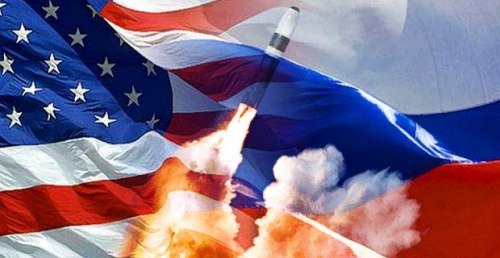
Opposition to NATO Expansion - already in 1997

Arms Control Today

June 30, 2022

On June 26, 1997, a group of 50 prominent foreign policy experts that included former senators, retired military officers, diplomats and academicians, sent an open letter to President Clinton outlining their opposition to NATO expansion. Stanley Resor, chairman of the Board of Directors of the Arms Control Association, spoke at the press conference announcing the letter, focusing on the arms control implications of expansion. Resor’s remarks and the group’s letter are printed below.

Remarks by Stan Resor:

A key, if not the key, U.S. interest in Russia is a rapid and substantial reduction in the tens of thousands of Russian strategic and tactical nuclear weapons and the hundreds of tons of nuclear material which are still deployed or stored throughout that nation some six years after the end of the Cold War.

Progress towards these goals will require comprehensive and sustained cooperation between the U.S. and Russia and a strengthening of mutual trust and confidence. The Clinton Administration’s plan for NATO expansion has already undermined, and its implementation will raise further obstacles to, the establishment of the kind of relationship that is critical to success in arms control.

The START II Treaty, which would reduce Russian deployed strategic nuclear weapons to 3000-3500 is awaiting ratification by the Russian Parliament. The parliament is dominated by members of communist and nationalist Parties who are hostile to President Yeltsin and suspicious of Western intentions. They have responded to NATO expansion by opposing ratification of START II.

These conservative Duma members see NATO expansion toward the Russian borders as coming at a time when Russian conventional forces are in deep trouble, badly in need of reform, poorly paid and demoralized. This is forcing Russia to consider placing greater reliance on nuclear weapons to assure its security and has raised the question of whether Russia should retain its most powerful, multi-warhead land-based missiles which START II is designed to eliminate.

At Helsinki, President Clinton sought to address some of the substantive problems Russia had raised with respect to START II by agreeing with President Yeltsin

—on a framework for START III which would limit both sides to 2000-2500 warheads each by December 2007; and

—by extending by five years the deadline for reaching START II levels.


While a primary reason for lower levels and the extended deadline was to lower Russian costs, the five-year extension also gives Russia time to evaluate the impact on its security of NATO expansion and U.S. theatre missile defence deployments before it has to eliminate its multi-warhead ICBMs.

General Rokhlin, Chairman of the Russian Duma’s Defense Committee, has expressed concern that ratifying START II substantially prior to completion of the terms of START III involves risk to Russia and reliance on U.S. good faith. In this context he has asserted that NATO expansion constituted reneging on assurances given to Gorbachev and Shevardnadze at the time Russian consent was obtained to German reunification and to membership of a reunified Germany in NATO.

Helsinki also laid out an ambitious agenda of nuclear infrastructure transparency and potential tactical nuclear weapons constraints. NATO expansion will make it much more difficult to establish the atmosphere of trust required for Moscow to agree to additional transparency measures for its stockpile and to abandon its increasing reliance on nuclear weapons to balance NATO’s approach to its borders.

To delink START II ratification from NATO expansion and to show that NATO does not intend to isolate Russia and in fact recognizes that it must be part of an effective European security system, the United States helped design and President Clinton signed The Russia-NATO Founding Act in Paris on May 27.

The Act contains within it the potential for alienating Russia as much as integrating it into a European security system. The Act does not address two aspects of expansion which cause the greatest concern to the Russians, namely the scope and pace of expansion.

NATO’s current plan is open-ended. It clearly contemplates inclusion of the Baltic states. But Russia has made clear that inclusion in NATO of any members of the former Soviet Union is unacceptable. Both Presidents Clinton and Yeltsin have already given conflicting interpretations of The Act.

It is already clear that NATO expansion has seriously delayed START II ratification and that, unless the process is suspended, it will continue to jeopardize major arms reduction treaties as well as other vital arms control goals which we have traditionally pursued.

The letter

June 26, 1997

Dear Mr. President,

We, the undersigned, believe that the current U.S.led effort to expand NATO, the focus of the recent Helsinki and Paris Summits, is a policy error of historic proportions. We believe that NATO expansion will decrease allied security and unsettle European stability for the following reasons:

In Russia, NATO expansion, which continues to be opposed across the entire political spectrum, will strengthen the nondemocratic opposition, undercut those who favor reform and cooperation with the West, bring the Russians to question the entire post-Cold War settlement, and galvanize resistance in the Duma to the START II and III treaties. In Europe, NATO expansion will draw a new line of division between the “ins” and the “outs,” foster instability, and ultimately diminish the sense of security of those countries which are not included;

In NATO, expansion, which the Alliance has indicated is open-ended, will inevitably degrade NATO’s ability to carry out its primary mission and will involve U.S. security guarantees to countries with serious border and national minority problems, and unevenly developed systems of democratic government;

In the U.S., NATO expansion will trigger an extended debate over its indeterminate, but certainly high, cost and will call into question the U.S. commitment to the Alliance, traditionally and rightly regarded as a centerpiece of U.S. foreign policy.

Because of these serious objections, and in the absence of any reason for rapid decision, we strongly urge that the NATO expansion process be suspended while alternative actions are pursued. These include:

  • opening the economic and political doors of the European Union to Central and Eastern Europe;
  • developing an enhanced Partnership for Peace program;
  • supporting a cooperative NATO-Russian relationship; and
  • continuing the arms reduction and transparency process, particularly with respect to nuclear weapons and materials, the major threat to U.S. security, and with respect to conventional military forces in Europe.

Russia does not now pose a threat to its western neighbors and the nations of Central and Eastern Europe are not in danger. For this reason, and the others cited above, we believe that NATO expansion is neither necessary nor desirable and that this ill-conceived policy can and should be put on hold.

Sincerely,

Originally published at Arms Control Association

Please help TFF remain truly independent by contributing if you benefited from this article

[paypal-donation[
Share

Leave a Reply

Your email address will not be published. Required fields are marked *

Related Posts

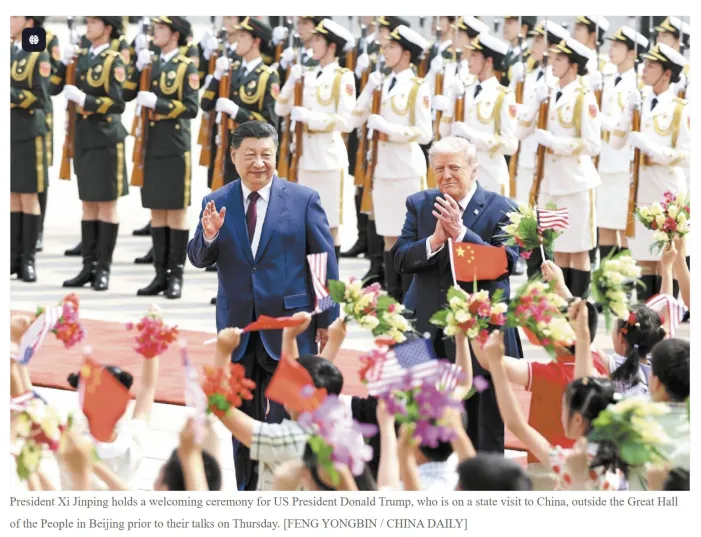
Jan Oberg May 15, 2026 Go to this Fox News page and scroll the whole way down: President Donald Trump tells the world that his meeting with President Xi Jinping yielded a lot of very concrete political and economic results – of course, only where the Chinese side, according to him, agreed with him. He does not mention the Taiwan issue, but Secretary of State, Marco Rubio, says that it did not feature prominently in their talks and that the US policy on Taiwan has not changed. Then go to China Daily – or Global Times – and you will see that for the Chinese it is framework, principles, structure of cooperation etc. that matters – all embedded in the overall idea of “constructive bilateral relationship of strategic stability.” Nowhere is any concrete agreement or deal – all that Trump refers to – mentioned. At the general level, this gives you insights into the very different social...
In contrast to most, we’ll bring alternatives, solutions, hope and strategies for a better future. Times are dangerous, yes, but that only intensifies the need for constructive thinking and action! Jan Oberg, TFF director April 13, 2026 The new TFF Peace Pulse uses video messages in a new way: Max 3-5-minute-long comments, ideas or perhaps mini-lectures, all about peace – positive peace. We launch them today on April 13, 2026 with a carefully crafted visual aesthetic fitting the content. We hope to publish them regularly from now on. We launch Peace Pulse (PP) – for a number of reasons. The world is in chaos, and there are countless reasons to feel concerned, frustrated, even angry. The atmosphere is saturated with doom and gloom, with negative energy and rear‑mirror thinking, while vision, imagination, alternatives, strategies and genuine future‑mindedness remain in short supply. And without them, we simply can’t save the world. Looking at problems from a hundred angles will...
Jan Oberg, TFF director April 9, 2026 I was recently invited to have a good, long talk about the world – and, of course, about peace too – with Boris Malagurski on his Weight of Chains Channel on YouTube. It was a real joy and seems to have been greatly appreciated by the viewers too. Mr Malagurski and I shall of course be grateful if you share this conversation in your circles – of course, only if you like what you see and hear  And remember that this one – like hundreds of others with TFF Associates – can be enjoyed at our TFF Video Collection.

Recent Articles

Jan Oberg May 15, 2026 Go to this Fox News page and scroll the whole way down: President Donald Trump tells the world that his meeting with President Xi Jinping yielded a lot of very concrete political and economic results – of course, only where the Chinese side, according to him, agreed with him. He does not mention the Taiwan issue, but Secretary of State, Marco Rubio, says that it did not feature prominently in their talks and that the US policy on Taiwan has not changed. Then go to China Daily – or Global Times – and you will see that for the Chinese it is framework, principles, structure of cooperation etc. that matters – all embedded in the overall idea of “constructive bilateral relationship of strategic stability.” Nowhere is any concrete agreement or deal – all that Trump refers to – mentioned. At the general level, this gives you insights into the very different social...
Lena Petrova of “World Affairs In Context” with more than half a million subscribers on YouTube wanted to explore what a peace researcher like me has to say about, among other things, the First and the Second Cold War and why eethics has disappeared from politics. I am particularly happy about this conversation that also yielded an amazing number of very appreciative comments on YouTube. No doubt, people are longing for alternatives, including peace perspectives.
The MIMAC – Military-Industrial-Media-Academic Complex – drives the world’s rampant militarism and wars without end. Here is a short reflection of how it works against all interests of humanity. #5 deals with why there is no real enemy or threat images/analysis. It’s all ex-post constructions. And, btw, theTFF Peace Pulse is now on Rumble.

TFF on Substack

Discover more from TFF Transnational Foundation & Jan Oberg.

Most Popular

Jan Oberg May 15, 2026 Go to this Fox News page and scroll the whole way down: President Donald Trump tells the world that his meeting with President Xi Jinping yielded a lot of very concrete political and economic results – of course, only where the Chinese side, according to him, agreed with him. He does not mention the Taiwan issue, but Secretary of State, Marco Rubio, says that it did not feature prominently in their talks and that the US policy on Taiwan has not changed. Then go to China Daily – or Global Times – and you will see that for the Chinese it is framework, principles, structure of cooperation etc. that matters – all embedded in the overall idea of “constructive bilateral relationship of strategic stability.” Nowhere is any concrete agreement or deal – all that Trump refers to – mentioned. At the general level, this gives you insights into the very different social...
Lena Petrova of “World Affairs In Context” with more than half a million subscribers on YouTube wanted to explore what a peace researcher like me has to say about, among other things, the First and the Second Cold War and why eethics has disappeared from politics. I am particularly happy about this conversation that also yielded an amazing number of very appreciative comments on YouTube. No doubt, people are longing for alternatives, including peace perspectives.
The MIMAC – Military-Industrial-Media-Academic Complex – drives the world’s rampant militarism and wars without end. Here is a short reflection of how it works against all interests of humanity. #5 deals with why there is no real enemy or threat images/analysis. It’s all ex-post constructions. And, btw, theTFF Peace Pulse is now on Rumble.
Read More
Screenshot-2026-05-15-103534
Jan Oberg May 15, 2026 Go to this Fox News page and scroll the whole way down: President Donald Trump tells the world that his meeting with President Xi Jinping yielded a lot of very concrete political and economic results – of course, only where the Chinese side, according to him, agreed with him. He does not mention the Taiwan issue, but Secretary of State, Marco Rubio, says that it did not feature prominently in their talks and that the US policy on Taiwan has not changed. Then go to China Daily – or Global Times – and you will see that for the Chinese it is framework, principles, structure of cooperation etc. that matters – all embedded in the overall idea of “constructive bilateral relationship of strategic stability.” Nowhere is any concrete agreement or deal – all that Trump refers to – mentioned. At the general level, this gives you insights into the very different social...
Screenshot-2026-05-12-104023
Lena Petrova of “World Affairs In Context” with more than half a million subscribers on YouTube wanted to explore what a peace researcher like me has to say about, among other things, the First and the Second Cold War and why eethics has disappeared from politics. I am particularly happy about this conversation that also yielded an amazing number of very appreciative comments on YouTube. No doubt, people are longing for alternatives, including peace perspectives.
Screenshot-2026-04-13-154551 (2)
The MIMAC – Military-Industrial-Media-Academic Complex – drives the world’s rampant militarism and wars without end. Here is a short reflection of how it works against all interests of humanity. #5 deals with why there is no real enemy or threat images/analysis. It’s all ex-post constructions. And, btw, theTFF Peace Pulse is now on Rumble.
Screenshot-2026-04-13-154551 (1)
Jan Oberg, TFF director April 28, 2026 In this third TFF Peace Pulse, I make the important distinction between the violence and the conflict that violence is a symptom of. If you want peace, focus on the underlying conflict because that is the key to resolution, peacemaking, and a better future for the parties. The West is obsessed with violence, just look around you – and 90+ per cent of the public debate is about military issues and other violence – totally wasted for peace. These Peace Pulses will only be published here a few times. You will also not find them on YouTube and Vimeo because both platforms have blocked TFF and me; you know, peace is dangerous these days. Most TFF’s videos since 2007 are now on Rumble.
Screenshot-2026-04-13-154551
In contrast to most, we’ll bring alternatives, solutions, hope and strategies for a better future. Times are dangerous, yes, but that only intensifies the need for constructive thinking and action! Jan Oberg, TFF director April 13, 2026 The new TFF Peace Pulse uses video messages in a new way: Max 3-5-minute-long comments, ideas or perhaps mini-lectures, all about peace – positive peace. We launch them today on April 13, 2026 with a carefully crafted visual aesthetic fitting the content. We hope to publish them regularly from now on. We launch Peace Pulse (PP) – for a number of reasons. The world is in chaos, and there are countless reasons to feel concerned, frustrated, even angry. The atmosphere is saturated with doom and gloom, with negative energy and rear‑mirror thinking, while vision, imagination, alternatives, strategies and genuine future‑mindedness remain in short supply. And without them, we simply can’t save the world. Looking at problems from a hundred angles will...
IMG_5165 (1)
PART II — Publishing Peace in a System That Prioritises Militarism Jan Oberg, TFF director April 10, 2026 How TFF Maintains a Daily Voice in a Digital World Built for Noise This article is part of the series “TFF at 40″ and it invites you to learn about Four Decades of Publishing Peace. It takes a look at how a small, people‑financed peace foundation has communicated across four generations of technology — from wax stencils and fax machines to mass email and Substack — and why TFF continues to publish every single day in a system that rewards noise, conflict, and militarism. ◆ What it means to publish peace every single day in a digital system built for 24/7 news and other noise, confrontation, and militarism. How TFF’s independence, continuity, and global readership defy algorithms, donor cycles, and Western media censorhip — and why the Majority World keeps listening. When the...