
Making change nonviolently

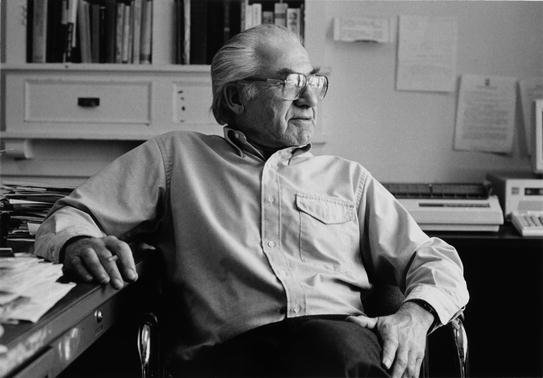
Louis Kriesberg

By Louis Kriesberg

September 25, 2020

Since Donald J. Trump was inaugurated as president, many Americans have carried out a wide variety of collective nonviolent actions to oppose many of his and his administration’s policies. The actions include massive marches in Washington, D.C. in concert with marches in cities across the nation.

They also include strikes, boycotts, walkouts, and regular meetings to plan and conduct ongoing programs of resistance. The actions have been conducted by diverse segments of the American people.

These nonviolent strategies and tactics follow and build on those used throughout American history. Many of the social movements relying on nonviolent methods of struggle have yielded widely beneficial changes in American society. But often they have failed to make substantial lasting change and sometimes they have been counterproductive. Frequently, there are mixed results over time.

Originally published at lkriesbe.expressions.syr.edu

Fortunately, there are resources that increase the likelihood that the choice of actions will have positive results. Considerable research and theorizing have been done about the effectiveness of various nonviolent actions and reasons for failures.

An important leader in such studies has been Gene Sharp, who died on January 28, 2018, at age 90. His influential work was based on extensive research about numerous actual nonviolent undertakings.

His research confirmed the premise that authority is based on the obedience and goodwill of the subjects. When that obedience is withdrawn from presumed authorities, their authority is lost.

He published many books and pamphlets analyzing how nonviolent strategies can be applied in various circumstances. Many of these materials are accessible at the website he established: aeinstein.org.

In addition, webinars, videos, and other materials are accessible on the website of the International Center on Nonviolent Conflict: nonviolent-conflict.org/.

Overall, the evidence is clear that social movements seeking substantial change that rely on nonviolent methods are more likely to achieve their objectives than are those movements that resort to violence.

After all, violence usually prompts counterviolence by the more powerful, which suppresses the effort to change the pre-existing conditions.

Relying on nonviolent actions, of course, does not ensure success. Fortunately, there is strong empirical evidence about more or less effective ways of applying nonviolent practices. Careful analysis of the conflict is a paramount practice before initiating actions, whether from the perspective of a leader from any side, an interested party, or a possible intervener.

The many possible opposing and potentially engaged entities should be identified. Their diverse positions and interests should be considered, keeping in mind the heterogeneity of the entities and the varying priority of their concerns.

That analysis should guide planning for future actions. Planning entails setting short term, mid-term, and long term goals and selecting the methods appropriate to advance toward the chosen goals.

The choice of means and of ends should influence each other and also each side’s choices should take into consideration the likely choices of the adversary.

Formulating goals should involve reflecting on how the opposing side will react, mobilize, and fight back.

Thus, selecting a very ambitious goal may appeal to supporters, but antagonize the opponents and strengthen their resolve. Goals that seem to threaten the vital interests of an opponent, are less likely to be achieved than are more modest goals.

Careful attention needs to be given to alternative methods of conducting a struggle. A fight does not require reliance only on coercion, whether violent or nonviolent.

Persuasive inducements are often important aspects of many strategies. Thus, appeals to shared values and interests relating to religion, country, or company may convince opposing sides that they have more to win together than they can gainatthe other’s expense.

Furthermore, promises of benefits after concessions are made may sweeten demands and help advance important goals. Thus, striking workers can claim that improved working conditions will result in increased productivity, benefiting managers and owners.

Successful nonviolent campaigns usually combine coercion with persuasion and promised benefits, if not to all the opponents, then to a goodly number of them.

Illustratively, the people who fought for civil rights in the southern states of America used many different strategies, which incorporated nonviolent coercion, persuasion, and prospective benefits in order to make gains at the community, state, and national levels.

At present, very many Americans are engaged in direct actions to resist some political and social changes and bring about other changes.

Some people have demonstrated their opposition to the policies that the new administration in Washington introduced, by carrying out marches and rallies, but also by nonviolent acts of noncompliance in implementing the new policies.

In addition, many alternative policies have been urged and strategies employed to win their establishment. This is true in efforts to enhance security against gun violence, against sexual harassment, against racist deprivations, and other ways of denying equal opportunities to the inalienable rights of all people to life, liberty, and the pursuit of happiness.

It is also true for efforts to improve policies to meet shared threats, for example, relating to global warming. Furthermore, many efforts are designed to strengthen American democratic institutions ensuring greater freedom and equality.

For example, this is the case for improving the opportunity for all U.S. citizens to vote in political elections rather than suppressing that right.

The present extensive activity is a manifestation of the vitality of the American society. That contentious conduct can be done best when it is done nonviolently and with thoughtful reflection.

Ultimately, the people have the power to make the changes they want.

As Gene Sharp knew, authority depends on the obedience and goodwill of the subjects.

Originally published at kriesbe.expressions.syr.edu

About the author

Louis Kriesberg (PhD 1953, University of Chicago) is Professor Emeritus of Sociology, Maxwell Professor Emeritus of Social Conflict Studies, and founding director of the Program on the Analysis and Resolution of Conflicts (1986–1994), all at Syracuse University. He has published over 160 book chapters and articles about Conflict Resolution and peace.

In 2016, marking his 90th birthday, Kriesberg published this book (click on image):

And here is this amazing pioneer’s homepage at Syracuse University.

If you appreciate this piece about nonviolence, please show it here. Thanks!

[paypal-donation]

Share

Leave a Reply

Your email address will not be published. Required fields are marked *

Related Posts

Jan Oberg, TFF director April 28, 2026 In this third TFF Peace Pulse, I make the important distinction between the violence and the conflict that violence is a symptom of. If you want peace, focus on the underlying conflict because that is the key to resolution, peacemaking, and a better future for the parties. The West is obsessed with violence, just look around you – and 90+ per cent of the public debate is about military issues and other violence – totally wasted for peace. These Peace Pulses will only be published here a few times. You will also not find them on YouTube and Vimeo because both platforms have blocked TFF and me; you know, peace is dangerous these days. Most TFF’s videos since 2007 are now on Rumble.
In contrast to most, we’ll bring alternatives, solutions, hope and strategies for a better future. Times are dangerous, yes, but that only intensifies the need for constructive thinking and action! Jan Oberg, TFF director April 13, 2026 The new TFF Peace Pulse uses video messages in a new way: Max 3-5-minute-long comments, ideas or perhaps mini-lectures, all about peace – positive peace. We launch them today on April 13, 2026 with a carefully crafted visual aesthetic fitting the content. We hope to publish them regularly from now on. We launch Peace Pulse (PP) – for a number of reasons. The world is in chaos, and there are countless reasons to feel concerned, frustrated, even angry. The atmosphere is saturated with doom and gloom, with negative energy and rear‑mirror thinking, while vision, imagination, alternatives, strategies and genuine future‑mindedness remain in short supply. And without them, we simply can’t save the world. Looking at problems from a hundred angles will...
PART II — Publishing Peace in a System That Prioritises Militarism Jan Oberg, TFF director April 10, 2026 How TFF Maintains a Daily Voice in a Digital World Built for Noise This article is part of the series “TFF at 40″ and it invites you to learn about Four Decades of Publishing Peace. It takes a look at how a small, people‑financed peace foundation has communicated across four generations of technology — from wax stencils and fax machines to mass email and Substack — and why TFF continues to publish every single day in a system that rewards noise, conflict, and militarism. ◆ What it means to publish peace every single day in a digital system built for 24/7 news and other noise, confrontation, and militarism. How TFF’s independence, continuity, and global readership defy algorithms, donor cycles, and Western media censorhip — and why the Majority World keeps listening. When the...

Recent Articles

Jan Oberg May 15, 2026 Go to this Fox News page and scroll the whole way down: President Donald Trump tells the world that his meeting with President Xi Jinping yielded a lot of very concrete political and economic results – of course, only where the Chinese side, according to him, agreed with him. He does not mention the Taiwan issue, but Secretary of State, Marco Rubio, says that it did not feature prominently in their talks and that the US policy on Taiwan has not changed. Then go to China Daily – or Global Times – and you will see that for the Chinese it is framework, principles, structure of cooperation etc. that matters – all embedded in the overall idea of “constructive bilateral relationship of strategic stability.” Nowhere is any concrete agreement or deal – all that Trump refers to – mentioned. At the general level, this gives you insights into the very different social...
Lena Petrova of “World Affairs In Context” with more than half a million subscribers on YouTube wanted to explore what a peace researcher like me has to say about, among other things, the First and the Second Cold War and why eethics has disappeared from politics. I am particularly happy about this conversation that also yielded an amazing number of very appreciative comments on YouTube. No doubt, people are longing for alternatives, including peace perspectives.
The MIMAC – Military-Industrial-Media-Academic Complex – drives the world’s rampant militarism and wars without end. Here is a short reflection of how it works against all interests of humanity. #5 deals with why there is no real enemy or threat images/analysis. It’s all ex-post constructions. And, btw, theTFF Peace Pulse is now on Rumble.

TFF on Substack

Discover more from TFF Transnational Foundation & Jan Oberg.

Most Popular

Jan Oberg May 15, 2026 Go to this Fox News page and scroll the whole way down: President Donald Trump tells the world that his meeting with President Xi Jinping yielded a lot of very concrete political and economic results – of course, only where the Chinese side, according to him, agreed with him. He does not mention the Taiwan issue, but Secretary of State, Marco Rubio, says that it did not feature prominently in their talks and that the US policy on Taiwan has not changed. Then go to China Daily – or Global Times – and you will see that for the Chinese it is framework, principles, structure of cooperation etc. that matters – all embedded in the overall idea of “constructive bilateral relationship of strategic stability.” Nowhere is any concrete agreement or deal – all that Trump refers to – mentioned. At the general level, this gives you insights into the very different social...
Lena Petrova of “World Affairs In Context” with more than half a million subscribers on YouTube wanted to explore what a peace researcher like me has to say about, among other things, the First and the Second Cold War and why eethics has disappeared from politics. I am particularly happy about this conversation that also yielded an amazing number of very appreciative comments on YouTube. No doubt, people are longing for alternatives, including peace perspectives.
The MIMAC – Military-Industrial-Media-Academic Complex – drives the world’s rampant militarism and wars without end. Here is a short reflection of how it works against all interests of humanity. #5 deals with why there is no real enemy or threat images/analysis. It’s all ex-post constructions. And, btw, theTFF Peace Pulse is now on Rumble.
Read More
Screenshot-2026-05-15-103534
Jan Oberg May 15, 2026 Go to this Fox News page and scroll the whole way down: President Donald Trump tells the world that his meeting with President Xi Jinping yielded a lot of very concrete political and economic results – of course, only where the Chinese side, according to him, agreed with him. He does not mention the Taiwan issue, but Secretary of State, Marco Rubio, says that it did not feature prominently in their talks and that the US policy on Taiwan has not changed. Then go to China Daily – or Global Times – and you will see that for the Chinese it is framework, principles, structure of cooperation etc. that matters – all embedded in the overall idea of “constructive bilateral relationship of strategic stability.” Nowhere is any concrete agreement or deal – all that Trump refers to – mentioned. At the general level, this gives you insights into the very different social...
Screenshot-2026-05-12-104023
Lena Petrova of “World Affairs In Context” with more than half a million subscribers on YouTube wanted to explore what a peace researcher like me has to say about, among other things, the First and the Second Cold War and why eethics has disappeared from politics. I am particularly happy about this conversation that also yielded an amazing number of very appreciative comments on YouTube. No doubt, people are longing for alternatives, including peace perspectives.
Screenshot-2026-04-13-154551 (2)
The MIMAC – Military-Industrial-Media-Academic Complex – drives the world’s rampant militarism and wars without end. Here is a short reflection of how it works against all interests of humanity. #5 deals with why there is no real enemy or threat images/analysis. It’s all ex-post constructions. And, btw, theTFF Peace Pulse is now on Rumble.
Screenshot-2026-04-13-154551 (1)
Jan Oberg, TFF director April 28, 2026 In this third TFF Peace Pulse, I make the important distinction between the violence and the conflict that violence is a symptom of. If you want peace, focus on the underlying conflict because that is the key to resolution, peacemaking, and a better future for the parties. The West is obsessed with violence, just look around you – and 90+ per cent of the public debate is about military issues and other violence – totally wasted for peace. These Peace Pulses will only be published here a few times. You will also not find them on YouTube and Vimeo because both platforms have blocked TFF and me; you know, peace is dangerous these days. Most TFF’s videos since 2007 are now on Rumble.
Screenshot-2026-04-13-154551
In contrast to most, we’ll bring alternatives, solutions, hope and strategies for a better future. Times are dangerous, yes, but that only intensifies the need for constructive thinking and action! Jan Oberg, TFF director April 13, 2026 The new TFF Peace Pulse uses video messages in a new way: Max 3-5-minute-long comments, ideas or perhaps mini-lectures, all about peace – positive peace. We launch them today on April 13, 2026 with a carefully crafted visual aesthetic fitting the content. We hope to publish them regularly from now on. We launch Peace Pulse (PP) – for a number of reasons. The world is in chaos, and there are countless reasons to feel concerned, frustrated, even angry. The atmosphere is saturated with doom and gloom, with negative energy and rear‑mirror thinking, while vision, imagination, alternatives, strategies and genuine future‑mindedness remain in short supply. And without them, we simply can’t save the world. Looking at problems from a hundred angles will...
IMG_5165 (1)
PART II — Publishing Peace in a System That Prioritises Militarism Jan Oberg, TFF director April 10, 2026 How TFF Maintains a Daily Voice in a Digital World Built for Noise This article is part of the series “TFF at 40″ and it invites you to learn about Four Decades of Publishing Peace. It takes a look at how a small, people‑financed peace foundation has communicated across four generations of technology — from wax stencils and fax machines to mass email and Substack — and why TFF continues to publish every single day in a system that rewards noise, conflict, and militarism. ◆ What it means to publish peace every single day in a digital system built for 24/7 news and other noise, confrontation, and militarism. How TFF’s independence, continuity, and global readership defy algorithms, donor cycles, and Western media censorhip — and why the Majority World keeps listening. When the...

