Mahatma Gandhi and the Revival of Nonviolent Politics in the Late 20th Century
I. What is the Gandhian
Legacy?
Gandhi’s successful challenge to British colonialism
is viewed as a heroic anomaly in a world still generally
interpreted by way of a ‘realist’ prism that regards
violence and hard power relations as the main causative
agents of history, while at the same time deliberately
excluding moral and legal considerations as distractions
from a rational decision process.
Although the memory of Gandhi is revered everywhere, the
life and ways of Gandhi have not been treated as influential
in relation to subsequent patterns of political practice,
either within states or at a global level. Instead, there
has been a widespread belief that what Gandhi achieved was
unique to his time, place, and person. In this sense, the
persisting importance of Gandhi, outside of the efforts of
academic programs devoted to peace studies and scattered
activists and visionaries, has been historical in two
senses: as preoccupied with the extraordinary role played by
Gandhi in liberating India from the British Empire without
reliance on guns and violence; and as a method for dealing
with a specific set of events in the past that became almost
a closed book as far as political life is concerned as soon
as Gandhi himself passed from the scene.
True, there were definite reverberations of the Gandhian
heritage in the American civil rights movement under the
leadership of Reverend Martin Luther King, Jr., but this
struggle against racial discrimination was devoted to the
implementation of the United States Constitutional and a
process of reform that never questioned the legitimacy of
the established order. Besides, the thought of Gandhi seemed
exotic, irrelevant, and too extreme for most of King’s
followers. Here and there, political initiatives have been
directly inspired and their tactics shaped by
Gandhiís approach and life of dedication, especially
those undertaken by individual and groups with strong
religious convictions.
In some cases, their own struggles against militarism and
war, particularly in the United States, have been guided by
a principled adherence to the unconditional nonviolence so
vividly articulated by Gandhi’s words and deeds. In this
connection, I think of the writings and lifetime commitments
of the Berrigan brothers (Daniel and Philip) and James
Douglass. Douglass, together with his wife Shelley, founded
Ground Zero (a community of religiously inclined activists
determined to obstruct the deployment of Trident Submarines
at a naval base near to Seattle, Washington), invoked the
examples of Gandhi and Jesus to explain their course of
militant action. Part of their seriousness was to meditate
upon and study the lives of these exceptional
individuals.
But unlike Gandhi’s own experience, including that in South
Africa, this more radical peace movement activity never
managed to mobilize a mass challenge to war and militarism.
Their achievement, which should not be minimized, as it
indirectly influenced many in the mainstream especially
young people during the long decade of the Vietnam War and
in relation to the nuclear arms race that was at the core of
the cold war, involved a largely symbolic witness. It was
widely admired, but never coalesced into a general challenge
of the sort that Gandhi organized to overturn an entire
structure of power.
I think that part of the distinctiveness of the Gandhian
phenomenon lies in its embrace of an unconditional reliance
on nonviolence to challenge, dismantle, and transform an
entire structure of power and authority, and to do so on an
uncompromising basis of mass mobilization on the part of
unarmed people, many of whom were trained to endure severe
violence without striking back. Indeed, in this respect,
Gandhiís core achievement in India has never been
duplicated elsewhere. Even in India the sustainability of a
nonviolent ethos was put in doubt while Gandhi was still
alive by the outbreak of Muslim/Hindu violence, by the Hindu
nationalism of Gandhi’s assassin, and by Nehru’s blatant and
abrupt departures from the Gandhian path almost immediately
after he became head of an independent India.
In effect, Nehru was willing to proceed down the nonviolent
path that Gandhi cleared to confront entrenched and superior
British police and military power, but when on his own, soon
insisted upon, and deployed, the instruments of violence as
a practical necessity once India achieved its independence.
By so proceeding, Nehru ‘normalized’ the behavior of India
as a state among states in light of the violent character of
international political life. Gandhi’s own views were that a
commitment by India to a nonviolent statecraft would have a
transformative impact upon the character of international
relations generally.
A new turn to nonviolence?
But recently the question of Gandhian relevance is being
posed anew, yet not directly or explicitly, by a series of
political movements that have emerged under quite diverse
conditions, that suggest a major turn toward nonviolent
forms of struggle by those advocating transformative change.
This turn seems complex and contradictory, and it may not be
sustained. Aside from its adherence to nonviolent practice,
its general political line is essentially tactical, seeking
to turn weakness into strength by engaging the enemy in a
manner that minimizes the advantages of the militarily
stronger side and maximizes its vulnerability to
moral/spiritual challenges. Its relevance has been most
evident in the struggles of civic movements of resistance
against various forms of oppressive rule that rely on
arbitrary and brutal violence and on its control over the
mechanisms of violence.
An important aspect of the current historical setting is the
almost total abandonment of Marxism/Leninism/Maoism as an
active revolutionary ideology positing as a tenet of belief,
the unavoidable necessity of armed struggle. This
abandonment is the result of several connected developments,
a process that has been especially accelerated by the Soviet
collapse and the Chinese shift of attention to the dynamics
of modernization in a highly marketized world economy.
A further factor is the social learning experience of
activists and radicals that has understood potency of
nonviolent struggle is an array of settings coupled with the
dismal disappointments of sustained armed struggle leading
in the end to despair, or at least to a compromise that
might have been achieved far earlier in the course of a
struggle if misguidedly romantic views about the prospects
of revolutionary violence had not been accepted.
Governments, too, have learned that their reliance on
violence, even if in a setting of onesidedness, drives their
adversary often in the direction of more and more desperate
violence, and does not result in the restoration of
stability and that an imposed peace can be elusive and
temporary.
Another aspect of these circumstances that seems to be
deideologizing revolutionary practice arises from the
effects of economic globalization, especially its tendency
to give priority to abstract targets of market shares and
economic growth that can only rarely (arguably in the Gulf
War, 1991) be directly achieved on a field of battle. This
partial obsolescence of war is being reinforced by the
astonishingly rapid growth of media/cyberworld influence,
coupled with the confidence that soft power modalities of
struggle tend to be decisive under contemporary world
conditions, especially given the importance being attached
in various symbolic battles being waged on the terrain of
political legitimacy.
Such revolutionary challenges posed by the Zapatistas in
Mexico and the Tupac Amaru in Peru have tellingly disclosed
their preoccupation with the harmful impacts of
globalization on the poor and vulnerable in their particular
countries, and although not invoking nonviolence as an
approach to their political struggle, these groups manifest
a strong interest in finding new and less destructive ways
to pursue their revolutionary goals, even relying on
imaginative recourse to the global media and the internet.
Their main intention is to gain sympathy in the world for
the legitimacy of their demands.
From these perspectives the last quarter of a century has
exhibited an extraordinary range of militant political
movements that have to varying degrees endorsed and
practiced nonviolence. These movements have not been
self-consciously Gandhian, but have pursued a political
course that appears guided by an opportunistic assessment of
relative strengths and weaknesses in particular contexts of
struggle. The precariousness of their commitment to
nonviolence is disclosed, to some extent, by the adoption of
violent methods once the movement has succeeded in achieving
control over the apparatus of state power and shifts roles
from that of being in a posture of resistance to that of
being in charge.
Proceeding on the basis of a Gandhian ethos of nonviolence,
how is the recent experience to be evaluated? There are two
broad possibilities, with many variations in between. The
first view would take an optimistic line, regarding these
occasions of tactical reliance on nonviolent approaches to
be exhibiting a trend away from a blind assumption about the
efficacy of violence. Gandhi was himself a realist who
viewed his own life as a series of explorations relating to
truth-bearing (ahimsa) and courage, as well as an
appreciation that where choices are so difficult that
reliance on a degree of violence can be understood, and even
affirmed. Gandhi’s lifelong connection with the
Bhagavadgita, and its complex view of war and duty, suggests
the degree to which Gandhi understood the difficulty of
taking a pure stand on violence, despite his own evolution
in that direction. Gandhi’s own approach stressed active
engagement on behalf of justice, scorning passivity as being
often a greater evil than violence.
The second possibility is to view tactical nonviolence with
skepticism, as a kind of impurity of means that is bound to
taint the ends being pursued. In this regard the lack of an
unconditional commitment to nonviolence is likely to mean
that violence will be relied upon as soon as the tactical
realities are reversed, and to this extent the process that
discredited Marxist/Leninist approaches to change will be
reproduced with innovative rationalizations, but no less
bloody results.
With this background in mind, a few recent instances of
tactical nonviolence will be set forth to provide some
ground for making a choice between an optimistic and a
skeptical interpretation of recent history from the
perspective of a Gandhian ethos.
II. A Few Recent Instances of Tactical
Nonviolence
There are a large number of examples that could be
chosen as illustrative cases. Those presented here are
selected because they appear to bear directly on the theme
of inquiry relating to the Gandhi legacy.
(1) The Iranian Revolution
In the mid-1970s a movement of opposition to the Shah’s
regime in Iran took shape, with its principal leadership
being provided by an Islamic orientation articulated by
Ayatollah Ruhollah Khomeini from his places of exile,
especially Paris. This movement based its challenge upon a
mass mobilization in the cities, especially Tehran, and was
subject from its outset to brutal forms of oppression that
included the repeated shooting of unarmed demonstrators, and
even attacks on hospitals and doctors who were trying to
treat the wounds incurred in these public events. Khomeini
resisted calls in the streets for weapons (‘Leaders,
leaders, give us guns!) made by participants who were being
subjected to an array of violent intimidations by the Shah’s
heavily armed forces, culminating in a massacre in a public
square in which demonstrators were trapped by soldiers
firing machine guns from the available escape routes.
Instead, the Islamic leadership, with impressive results,
urged demonstrators to put flowers in the barrels of guns,
and chant ‘Do not shoot, we are your brothers and
sisters.’
No theoretical grounding was offered in public, and after
Khomeini returned to Iran in early 1979, the revolution that
he led quickly moved in a violent direction, many prior
supporters alleging that the scale and forms of its
repressive violence exceeded that of the Shah. Khomeni may
have opposed the most vengeful tendencies of the new
clerical elite in Iran, but there were many executions and
reports of torture relating to the disposition of enemies,
old and new. No longer was the political rhetoric couched in
nonviolent language, but on the contrary, the emphasis was
on austerity and the punishment of evil deeds and disloyal
acts.
By the late 1990s the Islamic zeal has somewhat moderated,
but there is no indication whatsoever that Iran intends to
pursue its goals at home or abroad in a nonviolent manner.
It has been reliably reported to lend a large measure of
support to international terrorism and to be seeking to
acquire the capability to produce nuclear weapons. Arguably,
from 1979 onwards, the hostility of Iraq and the United
States to the Iranian Revolution, created real and serious
threats to Iran’s political independence. But Iran’s
response led to a series of moves against imagined and real
enemies that were based on extreme violence, ranging from
the summary execution of critics to the deployment of young
children on battlefields during the Iraq/Iran War to detect
minefields. There was a total abandonment of the approach
taken in the struggle against the Shah, and no effort made
to minimize violence much less to avoid it.
In this context, then, the Iranian Revolution and its
aftermath can be understood as having shown how effective
nonviolent tactics can be in certain contexts, but also how
fragile is the principled underpinning of such an approach
if it rests on exclusively tactical considerations.
(2) People Power in the Philippines
Here a powerful movement took shape to drive the Marcos
regime from power in 1986, reacting in part to the
assassination of a social democratic opponent, Benigno
Aquino, and in part to electoral fraud that seemed to
epitomize the corruption of a brutal and venal leadership.
There was great exhilaration in the Philippines, and
important elements in the army backed the popular movement,
with the United States standing aloof to avoid a repetition
of its experience in Iran where it found itself cast in the
role of geopolitical villain. People Power eschewed all
forms of violence, and its ascent to power was an
exhilarating victory for democratic forces in a strongly
authoritarian atmosphere.
But the victory was only partial. In Iran the old order was
dismantled and its elite sent into hiding or death; the
transformation occurred as the Islamic leadership promised,
although it assumed a brutal form. In the Philippines, the
energy of the victors was devoted to reconciliation and
reassurance, with the positive result that recriminatory
violence was avoided. But neither was social justice
achieved, or the corruption of the old order effectively
challenged. As with Iran, disillusionment followed, but the
new path was relatively moderate, enticing many former armed
revolutionaries to play a peaceful role in Filipino
society.
The result has been a definite moderation of violence in the
country, but an acquiescence in the overall structures of
inequity that has produced massive poverty and growing
income disparities between rich and poor. Land reform has
been stymied by traditional elites, and the military has
remained a strong force in the internal politics of the
country. Thus, the victories of People Power did not lead to
an abandonment of nonviolence, but rather the vision of a
just society in the Philippines that motivated the movement
was easily coopted. Nonviolence that is not directed toward
social transformation forgets that the rationale for
struggle and action is to overcome injustice; it cannot
retain its true nonviolent identity if it indulges
structural violence.
(3) Eastern Europe, especially Poland and
Czechoslovakia
In Eastern Europe tactical nonviolence was an explicit
response to the failures of violent resistance in the 1950s,
particularly the experience with the Hungarian uprising of
1956, and the events in East Germany and Poland in 1958 and
subsequently. It was impressively theorized in the work of
such intellectuals as George Konrad, Adam Michnik, and
Vaclev Havel.* With the change in the Soviet Union brought
about by Gorbachev, and the vitality of mass movements, the
elite structures in East Europe crumbled from their own dead
weight. When the puppeteer no longer pulled the strings, the
puppet slumped lifelessly; only in Rumania, the country
heralded in the West for its degree of independence from
Moscow was the entrenched elite willing to fight for its
survival against its own citizenry.
What can be said is that movements such as Solidarity in
Poland and Charter 77 in Czechoslovakia, isolated
governments long accustomed to ruling by force and
intimidation. Nonviolent opposition, taking many imaginative
forms, and encouraged by external forces, especially by
important links with peace and human rights movements in
Western Europe, definitely put the regimes in power in a
manner that earlier violent modes of opposition had been
unable to do. And whereas the West could support claims
advanced on behalf of human rights, it was inhibited from
intervening on behalf of movements seeking to forcibly wrest
power from the rulers and their Soviet handlers for fear of
provoking World War III.
But again the victories of tactical nonviolence are partial
at best. The rush of the new elites to establish free
markets overnight has produced a wave of criminality,
outrageous inequalities, and great suffering for large
portions of the population. Ironically, in the face of these
disappointments, citizens have been inclined in some
instances to vote the hated Communists back into power, an
astonishing reversal of the atmosphere of 1989. In other
settings, the Catholic Church has substituted its
authoritarianism for that of the former regimes, producing
real setbacks for women and minorities. What can be said is
that the tactical nonviolence as practiced in East Europe
was too exclusively preoccupied with the transfer of power,
and cannot reach a sustainable outcome unless it is also
concerned with justice.
(4) The intifada of the Occupied Territories
Here the movement by the Palestinians in the late 1980s
arose out of a determined attempt to find a way to oppose
the violence of Israel. The intifada was principled despite
not adhering to a nonviolent approach. By unarmed
Palestinians, including many who were young, taunting and
throwing stones at heavily armed Israeli occupiers, the
brutality of the occupation was exposed as never before. It
created splits in Israel itself as to the wisdom and
acceptability of the occupation and encouraged larger
segments of world public opinion to comprehend, at long
last, the Palestinian anguish and the justice of their call
for self-determination.
A ‘peace process’ of sorts ensued, with a Palestinian
Authority exercising its own power over limits portions of
the Palestinian people in the West Bank and Gaza. There was
no Palestinian discourse that suggested a nonviolent
orientation even toward dissident Palestinians engaging in
peaceful activities. The glories of the intifada were
replaced by the bureaucratic corruptions of the PLO
leadership. In this instance, those that were experimenting
with new forms of oppositional politics were never allowed
to exercise power, and their movement was accepted by the
PLO as ‘useful’ in relation to their own quite conventional
ambitions, but to be discarded as soon as those ambitions
were realized even in fragmentary form.
(5) Pro-Democracy Movements in China and Burma
In these movements of the late 1980s there seemed to be a
definite principled commitment to nonviolent methods of
political struggle and to a democratic form of governance
thereafter. Unfortunately, the failure of these movements to
achieve their main goals has meant that the sincerity of
these commitments has never been tested. Until power is
held, adherence to nonviolence is not a good predictor of
what will occur subsequently. Nevertheless, it seems clear
that in Burma, at least, the convictions of the movement as
articulated by Aung San Suu Kyi are indeed of a principled
character resting on philosophical grounds that would not
likely be discarded if the movement found itself forming a
new government.
III. Are We Approaching a Gandhian
Stage of Human History?
At the very least, the ambiguous political instances
discussed in the prior section, along with a large number of
others, suggests that for the first time since Gandhi’s
death fifty years ago we can ask broader questions about
whether or not an emergent Gandhiism is in the early stages
of unfolding throughout the world.
True, the concrete results are mixed, and overall not
encouraging. Twenty-five wars of varying magnitudes are
raging as these pages are written. There are numerous daily
reports of brutality and recurrent eruptions of ethnic,
state, and religious violence being perpetrated against
women and children, against all that is innocent. The
neoliberal ideology that accompanies economic globalization
is unconcerned about the persistence of mass poverty and
large-scale unemployment, while regarding incredible
disparities in income as the mere byproduct of efficiency in
the use of resources. The end result being that economic
policy is capital-driven rather than people-driven.
And yet, the political trends observed contain seeds of hope
that may yet produce a bright future for humanity. There is
to begin with, the growing realization that war is useless
or worse as an instrument of policy, and more broadly, that
violence rarely succeeds either as a strategy for
transformative change or as a means to sustain control.
Further, the deepening of the democratic spirit is leading
courageous people throughout the world to experiment to
different degrees with varying forms of nonviolence.
As well, there is also present a complex process of
globalization-from-below in which transnational social
forces are organizing in response to
globalization-from-above under the aegis of global market
forces. These populist energies being unleashed are pushing
hard in many different societal settings to support human
rights, to help women in their quests for liberation, to
bolster campaigns of environmental protection, and to take
on locally many other challenges that are being shaped
globally. In particular, there exists for this evolving
global civil society an ever-expanding and changing agenda
of peace and development goals ranging from nuclear
disarmament to opposing adjustment programs imposed by the
World Bank and the IMF on the poor.
But should these various positive tendencies, which remain
at the margins of social and political reality, be
associated with a kind of neo-Gandhian quest for peace and
justice through the active commitment of women and men
throughout the world? I think such an association, as one
line of interpretation, is valid and suggestive of a
potential future unity of direction for what otherwise might
appear to be chaotic, futile, and random gestures of
resistance against the overwhelming momentum being generated
by globalization-from-above with its enthusiasm for
consumerism, its indifference to suffering, and its
reluctance to take steps to protect the global commons from
destructive forms of overuse.
The Gandhian heritage provides a coherent body of thought
and practice that was evolved by Gandhi in the crucible of
action. It was powerful normatively, and yet encouraged
creative responses to particular realities, but always with
an awareness that reliance on violence poisons means and
ends, and that its renunciation is quite consistent with
maintaining and advancing struggles for justice however
great the cost may be. For Gandhi himself that cost was the
loss of his life through violence, a paradoxical slap in the
face, and yet also an expression of the depth of his
commitment.
Great changes in the pattern of human behavior normally
occur when objective conditions, including prevailing ideas,
change. War and violence, while remaining disturbingly
prevalent are still gradually losing their charm as the
dominant features of politics and history. Democratic
initiatives premised on nonviolent militancy and an
affirmation of human rights are helping to build global
civil society on solid normative foundations. For these
various reasons, then, it seems illuminating to connect this
process with a Gandhian rebirth.
© Richard Falk, 1998
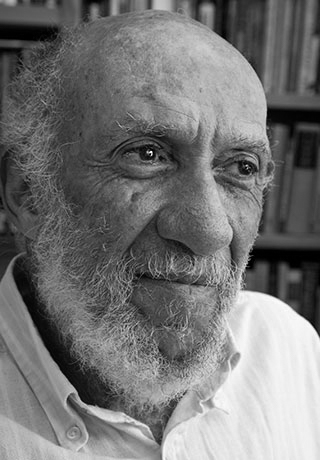
Richard Falk is professor at Princeton University and TFF adviser