Eastern Europe

Category

Year

Author / Contributor

Region

Sort by

Showing 1-9 of 9 stories

Categories

Year

Author / Contributor

Region

d7bc358c-2854-4e5f-9c9b-463a9a246504_1280x720
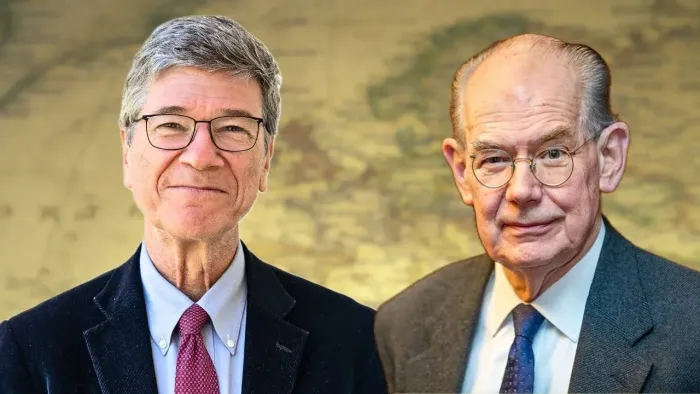
The World Is a Sphere, But It Needs Zones of Peace Biljana Vankovska Professor emerita, TFF Board member November 13, 2025 As members of a global intellectual public, concerned not merely with knowledge but with humanity’s survival, we hunger for debates that are as rigorous as transformative, i.e. debates capable of imagining a fundamentally different world order. The latest exchange between two most distinguished US professors, Jeffrey Sachs and John Mearsheimer, has proven highly attractive and necessary. Yet, in my opinion, it does not transcend existing paradigms (despite the introduction of the concept of “spheres of security”) and offers no solutions for the structural and deep-rooted problems. As promised, albeit with some delay, here I am, stepping into the arena of intellectual giants in international relations and political economy. My intention is not to challenge their brilliance or integrity but to advocate for a pluralization of voices and perspectives. The small states and postcolonial...
ObergPhoto2cmB-W-3
. We think that it’s 30th Anniversary is a fitting occasion to reflect on what has happened in the big world and in our lives with the foundation. It is also a piece of Lund’s research history in general and of peace research and education in particular. Motivation The 1980s was a decade of gross changes in Europe, the struggle against nuclear weapons in particular. Lund University was predominantly about education and single research projects – while TFF could be more of an experimental playground. We wanted to do truly free research and not negotiate with higher levels at, say, the university what to do where, in which countries to work and what to say to the media. Peace has always been controversial and there were – and remain – enough examples of places that become ‘mainstream’ and routine – rather than experimental and radically ’alternative.’ What we did not...
johangaltung
Who wrote this? “The Aryan stock is bound to triumph”. “The Dictator of the Red Citadel (Petrograd) – all Jews” “The same evil prominence was obtained by Jews – in Hungary” “The same phenomenon has been presented in Germany–preying” “-the schemes of the international Jews /against/ spiritual hopes” “-this worldwide conspiracy for the overthrow of civilization” “-it played recognizable part in the tragedy of the French Revolution” “-the mainspring in every subversive movement in the 19th century” Churchill did. Here quoted from Robert Barsocchini in Countercurrents in February 2015. His point was not that Jews were active in many places, the point is that for Churchill they were the cause of all the revolutions, the root of evil, not, for instance, feudalism gone mad. What does Churchill, a top politician, believe in? (same source): “-the British Empire and its Commonwealth last for a thousand years” “-100,000 degenerate Britons sterilized /to...
ObergPhoto2cmB-W-3
/10/janoberg.jpg”>[/caption] /05/tff-pressinfo-ukraine-stop-escalation-and-think-peace/”>one of TFF’s proposals since the fighting broke out. In October 1991, TFF was also the first to suggest that the UN be deployed to Croatia. It actually was a few months later thanks to Cyrus Vance, the former U.S. Secretary of State, who in his role as mediator was working on exactly that when he received our report and we then met him a late evening in Belgrade. Conclusion: Never give up constructive pro-peace proposal-making. One day they do become relevant – when people find out that violence was not such a brilliant idea.
ObergPhoto2cmB-W-3
/10/janoberg.jpg”>[/caption] Lund, Sweden, March 13, 2015 If the parties continue this way, there will be no peace in Ukraine but probably war in Europe. With a little out-of-the-box thinking, we could move in a safer direction. You’ve heard everybody involved in the Ukraine conflict solemnly declare that there is no military solution. And what do they all do? Right, they militarise the situation further, use bellicose language, speak bad about each other, take provocative steps, use propaganda and flex their military muscles. It’s thoughtprovokingly thoughtless. These men – sorry, but the are all men – who are competent in war and other violence run our world. They are conflict and peace illiterates embedded with MIMACs – Military-Industrial-Media-Academic Complexes – which exist in both Russia, EU, NATO and the U.S. It’s not about evil – they are probably all good spouses, nice to their children or grandchildren and enjoy literature, painting...

ChatGPT Image 9 jun 2026, 11_11_33
/10/jonathanpower2.jpg”> Economically Ukraine continues to go down the chute. No other East European has messed up its economic potential, as has Ukraine. During Soviet times Ukraine with its industrial prowess and wonderful fertile soil, making it the Soviet Union’s breadbasket, was a success (by communist standards). Now 25 years of political upheaval, economic mismanagement and greed by the oligarchs have taken a dreadful tool on living standards. The stoicism of ordinary people is to be wondered at. One reason why many easterners want to return to Russia is because they think they will have higher living standards. In an essay in the December, 2014, issue of Foreign Affairs Andrei Shleifer, a professor of economics at Harvard and Daniel Treisman, a professor of political science at the university of California have presented an analysis of what went right in the other east European countries, and, a for a time, in Russia...
Imagen-thumbnail-The-Transnational-1
The agreement recently signed between the government of Romania and the government of the United States represents one of the greatest political failures in Romania in recent decades. It is part of a continuing policy rooted in the absence of responsible politics and a reliance on increasing militarism and aggressive military engagement in a broader US dependent alliance. Romania is the first post-Warsaw pact country to establish permanent US military bases in its territory, contributing to increased insecurity and militarization of the Black Sea region. This step is part of the policies of Romanian governments over the past 14 years – regardless of political party – which have led to the promotion of increased militarization, participation in three foreign wars and accompanying occupation, and misuse of national resources for excessive and unnecessary military expenditures. US military deployment in Romania will include use of the Mihail Kogalniceanu airbase in southern Romania...
ObergPhoto2cmB-W-3
2 april 2002 EU’s militarisering som udbrud af en dybtliggende kultur Hvordan er det muligt at militarisere den Europæiske Union med så ringe opmærksomhed fra og så lille viden om det i medierne, i den offentlige debat og blandt de politiske beslutningstagere? Hvordan går det til, at idéer som militær, humanitær intervention, bombning, krigsførings-strategier og en uophørlig strøm af nye, mindre våben såvel som masseødelæggelsesvåben bliver ‘solgt’ til offentligheden som fredsinstrumenter? Lad os begynde med nogle få heuristiske teser, som jeg tror understøtter de nuværende globale militariseringstendenser, gennemtvunget som de er af Vesten. 1) På trods af alle de gode ting, der også kan siges om Vesten, er den vestlige kultur en grundlæggende militaristisk, voldstilbøjelig civilisation. Direkte og strukturel vold, psykologisk vold, kulturel vold og vold som underholdning er så gennemstrømmende i kulturen, at det tager sig ‘naturligt’ ud for flertallet. Tese 1: Systemet er kulturelt blindt og fundamentalt voldeligt....
Imagen-thumbnail-The-Transnational-1
1. Introduction – PATRIR A vital new initiative is being launched to promote peacebuilding and peaceful conflict transformation in Romania and Eastern and South-Eastern Europe. The Peace Action, Training and Research Institute of Romania (PATRIR), is due to begin work in January, 2001. Already, however, a great deal is being done to lay the foundations for this new Institute. In order to make this effort successful, we are asking for your support, and are inviting you, as individuals and through your organisations, to cooperate together with PATRIR in ways that will help to strengthen the work of the Institute. Below you will find a complete outline and description of the Institute, including its structure, vision, and methodology. If you would like to receive more information, or to explore ways in which we could cooperate together, please feel free to write to us at icl@c2i.net 2. PATRIR Outline PATRIR: Peace Action,...