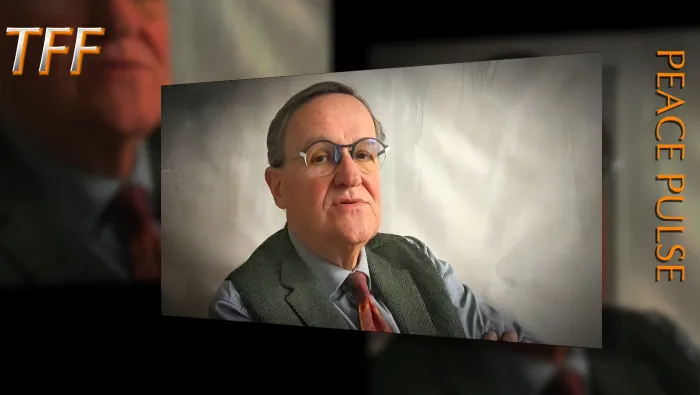
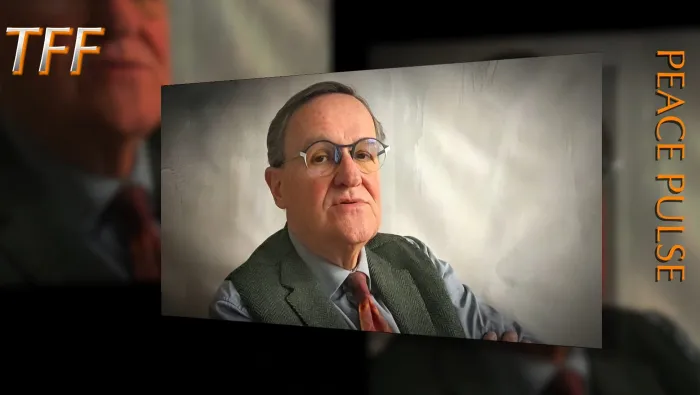
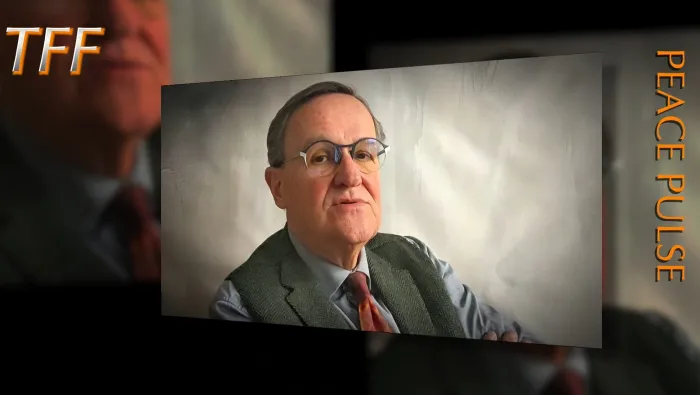
Photo: Pankaj Mishra

By Radmila Nakarada and Jelena Vidojević
June 29, 2021
This conversation with the Indian-born essayist, novelist and historian Pankaj Mishra, took place before the US elections.
Q: In your major writings you deal with the Western model of modernisation and in the suffering involved in its evolution, expansion and emulation. You have emerged as a prominent critic of the empire and its links to liberal ideas. Reviewers often depict you as the voice of the marginalised and excluded, humiliated, the victims. How would you define yourself today?
A: I think I was fortunate to write for mainstream publications in the United States and Britain from the late 1990s onwards, when the illusions of Americanising the world were at their strongest. Britain and America were being held as models for the rest of the world to imitate and no attention was being paid to their long past of slavery and imperialism – what had actually made them so powerful and wealthy. There were hardly any writers and journalists of my postcolonial background then, and it was easy for many American and British writers to hold forth on the virtues of empire – a dangerous and deceptive argument for what was seen as a racist despotism by the vast majority of people who had actually suffered from imperialism.
I found myself resisting these ideas more strongly because I could see how they had manifested themselves in the war on terror, in fantasies of democratising the Middle East through military force and had become more and pernicious. I think four years of Trump had clarified how many political and economic institutions of the West, whether called “liberal” or something else, cannot be disentangled historically from the exercise of white supremacy. In that sense, the Black Lives Matter and other anti-racist movements have vindicated what I and other writers were arguing for many years.
Originally published at gapp-tt.org
Q: Your excellent book titled Age of Anger was published three years ago. In the meantime, ISIS has been defeated, (spectacular) terrorist attacks have to a large degree subsided, the ongoing conflicts/catastrophes outside the West are systematically being erased by the media from public attention. The Covid-19 pandemic is obscuring another chapter of the profound global economic crisis that began before the virus attack, and the privileged are continuing to benefit from the ordeals, while victims are confused, unable to recognise their interests and act collectively (Wolfgang Streeck), turning against each other, and voting for those who victimise them: Trump, Johnson, etc. Are we still living in the age of anger or are we trapped in an age of apathy, helpless desperation, in an epidemic of global depression?
A: Yes, I think no positive political solutions are in sight. The left in most countries is too weak to mobilise an angry and frustrated population. Far-right demagogues have found it much easier to persuade it. And when they suffer a temporary defeat, as Trump would, the alternative is the same old “liberal order” whose failures created an opening for people like Trump in the first place. You can see that happening in real time with Joe Biden today. The same old people who got the US in this mess are going to return to power, creating the opening for more upheavals.
Q: You basically define the sum of the present turmoil as a “global civil war”, a conflict that may turn out to be more apocalyptic than all the previous total wars. Could you briefly summarise its characteristics, forms, envisioned paths of development?
A: In a situation where society is reconfigured as a marketplace, self-interest is exalted above the common good, individuals are encouraged to see themselves as entrepreneurs locked in competition with each other, and many institutions that mediate our relationship with the wider world, from trade unions to local government and nation-states, are deliberately weakened for the sake of capital flows and private accumulation, then political communities will naturally lose their cohesion, and become split in smaller and smaller groups, liable to see themselves as playing a zero-sum game, and therefore mutually antagonistic.
The one political response to this low-intensity civil war has been renewed nationalism. You see that in a range of places from India to France. But in places with very diverse populations, like the United States, this can create open conflict. And we are seeing some signs of it already in the far-right militia that have emerged in recent years.
Q: In the mentioned book, you refer to Kwame Anthony Appiah, and his notion of the “comprador intelligentsia” as well as the idea of “bland fanatics” of Western civilisation (“who regard the highly contingent achievements of our culture as the final form and norm of human existence”) of Reinhold Niebuhr, which turns out to be the title of your newest publication/collection of essays. In its introduction, you said that the essays are written in “response to the Anglo-American delusions that climaxed in Brexit, the election of Donald Trump and, finally, a calamitous response to the Covid-19 outbreak”. Who are the “bland fanatics” of Western civilisation and what exactly is their function/role?
A: The phrase “bland fanatics” is from a book Niebuhr published in 1959, a year before Walt Rostow launched his manifesto for modernising, actually Americanising, the non-Western world. It identifies a tendency in the Anglo-American sphere that strengthens through much of the 20th century and becomes especially powerful after the end of the Cold War—the tendency to assume that the world has no option but to converge on the superior political and economic models pioneered by the English-speaking nations, the United States and Britain.
In the words of Thomas Friedman, the corporate guru of our time, “I want everyone to become an American”. Of course, Friedman is too obvious a target. My book examines a whole range of mainstream Anglo-American intellectuals, especially those writing in periodicals like the New York Times, Guardian, Financial Times and The Economist.
I argue that the ideological children of Reagan and Thatcher, trained in Anglo-American knowledge systems, became dominant around the world even as Britain and the United States started to rapidly decline. Even intellectuals of postcolonial countries became their willing disciples, rejecting the lessons of Belgrade and Bandung and embracing the pieties of the Washington Consensus.
Q: What is the interest of the Left in the deconstruction of Gandhi’s legacy, insisting that he was a racist, misogynist, useful servant of Great Britain who deradicalised the resistance of his followers, a Saint of Status quo (Arundhati Roy) etc, against which you argue in your article “Gandhi for the Post-truth Age”?
A: I think Gandhi could be and should be criticised for a range of positions he took during his long life. He himself invited such criticism and made no claim to infallibility. On the contrary – he was obsessed with what he saw as his failings. The fact is that people like WEB du Bois and Martin Luther King and Nelson Mandela saw him as a mentor and on a variety of issues, from empire to the environment, he remains relevant. I think condemning him wholesale would mean depriving ourselves of a major intellectual and moral resource, especially in these bleak times.
Q: You are deeply critical of contemporary human rights discourse, where does this scepticism come from?
A: Anyone who grew up in a post-colonial country would be aware that a Western discourse of human rights historically accompanied the efforts of imperialist powers to justify their military assaults and exercise their authority and influence over large parts of the world. The fact that human rights discourse has long been disconnected from substantive issues of social justice and redistribution makes it even more suspect. The major West-based human rights groups have themselves realised this and started to expand their notion of “rights”.
Q: You argue that the “Western model” became globalised as a result of imperialism. What are the differences between Western and non-Western imperialisms? How is the colonial and postcolonial experience of the Balkans, for example, which was colonised by the Ottoman Empire, different from the one of Africa, colonised by the Western colonial powers?
A: I think the older imperialisms, whether Ottoman, Hapsburg, or Qing, did not seek to impose the same systematically extractive relationship between centre and periphery that the seafaring and mercantile Western imperialisms needed in order to be profitable. Moreover, these older imperialisms had relatively little interest in the political and cultural remaking of their subjects. The massive projects of churning out obedient and helpful elites in conquered nations meant that Western political philosophy became globally hegemonic in a way no other worldview or outlook had been.
Q: Why is the fate of Yugoslavia only mentioned, more or less, in passing in your works? In other words, why did it not find its place in your extensive analysis of the calamities of the periphery although its fate is to a large extent an expression of global contradictions you discuss, a local chapter with significant global implications?
A: That is surely a serious omission. I think I stayed away from this subject because much had been written about the Balkans in the 1990s and early 2000s (mostly very mediocre and misleading). In the light of everything that has happened since then, I do want to engage with the fate of the former Yugoslavia and other former socialist countries that embraced Western models of politics and economy and find themselves beset with insoluble problems.
Q: Do you recognise in the really existing circumstance the possibility of an emerging alternative that would affirm common good, social equality and brotherhood, transcending “frenetic individualism” with solidarity, reinvention of community, transformed state that would recapture its redistributive functions, provide social protection and eco viability? What are the chances that the alternative way of thinking and living will come from the Global South?
A: I think I would be in danger of sacrificing lucidity to enthusiasm if I say that an alternative is in sight and can be quickly institutionalised. The fact is that it has been systematically denigrated. Those of us who grew up in socialist developmental countries remember those slogans of equality and fraternity and general welfare. We also know that reality back then was very different. But at least we had some worthy ideals to aspire to. Since the 1990s, the propaganda regime of the “free world” has exalted hyper-individualist capitalism to the point where it is impossible to even imagine an alternative. It is for the first time since the modern world began 200 years ago that we have found ourselves so morally and spiritually bereft.
That said, young people are discovering that alternative for themselves, out of their traumatic experience of a failed model of endless growth, their insecurities about the future, their anxieties about the environment. And this is where hope lies today, in the intellectual and political ability of young people. DM
Originally published at gapp-tt.org
This article was also published in the Daily Maverick here
It came out in Politika in Serbia as well
About the Authors
Prof Radmila Nakarada is Professor Emeritus of Peace Studies and founder of the Centre for Peace Studies, University of Belgrade, Serbia – Faculty of Political Sciences. She’s also a TFF Associate.
Dr Jelena Vidojević is a political scientist at the University of Belgrade who works with the South African think-tank on Government and Public Policy (GAPP).
Pankaj Mishra is an Indian-born essayist, novelist and historian. He writes literary and political essays for the New York Times, New York Review of Books, The Guardian, New Yorker, London Review of Books, Bloomberg View, among other American, British, and Indian publications. His work has also appeared in the Times Literary Supplement, Financial Times, Wall Street Journal, New Republic, Washington Post, Boston Globe, Time, The Independent, Granta, The Nation, n+1, Poetry, Common Knowledge, Outlook, and Harper’s. He is the author of several books, including From the Ruins of Empire: The Revolt Against the West and the Remaking of Asia, published in 2012; Age of Anger: A History of the Present, published in 2017 and most recently, published in 2020, Bland Fanatics: Liberals, Race and Empire.
Please help TFF remain truly independent by contributing if you benefited from this article
[paypal-donation]