PressInfo #203 - Japan: Peace Nation or War Ally?

Today, on the International Human Rights Day, the Japanese government – i.e. the Liberal Democratic Party and New Komeito party – approved a draft of the new National Defence Program Outline and the fiscal 2005-2009 midterm defence build-up program. Yesterday it decided to extend for another year the presence of the Self-Defence Forces, SDF, in Iraq.

While every security-related decision these years represents a de facto undermining of its Peace Constitution as well as military build-up and integration with the belligerent Bush administration, Japan has built up neither its intellectual nor its political capabilities proportionately. It remains fundamentally dependent, conveniently vague and acquiescing. The image of Japan as a U.S. aircraft carrier is becoming more and more real.

By and large, the Japanese public opinion is against all this, particularly the presence of the SDF in Iraq. But, Japanese democracy is compatible with a government more loyal with a foreign power than with the opinions and security of its own people. Like, say, Denmark and Italy.

Peace means war – and a web of contradictions

Iraq never threatened Japan, so at the outset one may wonder why Japan needs to be in Iraq to practise its self-defence-only policy. For a country with a peace constitution, it ought to be quite impossible to participate in the US aggression and occupation – not to mention transporting U.S. troops with their weapons and ammunition in and out of Iraq. Due to the decaying security situation in Iraq, Japan will now also co-operate more closely with the British troops – not exactly on humanitarian mission there either.

Prime Minister Junichiro Kouizumi argues that SDF support the Iraqi people’s wish to create a stable, democratic state and thus serve Japan’s best interests. Asahi Shimbun states that ” the government, citing the importance of U.S. ties and the needs of Iraqis, decided Thursday to extend the mission.” It can safely be assumed that Japan is in Iraq for the sake of the U.S. and not for the sake of the Iraqi people or a democracy that will never emerge out of this occupation.

So, by being in Iraq Japan only achieves this: ruining its international goodwill capital because it is on the wrong side in this conflict and increasing the risk of a terrorist attack on its troops in Iraq or on Japan itself. In other words, insecurity policy. The Japanese government’s policy is incompatible with any notion of world peace and welfare for the suffering people in the majority world. It’s incompatible with international law and the principles of both its Constitution and the Charter of the UN.

Add to that just a few of the other militarization issues in the Japanese political air:

– participation in the Theatre Missile Defence (serving only to make nuclear war more winnable for the US);

– liberalization of Japanese arms exports,

– increased integration between official (military) peace-building and development assistance,

– the government’s now officially for the first time defining China as the major future threat,

– the Prime Minister’s lack of empathy with the rest of the world in visiting the Yasukuni Shrine,

– Japan’s fundamental lack of an independent-minded constructive policy vis-à-vis North Korea,

and you have a fairly unpleasant cocktail.

Political correctness – incorrect policies

There is not much debate in Japan about all this. NHK, the major national public service media corporation, has told its viewers more about hungry bears attacking a few individuals in the countryside, about typhoons and corporations’ ownership of baseball teams than about Iraq or the deliberations of the government. An expert in security matters seems to be an interpreter of government reports and statements, not someone who raises issues or criticizes government policies publicly.

Political correctness means everything here – however, the policy is anything but correct. If you want to promote peace in the world, that is.

Simultaneously, Japan wants to be seen as a responsible world actor and pays comparatively much to the UN so it wants a permanent seat in the Security Council. But why should it when it supports a war and an occupation that runs counter to the letter as well as the spirit of that organization?

Keep and eye on Japan – and imagine what it could do instead for true peace

We in the West don’t hear or talk much about the international security role of Japan. If the future, as it looks, means increased Japanese militarism at home and abroad coupled with total submissiveness under the U.S. empire, it’s time we begin to.

However, let’s hope that the public opinion and opposition in Japan gains momentum and the country begins to think and act as a sovereign state. Let’s imagine that Japen moves closer to its regional, much more natural allies and sees the EU as its first partner in the West. Let’s imagine that Japan speaks up against weapons of mass destruction everywhere – no country can do it with more conviction. And let’s hope it becomes the champion of real human security and conflict resolution with peaceful means.

It’s all perfectly possible for a sovereign state. Japan could do it. All it takes is a mature relation with the United States. And then it could become one of the most fascinating and useful members to the world community and a natural leader in the UN Security Council and elsewhere. Indeed, there are few limits to the good Japan could do for the world. If only it chooses to and gets its peace – not war – acts together.

© TFF and the author 2004

Peace & future researcher + ‌Art Photographer

Share

Leave a Reply

Your email address will not be published. Required fields are marked *

Related Posts

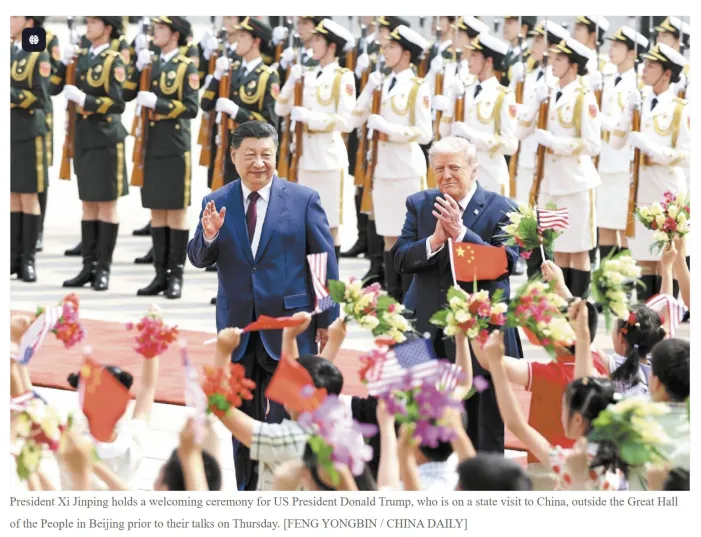
Jan Oberg May 15, 2026 Go to this Fox News page and scroll the whole way down: President Donald Trump tells the world that his meeting with President Xi Jinping yielded a lot of very concrete political and economic results – of course, only where the Chinese side, according to him, agreed with him. He does not mention the Taiwan issue, but Secretary of State, Marco Rubio, says that it did not feature prominently in their talks and that the US policy on Taiwan has not changed. Then go to China Daily – or Global Times – and you will see that for the Chinese it is framework, principles, structure of cooperation etc. that matters – all embedded in the overall idea of “constructive bilateral relationship of strategic stability.” Nowhere is any concrete agreement or deal – all that Trump refers to – mentioned. At the general level, this gives you insights into the very different social...
The MIMAC – Military-Industrial-Media-Academic Complex – drives the world’s rampant militarism and wars without end. Here is a short reflection of how it works against all interests of humanity. #5 deals with why there is no real enemy or threat images/analysis. It’s all ex-post constructions. And, btw, theTFF Peace Pulse is now on Rumble.
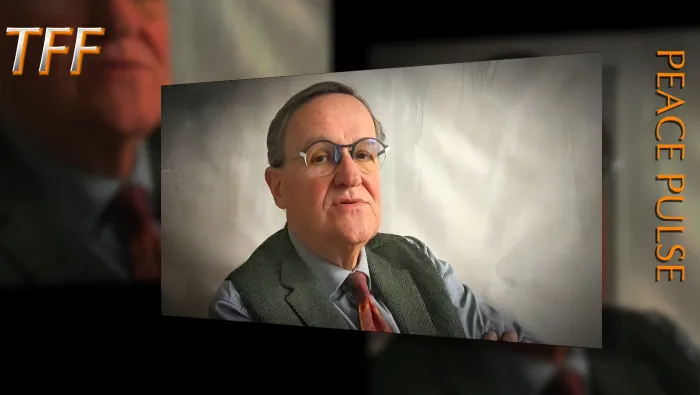
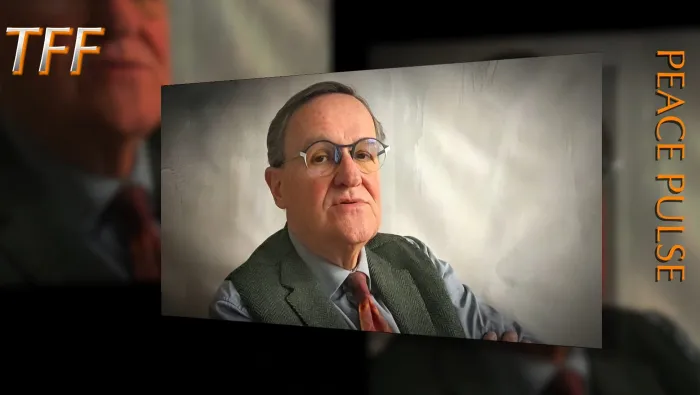
Jan Oberg, TFF director April 28, 2026 In this third TFF Peace Pulse, I make the important distinction between the violence and the conflict that violence is a symptom of. If you want peace, focus on the underlying conflict because that is the key to resolution, peacemaking, and a better future for the parties. The West is obsessed with violence, just look around you – and 90+ per cent of the public debate is about military issues and other violence – totally wasted for peace. These Peace Pulses will only be published here a few times. You will also not find them on YouTube and Vimeo because both platforms have blocked TFF and me; you know, peace is dangerous these days. Most TFF’s videos since 2007 are now on Rumble.

Recent Articles

Jan Oberg May 15, 2026 Go to this Fox News page and scroll the whole way down: President Donald Trump tells the world that his meeting with President Xi Jinping yielded a lot of very concrete political and economic results – of course, only where the Chinese side, according to him, agreed with him. He does not mention the Taiwan issue, but Secretary of State, Marco Rubio, says that it did not feature prominently in their talks and that the US policy on Taiwan has not changed. Then go to China Daily – or Global Times – and you will see that for the Chinese it is framework, principles, structure of cooperation etc. that matters – all embedded in the overall idea of “constructive bilateral relationship of strategic stability.” Nowhere is any concrete agreement or deal – all that Trump refers to – mentioned. At the general level, this gives you insights into the very different social...
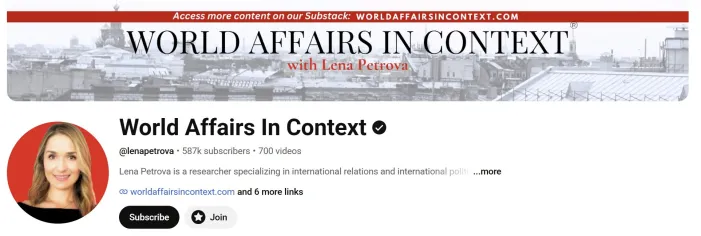
Lena Petrova of “World Affairs In Context” with more than half a million subscribers on YouTube wanted to explore what a peace researcher like me has to say about, among other things, the First and the Second Cold War and why eethics has disappeared from politics. I am particularly happy about this conversation that also yielded an amazing number of very appreciative comments on YouTube. No doubt, people are longing for alternatives, including peace perspectives.
The MIMAC – Military-Industrial-Media-Academic Complex – drives the world’s rampant militarism and wars without end. Here is a short reflection of how it works against all interests of humanity. #5 deals with why there is no real enemy or threat images/analysis. It’s all ex-post constructions. And, btw, theTFF Peace Pulse is now on Rumble.

TFF on Substack

Discover more from TFF Transnational Foundation & Jan Oberg.

Most Popular

Jan Oberg May 15, 2026 Go to this Fox News page and scroll the whole way down: President Donald Trump tells the world that his meeting with President Xi Jinping yielded a lot of very concrete political and economic results – of course, only where the Chinese side, according to him, agreed with him. He does not mention the Taiwan issue, but Secretary of State, Marco Rubio, says that it did not feature prominently in their talks and that the US policy on Taiwan has not changed. Then go to China Daily – or Global Times – and you will see that for the Chinese it is framework, principles, structure of cooperation etc. that matters – all embedded in the overall idea of “constructive bilateral relationship of strategic stability.” Nowhere is any concrete agreement or deal – all that Trump refers to – mentioned. At the general level, this gives you insights into the very different social...
Lena Petrova of “World Affairs In Context” with more than half a million subscribers on YouTube wanted to explore what a peace researcher like me has to say about, among other things, the First and the Second Cold War and why eethics has disappeared from politics. I am particularly happy about this conversation that also yielded an amazing number of very appreciative comments on YouTube. No doubt, people are longing for alternatives, including peace perspectives.
The MIMAC – Military-Industrial-Media-Academic Complex – drives the world’s rampant militarism and wars without end. Here is a short reflection of how it works against all interests of humanity. #5 deals with why there is no real enemy or threat images/analysis. It’s all ex-post constructions. And, btw, theTFF Peace Pulse is now on Rumble.
Read More
Screenshot-2026-05-15-103534
Jan Oberg May 15, 2026 Go to this Fox News page and scroll the whole way down: President Donald Trump tells the world that his meeting with President Xi Jinping yielded a lot of very concrete political and economic results – of course, only where the Chinese side, according to him, agreed with him. He does not mention the Taiwan issue, but Secretary of State, Marco Rubio, says that it did not feature prominently in their talks and that the US policy on Taiwan has not changed. Then go to China Daily – or Global Times – and you will see that for the Chinese it is framework, principles, structure of cooperation etc. that matters – all embedded in the overall idea of “constructive bilateral relationship of strategic stability.” Nowhere is any concrete agreement or deal – all that Trump refers to – mentioned. At the general level, this gives you insights into the very different social...
Screenshot-2026-05-12-104023
Lena Petrova of “World Affairs In Context” with more than half a million subscribers on YouTube wanted to explore what a peace researcher like me has to say about, among other things, the First and the Second Cold War and why eethics has disappeared from politics. I am particularly happy about this conversation that also yielded an amazing number of very appreciative comments on YouTube. No doubt, people are longing for alternatives, including peace perspectives.
Screenshot-2026-04-13-154551 (2)
The MIMAC – Military-Industrial-Media-Academic Complex – drives the world’s rampant militarism and wars without end. Here is a short reflection of how it works against all interests of humanity. #5 deals with why there is no real enemy or threat images/analysis. It’s all ex-post constructions. And, btw, theTFF Peace Pulse is now on Rumble.
Screenshot-2026-04-13-154551 (1)
Jan Oberg, TFF director April 28, 2026 In this third TFF Peace Pulse, I make the important distinction between the violence and the conflict that violence is a symptom of. If you want peace, focus on the underlying conflict because that is the key to resolution, peacemaking, and a better future for the parties. The West is obsessed with violence, just look around you – and 90+ per cent of the public debate is about military issues and other violence – totally wasted for peace. These Peace Pulses will only be published here a few times. You will also not find them on YouTube and Vimeo because both platforms have blocked TFF and me; you know, peace is dangerous these days. Most TFF’s videos since 2007 are now on Rumble.
Screenshot-2026-04-13-154551
In contrast to most, we’ll bring alternatives, solutions, hope and strategies for a better future. Times are dangerous, yes, but that only intensifies the need for constructive thinking and action! Jan Oberg, TFF director April 13, 2026 The new TFF Peace Pulse uses video messages in a new way: Max 3-5-minute-long comments, ideas or perhaps mini-lectures, all about peace – positive peace. We launch them today on April 13, 2026 with a carefully crafted visual aesthetic fitting the content. We hope to publish them regularly from now on. We launch Peace Pulse (PP) – for a number of reasons. The world is in chaos, and there are countless reasons to feel concerned, frustrated, even angry. The atmosphere is saturated with doom and gloom, with negative energy and rear‑mirror thinking, while vision, imagination, alternatives, strategies and genuine future‑mindedness remain in short supply. And without them, we simply can’t save the world. Looking at problems from a hundred angles will...
IMG_5165 (1)
PART II — Publishing Peace in a System That Prioritises Militarism Jan Oberg, TFF director April 10, 2026 How TFF Maintains a Daily Voice in a Digital World Built for Noise This article is part of the series “TFF at 40″ and it invites you to learn about Four Decades of Publishing Peace. It takes a look at how a small, people‑financed peace foundation has communicated across four generations of technology — from wax stencils and fax machines to mass email and Substack — and why TFF continues to publish every single day in a system that rewards noise, conflict, and militarism. ◆ What it means to publish peace every single day in a digital system built for 24/7 news and other noise, confrontation, and militarism. How TFF’s independence, continuity, and global readership defy algorithms, donor cycles, and Western media censorhip — and why the Majority World keeps listening. When the...