ISS Today: Do global actors have what it takes to help Burundi?

Burundi’s ongoing political instability highlights the stark divide between global conflict prevention rhetoric and practice.


By Priyal Singh for ISS TODAY.

 First published by ISS Today

• Since Burundian President Pierre Nkurunziza announced that he would run for a third term in early 2015, political instability across the country has tested the limits of global conflict prevention responses. This instability has included a failed coup d’état, violent clashes between government and opposition forces, increasing suppressionof the media and civil society, as well as targeted assassinations.

The violence has resulted in more than 400,000 Burundians fleeing to neighbouring states and over 55,000 internally displaced, amid allegations of serious human rights violations in the country.

Burundi’s instability, however, appears not to feature the central elements or drivers generally associated with the conflicts of other countries. The presence of transnational organised criminal syndicates has not featured prominently, nor have the influence or proliferation of radical non-state actors. And while the Nkurunziza government has accused regional actors of meddling to fuel conflict in the country, these allegations have remained largely false.

Why then, after more than two years since the violence began, have international, continental and regional conflict prevention responses been so ineffective? It seems intractability, in Burundi’s case, has found its greatest expression not in the nature of the conflict itself – the interests, agendas and material capabilities of the belligerents – but rather in the limits of normative and institutional global conflict prevention frameworks and mechanisms.

To be fair, international and regional peace and security stakeholders have kept abreast of developments in Burundi and have generally articulated positions highlighting the fragility of the country’s peace and security environment. These include the United Nations (UN) and the African Union (AU), and sub-regional actors such as the East African Community (EAC) and the International Conference on the Great Lakes Region (ICGLR).

These actors have all either shown concern regarding Burundi’s crisis, or attempted to act on this concern. Working within the institutional bounds of its peace and security architecture, both the AU and the EAC have tried to find meaningful solutions to allay crisis in the country, and avoid a relapse into the scale of conflict the country has seen.

But these efforts have largely failed in the face of the Nkurunziza government’s increasingly rigid and unco-operative position. The government rejected the recommendations of a 2014 joint EAC-Common Market for Eastern and Southern Africa (Comesa) Panel of the Wise,which sought to defuse tensions leading up to the country’s 2015 elections.

Nkurunziza further rejected exit plans that were initially offered by Ugandan President Yoweri Museveni through the early 2015 intervention of an EAC-led negotiation process.

The government has also sidelined (or completely boycotted) EAC summits since 2015. It has further rejected the deployment of the AU’s African Prevention and Protection Mission in Burundi (MAPROBU) peacekeeping force which had been authorised by the Peace and Security Council in December 2015 (along with the full deployment of 100 human rights and military observers authorised earlier that year).

The Nkurunziza government, growing wary of international scrutiny, has also consistently refused to cooperate with the UN’s commission of inquiry on human rights in the country. The commission’s mandate, as of September 2017, has been extended by a year.

Most recently, the International Criminal Court authorised an investigation into alleged crimes against humanity in the country (between April 2015 and October 2017) which came into effect just two days before the country’s formal withdrawal from the court.

Rejection, impunity and inflexibility have characterised the Nkurunziza government since early 2015. This has resulted in the incumbent political elite’s continued rule through the suppression of the opposition, beyond the scrutiny of external actors and processes geared towards conflict prevention.

The situation directly calls into question the capability and coordination of regional and international conflict prevention actors.

First published by ISS Today

One such question refers to the readiness and fit-for-purpose capability of sub-regional organisations in leading conflict-prevention strategies. While the principle of subsidiarity is important, developments concerning Burundi clearly highlight critical shortcomings associated with divergent sub-regional political agendas and interests – and the impartiality needed to establish and sustain conflict prevention processes.

Further questions concerning the institutional coherence of the AU system, particularly regarding the structures comprising its African Peace and Security Architecture, must be critically appraised.

Gustavo de Carvalho, peace building expert at the Institute for Security Studies (ISS), argues that “in light of the UN’s recent prioritisation of conflict prevention, the lack of any clear strategies, implementable plans, concise guidelines and inter-organisational coordination mechanisms to serve this agenda, is becoming an increasingly significant concern”.

Opportunities and entry points for greater co-ordination between the organs of the UN’s peace building architecture, for example, with the AU, EAC and ICGLR should be more coherently pursued. Hopefully this would result in more uniform and effective conflict prevention strategies, over longer-term frameworks.

Global actors should consider using their existing conflict-prevention approaches to effectively urge the Burundi government to commit to an inclusive peace process – in accordance with its international obligations. Failing to do so would raise serious questions on whether conflict prevention can be effectively implemented in practice.

Without the necessary innovation and co-ordination to make this change, the international community may well have found the limits of its conflict- prevention agenda. DM

This ISS Today is a version of an article first published on the Conflict Prevention Innovation website, a partnership between the ISS and the Igarapé Institute

Priyal Singh is a researcher, Peace Operations and Peace Building, ISS Pretoria

Photo: Students stand around a Burundian flag during a candlelight vigil for the country, in Nairobi, Kenya, 16 December 2015. Students gathered at the Catholic University of Eastern Africa in Nairobi to remember Burundi that has been gripped by violence between police and opposition groups since April, when President Pierre Nkurunziza announced he would seek a third term in office. EPA/DAI KUROKAWA

Related Posts

Lena Petrova of “World Affairs In Context” with more than half a million subscribers on YouTube wanted to explore what a peace researcher like me has to say about, among other things, the First and the Second Cold War and why eethics has disappeared from politics. I am particularly happy about this conversation that also yielded an amazing number of very appreciative comments on YouTube. No doubt, people are longing for alternatives, including peace perspectives.
In contrast to most, we’ll bring alternatives, solutions, hope and strategies for a better future. Times are dangerous, yes, but that only intensifies the need for constructive thinking and action! Jan Oberg, TFF director April 13, 2026 The new TFF Peace Pulse uses video messages in a new way: Max 3-5-minute-long comments, ideas or perhaps mini-lectures, all about peace – positive peace. We launch them today on April 13, 2026 with a carefully crafted visual aesthetic fitting the content. We hope to publish them regularly from now on. We launch Peace Pulse (PP) – for a number of reasons. The world is in chaos, and there are countless reasons to feel concerned, frustrated, even angry. The atmosphere is saturated with doom and gloom, with negative energy and rear‑mirror thinking, while vision, imagination, alternatives, strategies and genuine future‑mindedness remain in short supply. And without them, we simply can’t save the world. Looking at problems from a hundred angles will...
Jan Oberg February 19, 2026 What a thrill to be interviewed by former British diplomat Ian Proud! Don’t waste a minute: acquaint yourself with him here on his homepage, which he elegantly calls “Proud Diplomat.” Notice also his book, A Misfit In Moscow. Ian is, of course, also on Substack, where he calls himself The Peace Monger, and recently he set up his own PeaceMonger Channel on YouTube. For once, I was not interviewed as if I were a military geopolitical expert, where I normally have to twist the whole thing in the direction of peace. No, we both had a focus on peace – why it has been disappeared by research, politics and the media, but also what can be done to shape a more peaceful future for us all. One idea we came up with was that of connecting people through citizens diplomacy – in an era where more or less authoritarian leaders meet frequently and confirm each other as members...

Recent Articles

Johan Galtung 1930-2024October 2015 Published here on October 3, 2026 Let us focus on Civilization for conflict analysis and remedies. Major forms of disorder use violence; war is state organized violence. The most belligerent states are the United States of America and Israel, both with civilization roots. National Evangelism, the US Protestant Christian civilization– more national than evangelical–justifies US warfare as exceptionalism of a people chosen by God, with a manifest destiny to run the world. Orthodox Judaism justifies Israeli warfare to conquer and expand from Nile to Euphrates as a religious right and duty to the Eternal One. The third most belligerent country, the UK, no longer believes it is God-chosen but chosen by the USA; not quite the same but something. But the root cause of global disorder lies in the Occident–with Islam–seeing itself as the single, universal civilization valid for all at all times, all others being...
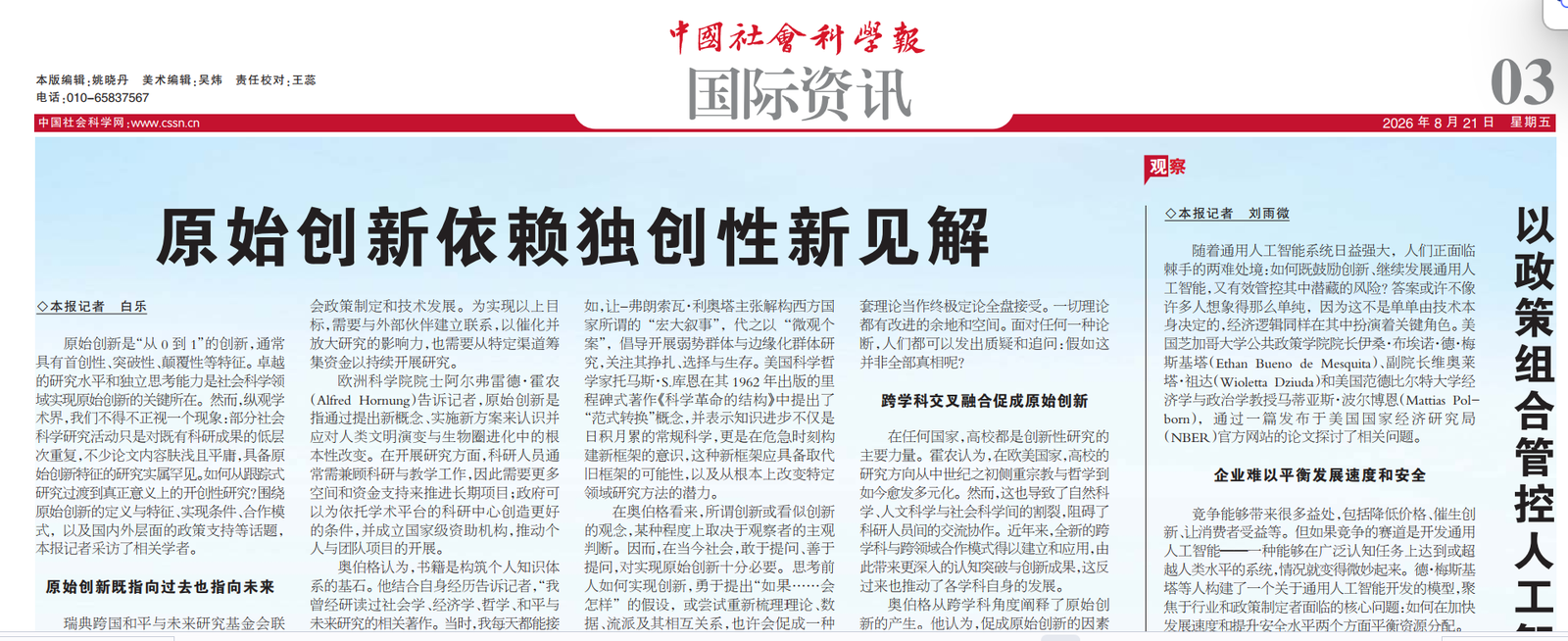
Jan ObergPhD, director, The Transnational Foundation for Peace and Future Research, TFFLund, Sweden October 2, 2026 This is my full original manuscript. The Chinese Academy of Social Science, CASS, makes two publications out if it. 1. China’s Five-year plan emphasized the capabilities of basic research and original innovation. It is regarded as the goal of the future social development, which, as required, should be significantly enhanced. Can you comment on the importance of original innovation in research and academic study? I believe it is easier to define “original innovation” in the natural sciences than in social sciences. The breaking points of what constitutes something new, or innovative, are not quite as sharp in the latter. But in both fields it is about opening up something that was closed, unseen, unexplored before – making manifest what was earlier latent. Innovations come in many forms and shapes – naming something that was not...
The agreement is catastrophic both because of what it says and what it doesn’t mention. It reduces further the major asset of security policies: Freedom of action. Jan Oberg TFF director September 25, 2026 A couple of hours before the agreement was signed on September 22, 2026, I published the following 13 hypotheses about what it would most likely contain on TFF Substack (in English). I was wrong on only the first point. Contrary to what Trump had written on his Truth Social platform, it does not appear to come into force immediately. In fact, it turned out to be worse than even I had anticipated. After these hypotheses now come a number of reflections in light of what the agreement actually contains, and does not contain, as well as the way in which it has generally been presented by major media outlets and by the public-service broadcaster DR. My...

TFF on Substack

Discover more from TFF Transnational Foundation & Jan Oberg.

Most Popular

Johan Galtung 1930-2024October 2015 Published here on October 3, 2026 Let us focus on Civilization for conflict analysis and remedies. Major forms of disorder use violence; war is state organized violence. The most belligerent states are the United States of America and Israel, both with civilization roots. National Evangelism, the US Protestant Christian civilization– more national than evangelical–justifies US warfare as exceptionalism of a people chosen by God, with a manifest destiny to run the world. Orthodox Judaism justifies Israeli warfare to conquer and expand from Nile to Euphrates as a religious right and duty to the Eternal One. The third most belligerent country, the UK, no longer believes it is God-chosen but chosen by the USA; not quite the same but something. But the root cause of global disorder lies in the Occident–with Islam–seeing itself as the single, universal civilization valid for all at all times, all others being...
Jan ObergPhD, director, The Transnational Foundation for Peace and Future Research, TFFLund, Sweden October 2, 2026 This is my full original manuscript. The Chinese Academy of Social Science, CASS, makes two publications out if it. 1. China’s Five-year plan emphasized the capabilities of basic research and original innovation. It is regarded as the goal of the future social development, which, as required, should be significantly enhanced. Can you comment on the importance of original innovation in research and academic study? I believe it is easier to define “original innovation” in the natural sciences than in social sciences. The breaking points of what constitutes something new, or innovative, are not quite as sharp in the latter. But in both fields it is about opening up something that was closed, unseen, unexplored before – making manifest what was earlier latent. Innovations come in many forms and shapes – naming something that was not...
The agreement is catastrophic both because of what it says and what it doesn’t mention. It reduces further the major asset of security policies: Freedom of action. Jan Oberg TFF director September 25, 2026 A couple of hours before the agreement was signed on September 22, 2026, I published the following 13 hypotheses about what it would most likely contain on TFF Substack (in English). I was wrong on only the first point. Contrary to what Trump had written on his Truth Social platform, it does not appear to come into force immediately. In fact, it turned out to be worse than even I had anticipated. After these hypotheses now come a number of reflections in light of what the agreement actually contains, and does not contain, as well as the way in which it has generally been presented by major media outlets and by the public-service broadcaster DR. My...
Read More
010
Johan Galtung 1930-2024October 2015 Published here on October 3, 2026 Let us focus on Civilization for conflict analysis and remedies. Major forms of disorder use violence; war is state organized violence. The most belligerent states are the United States of America and Israel, both with civilization roots. National Evangelism, the US Protestant Christian civilization– more national than evangelical–justifies US warfare as exceptionalism of a people chosen by God, with a manifest destiny to run the world. Orthodox Judaism justifies Israeli warfare to conquer and expand from Nile to Euphrates as a religious right and duty to the Eternal One. The third most belligerent country, the UK, no longer believes it is God-chosen but chosen by the USA; not quite the same but something. But the root cause of global disorder lies in the Occident–with Islam–seeing itself as the single, universal civilization valid for all at all times, all others being...
Screenshot 2026-10-02 011738
Jan ObergPhD, director, The Transnational Foundation for Peace and Future Research, TFFLund, Sweden October 2, 2026 This is my full original manuscript. The Chinese Academy of Social Science, CASS, makes two publications out if it. 1. China’s Five-year plan emphasized the capabilities of basic research and original innovation. It is regarded as the goal of the future social development, which, as required, should be significantly enhanced. Can you comment on the importance of original innovation in research and academic study? I believe it is easier to define “original innovation” in the natural sciences than in social sciences. The breaking points of what constitutes something new, or innovative, are not quite as sharp in the latter. But in both fields it is about opening up something that was closed, unseen, unexplored before – making manifest what was earlier latent. Innovations come in many forms and shapes – naming something that was not...
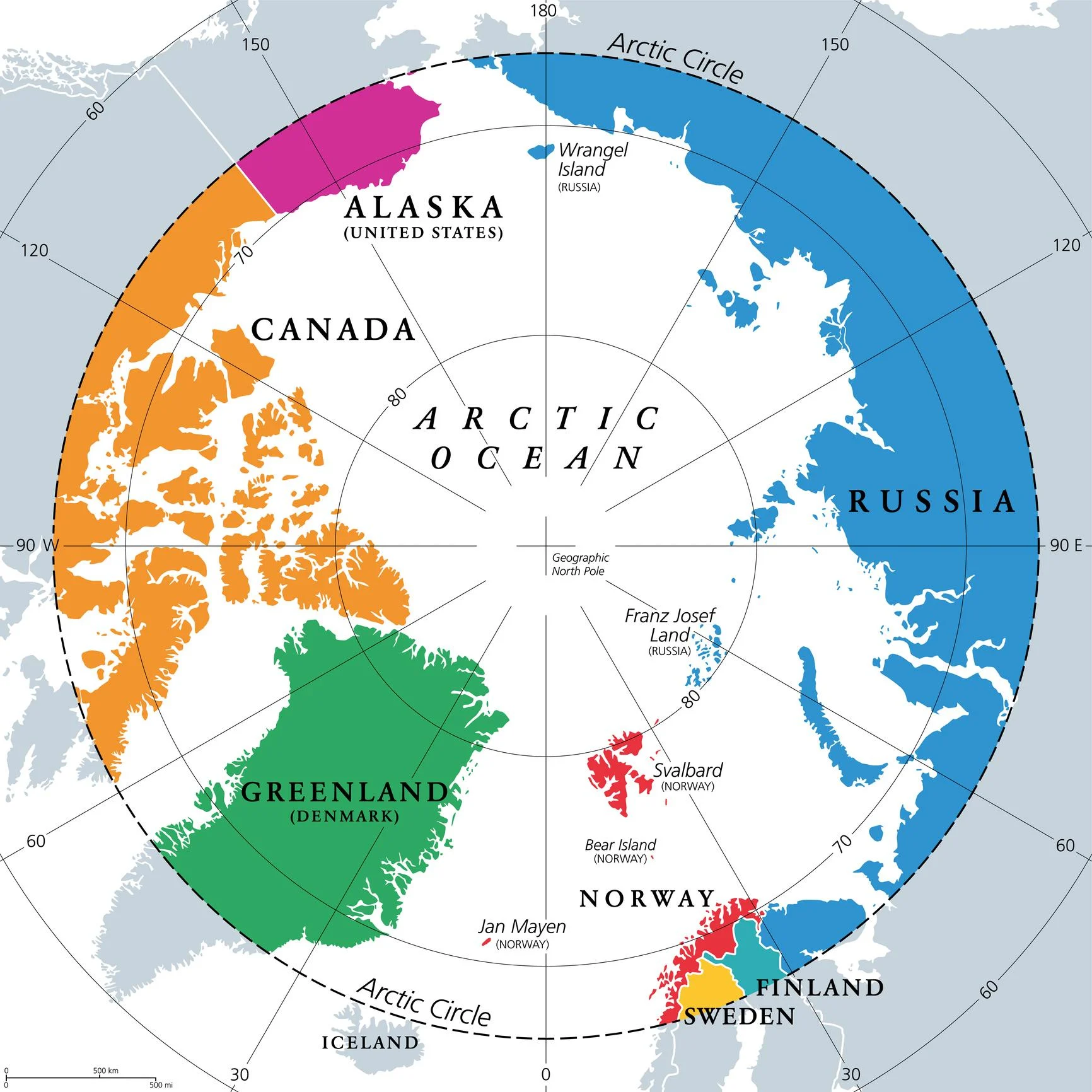
arctic-circle-map
The agreement is catastrophic both because of what it says and what it doesn’t mention. It reduces further the major asset of security policies: Freedom of action. Jan Oberg TFF director September 25, 2026 A couple of hours before the agreement was signed on September 22, 2026, I published the following 13 hypotheses about what it would most likely contain on TFF Substack (in English). I was wrong on only the first point. Contrary to what Trump had written on his Truth Social platform, it does not appear to come into force immediately. In fact, it turned out to be worse than even I had anticipated. After these hypotheses now come a number of reflections in light of what the agreement actually contains, and does not contain, as well as the way in which it has generally been presented by major media outlets and by the public-service broadcaster DR. My...
Imagen-thumbnail-The-Transnational-1
LONDON – It was the late president of France, Charles de Gaulle, who famously said, “Brazil has a great future, and it always will have.” With the first round of the Brazilian election over with the favourite to win, President Luiz Inacio Lula da Silva, coming under increasing scrutiny for corruption – the seemingly eternal Brazilian political disease – many observers seriously wonder if Brazil can ever unlock its enormous potential. Brazil has long lived out its personal fantasy of the archetypal relaxed, tolerant and gregarious country with Copacabana beach, the samba, the carnival and a great deal of sexual freedom, but all this has come at a price – the lack of discipline in both personal and public morality. The ingrained privileges of those who have already made it, together with the manipulative corruption of the established political class, make it difficult for Brazil to engage in the economic...
girl-5894831_1280
Below are TFF-related media mentions, comments, videos and social media posts published elsewhere but not on this homepage. We happen to catch and list only a fraction. Regarding video comments and debates, we recommend that you go to the TFF Video Channel on Substack where many of them are reproduced. Jan Oberg is a contributor to China Daily – 52 million daily clicks – and Global Times, CGTN and CCTV (the national television), China Investment, Xinhua News Agency and several others. Articles and videos on these media very often multiply into countless Chinese (and Western media) that re-post them from these main media. Thanks to The China Academy, his analyses, interviews and comments are frequently posted on YouTube channels such as Thinkers Forum and Wave Media. These videos are often re-posted on Bilibili (China’s YouTube), the China Content Center on TikTok, and on the Chinese edition of TikTok, Douyin.com. This means reaching hundreds of millions of viewers worldwide over a year. While there are too many to catch on all these...
Screenshot-2026-09-28-145821
How Oxford University Press allowed a personality‑driven narrative to masquerade as scholarship. Jan Oberg, dr hc, TFF director This article has also been published on TFF Substack where more readers react and withdraw their interviews from the project. A Special Issue in a scholarly journal is not an ordinary publication. It is a collective, curated […]