
Everybody knows JCPOA was not bilateral agreement between Iran and U.S.

By Javad Heirannia, The Tehran Times
January 24, 2018


TEHRAN – Professor Farhang Jahanpour, part-time tutor on the Middle East in the Department of Continuing Education at the University of Oxford, tells the Tehran Times that “President Trump’s recent speech on Iran was the most belligerent speech by any U.S. president about Iran since the Iranian revolution.”

“As everybody knows, the Joint Comprehensive Plan of Action (JCPOA) was not a bilateral agreement between Iran and the United States,” Jahanpour tells the Tehran Times in an exclusive interview.

Following is the full text of the interview:


Q: President Trump has decertified the JCPOA. How important is this decision for the survival of the nuclear agreement?

A: President Trump’s recent speech on Iran was the most belligerent speech by any U.S. president about Iran since the Iranian revolution. However, its importance for undermining the nuclear agreement should not be exaggerated. As everybody knows, the Joint Comprehensive Plan of Action (JCPOA) was not a bilateral agreement between Iran and the United States. It was an international agreement between Iran and five permanent members of the Security Council, plus Germany, supported by the European Union and given the force of law by the Security Council Resolution 2231.

Therefore, one member of the agreement cannot unilaterally destroy it. As the EU High Representative for Foreign Affairs Federica Mogherini has rightly said: “The U.S. president has many powers, but this is not one of them.”

It should be pointed out that certification is not a part of the agreement, but an internal U.S. issue. That certification has no international validity. Trump has given a long list of contentious issues about Iran’s alleged malign influences in the region, but none of those issues has anything to do with the nuclear agreement. So Trump’s decertification of the deal will not kill it.

In the short time that he has been in power, Trump has reversed some of President Obama’s major domestic and international achievements.
Domestically, Trump has fallen out with American intelligence organizations, comparing them to the Nazis. He has attacked most of the media as “being the greatest enemy of the people” and producing fake news.

He has attacked “the so-called judges” for trying to block his unconstitutional executive order banning Muslim refugees or immigrants from seven Muslim-majority countries.

He scrapped the critical health care subsidies to hit Obamacare, while the bill that he sent to Congress was not approved.

In foreign policy, he has taken America out of the Paris Climate Accord, which is an agreement within the United Nations Framework Convention on Climate Change, which 195 members have signed and 168 members have already ratified.

He has taken the United States out of the Trans-Pacific Partnership, and on 11 October he announced that the U.S. would drop out of the North American Free Trade Agreement.

The United States and Israel announced that they would withdraw from UNESCO because of its alleged anti-Israeli bias.

However, despite all those major decisions, the sky has not fallen down and international agreements are continuing without the United States. All that he has achieved so far has been to isolate America in the international community.


Q: What were the reasons for his decertification of Iran’s compliance with the nuclear deal? What signal did he want to deliver by doing so?

A: Of course, the decertification of Iran’s compliance with the agreement does not make any sense, since Trump had twice certified it before, and nothing had changed during the intervening period. In fact, as recently as 14 September 2017, Trump waived certain sanctions against Iran as required under the terms of the deal.

During the campaign Trump often criticized the agreement as the worst agreement in history and promised that he would tear it up. In his inaugural address to the UN General Assembly, he called it as “an embarrassment to the United States.” So, by taking this step he wants to reassure his base that he is implementing at least one of his promises.

This decision comes at a time when his administration is in disarray, and when some of the leading figures in his own Republican Party have strongly criticised him. One of the most influential Republicans, the chairman of the Senate Foreign Relations Committee Bob Corker, in an interview with the New York Times said that Trump’s volatility could spark World War III. He added: “He would have to concern anyone who cares about our nation.”

He went on to say: “Look, except for a few people, the vast majority of our caucus understands what we’re dealing with here,” Corker continued. “Of course, they understand the volatility that we’re dealing with and the tremendous amount of work that it takes by people around him to keep him in the middle of the road.” This is very strong criticism by a senator who has to approve Trump’s foreign policy initiatives.

Internationally, the threat of terrorism in the Middle East has not yet ended, the U.S.-supported Saudi Arabia’s disastrous war against Yemen is still continuing killing and wounding scores of people in that poverty-stricken country every day, and above all Trump’s threat of “fire and fury the like of which the world has never seen” against North Korea and the promise that he would totally destroy that country have not worked and that dangerous standoff still continues. Therefore, I believe that his policy over Iran is a way of diverting attention from his growing failures.


Q: Has his policy received much domestic or international support? 

A: Many prominent U.S. officials, such as former presidential candidate Hillary Clinton, former Secretary of State John Kerry who negotiated the agreement, as well as some leading figures in his own administration, including Secretary of State, Secretary of Defense, and chairman of the Joint Chiefs of Staff have said that Iran had been compliant with the agreement and Trump should have certified it.

On the international arena, in addition to Russia and China that have strongly condemned Trump’s decision, some of America’s closest allies in Europe too have spoken openly against him.

As the former German ambassador to the United States Wolfgang Ischinger said, Trump’s decision “will show total disrespect for America’s allies.”

Shortly after Trump’s speech, in a joint statement the leaders of Britain, France, and Germany expressed alarm at Trump’s decision and reaffirmed their total commitment to the Iran deal. “Preserving the J.C.P.O.A. is in our shared national security interest,” Prime Minister Theresa May, President Emmanuel Macron, and Chancellor Angela Merkel said.

“The nuclear deal was the culmination of thirteen years of diplomacy and was a major step towards ensuring that Iran’s nuclear program is not diverted for military purposes.” They noted that the deal was “unanimously endorsed” by the U.N. Security Council, and appealed to the Administration and Congress to “consider the implications to the security of the United States and its allies before taking any steps that might undermine the J.C.P.O.A.”

This level of open opposition to the policies of U.S. president by his closest allies is unprecedented.


Q: It is believed that President Macron has said that it would be necessary to include some articles pertinent to human rights and missile issues within JCPOA. Is this a diversion from common European stance towards the agreement? 

A: No, this is a misreading of what President Macron said. Some of the deal’s critics have seized on Macron’s willingness to supplement the agreement by addressing ballistic missiles and extending the duration of some constraints on Iran’s nuclear program.

However, like leaders of all other P5+1 states, Macron has repeatedly emphasised the primary importance of preserving the JCPOA, but he has said that if there are other issues that the United States is concerned about, they could be discussed separately in a similar forum as 5+1.

That was in no way an endorsement of Trump’s policy. The JCPOA is not re-negotiable.


Q: In your view, how should Iran respond to that provocation? 

A: I believe that the Iranian response has been wise, measures and dignified. President Rouhani was absolutely correct to say: “Today the United States is more than ever isolated in its opposition to the nuclear deal and in its plots against the Iranian people. What was heard today was nothing but the repetition of baseless accusations and swear words that they have repeated for years.”

He said of Trump: “He has not studied international law. Can a president annul a multilateral international treaty on his own? Apparently he does not know that this agreement is not a bilateral agreement solely between Iran and the United States.”

The latest fuss shows that the nuclear agreement was very well negotiated by Iran in order to prevent a subsequent president being able to destroy it. Therefore, Iran should continue with the JCPOA by strengthening ties with Europe and other allies, regardless of Trump’s decision.


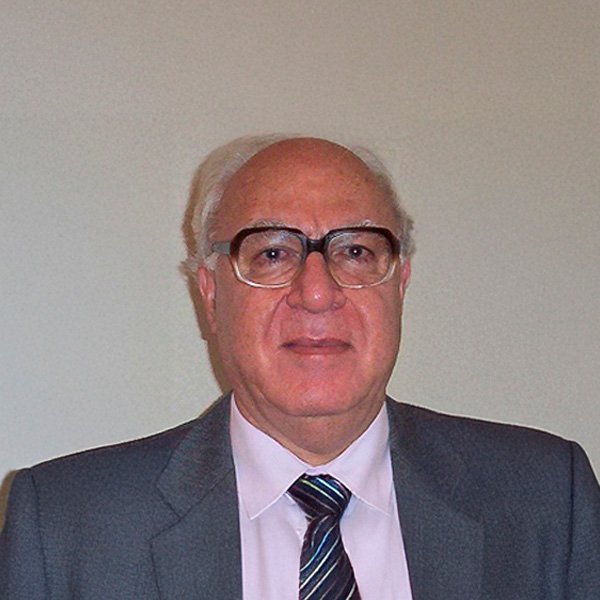
Professor Farhang Jahanpour is a former lecturer at the University of Cambridge and a Senior Research Fellow at Harvard. He is a tutor at the Department of Continuing Education and a member of Kellogg College at the University of Oxford and member of the TFF Board.

Share

Leave a Reply

Your email address will not be published. Required fields are marked *

Related Posts

Jan Oberg May 15, 2026 Go to this Fox News page and scroll the whole way down: President Donald Trump tells the world that his meeting with President Xi Jinping yielded a lot of very concrete political and economic results – of course, only where the Chinese side, according to him, agreed with him. He does not mention the Taiwan issue, but Secretary of State, Marco Rubio, says that it did not feature prominently in their talks and that the US policy on Taiwan has not changed. Then go to China Daily – or Global Times – and you will see that for the Chinese it is framework, principles, structure of cooperation etc. that matters – all embedded in the overall idea of “constructive bilateral relationship of strategic stability.” Nowhere is any concrete agreement or deal – all that Trump refers to – mentioned. At the general level, this gives you insights into the very different social...
The MIMAC – Military-Industrial-Media-Academic Complex – drives the world’s rampant militarism and wars without end. Here is a short reflection of how it works against all interests of humanity. #5 deals with why there is no real enemy or threat images/analysis. It’s all ex-post constructions. And, btw, theTFF Peace Pulse is now on Rumble.
Jan Oberg, TFF director April 28, 2026 In this third TFF Peace Pulse, I make the important distinction between the violence and the conflict that violence is a symptom of. If you want peace, focus on the underlying conflict because that is the key to resolution, peacemaking, and a better future for the parties. The West is obsessed with violence, just look around you – and 90+ per cent of the public debate is about military issues and other violence – totally wasted for peace. These Peace Pulses will only be published here a few times. You will also not find them on YouTube and Vimeo because both platforms have blocked TFF and me; you know, peace is dangerous these days. Most TFF’s videos since 2007 are now on Rumble.

Recent Articles

Jan Oberg May 15, 2026 Go to this Fox News page and scroll the whole way down: President Donald Trump tells the world that his meeting with President Xi Jinping yielded a lot of very concrete political and economic results – of course, only where the Chinese side, according to him, agreed with him. He does not mention the Taiwan issue, but Secretary of State, Marco Rubio, says that it did not feature prominently in their talks and that the US policy on Taiwan has not changed. Then go to China Daily – or Global Times – and you will see that for the Chinese it is framework, principles, structure of cooperation etc. that matters – all embedded in the overall idea of “constructive bilateral relationship of strategic stability.” Nowhere is any concrete agreement or deal – all that Trump refers to – mentioned. At the general level, this gives you insights into the very different social...
Lena Petrova of “World Affairs In Context” with more than half a million subscribers on YouTube wanted to explore what a peace researcher like me has to say about, among other things, the First and the Second Cold War and why eethics has disappeared from politics. I am particularly happy about this conversation that also yielded an amazing number of very appreciative comments on YouTube. No doubt, people are longing for alternatives, including peace perspectives.
The MIMAC – Military-Industrial-Media-Academic Complex – drives the world’s rampant militarism and wars without end. Here is a short reflection of how it works against all interests of humanity. #5 deals with why there is no real enemy or threat images/analysis. It’s all ex-post constructions. And, btw, theTFF Peace Pulse is now on Rumble.

TFF on Substack

Discover more from TFF Transnational Foundation & Jan Oberg.

Most Popular

Jan Oberg May 15, 2026 Go to this Fox News page and scroll the whole way down: President Donald Trump tells the world that his meeting with President Xi Jinping yielded a lot of very concrete political and economic results – of course, only where the Chinese side, according to him, agreed with him. He does not mention the Taiwan issue, but Secretary of State, Marco Rubio, says that it did not feature prominently in their talks and that the US policy on Taiwan has not changed. Then go to China Daily – or Global Times – and you will see that for the Chinese it is framework, principles, structure of cooperation etc. that matters – all embedded in the overall idea of “constructive bilateral relationship of strategic stability.” Nowhere is any concrete agreement or deal – all that Trump refers to – mentioned. At the general level, this gives you insights into the very different social...
Lena Petrova of “World Affairs In Context” with more than half a million subscribers on YouTube wanted to explore what a peace researcher like me has to say about, among other things, the First and the Second Cold War and why eethics has disappeared from politics. I am particularly happy about this conversation that also yielded an amazing number of very appreciative comments on YouTube. No doubt, people are longing for alternatives, including peace perspectives.
The MIMAC – Military-Industrial-Media-Academic Complex – drives the world’s rampant militarism and wars without end. Here is a short reflection of how it works against all interests of humanity. #5 deals with why there is no real enemy or threat images/analysis. It’s all ex-post constructions. And, btw, theTFF Peace Pulse is now on Rumble.
Read More
Screenshot-2026-05-15-103534
Jan Oberg May 15, 2026 Go to this Fox News page and scroll the whole way down: President Donald Trump tells the world that his meeting with President Xi Jinping yielded a lot of very concrete political and economic results – of course, only where the Chinese side, according to him, agreed with him. He does not mention the Taiwan issue, but Secretary of State, Marco Rubio, says that it did not feature prominently in their talks and that the US policy on Taiwan has not changed. Then go to China Daily – or Global Times – and you will see that for the Chinese it is framework, principles, structure of cooperation etc. that matters – all embedded in the overall idea of “constructive bilateral relationship of strategic stability.” Nowhere is any concrete agreement or deal – all that Trump refers to – mentioned. At the general level, this gives you insights into the very different social...
Screenshot-2026-05-12-104023
Lena Petrova of “World Affairs In Context” with more than half a million subscribers on YouTube wanted to explore what a peace researcher like me has to say about, among other things, the First and the Second Cold War and why eethics has disappeared from politics. I am particularly happy about this conversation that also yielded an amazing number of very appreciative comments on YouTube. No doubt, people are longing for alternatives, including peace perspectives.
Screenshot-2026-04-13-154551 (2)
The MIMAC – Military-Industrial-Media-Academic Complex – drives the world’s rampant militarism and wars without end. Here is a short reflection of how it works against all interests of humanity. #5 deals with why there is no real enemy or threat images/analysis. It’s all ex-post constructions. And, btw, theTFF Peace Pulse is now on Rumble.
Screenshot-2026-04-13-154551 (1)
Jan Oberg, TFF director April 28, 2026 In this third TFF Peace Pulse, I make the important distinction between the violence and the conflict that violence is a symptom of. If you want peace, focus on the underlying conflict because that is the key to resolution, peacemaking, and a better future for the parties. The West is obsessed with violence, just look around you – and 90+ per cent of the public debate is about military issues and other violence – totally wasted for peace. These Peace Pulses will only be published here a few times. You will also not find them on YouTube and Vimeo because both platforms have blocked TFF and me; you know, peace is dangerous these days. Most TFF’s videos since 2007 are now on Rumble.
Screenshot-2026-04-13-154551
In contrast to most, we’ll bring alternatives, solutions, hope and strategies for a better future. Times are dangerous, yes, but that only intensifies the need for constructive thinking and action! Jan Oberg, TFF director April 13, 2026 The new TFF Peace Pulse uses video messages in a new way: Max 3-5-minute-long comments, ideas or perhaps mini-lectures, all about peace – positive peace. We launch them today on April 13, 2026 with a carefully crafted visual aesthetic fitting the content. We hope to publish them regularly from now on. We launch Peace Pulse (PP) – for a number of reasons. The world is in chaos, and there are countless reasons to feel concerned, frustrated, even angry. The atmosphere is saturated with doom and gloom, with negative energy and rear‑mirror thinking, while vision, imagination, alternatives, strategies and genuine future‑mindedness remain in short supply. And without them, we simply can’t save the world. Looking at problems from a hundred angles will...
IMG_5165 (1)
PART II — Publishing Peace in a System That Prioritises Militarism Jan Oberg, TFF director April 10, 2026 How TFF Maintains a Daily Voice in a Digital World Built for Noise This article is part of the series “TFF at 40″ and it invites you to learn about Four Decades of Publishing Peace. It takes a look at how a small, people‑financed peace foundation has communicated across four generations of technology — from wax stencils and fax machines to mass email and Substack — and why TFF continues to publish every single day in a system that rewards noise, conflict, and militarism. ◆ What it means to publish peace every single day in a digital system built for 24/7 news and other noise, confrontation, and militarism. How TFF’s independence, continuity, and global readership defy algorithms, donor cycles, and Western media censorhip — and why the Majority World keeps listening. When the...

