

Europe's Leaders Are Paying a High Price at Home for Supporting Ukraine

Michael Gfoeller & David H. Rundell

September 27, 2023

In 1919, John Maynard Keynes was a young economist with the British delegation negotiating the Versailles Treaty. Keynes strongly objected to the harsh economic treatment being meted out to Germany. He resigned and went home to write “The Economic Consequences of the Peace,” which accurately predicted how the treaty would sow the seeds for future conflict. Had Keynes been alive last year, he might well have written “The Economic Consequences of the War,” predicting how the economic sanctions being placed on Russia would, in fact, unravel Europe’s political order.

Few products contribute more to economic prosperity and political stability than affordable food and energy. Increased energy costs retard every aspect of economic growth. Rising food costs act much like a regressive tax increase. By imposing economic sanctions on Russia, Europe destroyed its own access to inexpensive food and energy. One did not need John Maynard Keynes to predict that as a result of the sanctions, Europe’s prices would rise and economic growth stall. We made that prediction in these pages a year ago.

Originally published by Newsweek on September 7, 2023

Between February and May of 2022, the OPEC basket oil price rose from $75 to $125 per barrel. During the same period wheat prices in Germany increased from $350 to $530 per ton. Germany had imported half of its natural gas from Russia. According to the Center for Global Energy Policy, last year the cost of heating the average German single family home went from $1,500 to $5,250. As a result, the German government took advantage of the EU‘s Temporary Crisis Framework to provide a $200 billion package, which has ultimately cost German taxpayers more than all the military equipment the United States has sent Ukraine.

While the price on some commodities has since eased, the fact remains that overall levels remain substantially higher than before the war.

In 2022, the Eurozone’s annual inflation rate rose to over 10 percent and although the rate at which prices are rising has now stabilized at prewar levels, the overall price level in Europe remains much higher than it was two years ago. Moreover, the Eurozone’s average inflation rate disguises the fact that in places like Poland and Hungary the inflation rate remains 10 and 17 percent respectively.

Meanwhile, Eurozone GDP growth continues to collapse from 5.3 percent in 2021 to 3.5 percent in 2022 and an IMF predicted rate of less than 1.0 percent this year. Again, this overall figure conceals the fact that some nations like Germany, Poland, and Hungary will see no economic growth at all in 2023. Europe’s unemployment rate remains nearly twice that of the United States while European wages, productivity, and hours worked all remain at or below pre-Covid levels.

Europe’s economic difficulties were compounded by a massive wave of Ukrainian refugees that has strained public services and government budgets across the continent. According to the United Nations, more than 8 million refugees have fled Ukraine.

Most have gone to Poland, Russia and Germany. However all EU nations were affected because for the first time the European Union implemented a temporary protective directive (TPD). This allowed Ukrainians to enter without formal asylum procedures, something that had never been done for African and Middle Eastern refugees. The TPD guaranteed Ukrainian refugees residency, housing, education, employment, medical, and social services benefits. Tensions rose as schools and hospitals became overcrowded and citizens perceived that refugees were receiving preferential treatment.
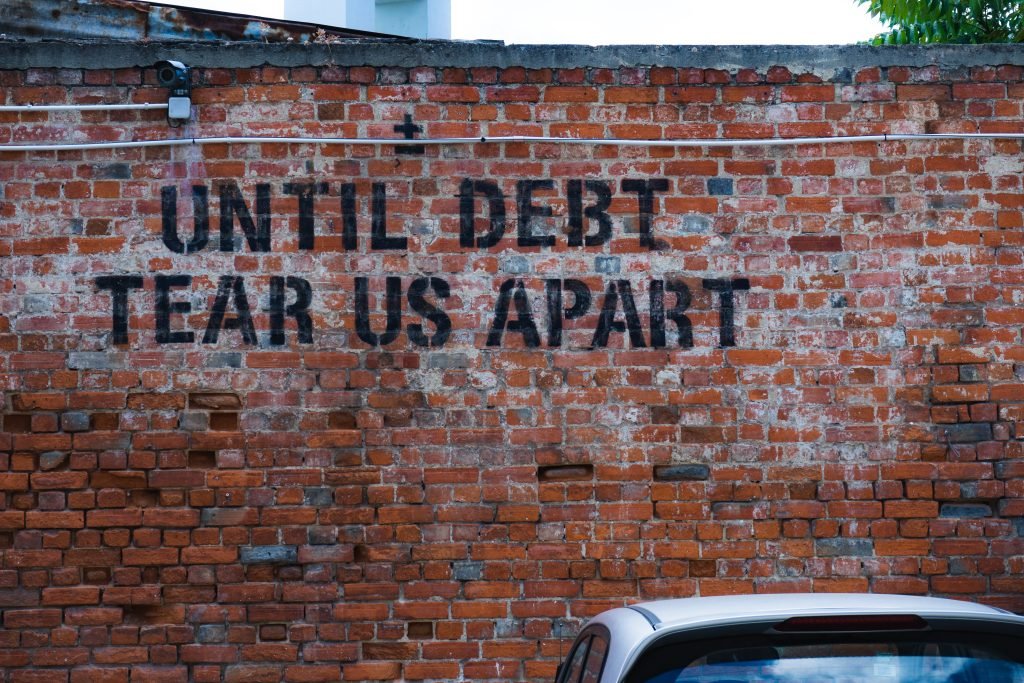
These economic problems have had very substantial political consequences. Over the past 18 months, more than a third of European Union governments have fallen. It would be inaccurate to blame these changes solely on the war in Ukraine. In many instances, local issues played a major role. Nevertheless, it would be equally misleading to ignore the fact that economic hardship created an atmosphere of anger and apprehension which contributed to political change.

Here is a selection of some of those changes:

  • In Italy, Giorgia Meloni, a conservative who openly criticizes EU refugee policies became prime minister.
  • In Sweden, the ruling Socialist Party was defeated by a coalition of conservative parties.
  • Finnish Prime Minister Sanna Marin was ousted after her Social-Democratic Party lost parliamentary elections to two conservative parties.
  • Dutch Prime Minister, Mark Rutte, lost power when his coalition government collapsed.
  • Spanish Prime Minister Pedro Sánchez called snap parliamentary elections after his Socialist Workers Party did extremely poorly in local elections. The conservative People’s Party won a plurality in the snap election, securing 136 seats in the 350 seat Spanish parliament but no one has yet been able to form a new government.
  • The government of Moldova fell in February 2023.
  • Romanian Prime Minister Nicolae Ciucă resigned in June 2023, together with his entire cabinet.
  • Bulgaria has been in a state of chronic political instability throughout 2022 and 2023 and held its fifth snap parliamentary election in two years last April.

More ominously, the governments in Europe’s three largest economies look increasingly shaky. In France, economic growth has fallen from 7 percent in 2021 to 2.5 percent last year and is predicted to be only .8 percent for 2023. Economic frustrations are growing and recent opinion polls indicate that the leader of France’s far-right opposition party, Marine Le Pen, would defeat incumbent Emmanuel Macron if a presidential election were held today. Great Britain has had three prime ministers since the war in Ukraine began and few expect its adamantly pro-war government to remain in power after the next general election.

In Germany, the once marginal right wing opposition party “Alternative for Germany” is now the second largest party in the country and is polling ahead of Chancellor Olaf Scholz’s Social Democrat Party. Sensing these changing winds, the German government appears unlikely to increase defense spending to the NATO target of 2 percent of GDP in 2024.

Only one issue unites these diverse outcomes—all of these nations are struggling economically due to the sanctions placed on Russia. Those sanctions have been strikingly ineffective. It now seems very doubtful that Ukraine will defeat Russia or that peace can be restored without significant Ukrainian concessions. Once European voters perceive that their economic sacrifices have been in vain, we expect more governments to fall. Ultimately, the most enduring effect of NATO’s war with Russia may well be the rise of conservative, nationalist-populist governments in much of Europe.

The authors

David H. Rundell is a former chief of mission at the American Embassy in Saudi Arabia and the author of Vision or Mirage, Saudi Arabia at the Crossroads.

Ambassador Michael Gfoeller is a former political advisor to the U.S. Central Command. He served for 15 years in Eastern Europe and the former Soviet Union.

The views expressed in this article are the writers’ own.

Share

Leave a Reply

Your email address will not be published. Required fields are marked *

Related Posts

This is the third appeal from TFF. The first and the second here. On August 22, 2025, the UN officially declared famine in Gaza. The world’s top authority on food security called for help and said starvation will spread further within the Strip unless fighting stops and much more aid is allowed in. More than half a million people in the Gaza Strip are facing catastrophic hunger conditions, while more than a million more are in a food emergency phase, the report states. This man-made catastrophic famine could have been prevented by a steady flow of humanitarian aid into the enclave, relief chief Tom Fletcher pointed out. “Yet food stacks up at borders because of systematic obstruction by Israel,” Mr. Fletcher said. “It is a famine within a few 100 meters of food in a fertile land.” The UN’s top aid official underscored that the famine in Gaza is “caused by cruelty, justified...
TFF Associate and former Board member On 28 August 2025, France, Germany, and the United Kingdom (the EU Troika) decided to trigger the so-called “snapback mechanism” and reimpose stringent sanctions on Iran after 30 days for its alleged violation of the terms of the Iran nuclear deal, known as the Joint Comprehensive Plan of Action (JCPOA), if Iran did not give in to their demands within 30 days. In the lawless world in which we are living at the moment, discussing the principles of international law is futile and irrelevant. We have reverted to the age of imperial dictatorship and big power dominance. This state of affairs is dangerous for the whole world, especially the Global South, which is at the mercy of the dictates of the superpowers. However, a return to the rivalry between powerful empires outside the scope of international law, which led to the two world wars,...
Every few days, I was on TV in Russia and China – Russia TV1 and CCTV – the latter as part of a much longer studio discussion and documentary about Ukraine, Russa and the EU. February 14, 2025 – about half an hour on Russia’s leading TV Channel – 1TV – a kind of portrait with lots of views on current affairs. And many more videos with other TFF Associates and a series of world issues. It’s a great way to learn new angles from some of the most experienced people of our time. And the best part – new videos are selected and uploaded almost every day. Do not miss!! Enjoy and, if you like, share!

Recent Articles

Jan Oberg May 15, 2026 Go to this Fox News page and scroll the whole way down: President Donald Trump tells the world that his meeting with President Xi Jinping yielded a lot of very concrete political and economic results – of course, only where the Chinese side, according to him, agreed with him. He does not mention the Taiwan issue, but Secretary of State, Marco Rubio, says that it did not feature prominently in their talks and that the US policy on Taiwan has not changed. Then go to China Daily – or Global Times – and you will see that for the Chinese it is framework, principles, structure of cooperation etc. that matters – all embedded in the overall idea of “constructive bilateral relationship of strategic stability.” Nowhere is any concrete agreement or deal – all that Trump refers to – mentioned. At the general level, this gives you insights into the very different social...
Lena Petrova of “World Affairs In Context” with more than half a million subscribers on YouTube wanted to explore what a peace researcher like me has to say about, among other things, the First and the Second Cold War and why eethics has disappeared from politics. I am particularly happy about this conversation that also yielded an amazing number of very appreciative comments on YouTube. No doubt, people are longing for alternatives, including peace perspectives.
The MIMAC – Military-Industrial-Media-Academic Complex – drives the world’s rampant militarism and wars without end. Here is a short reflection of how it works against all interests of humanity. #5 deals with why there is no real enemy or threat images/analysis. It’s all ex-post constructions. And, btw, theTFF Peace Pulse is now on Rumble.

TFF on Substack

Discover more from TFF Transnational Foundation & Jan Oberg.

Most Popular

Jan Oberg May 15, 2026 Go to this Fox News page and scroll the whole way down: President Donald Trump tells the world that his meeting with President Xi Jinping yielded a lot of very concrete political and economic results – of course, only where the Chinese side, according to him, agreed with him. He does not mention the Taiwan issue, but Secretary of State, Marco Rubio, says that it did not feature prominently in their talks and that the US policy on Taiwan has not changed. Then go to China Daily – or Global Times – and you will see that for the Chinese it is framework, principles, structure of cooperation etc. that matters – all embedded in the overall idea of “constructive bilateral relationship of strategic stability.” Nowhere is any concrete agreement or deal – all that Trump refers to – mentioned. At the general level, this gives you insights into the very different social...
Lena Petrova of “World Affairs In Context” with more than half a million subscribers on YouTube wanted to explore what a peace researcher like me has to say about, among other things, the First and the Second Cold War and why eethics has disappeared from politics. I am particularly happy about this conversation that also yielded an amazing number of very appreciative comments on YouTube. No doubt, people are longing for alternatives, including peace perspectives.
The MIMAC – Military-Industrial-Media-Academic Complex – drives the world’s rampant militarism and wars without end. Here is a short reflection of how it works against all interests of humanity. #5 deals with why there is no real enemy or threat images/analysis. It’s all ex-post constructions. And, btw, theTFF Peace Pulse is now on Rumble.
Read More
Screenshot-2026-05-15-103534
Jan Oberg May 15, 2026 Go to this Fox News page and scroll the whole way down: President Donald Trump tells the world that his meeting with President Xi Jinping yielded a lot of very concrete political and economic results – of course, only where the Chinese side, according to him, agreed with him. He does not mention the Taiwan issue, but Secretary of State, Marco Rubio, says that it did not feature prominently in their talks and that the US policy on Taiwan has not changed. Then go to China Daily – or Global Times – and you will see that for the Chinese it is framework, principles, structure of cooperation etc. that matters – all embedded in the overall idea of “constructive bilateral relationship of strategic stability.” Nowhere is any concrete agreement or deal – all that Trump refers to – mentioned. At the general level, this gives you insights into the very different social...
Screenshot-2026-05-12-104023
Lena Petrova of “World Affairs In Context” with more than half a million subscribers on YouTube wanted to explore what a peace researcher like me has to say about, among other things, the First and the Second Cold War and why eethics has disappeared from politics. I am particularly happy about this conversation that also yielded an amazing number of very appreciative comments on YouTube. No doubt, people are longing for alternatives, including peace perspectives.
Screenshot-2026-04-13-154551 (2)
The MIMAC – Military-Industrial-Media-Academic Complex – drives the world’s rampant militarism and wars without end. Here is a short reflection of how it works against all interests of humanity. #5 deals with why there is no real enemy or threat images/analysis. It’s all ex-post constructions. And, btw, theTFF Peace Pulse is now on Rumble.
Screenshot-2026-04-13-154551 (1)
Jan Oberg, TFF director April 28, 2026 In this third TFF Peace Pulse, I make the important distinction between the violence and the conflict that violence is a symptom of. If you want peace, focus on the underlying conflict because that is the key to resolution, peacemaking, and a better future for the parties. The West is obsessed with violence, just look around you – and 90+ per cent of the public debate is about military issues and other violence – totally wasted for peace. These Peace Pulses will only be published here a few times. You will also not find them on YouTube and Vimeo because both platforms have blocked TFF and me; you know, peace is dangerous these days. Most TFF’s videos since 2007 are now on Rumble.
Screenshot-2026-04-13-154551
In contrast to most, we’ll bring alternatives, solutions, hope and strategies for a better future. Times are dangerous, yes, but that only intensifies the need for constructive thinking and action! Jan Oberg, TFF director April 13, 2026 The new TFF Peace Pulse uses video messages in a new way: Max 3-5-minute-long comments, ideas or perhaps mini-lectures, all about peace – positive peace. We launch them today on April 13, 2026 with a carefully crafted visual aesthetic fitting the content. We hope to publish them regularly from now on. We launch Peace Pulse (PP) – for a number of reasons. The world is in chaos, and there are countless reasons to feel concerned, frustrated, even angry. The atmosphere is saturated with doom and gloom, with negative energy and rear‑mirror thinking, while vision, imagination, alternatives, strategies and genuine future‑mindedness remain in short supply. And without them, we simply can’t save the world. Looking at problems from a hundred angles will...
IMG_5165 (1)
PART II — Publishing Peace in a System That Prioritises Militarism Jan Oberg, TFF director April 10, 2026 How TFF Maintains a Daily Voice in a Digital World Built for Noise This article is part of the series “TFF at 40″ and it invites you to learn about Four Decades of Publishing Peace. It takes a look at how a small, people‑financed peace foundation has communicated across four generations of technology — from wax stencils and fax machines to mass email and Substack — and why TFF continues to publish every single day in a system that rewards noise, conflict, and militarism. ◆ What it means to publish peace every single day in a digital system built for 24/7 news and other noise, confrontation, and militarism. How TFF’s independence, continuity, and global readership defy algorithms, donor cycles, and Western media censorhip — and why the Majority World keeps listening. When the...

