
PressInfo #230 – Ending the war on Iraq

Generic thumbnail

The American debate on the Iraq War has entered a dramatic new phase. For the first time, a prominent Democrat, Congressman John Murtha, has called for a withdrawal of American forces from the country. Murtha’s words have had a major impact because he was a former supporter of the war, and has had a career distinguished by his consistently pro-military profile.

His argument is based on the inability to complete the American military mission in Iraq, making inexcusable the continued killing and loss of life. He also refers to the adverse effects of the unpopular and flawed occupation of Iraq on the wider goals of opposing global terrorism and to the failure of American reconstruction efforts. Murtha’s critique is widely shared by a majority of Americans at this point, and helps explain the declining popularity of the Bush presidency.

Vietnam – a precursor but different

But there is no sign that these developments, even in the face of a rising crescendo of violent incidents and high casualties, will bring a rapid end to the Iraq War. President Bush keeps reiterating his resolve ‘to stay the course,’ to do whatever is necessary to prevail in Iraq. A Republican-controlled Congress, although increasingly restive about the war, is not yet likely to break with the president, and withhold appropriations or mandate an exit strategy that calls for a definite end to the war. Unlike Vietnam, which looks more and more like a precursor to Iraq, the strategic stakes are high. The efforts to pretend that the outcome of Vietnam was strategically important because of ‘falling dominos’ in the region was never convincing, and the only strong argument for American forces remaining was the alleged prospect of a bloodbath in the aftermath of an American departure, a nightmare scenario that never materialized.

But in Iraq there are major strategic stakes: oil, non-proliferation, the impact on Turkey and Iran, the containment of radical Islam, anti-terrorism, the security of Israel, regional security politics. And so the puzzle posed is how to end the Iraq War without further and too seriously jeopardizing these strategic concerns.

Mainstream thinking leads to terminal disaster

The solutions being proposed in the American political mainstream are not convincing: wait until the Iraq military can bring stability to the country, which seems like waiting for Godot; transfer the foreign security role to NATO in the manner of the Kosovo War, which reduces the American role by no more than a tiny percentage; reduce the American presence, but sustain the mission. These supposed solutions are disguised recipes for prolonging the futility of the war, and invitations for terminal disaster.

It should be remembered that years after the American leadership realized that the Vietnam War was lost, the dying and killing continued, because the US Government insisted that it could find victory by political maneuver after acknowledging privately its inability to pacify the country by military occupation. As we know, when withdrawal finally came in 1975, it was humiliating, with a total exhibition of defeat, epitomized by helicopters lifting former Vietnamese collaborators with the occupation from the roof of the American Embassy. There is no way to transform the military defeat in the occupation phase of the Iraq War into a political victory. No way, and the sooner the illusion of magic rabbit is recognized for what it is the better the prospects for an effective end to the Iraq War before all room for diplomacy disappears.

Earlier in Iraq, the US Government had confused military victory with a political victory. Bush’s famous speech on the American aircraft carrier, USS Abraham Lincoln, of May 1, 2003, with the banner behind his podium reading ‘mission accomplished,’ was the extreme version of this miscalculation.

Again as the Vietnam experience should have made clear, when confronting a nationalist adversary, battlefield victories are difficult, if not impossible to translate into favorable political outcomes. The bloody occupation of Iraq has confirmed this lesson, dramatizing the limits of military superiority in wars associated with foreign occupation, especially of a country previously colonized.

Alternatives: do what seems right – it is not enough to be critical

Understanding what has failed in the past and is unlikely to succeed in the present, is not enough. Without a positive alternative the blame game leads nowhere. In my view such an alternative does exist, although it contains big risks and like every proposed line of future policy in Iraq is enmeshed in uncertainty. We cannot know the risks of alternative lines of policy with any precision, but we can do what seems right under the circumstances, and appears to have the best prospect of stopping the bodies from piling up.

In a key respect, Rumsfeld was right when a couple of years ago he wrote in an internal Pentagon memo that we lack ‘a metric’ for determining whether we are winning or losing the war against terror inside Iraq or in the world as a whole. Such an acknowledgement should suggest humility on all sides, but especially on those who in the face of such doubts, go on with a war that has had such disastrous human and political results. In law, morality, and politics we should all endorse a strong presumption against war as an instrument of policy.

The steps that must be taken

I would propose several steps that together constitute a plan, or at least an approach, that moves toward hope for the future:

 a clear statement by the US Government that it intends to withdraw completely from Iraq and renounces all plans to build permanent military bases;

 a timetable for withdrawal of US forces that calls for the complete phasing out of the American (and coalition) presence within one year;

 a defensive military posture adopted immediately; American forces in Iraq will only attack if attacked from now on;

 private and public encouragement of Iraqi forces to pursue a diplomacy of compromise and reconciliation as an alternative to prolonged civil war;

 diversify the effort at economic and social reconstruction to the extent possible, including seeking a new role for the United Nations acting with full independence of the American occupation;

 encourage regional initiatives that include Turkey, Iran, as well as Arab countries, that explore peacekeeping and political contributions to the post-occupation transition;

 affirm an American and British commitment to the unity of Iraq;

 exert greater pressure to end the Israeli occupation of Palestinian territories, and move toward a solution of the conflict that recognizes the legal rights of the Palestinian people and the necessity of peace based on equality and mutual respect.

Help Iraqi reconciliation: Mobilise the anti-war opinion in the U.S.

In the end, this approach has no chance of becoming operative without a major mobilization of anti-war opinion in the United States, reinforced by the expression of similar sentiments throughout the world, and on the part of regional leaders in the Middle East. Without a great heightening of anti-war activism, the war will drag on until a hasty terminal process is adopted in a spirit of desperation.

What I am advocating is a comprehensive rethinking of American regional goals and behavior, with a fair chance that the results are likely to be more positive than can be realistically anticipated. My reason for guarded optimism is the sense that when the American protective shield is unmistakably removed, Kurds and Shi’ia will find themselves under great pressure to reconcile with Sunni elements in Iraq, or face a continuing insurgency, possibly a full-scale civil war, that they would almost certainly lose. On the Sunni side, as well, the incentive of avoiding such prolonged civil strife would create important pressure to reconcile as Sunnis too would be confronted by dissident nationalisms that can no longer be squashed in the post-Saddam era.

As long as the US occupation persists, the elements in Iraq that are benefited have no reason to compromise in a manner that is acceptable to the Sunnis. Of course, the ethnic composition of Iraq is more complex than this, and the faultlines of conflict are not only identified by reference to Kurds, Shi’ites, and Sunnis, but these divisions have a definite geographic foundation, and have been deepened by the faulty politics of the American occupation.

The situation in Iraq has deteriorated to a point that there is no assured exit strategy that is not beset by dangers, but at least these dangers raise hopes that a different path can be taken. By remaining on the Iraq War path, now so suddenly discredited, all we know is that the bodies will keep piling up!Get free articles & updates
Få gratis artikler og info fra TFF

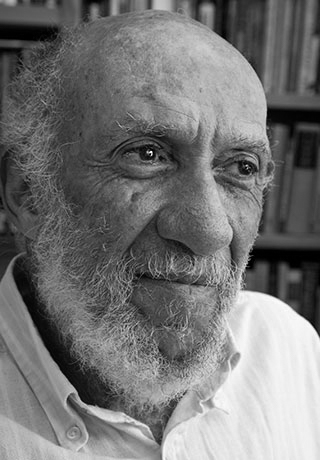
Professor Falk became an adviser to TFF when it was established in 1985.

Share

Leave a Reply

Your email address will not be published. Required fields are marked *

Related Posts

Jan Oberg May 15, 2026 Go to this Fox News page and scroll the whole way down: President Donald Trump tells the world that his meeting with President Xi Jinping yielded a lot of very concrete political and economic results – of course, only where the Chinese side, according to him, agreed with him. He does not mention the Taiwan issue, but Secretary of State, Marco Rubio, says that it did not feature prominently in their talks and that the US policy on Taiwan has not changed. Then go to China Daily – or Global Times – and you will see that for the Chinese it is framework, principles, structure of cooperation etc. that matters – all embedded in the overall idea of “constructive bilateral relationship of strategic stability.” Nowhere is any concrete agreement or deal – all that Trump refers to – mentioned. At the general level, this gives you insights into the very different social...
The MIMAC – Military-Industrial-Media-Academic Complex – drives the world’s rampant militarism and wars without end. Here is a short reflection of how it works against all interests of humanity. #5 deals with why there is no real enemy or threat images/analysis. It’s all ex-post constructions. And, btw, theTFF Peace Pulse is now on Rumble.
Jan Oberg, TFF director April 28, 2026 In this third TFF Peace Pulse, I make the important distinction between the violence and the conflict that violence is a symptom of. If you want peace, focus on the underlying conflict because that is the key to resolution, peacemaking, and a better future for the parties. The West is obsessed with violence, just look around you – and 90+ per cent of the public debate is about military issues and other violence – totally wasted for peace. These Peace Pulses will only be published here a few times. You will also not find them on YouTube and Vimeo because both platforms have blocked TFF and me; you know, peace is dangerous these days. Most TFF’s videos since 2007 are now on Rumble.

Recent Articles

Burundi – hopp om fred Burundi, var är det nu det ligger? Det är nånting med Hutsier och Tutuer – eller vad de nu heter – som mördar varandra med machete-knivar, nånting med fattigdom, korruption, militärdiktatur, nöd och elände? Det hopplösa, mörka Afrika i ett bananskal, eller hur? Tja. Jag har precis varit där. Det ligger naturligtvis någonting i det. Och det finns en del orsaker till att vi inte ser mycket om landet i massmedia. En av dem är att det inte försiggår något folkmord just nu, ingen naturkatastrofer, ingen kupp. Det finns ingen misslyckad FN-mission, USA och EU har få intressen, Madeleine Halfbright har inte sagt något om det nyss, NATO:s Solana ser inte bombningar i Burundi som viktiga för firandet av alliansens 50-årsdag i april. För en tid sedan då 50 människor mördades strömmade hundratals journalister med CNN i spetsen till Burundi…men för att snabbt försvinna till Kongo...
Burundi – håb forude Burundi, hvor er det nu det ligger? Det er noget med Hutsier og Tutuer – eller hvad de nu hedder – der laver folkemord med machete-knive på hinanden, noget med fattigdom, korruption, militærdiktatur, nød og elendighed? Det håbløse, mørke Afrika i en bananskal, ikke? Tjah. Jeg har lige været der. Der er selvfølgelig noget om snakken. Der er en del årsager til at man ikke hører særligt meget om livet i dette lille land. En af dem er at der ikke foregår noget folkemord for tiden, ingen naturkatastrofer, intet kup. Der er ingen mislykket FN-mission, USA og EU har ingen interesser, Madeleine Halfbright har ikke sagt noget om det, NATO’s Solana ser ikke bombinger i Burundi som afgørende forud for alliancens 50årsdag. For nogen tid siden da et halvt hundrede mennesker var blevet dræbt valfartede hundreder af journalister med CNN i spidsen dertil . . . men...
Rambouillet (Rambo-Yeah) og Rashid Vi skriver fredag den 19. januar. For få dage siden kom jeg hjem fra små tre uger i Skopje, Beograd og Kosovo. Min analyse og min intuition siger mig dét, jeg ikke vil høre: bombningerne nærmer sig. Det var 34. besøg siden 1991. Jeg er delvist uddannet i Dubrovnik, fra 1974. Jeg kan ikke slippe det. Det er altså også mit land, der atter trues af den kulturkreds, jeg tilhører. Radmila og Peca i Beograd, venner siden 1974, intellektuelle der har valgt ikke at forlade landet og netop har sagt nej til et ophold i udlandet. Datteren Anja på 9 skal vokse op hér. "Jeg rejste ned nu," siger jeg, "fordi der enten ville falde bomber eller blive en eller anden slags ‘forhandling’ og jeg vil være hér hvis I blir bombet, for jeg skammer mig over hvad Danmark og andre lande gør." Hun får tårer...

TFF on Substack

Discover more from TFF Transnational Foundation & Jan Oberg.

Most Popular

Burundi – hopp om fred Burundi, var är det nu det ligger? Det är nånting med Hutsier och Tutuer – eller vad de nu heter – som mördar varandra med machete-knivar, nånting med fattigdom, korruption, militärdiktatur, nöd och elände? Det hopplösa, mörka Afrika i ett bananskal, eller hur? Tja. Jag har precis varit där. Det ligger naturligtvis någonting i det. Och det finns en del orsaker till att vi inte ser mycket om landet i massmedia. En av dem är att det inte försiggår något folkmord just nu, ingen naturkatastrofer, ingen kupp. Det finns ingen misslyckad FN-mission, USA och EU har få intressen, Madeleine Halfbright har inte sagt något om det nyss, NATO:s Solana ser inte bombningar i Burundi som viktiga för firandet av alliansens 50-årsdag i april. För en tid sedan då 50 människor mördades strömmade hundratals journalister med CNN i spetsen till Burundi…men för att snabbt försvinna till Kongo...
Burundi – håb forude Burundi, hvor er det nu det ligger? Det er noget med Hutsier og Tutuer – eller hvad de nu hedder – der laver folkemord med machete-knive på hinanden, noget med fattigdom, korruption, militærdiktatur, nød og elendighed? Det håbløse, mørke Afrika i en bananskal, ikke? Tjah. Jeg har lige været der. Der er selvfølgelig noget om snakken. Der er en del årsager til at man ikke hører særligt meget om livet i dette lille land. En af dem er at der ikke foregår noget folkemord for tiden, ingen naturkatastrofer, intet kup. Der er ingen mislykket FN-mission, USA og EU har ingen interesser, Madeleine Halfbright har ikke sagt noget om det, NATO’s Solana ser ikke bombinger i Burundi som afgørende forud for alliancens 50årsdag. For nogen tid siden da et halvt hundrede mennesker var blevet dræbt valfartede hundreder af journalister med CNN i spidsen dertil . . . men...
Rambouillet (Rambo-Yeah) og Rashid Vi skriver fredag den 19. januar. For få dage siden kom jeg hjem fra små tre uger i Skopje, Beograd og Kosovo. Min analyse og min intuition siger mig dét, jeg ikke vil høre: bombningerne nærmer sig. Det var 34. besøg siden 1991. Jeg er delvist uddannet i Dubrovnik, fra 1974. Jeg kan ikke slippe det. Det er altså også mit land, der atter trues af den kulturkreds, jeg tilhører. Radmila og Peca i Beograd, venner siden 1974, intellektuelle der har valgt ikke at forlade landet og netop har sagt nej til et ophold i udlandet. Datteren Anja på 9 skal vokse op hér. "Jeg rejste ned nu," siger jeg, "fordi der enten ville falde bomber eller blive en eller anden slags ‘forhandling’ og jeg vil være hér hvis I blir bombet, for jeg skammer mig over hvad Danmark og andre lande gør." Hun får tårer...
Read More
Burundi – hopp om fred Burundi, var är det nu det ligger? Det är nånting med Hutsier och Tutuer – eller vad de nu heter – som mördar varandra med machete-knivar, nånting med fattigdom, korruption, militärdiktatur, nöd och elände? Det hopplösa, mörka Afrika i ett bananskal, eller hur? Tja. Jag har precis varit där. Det ligger naturligtvis någonting i det. Och det finns en del orsaker till att vi inte ser mycket om landet i massmedia. En av dem är att det inte försiggår något folkmord just nu, ingen naturkatastrofer, ingen kupp. Det finns ingen misslyckad FN-mission, USA och EU har få intressen, Madeleine Halfbright har inte sagt något om det nyss, NATO:s Solana ser inte bombningar i Burundi som viktiga för firandet av alliansens 50-årsdag i april. För en tid sedan då 50 människor mördades strömmade hundratals journalister med CNN i spetsen till Burundi…men för att snabbt försvinna till Kongo...
Burundi – håb forude Burundi, hvor er det nu det ligger? Det er noget med Hutsier og Tutuer – eller hvad de nu hedder – der laver folkemord med machete-knive på hinanden, noget med fattigdom, korruption, militærdiktatur, nød og elendighed? Det håbløse, mørke Afrika i en bananskal, ikke? Tjah. Jeg har lige været der. Der er selvfølgelig noget om snakken. Der er en del årsager til at man ikke hører særligt meget om livet i dette lille land. En af dem er at der ikke foregår noget folkemord for tiden, ingen naturkatastrofer, intet kup. Der er ingen mislykket FN-mission, USA og EU har ingen interesser, Madeleine Halfbright har ikke sagt noget om det, NATO’s Solana ser ikke bombinger i Burundi som afgørende forud for alliancens 50årsdag. For nogen tid siden da et halvt hundrede mennesker var blevet dræbt valfartede hundreder af journalister med CNN i spidsen dertil . . . men...
Rambouillet (Rambo-Yeah) og Rashid Vi skriver fredag den 19. januar. For få dage siden kom jeg hjem fra små tre uger i Skopje, Beograd og Kosovo. Min analyse og min intuition siger mig dét, jeg ikke vil høre: bombningerne nærmer sig. Det var 34. besøg siden 1991. Jeg er delvist uddannet i Dubrovnik, fra 1974. Jeg kan ikke slippe det. Det er altså også mit land, der atter trues af den kulturkreds, jeg tilhører. Radmila og Peca i Beograd, venner siden 1974, intellektuelle der har valgt ikke at forlade landet og netop har sagt nej til et ophold i udlandet. Datteren Anja på 9 skal vokse op hér. "Jeg rejste ned nu," siger jeg, "fordi der enten ville falde bomber eller blive en eller anden slags ‘forhandling’ og jeg vil være hér hvis I blir bombet, for jeg skammer mig over hvad Danmark og andre lande gør." Hun får tårer...
Konflikthåndtering – den ny kolde krig Det internationale såkaldte “samfund” er tilstede som fredsskabere i snart sagt hver eneste konflikt og krig med sine diplomater, soldater, genopbygningshjælp, monitorer, jurister, ambassadører, fredsbevarere, mæglere, politi, eksperter, forhandlere og med agenter, satelliter, hangarfartøjer og kampfly på alert. Fredsforstyrrende fraktioner skal bringes til det berømte forhandlingsbord omkring hvilket de under det internationale samfunds pres skal sige ja til fredsplaner, Den generelle, tidstypiske mediedækning af politiske konflikter og krige befæster mere eller mindre bevidst to dybt misvisende, men funktionelle, opfattelser. (A) Konflikter handler om gode versus mindre gode aktører og konfliktløsning er følgelig et spørgsmål om at straffe de onde og belønne de gode, ofrene. (B) Verden er opdelt i to parter, ja der er to verdener: På den ene side er der "fredsforstyrrerne" – slyngelstater, hitleristiske diktatorer, forfejlede stater, primitive og onde aktører, terrorister, folk der ikke forstår andet end store bogstaver og bomber...
Försoningens tid Att förlåta någon innebär att man accepterar den som handlat felaktigt och som ångrar det. Försoning är ett klarläggande och en accept av det som hänt, ett viljesmässigt beslut om att komma vidare och se framåt. Vi kan förlåta en annan människa hans eller hennes gärningar och därmed erbjuda en ny start. Vi försonas med fakta och med den skyldige och eventuellt också med att vi själva kan ha varit en medverkande orsak till att det gick som det gick. Förlåtelse och försoning handlar emellertid inte om att glömma. Ett par av mina kväkarvänner miste för några år sedan sin son och blivande svärdotter i en bilolycka, ett resultat av en annan bilists helt oansvariga manöver. Det var viktigt för dem att träffa den människa som förvållat dem så stor smärta. Straffet i sig var inte viktigt för dem utan de sade till honom: "vi kan förlåta Dig...
Ett expanderande NATO är konfliktbevarande Nato expanderar i en värld där de samlade militärutgifterna motsvarar årsinkomsten för jordens 49 procent fattigaste, skriver fredsforskaren Jan Øberg. Satsningen på Nato:s utvidgning går ut på att kämpa mot fiktiva hot och skapar exakt det man säger sig vilja undvika, ekonomisk kris, instabilitet och nya hot. Nato expanderar. De globala militära utgifterna har årligen fallit med några få procent. Men den nya teknologins slagkraft ökar. Kärnvapenindustrins forskare hotas inte av arbetslöshet. Enbart USA har en militär budget på drygt 250 miljarder dollar och världens samlade militärutgifter motsvarar årsinkomsten för de 49 procent fattigaste på klotet. Tyskland expanderar. En gång i tiden förstod man att ett förenat Tyskland måste vara neutralt. Men Gorbatjov, som gav Sovjetunionens och Warszawapaktens upplösning till Västvärlden i tron att han skulle få någonting i gengäld, serverade också ett förenat Tyskland till Nato på en silverbricka. Delvis kärnvapen-nedrustning följde liksom ryska...