
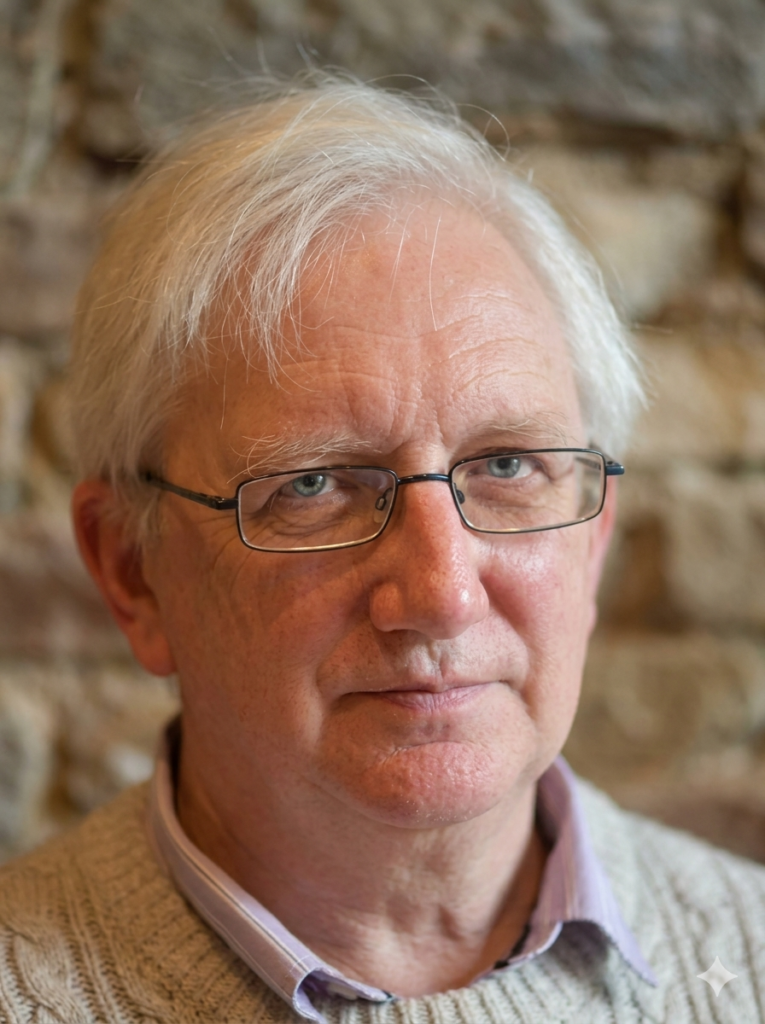
Craig Murray: Biden Works to Prolong Ukraine War

Craig Murray

June 17, 2022

I was in Turkey to try to further peace talks, as an experienced diplomat with good contacts there, and as a peace activist. I was not there as a journalist and much of what I discussed was with the understanding of confidence. It will be probably be some years before I judge it reasonable and fair to reveal all that I know. But I can give some outline.

Originally published on Craig Murray’s homepage on June 7, 2022

Turkey continues to be the centre of diplomatic activity on resolving the Ukraine war. It is therefore particularly revealing, and a sign of Western priorities, that I did not come across a single western journalist there trying to follow and cover the diplomatic process. There are hundreds of Western journalists in Ukraine, effectively embedded with the Ukrainian authorities, producing war porn.

There appear to be none seriously covering attempts to make peace.

There was a sea change two weeks ago when Ukraine shifted to a public stance that it would cede no territory at all in a peace deal. On 21 May, Zelensky’s office stated that “The war must end with the complete restoration of Ukraine’s territorial integrity and sovereignty.” Previously while they had been emphatic that no territory in “the East” would be ceded, there had been studied ambiguity about whether that referred to Donbas alone or also the Crimea.

The new Ukrainian stance, that there will be no peace deal without recovering the Crimea, has ended for now any hopes of an early ceasefire. It appears to be a militarily unachievable objective – I cannot think of any scenario in which Russia de facto loses Crimea, without the serious possibility of worldwide nuclear war.

This blow to the peace process was a setback in Ankara, and I should say that every source I spoke with believed the Ukrainians were acting on instructions conveyed from Washington to Zelensky by Defence Secretary Lloyd Austin, who openly stated he wanted the war to wear down Russian defence capabilities.

A long war in Ukraine is of course massively in the interest of the US military-industrial complex, whose dripping roasts in Afghanistan, Iraq and Syria have gone rather off the heat. It also forwards the strategic objective of severely damaging the Russian economy, although much of that damage is mutual.

Why we live in a world where the goal of nations is to damage the lives of inhabitants of other nations is a question which continues to puzzle me.

Food and mines

Turkey has for now turned towards the more limited goal of ensuring that grain supplies can be shipped out from the Black Sea through the Bosphorus. This is essential for developing nations and essential for world food supplies, which were already under pressure before this war began.

Turkey is offering to clear sea lanes of mines and to police the ships carrying grain from the port of Odessa, which is still under Ukrainian control. Russia has agreed to the deal.

Ukraine is objecting to this plan to export its own wheat, because it objects to the removal of the mines, which I should be clear were put down in the sea lanes by Ukraine to prevent amphibious attack on Odessa.

There is monumental hypocrisy by the West on this, blaming Russia for preventing the export of the grain while it is actually blocked in by Ukraine’s own mines, which they currently refuse to allow Turkey to remove.

On 19 May this was the headline of a UN press release:

Lack of Grain Exports Driving Global Hunger to Famine Levels, as War in Ukraine Continues, Speakers Warn Security Council

As it states, Ukraine and Russia together account for one third of world grain exports and two thirds of world sunflower oil exports. Many of those who die from this war are likely to do so in developing countries, from hunger.

The decision of the EU and US to target Russian and Belarussian agricultural exports for sanctions displays an extraordinary callousness towards the very poorest human beings on the globe, who cannot afford rising food prices.

Well, the headline here is that the USA and EU are pushing Ukraine to block any food deal, based on a number of objections including the reduction in the security of Odessa and the claim that Russia will sell looted Ukrainian grain. The view in both Ankara and the developing world is that the big picture, of millions facing starvation, is being lost.

The experience has made me so cynical that I am left wondering if the interests of the powerful agricultural lobbies in both the EU and USA are influencing policy. High world food prices benefit some powerful interests.

I blame Putin for starting a war that does nothing to redress Russian long term security concerns. But the truth is that politicians in the West are equally keen on this war.

Boris Johnson yesterday was blatantly promoting it for his own survival. Anybody who makes any effort to stop the killing – Presidents Macron and Erdogan in particular – are immediately and universally denounced by the “liberal” media.

And yet, what is the end result that the liberal warmongers wish to achieve?

When we reach the stage that Henry Kissinger is a comparative voice of sanity, the political situation is indeed dire.

Originally published on Craig Murray’s homepage, June 7, 2022

Please help TFF remain truly independent by contributing if you benefited from this article

[paypal-donation]

Share

Leave a Reply

Your email address will not be published. Required fields are marked *

Related Posts

Jan Oberg May 15, 2026 Go to this Fox News page and scroll the whole way down: President Donald Trump tells the world that his meeting with President Xi Jinping yielded a lot of very concrete political and economic results – of course, only where the Chinese side, according to him, agreed with him. He does not mention the Taiwan issue, but Secretary of State, Marco Rubio, says that it did not feature prominently in their talks and that the US policy on Taiwan has not changed. Then go to China Daily – or Global Times – and you will see that for the Chinese it is framework, principles, structure of cooperation etc. that matters – all embedded in the overall idea of “constructive bilateral relationship of strategic stability.” Nowhere is any concrete agreement or deal – all that Trump refers to – mentioned. At the general level, this gives you insights into the very different social...
Jan Oberg, TFF director April 9, 2026 I was recently invited to have a good, long talk about the world – and, of course, about peace too – with Boris Malagurski on his Weight of Chains Channel on YouTube. It was a real joy and seems to have been greatly appreciated by the viewers too. Mr Malagurski and I shall of course be grateful if you share this conversation in your circles – of course, only if you like what you see and hear  And remember that this one – like hundreds of others with TFF Associates – can be enjoyed at our TFF Video Collection.
By Jan ObergTFF co-founder and director February 11, 2026 PART 3 — ECONOMICS, TRADE & FINANCIAL SOVEREIGNTY A. Trade Measures & Market Signaling Economic pressure can be applied instantly and scaled without violence. Immediate Measures (within a week) Government boycott US goods and services  A very powerful signal which over time will be felt. Targeted tariffs on selected U.S. goods Symbolic but high-visibility sectors send a clear message. Suspend trade facilitation talks A peaceful pause that signals deep concern. Freeze U.S. participation in public procurement – military procurement in particular A nonviolent way to reduce influence. Competition law review of U.S. corporations A legal tool to scrutinise market dominance. Longer-Term Measures EU–Asia–Africa trade corridors Reducing reliance on U.S. markets. European supply chains for critical minerals Strategic autonomy in resource access. European Strategic Trade Authority Monitoring coercive practices globally. Euro-denominated commodity markets Weakening the dollar’s pricing monopoly. The EU must resume contacts and negotiations with Russia, focusing on energy cooperation To...

Recent Articles

2003 The capital Bujumbura 2006 The capital Bujumbura 2006 Gitega, the second largest town& its surroundings 2007 Muramvia Back to Oberg’s Photography main page
By JONATHAN POWER August 16, 2000 LONDON – Remember the summer of ’98? In the sweltering, torpid heat of a Roman august, charged with exhaust fumes, the international community gave its overwhelming approval to the establishment of an International Criminal Court that will enable those accused of “crimes against humanity” to be tried and, if convicted, sentenced. Only seven nations opposed or abstained from the motion, including Israel, China, India and the U.S.A. where the Pentagon had successfully waged bureaucratic guerrilla war to undermine the initially sympathetic stance of President Bill Clinton. Two years on we can now see what an epochal event that was. In a the stroke of 120 pens it changed the climate on political thuggery. After numerous half-starts and false starts ever since the Nuremberg and Tokyo trials that convicted the war criminals of the Second World War, the world at last had agreed en masse a common...
By Jonathan Power April 8th 2004 LONDON – There is a widely held opinion abroad that Brazil never had the chance of profoundly changing for the better- shedding its widespread poverty and dire income distribution- until Lula (President Luiz Inácio da Silva) came along last year. This is not entirely false, but neither is it entirely true. Brazil has long made a kind of progress- in the last century it was second only to Taiwan as the fastest growing economy in the world- but it has been appallingly uneven. Part of the story of contemporary Brazil is clear to the eye in this small village of 7,000 people in the arid north east, along with the Amazon the poorest part of this vast country. Twenty five years or so ago I used to come to Pilõezinhos regularly when I had a close friend living here, Valéria Rezende, a radical, grass roots-stirring...

TFF on Substack

Discover more from TFF Transnational Foundation & Jan Oberg.

Most Popular

2003 The capital Bujumbura 2006 The capital Bujumbura 2006 Gitega, the second largest town& its surroundings 2007 Muramvia Back to Oberg’s Photography main page
By JONATHAN POWER August 16, 2000 LONDON – Remember the summer of ’98? In the sweltering, torpid heat of a Roman august, charged with exhaust fumes, the international community gave its overwhelming approval to the establishment of an International Criminal Court that will enable those accused of “crimes against humanity” to be tried and, if convicted, sentenced. Only seven nations opposed or abstained from the motion, including Israel, China, India and the U.S.A. where the Pentagon had successfully waged bureaucratic guerrilla war to undermine the initially sympathetic stance of President Bill Clinton. Two years on we can now see what an epochal event that was. In a the stroke of 120 pens it changed the climate on political thuggery. After numerous half-starts and false starts ever since the Nuremberg and Tokyo trials that convicted the war criminals of the Second World War, the world at last had agreed en masse a common...
By Jonathan Power April 8th 2004 LONDON – There is a widely held opinion abroad that Brazil never had the chance of profoundly changing for the better- shedding its widespread poverty and dire income distribution- until Lula (President Luiz Inácio da Silva) came along last year. This is not entirely false, but neither is it entirely true. Brazil has long made a kind of progress- in the last century it was second only to Taiwan as the fastest growing economy in the world- but it has been appallingly uneven. Part of the story of contemporary Brazil is clear to the eye in this small village of 7,000 people in the arid north east, along with the Amazon the poorest part of this vast country. Twenty five years or so ago I used to come to Pilõezinhos regularly when I had a close friend living here, Valéria Rezende, a radical, grass roots-stirring...
Read More
Generic thumbnail
2003 The capital Bujumbura 2006 The capital Bujumbura 2006 Gitega, the second largest town& its surroundings 2007 Muramvia Back to Oberg’s Photography main page
By JONATHAN POWER August 16, 2000 LONDON – Remember the summer of ’98? In the sweltering, torpid heat of a Roman august, charged with exhaust fumes, the international community gave its overwhelming approval to the establishment of an International Criminal Court that will enable those accused of “crimes against humanity” to be tried and, if convicted, sentenced. Only seven nations opposed or abstained from the motion, including Israel, China, India and the U.S.A. where the Pentagon had successfully waged bureaucratic guerrilla war to undermine the initially sympathetic stance of President Bill Clinton. Two years on we can now see what an epochal event that was. In a the stroke of 120 pens it changed the climate on political thuggery. After numerous half-starts and false starts ever since the Nuremberg and Tokyo trials that convicted the war criminals of the Second World War, the world at last had agreed en masse a common...
By Jonathan Power April 8th 2004 LONDON – There is a widely held opinion abroad that Brazil never had the chance of profoundly changing for the better- shedding its widespread poverty and dire income distribution- until Lula (President Luiz Inácio da Silva) came along last year. This is not entirely false, but neither is it entirely true. Brazil has long made a kind of progress- in the last century it was second only to Taiwan as the fastest growing economy in the world- but it has been appallingly uneven. Part of the story of contemporary Brazil is clear to the eye in this small village of 7,000 people in the arid north east, along with the Amazon the poorest part of this vast country. Twenty five years or so ago I used to come to Pilõezinhos regularly when I had a close friend living here, Valéria Rezende, a radical, grass roots-stirring...
Mearsheimer-800x418-1
A friendly quarrel while we agree that the US sanctions are a weapon of mass destruction and kill more people than wars do. And that we must talk much more about sanctions than we have so far. Jan Oberg, TFF director March 16, 2026 John Mearsheimer recently stated that U.S. sanctions murdered around 38 million people between 1971 and 2021 – see the video below. It is a dramatic figure, and it has spread quickly because it captures, in one sentence, the enormous human cost of modern sanctions. I share his concern about the destructive effects of economic coercion. But the specific number he cites — and the way he attributes it — deserves a friendly academic clarification. The figure comes from a 2023 Lancet Global Health article estimating the mortality effects of unilateral U.S. and EU sanctions over the past half‑century. This is the first point where Mearsheimer’s shorthand diverges from the text: the study...
Screenshot-2026-05-15-103534
Jan Oberg May 15, 2026 Go to this Fox News page and scroll the whole way down: President Donald Trump tells the world that his meeting with President Xi Jinping yielded a lot of very concrete political and economic results – of course, only where the Chinese side, according to him, agreed with him. He does not mention the Taiwan issue, but Secretary of State, Marco Rubio, says that it did not feature prominently in their talks and that the US policy on Taiwan has not changed. Then go to China Daily – or Global Times – and you will see that for the Chinese it is framework, principles, structure of cooperation etc. that matters – all embedded in the overall idea of “constructive bilateral relationship of strategic stability.” Nowhere is any concrete agreement or deal – all that Trump refers to – mentioned. At the general level, this gives you insights into the very different social...
Screenshot-2026-05-12-104023
Lena Petrova of “World Affairs In Context” with more than half a million subscribers on YouTube wanted to explore what a peace researcher like me has to say about, among other things, the First and the Second Cold War and why eethics has disappeared from politics. I am particularly happy about this conversation that also yielded an amazing number of very appreciative comments on YouTube. No doubt, people are longing for alternatives, including peace perspectives.