

CGTN Think Tank survey: 84.6% believe U.S. war against terrorism in Afghanistan has failed

CGTN Think Tank

October 3rd, 2021

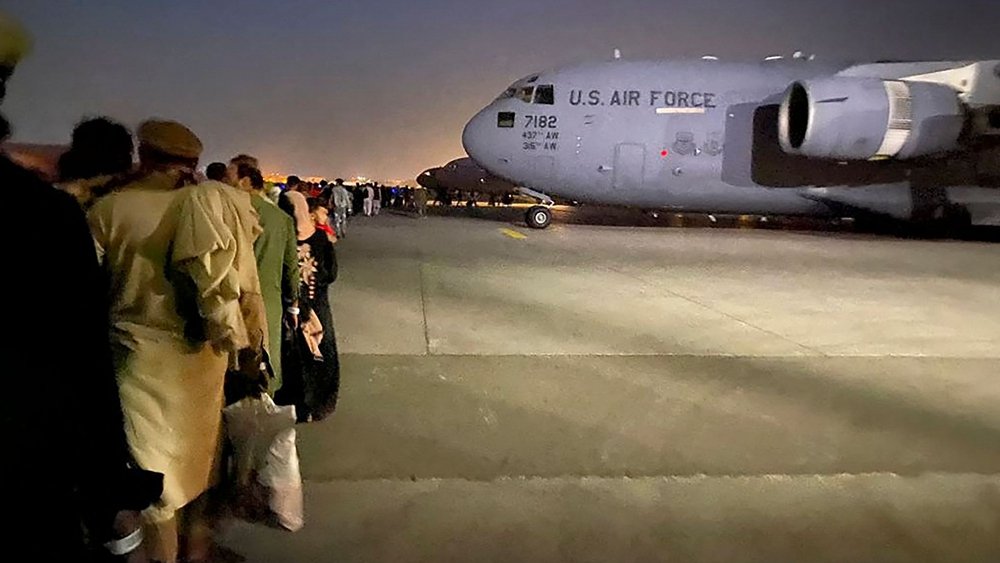
Images of Afghans chasing a U.S. transport plane at Kabul airport shocked the world after Taliban took over Kabul on August 15. As for the costly and longest-ever war waged by the U.S., 84.6 percent of global poll respondents believe it failed.

Originally posted on CGTN on August 27, 2021 here

The CGTN Think Tank conducted a global survey in Chinese, English, Spanish, French, Arabic and Russian on social media platforms including Twitter, Facebook, YouTube and Weibo from August 20 to August 26.

There have been more than 140,000 responses including liking, sharing and commenting on this online poll consisting of three questions.

80% say U.S. failed Afghanistan War

The United States launched the Afghanistan war in the name of counterterrorism in 2001 and made a hasty troop withdrawal in 2021. The first question is, do you think the U.S. war against terrorism in Afghanistan has failed? Why?

Among respondents from various countries who participated in liking, sharing and commenting, 84.6 percent believe that the U.S. war against terrorism in Afghanistan has failed and English speakers cast the highest number of votes – 77 percent. Arabic-speaking netizens showed a clear-cut stance, with over 90 percent of the comments tending to believe that the U.S.’s anti-terrorism war in Afghanistan failed.

On YouTube, the number of comments topped those of Facebook and Twitter. 

The survey analyzes the comments of six language groups: Chinese, English, Spanish, French, Arabic and Russian, and finds that the respondents in different languages tend to believe that “the United States has failed in the war on terrorism in Afghanistan,” but the reasons for the failure vary widely.

French-speaking participants compared the anti-terrorism war in Afghanistan with the wars in Iraq and Vietnam, saying that the United States lost its return on investment.

Many English-speaking respondents said that the U.S. war in Afghanistan was based on lies and disinformation, so was doomed to fail.
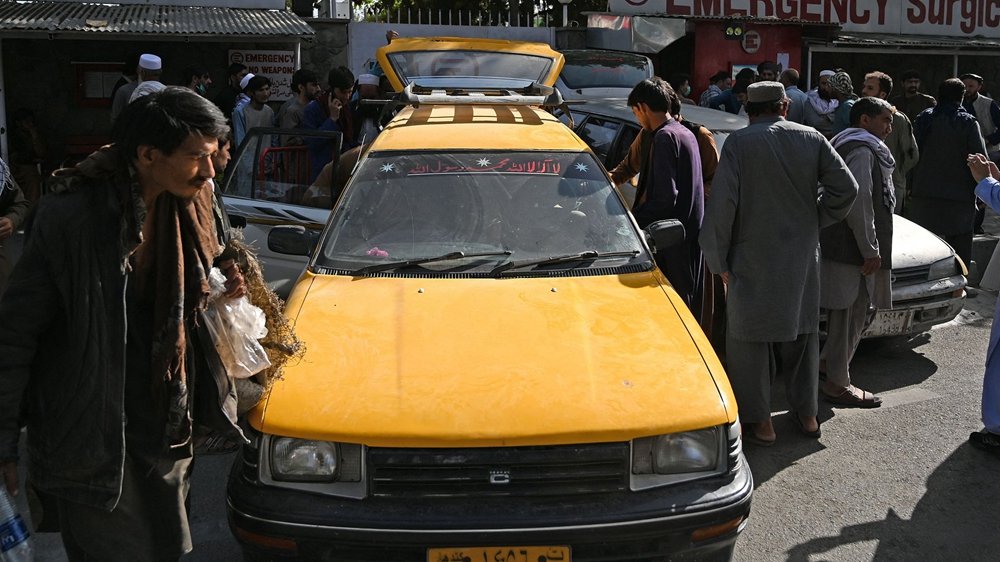
Relatives load coffins of victims of the August 26 twin suicide bombings into a car at a hospital in Kabul, August 27, 2021. /CFP

Wars waged by U.S. cause ‘destruction and turmoil’

After World War II, the United States launched wars in Vietnam War and Afghanistan, among others. The second question is, what do you think those wars have brought to these countries?

Global respondents in the six languages use highly consistent wording in this order of frequency words: destruction, turmoil, division, death, despair, pain and hatred.

According to the survey on Facebook, 88.89 percent of Spanish-speaking respondents, 82.14 percent of French-speaking respondents and 88 percent of Arabic-speaking respondents agree that “the war has brought negative impacts to relevant countries after World War II.” At the same time, Russian-speaking netizen responses to this survey question were nearly twice the number of the other two questions.

The survey analyzes the comments and finds that respondents believe that “such series of wars have brought violence, poverty, suffering and even destruction.”

Some English-speaking netizens believe that the series of wars launched by the United States have brought destruction to the war-torn countries, causing heavy casualties of innocent civilians and intensifying hatred between different countries and the United States.

A widespread perception among Arabic-speaking netizens is that U.S. military interventions have brought destruction, backwardness, instability, famine and death.

U.S. ‘not a superpower for the well-being of the world’

Former U.S. President Jimmy Carter has said that the U.S. is “the most warlike nation in the history of the world,” and the country has enjoyed only 16 years of peace in its 242-year history. The third question is, what do you think led to the U.S. becoming so “warlike”?

This question had the highest participation rate among respondents, with 80.2 percent showing a negative attitude towards belligerence.

In this poll, 89.63 percent and 87.23 percent of Spanish-speaking netizens on YouTube and Facebook respectively commented negatively on the cause of the belligerence.

The third question also had the highest participation among Twitter users. The number of responses in this single question accounts for 45 percent of the total number of responses in the survey.

One English-speaking netizen said, “I think the U.S. uses the term superpower not for the well-being of the world, especially the poor countries, but for plundering money in Muslim countries and seeking development in the name of creating terrorist organizations to make people think that terrorists are Muslims. Then they plunder resources and then leave to attack other countries, in order to make their own country safe.”

Download the full report in PDF:

CGTN Think Tank survey: Over 80% of respondents say U.S. war in Afghanistan failed

Please think of supporting TFF so we can bring you more genuine materials – like the above – on problems and on peace as well as remain 100% people-financed and therefore independent and politically non-correct…

CGTN is an international English-language cable TV news service based in Beijing, China. It is one of six channels provided by China Global Television Network, owned by the Chinese state media China Central Television, under the control of the Propaganda Department of the Chinese Communist Partyaccording to Wikipedia. Here is how it describes itself:

China Global Television Network, or CGTN, is an international media organization launched on December 31, 2016. It aims to provide global audiences with accurate and timely news coverage as well as rich audiovisual services, promoting communication and understanding between China and the world, and enhancing cultural exchanges and mutual trust between China and other countries.

Headquartered in Beijing, CGTN has three production centers, located in Nairobi, Washington D.C. and London, all staffed with international professionals from around the world.

Adhering to the principles of objectivity, rationality and balance in reporting, CGTN endeavors to present information from diverse perspectives.

CGTN’s TV channels are available in more than 160 countries and regions worldwide. It also incorporates the video news agency Global Video News Agency.

CGTN, a pioneer of media convergence in China, delivers digital content through CGTN Digital, which is accessible via CGTN.com, CGTN mobile applications, YouTube, Facebook, Twitter, Weibo and other social media platforms, with over 150 million followers across the globe.


Share

Leave a Reply

Your email address will not be published. Required fields are marked *

Related Posts

Jan Oberg, TFF director April 9, 2026 I was recently invited to have a good, long talk about the world – and, of course, about peace too – with Boris Malagurski on his Weight of Chains Channel on YouTube. It was a real joy and seems to have been greatly appreciated by the viewers too. Mr Malagurski and I shall of course be grateful if you share this conversation in your circles – of course, only if you like what you see and hear  And remember that this one – like hundreds of others with TFF Associates – can be enjoyed at our TFF Video Collection.
By Jan ObergTFF co-founder and director February 11, 2026 PART 3 — ECONOMICS, TRADE & FINANCIAL SOVEREIGNTY A. Trade Measures & Market Signaling Economic pressure can be applied instantly and scaled without violence. Immediate Measures (within a week) Government boycott US goods and services  A very powerful signal which over time will be felt. Targeted tariffs on selected U.S. goods Symbolic but high-visibility sectors send a clear message. Suspend trade facilitation talks A peaceful pause that signals deep concern. Freeze U.S. participation in public procurement – military procurement in particular A nonviolent way to reduce influence. Competition law review of U.S. corporations A legal tool to scrutinise market dominance. Longer-Term Measures EU–Asia–Africa trade corridors Reducing reliance on U.S. markets. European supply chains for critical minerals Strategic autonomy in resource access. European Strategic Trade Authority Monitoring coercive practices globally. Euro-denominated commodity markets Weakening the dollar’s pricing monopoly. The EU must resume contacts and negotiations with Russia, focusing on energy cooperation To...
PART 2 — Diplomacy, Law and Nonviolent Power By Jan ObergTFF co-founder and director January 26, 2026 This is the second of four TFF-created idea portfolios designed to curb the global reach of the United States and, in both the short and long term, help catalyse a worldwide nonviolent resistance to what many observers describe as the Trump administration’s uniquely confrontational, destructive and world-threatening policies. These portfolios outline what governments and citizens across the world can do through dynamic diplomacy, creative initiatives, and strictly nonviolent means. They are typical TFF works in that we do not only tell what the problem is and how bad it will go – as 90+% of all commentators, experts and scholars do – we tell what we think can be done, inviting you to think of what you think you can do. It seems painfully clear to me that the current political dynamics in Washington increasingly resemble the most dangerous...

Recent Articles

Jan Oberg May 15, 2026 Go to this Fox News page and scroll the whole way down: President Donald Trump tells the world that his meeting with President Xi Jinping yielded a lot of very concrete political and economic results – of course, only where the Chinese side, according to him, agreed with him. He does not mention the Taiwan issue, but Secretary of State, Marco Rubio, says that it did not feature prominently in their talks and that the US policy on Taiwan has not changed. Then go to China Daily – or Global Times – and you will see that for the Chinese it is framework, principles, structure of cooperation etc. that matters – all embedded in the overall idea of “constructive bilateral relationship of strategic stability.” Nowhere is any concrete agreement or deal – all that Trump refers to – mentioned. At the general level, this gives you insights into the very different social...
Lena Petrova of “World Affairs In Context” with more than half a million subscribers on YouTube wanted to explore what a peace researcher like me has to say about, among other things, the First and the Second Cold War and why eethics has disappeared from politics. I am particularly happy about this conversation that also yielded an amazing number of very appreciative comments on YouTube. No doubt, people are longing for alternatives, including peace perspectives.
The MIMAC – Military-Industrial-Media-Academic Complex – drives the world’s rampant militarism and wars without end. Here is a short reflection of how it works against all interests of humanity. #5 deals with why there is no real enemy or threat images/analysis. It’s all ex-post constructions. And, btw, theTFF Peace Pulse is now on Rumble.

TFF on Substack

Discover more from TFF Transnational Foundation & Jan Oberg.

Most Popular

Jan Oberg May 15, 2026 Go to this Fox News page and scroll the whole way down: President Donald Trump tells the world that his meeting with President Xi Jinping yielded a lot of very concrete political and economic results – of course, only where the Chinese side, according to him, agreed with him. He does not mention the Taiwan issue, but Secretary of State, Marco Rubio, says that it did not feature prominently in their talks and that the US policy on Taiwan has not changed. Then go to China Daily – or Global Times – and you will see that for the Chinese it is framework, principles, structure of cooperation etc. that matters – all embedded in the overall idea of “constructive bilateral relationship of strategic stability.” Nowhere is any concrete agreement or deal – all that Trump refers to – mentioned. At the general level, this gives you insights into the very different social...
Lena Petrova of “World Affairs In Context” with more than half a million subscribers on YouTube wanted to explore what a peace researcher like me has to say about, among other things, the First and the Second Cold War and why eethics has disappeared from politics. I am particularly happy about this conversation that also yielded an amazing number of very appreciative comments on YouTube. No doubt, people are longing for alternatives, including peace perspectives.
The MIMAC – Military-Industrial-Media-Academic Complex – drives the world’s rampant militarism and wars without end. Here is a short reflection of how it works against all interests of humanity. #5 deals with why there is no real enemy or threat images/analysis. It’s all ex-post constructions. And, btw, theTFF Peace Pulse is now on Rumble.
Read More
Screenshot-2026-05-15-103534
Jan Oberg May 15, 2026 Go to this Fox News page and scroll the whole way down: President Donald Trump tells the world that his meeting with President Xi Jinping yielded a lot of very concrete political and economic results – of course, only where the Chinese side, according to him, agreed with him. He does not mention the Taiwan issue, but Secretary of State, Marco Rubio, says that it did not feature prominently in their talks and that the US policy on Taiwan has not changed. Then go to China Daily – or Global Times – and you will see that for the Chinese it is framework, principles, structure of cooperation etc. that matters – all embedded in the overall idea of “constructive bilateral relationship of strategic stability.” Nowhere is any concrete agreement or deal – all that Trump refers to – mentioned. At the general level, this gives you insights into the very different social...
Screenshot-2026-05-12-104023
Lena Petrova of “World Affairs In Context” with more than half a million subscribers on YouTube wanted to explore what a peace researcher like me has to say about, among other things, the First and the Second Cold War and why eethics has disappeared from politics. I am particularly happy about this conversation that also yielded an amazing number of very appreciative comments on YouTube. No doubt, people are longing for alternatives, including peace perspectives.
Screenshot-2026-04-13-154551 (2)
The MIMAC – Military-Industrial-Media-Academic Complex – drives the world’s rampant militarism and wars without end. Here is a short reflection of how it works against all interests of humanity. #5 deals with why there is no real enemy or threat images/analysis. It’s all ex-post constructions. And, btw, theTFF Peace Pulse is now on Rumble.
Screenshot-2026-04-13-154551 (1)
Jan Oberg, TFF director April 28, 2026 In this third TFF Peace Pulse, I make the important distinction between the violence and the conflict that violence is a symptom of. If you want peace, focus on the underlying conflict because that is the key to resolution, peacemaking, and a better future for the parties. The West is obsessed with violence, just look around you – and 90+ per cent of the public debate is about military issues and other violence – totally wasted for peace. These Peace Pulses will only be published here a few times. You will also not find them on YouTube and Vimeo because both platforms have blocked TFF and me; you know, peace is dangerous these days. Most TFF’s videos since 2007 are now on Rumble.
Screenshot-2026-04-13-154551
In contrast to most, we’ll bring alternatives, solutions, hope and strategies for a better future. Times are dangerous, yes, but that only intensifies the need for constructive thinking and action! Jan Oberg, TFF director April 13, 2026 The new TFF Peace Pulse uses video messages in a new way: Max 3-5-minute-long comments, ideas or perhaps mini-lectures, all about peace – positive peace. We launch them today on April 13, 2026 with a carefully crafted visual aesthetic fitting the content. We hope to publish them regularly from now on. We launch Peace Pulse (PP) – for a number of reasons. The world is in chaos, and there are countless reasons to feel concerned, frustrated, even angry. The atmosphere is saturated with doom and gloom, with negative energy and rear‑mirror thinking, while vision, imagination, alternatives, strategies and genuine future‑mindedness remain in short supply. And without them, we simply can’t save the world. Looking at problems from a hundred angles will...
IMG_5165 (1)
PART II — Publishing Peace in a System That Prioritises Militarism Jan Oberg, TFF director April 10, 2026 How TFF Maintains a Daily Voice in a Digital World Built for Noise This article is part of the series “TFF at 40″ and it invites you to learn about Four Decades of Publishing Peace. It takes a look at how a small, people‑financed peace foundation has communicated across four generations of technology — from wax stencils and fax machines to mass email and Substack — and why TFF continues to publish every single day in a system that rewards noise, conflict, and militarism. ◆ What it means to publish peace every single day in a digital system built for 24/7 news and other noise, confrontation, and militarism. How TFF’s independence, continuity, and global readership defy algorithms, donor cycles, and Western media censorhip — and why the Majority World keeps listening. When the...
