Can Imran Khan end Pakistan’s war-like hostility towards India?

when only a rare foreign journalist was interested in him despite his fame as having been the world’s best cricketer. Now he has won a handsome political victory.

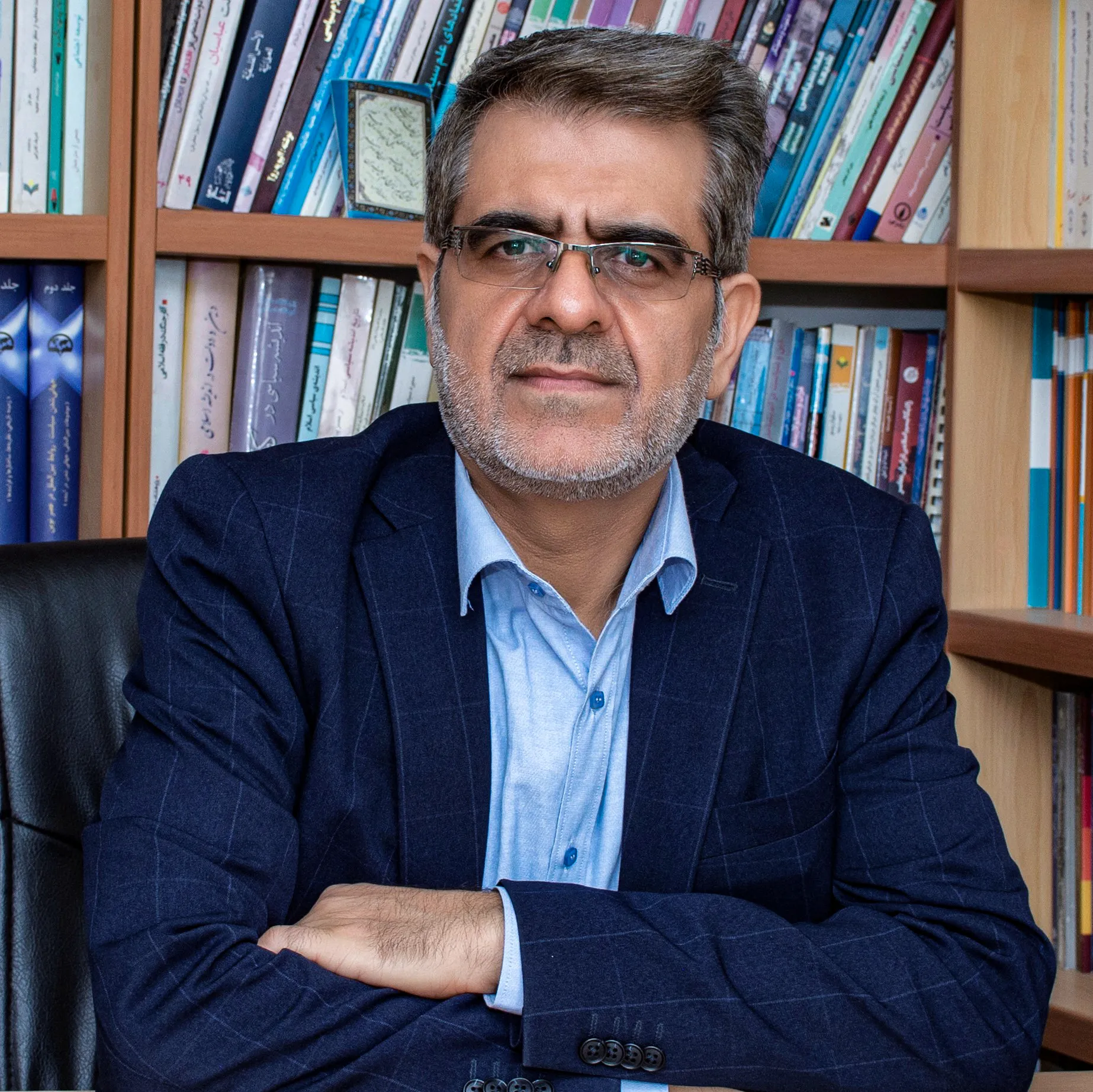
We did talk about Kashmir, the number one foreign policy issue then and today. He didn’t think the Indian government of that time, when Manmohan Singh was prime minister, was strong enough to make a deal. On the Pakistani side he didn’t think an army man could do it despite the army’s large influence on politics. He went on to say, ”a civilian prime minister could do it if a real leader emerged like Zulfikar Ali Bhutto” (who was prime minister in the 1960s). Maybe he meant himself.

The issue of Kashmir has dominated Pakistani and Indian foreign policy ever since colonial India was partitioned into predominantly Hindu India and Moslem Pakistan in 1947. The British left Kashmir with a majority Muslim population and a Hindu ruler.

Both Pakistan and India claimed this beautiful piece of Himalayan real estate. The conflict has led to three wars. President Bill Clinton said he was worried the next clash might lead to nuclear war.

India missed its great opportunity to settle the burning dispute while the military president, Pervez Musharraf, who ruled Pakistan from 2001 until his overthrow in 2008, was in power.

According to diplomats I talked to, both British and American, in New Delhi and Islamabad, a deal was tantalisingly close. One British ambassador told me that the main barrier to a deal was “psychological” and that India had to make very few concessions to make a final deal.

If Musharraf wasn’t prepared to give away the store, the Pakistani compromises came close to it. But India, despite the seemingly friendly diplomacy of  Foreign Minister Pranab Mukherjee and the unwarlike prime minister, Manmohan Singh, couldn’t bring itself to go the extra mile.

Observers had different explanations for the Indian intransigence – that the Indian army, the intelligence services and senior bureaucrats in the foreign ministry were resisting an accord; that the leadership had not made an effort to educate the electorate as Pakistan’s had done; that the prime minister was weak and over preoccupied with the economy; that his (highly successful) attempt to lower the grinding poverty in the rural areas was also a preoccupation;  that the time consuming nuclear deal with the U.S was critically important; and that India rather liked the status quo, since stubbornness fitted in with its self-image of being the sub continent’s super power.

There was also the failure of the George W. Bush Administration that was, in Singh words, “loved” by India for pushing a deal through Congress that lifted the long standing embargo on selling India nuclear materials and reactors to India. America could have used the muscle that the nuclear deal gave it to help push India to sign on to Musharraf’s magnanimous offer.

After his re-election Prime Minister Singh unexpectedly found himself riding high. Not only did Congress win hands down, but the grumbling that Singh was a weak prime minister has disappeared. But Singh still wouldn’t bite the bullet. As he had said to me eighteen months before, “How can you expect me to push a peace deal when militants are coming from Pakistan every few months to set off bombs in India.”

Needless to say, the big bombing in Bombay in 2010 reinforced his argument. But when I repeated this in my interview with Musharraf, he responded sharply. “I don’t agree with his way of looking at it. If everyone in the world looked for calm and peace before reaching a solution, we would never achieve peace anywhere. It is the political deal itself that can produce calm. Bomb blasts are a result of the problem. Let’s not put the cart before the horse.”

Musharraf had his own good reasons for compromising.

The conflict has led to Pakistan-based guerrillas fighting for a free Kashmir, (which Pakistan’s intelligence service has long secretly supported, although much less these days). But these militants have given aid, men and advice to the Taliban in Afghanistan. In turn the Afghani Taliban have helped the Pakistani Taliban, although they have not go along with the attacks made by factions of Pakistan’s Taliban – such as when they tried to kill Musharraf, did kill Benazir Bhutto as she campaigned to be prime minister and when they have blown up schools and clinics.

Settling Kashmir could have been and would be still a major contribution towards taming the Pakistani Taliban.

Is Imran Khan the civilian leader who could do the job of making peace with India? Could he carry the army with him?

Can he neutralize the Pakistani Taliban? Is India ready this time if he does?

We wait and we will see.

Copyright: Jonathan Power

www.jonathanpowerjournalist.com

Foreign affairs columnist, film-maker and author

Share

Leave a Reply

Your email address will not be published. Required fields are marked *

Related Posts

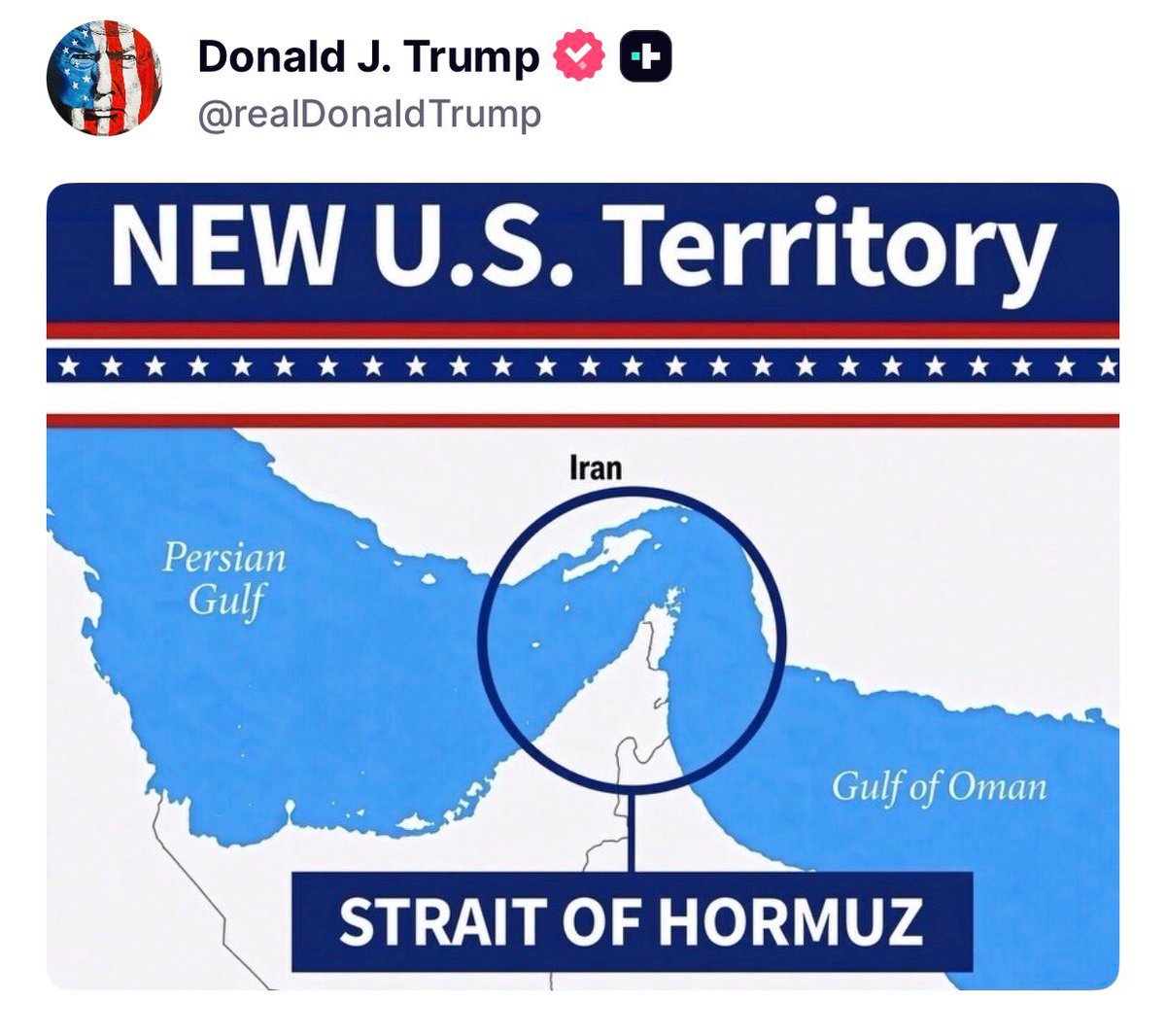
In 1980 in his State of the Union address President Jimmy Carter said: “Any attempt by any outside force to gain control of the Persian Gulf will be regarded as an assault on the vital interests of the United States and such an assault will be repelled by any means necessary, including military force.” Dear President Donald Trump: We’ve been here before and it’s as ludicrous this time as it was nearly 40 years ago. Why on earth are you sending in a flotilla of ships and 2,500 troops? Why are you so convinced that the mines that exploded on two oil tankers, neither of which were American, in the Persian Gulf are the work of the Iranians? The Persian Gulf, and in particular the infamous Strait of Hormuz, the narrow waterway (21 miles wide, the same as the English Channel) that is its entrance, is no longer the “jugular”...
I’m on the 250 km/hour train hurtling from Moscow to St Petersburg when it suddenly clicks in my mind. My apologies for being so stupid, but despite regular trips to Russia over many years I have only suddenly got it – I too have been brainwashed about Russia by Western politicians, media and authors, like nearly everyone else. What I noticed in Moscow and what I’ve seen in St Petersburg on previous trips is that, yes, I am, indeed I am, in a normal Western big city environment. Both cities are grand in different ways. St Petersburg, with its museums, palaces, great churches, canals and river, its rich store of art (probably second only to the Louvre) and its musical life (the Marriinsky theatre is the epicenter of world ballet) is arguably the most beautiful and imposing of all the world’s cities. Moscow has the Kremlin, the most majestic seat...
Brexit grabs the attention of much of the world, not least because Britain once had an Empire and ruled a great part of the world’s peoples. And it’s the caretaker of the English language, the Empire’s most important legacy. Add to that the BBC, the world’s favourite and most trusted radio and TV station, its top universities, its production of pop music, its numerous top-flight classical orchestras, its permanent membership of the UN Security Council, it being the world’s fifth largest economy and, alas, its possession of nuclear weapons. In terms of its soft non-military power, depending on which measurement is used, Britain is first or second in the world. It remains partly a mystery why something around half the electorate want Britain to leave the European Union. It’s mainly older people who voted that way in the referendum of three years ago. The very old who lived through World...

Recent Articles

Jan Oberg May 15, 2026 Go to this Fox News page and scroll the whole way down: President Donald Trump tells the world that his meeting with President Xi Jinping yielded a lot of very concrete political and economic results – of course, only where the Chinese side, according to him, agreed with him. He does not mention the Taiwan issue, but Secretary of State, Marco Rubio, says that it did not feature prominently in their talks and that the US policy on Taiwan has not changed. Then go to China Daily – or Global Times – and you will see that for the Chinese it is framework, principles, structure of cooperation etc. that matters – all embedded in the overall idea of “constructive bilateral relationship of strategic stability.” Nowhere is any concrete agreement or deal – all that Trump refers to – mentioned. At the general level, this gives you insights into the very different social...
Lena Petrova of “World Affairs In Context” with more than half a million subscribers on YouTube wanted to explore what a peace researcher like me has to say about, among other things, the First and the Second Cold War and why eethics has disappeared from politics. I am particularly happy about this conversation that also yielded an amazing number of very appreciative comments on YouTube. No doubt, people are longing for alternatives, including peace perspectives.
The MIMAC – Military-Industrial-Media-Academic Complex – drives the world’s rampant militarism and wars without end. Here is a short reflection of how it works against all interests of humanity. #5 deals with why there is no real enemy or threat images/analysis. It’s all ex-post constructions. And, btw, theTFF Peace Pulse is now on Rumble.

TFF on Substack

Discover more from TFF Transnational Foundation & Jan Oberg.

Most Popular

Jan Oberg May 15, 2026 Go to this Fox News page and scroll the whole way down: President Donald Trump tells the world that his meeting with President Xi Jinping yielded a lot of very concrete political and economic results – of course, only where the Chinese side, according to him, agreed with him. He does not mention the Taiwan issue, but Secretary of State, Marco Rubio, says that it did not feature prominently in their talks and that the US policy on Taiwan has not changed. Then go to China Daily – or Global Times – and you will see that for the Chinese it is framework, principles, structure of cooperation etc. that matters – all embedded in the overall idea of “constructive bilateral relationship of strategic stability.” Nowhere is any concrete agreement or deal – all that Trump refers to – mentioned. At the general level, this gives you insights into the very different social...
Lena Petrova of “World Affairs In Context” with more than half a million subscribers on YouTube wanted to explore what a peace researcher like me has to say about, among other things, the First and the Second Cold War and why eethics has disappeared from politics. I am particularly happy about this conversation that also yielded an amazing number of very appreciative comments on YouTube. No doubt, people are longing for alternatives, including peace perspectives.
The MIMAC – Military-Industrial-Media-Academic Complex – drives the world’s rampant militarism and wars without end. Here is a short reflection of how it works against all interests of humanity. #5 deals with why there is no real enemy or threat images/analysis. It’s all ex-post constructions. And, btw, theTFF Peace Pulse is now on Rumble.
Read More
Screenshot-2026-05-15-103534
Jan Oberg May 15, 2026 Go to this Fox News page and scroll the whole way down: President Donald Trump tells the world that his meeting with President Xi Jinping yielded a lot of very concrete political and economic results – of course, only where the Chinese side, according to him, agreed with him. He does not mention the Taiwan issue, but Secretary of State, Marco Rubio, says that it did not feature prominently in their talks and that the US policy on Taiwan has not changed. Then go to China Daily – or Global Times – and you will see that for the Chinese it is framework, principles, structure of cooperation etc. that matters – all embedded in the overall idea of “constructive bilateral relationship of strategic stability.” Nowhere is any concrete agreement or deal – all that Trump refers to – mentioned. At the general level, this gives you insights into the very different social...
Screenshot-2026-05-12-104023
Lena Petrova of “World Affairs In Context” with more than half a million subscribers on YouTube wanted to explore what a peace researcher like me has to say about, among other things, the First and the Second Cold War and why eethics has disappeared from politics. I am particularly happy about this conversation that also yielded an amazing number of very appreciative comments on YouTube. No doubt, people are longing for alternatives, including peace perspectives.
Screenshot-2026-04-13-154551 (2)
The MIMAC – Military-Industrial-Media-Academic Complex – drives the world’s rampant militarism and wars without end. Here is a short reflection of how it works against all interests of humanity. #5 deals with why there is no real enemy or threat images/analysis. It’s all ex-post constructions. And, btw, theTFF Peace Pulse is now on Rumble.
Screenshot-2026-04-13-154551 (1)
Jan Oberg, TFF director April 28, 2026 In this third TFF Peace Pulse, I make the important distinction between the violence and the conflict that violence is a symptom of. If you want peace, focus on the underlying conflict because that is the key to resolution, peacemaking, and a better future for the parties. The West is obsessed with violence, just look around you – and 90+ per cent of the public debate is about military issues and other violence – totally wasted for peace. These Peace Pulses will only be published here a few times. You will also not find them on YouTube and Vimeo because both platforms have blocked TFF and me; you know, peace is dangerous these days. Most TFF’s videos since 2007 are now on Rumble.
Screenshot-2026-04-13-154551
In contrast to most, we’ll bring alternatives, solutions, hope and strategies for a better future. Times are dangerous, yes, but that only intensifies the need for constructive thinking and action! Jan Oberg, TFF director April 13, 2026 The new TFF Peace Pulse uses video messages in a new way: Max 3-5-minute-long comments, ideas or perhaps mini-lectures, all about peace – positive peace. We launch them today on April 13, 2026 with a carefully crafted visual aesthetic fitting the content. We hope to publish them regularly from now on. We launch Peace Pulse (PP) – for a number of reasons. The world is in chaos, and there are countless reasons to feel concerned, frustrated, even angry. The atmosphere is saturated with doom and gloom, with negative energy and rear‑mirror thinking, while vision, imagination, alternatives, strategies and genuine future‑mindedness remain in short supply. And without them, we simply can’t save the world. Looking at problems from a hundred angles will...
IMG_5165 (1)
PART II — Publishing Peace in a System That Prioritises Militarism Jan Oberg, TFF director April 10, 2026 How TFF Maintains a Daily Voice in a Digital World Built for Noise This article is part of the series “TFF at 40″ and it invites you to learn about Four Decades of Publishing Peace. It takes a look at how a small, people‑financed peace foundation has communicated across four generations of technology — from wax stencils and fax machines to mass email and Substack — and why TFF continues to publish every single day in a system that rewards noise, conflict, and militarism. ◆ What it means to publish peace every single day in a digital system built for 24/7 news and other noise, confrontation, and militarism. How TFF’s independence, continuity, and global readership defy algorithms, donor cycles, and Western media censorhip — and why the Majority World keeps listening. When the...