PressInfo #152 - A U.S. war against Iraq must be prevented now

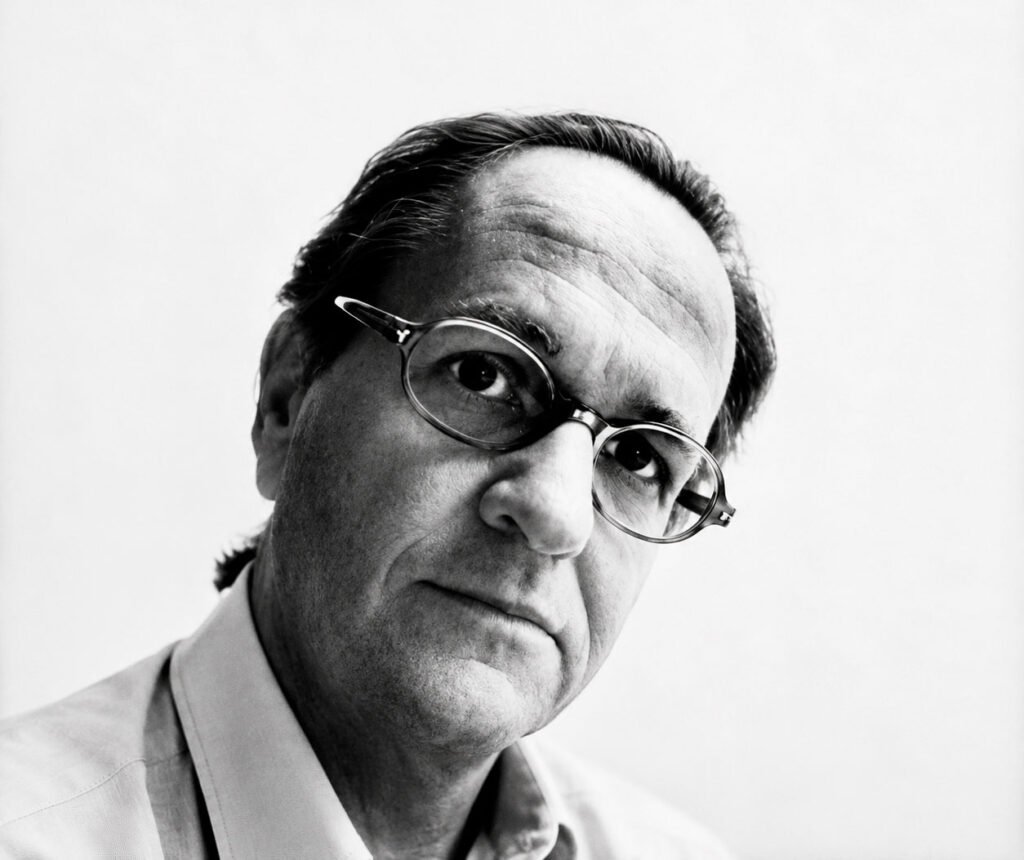
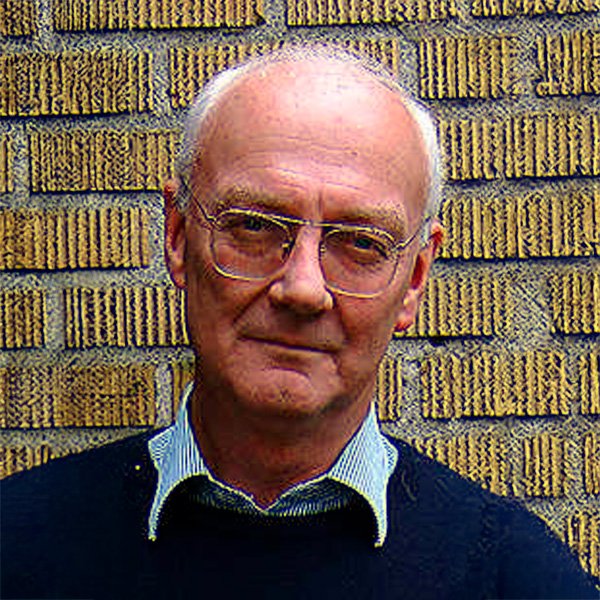
We had just driven the 900 kilometres-long, desert highway from Baghdad to Amman and boarded the plane from Amman to Sweden via Paris. Having lived in a free media free-zone for two weeks during our fact-finding mission to Baghdad, we eagerly grabbed The Wall Street Journal of May 28. The top headline read, Military Strategists Favor Large Iraq Invasion ForceAt Least 200,000 Troops Would Be Needed to Oust Saddam, U.S. Suggests. So, they are going to bomb, to destroy, to impose their will on Iraq, the country and the people, that we have just visited?

Now that we have been there, our reaction is different than it would have been had we read that headline back home in Sweden. We met a young woman in her wheelchair in Babylon, south of Baghdad. She had just been helped by the United Nations Development Program (UNDP) and the Iraqi Ministry of Labour to start a small shop where she prints publications from a computer and holds computer classes for university students and other citizens. Will her dream, already realised, be shattered by a new war?

We think of the dozens of children and older citizens in the street who greeted us with, Welcome to Iraq and Salam Aleikum – Hello = peace be upon you – and wanted us to take pictures of them, smiling all over, in spite of the way we look, strangers in their eyes. We have both travelled a bit and few peoples can compete with the Iraqis when it comes to being kind, helpful, hospitable and paying respect to the stranger. We think of the scholars we met on the last evening when we gave lectures on preventive diplomacy, peace-building and non-violent conflict-resolution at Baytol Hikma, The House of Wisdom, a beautiful, newly renovated, blue compound on the bank of the Tigris. Will Baytol Hikma be destroyed in new raids, will these scholars and their families be killed or further deprived of their right to pursue scholarly work the way they used to?

What sentimentality, you may think. But the problem with the West and its media, including The Wall Street Journal, is that the only Iraqi mentioned among 25 million is President Saddam Husayn. The only approach they have to one of the world’s oldest and most sophisticated cultures is devastating sanctions and military enforcement. The only perspective they have is their own and it seems to be beyond dispute that they have a moral right to bomb societies and oust leaders they just do not like. How the Iraqis think and feel after the wars with Iran, with Kuwait, with each other, with the West and after 12 years of utterly inhuman sanctions is of no concern.

If The Wall Street Journal cared to do investigative research and go to Iraq, it would have a hard time finding anyone in Iraq, citizen or foreigner, who favours the present sanctions or a future US war against Iraq. If it cared about objectivity, we would have had the anti-war viewpoints represented in the same article or hitting the front page of the next edition.

The whole war project is counterproductive; less diplomatically expressed, it’s absurd, perverse, pathetic and morally indefensible. If the U.S. starts a war against Iraq, it will be most divisive for NATO, which is still licking its wounds after the bombing of Yugoslavia in 1999, and the U.S., with its “we-don’t-need-you” policies when targeting Afghanistan. In terms of public opinion, the United States will end up being, unfortunately, even more isolated and the Atlantic gap will increase further.

Saddam Husayn will gain from such a war and know how to exploit it to his own benefit. True, there may be many in Iraq and outside who dream about the day he is gone. But in times of crisis and war, citizens tend to rally around their leaders; we saw that in Serbia during the bombing. Most likely, internal opposition elements will be labelled as traitors and treated accordingly by a regime that is not known to use soft gloves. As far as we know, there are no governments in the Middle East, with the exception of Israel, that favour a new war against Iraq, not even Kuwait. If that is so, rest assured that the Arab in the street is even more strongly against it. The fact is that the Iraqis have managed extremely well to re-build diplomatic and economic relations with neighbours. The opening of the border with Saudi Arabia in May is one of many examples.

Although Iraq is devastated and nowadays only a shadow of its past military might, it is not Afghanistan. It will not be possible for any foreign-imposed regime to control Baghdad and its immediate surroundings, about 5 million inhabitants, let alone control all of the country.

With 200,000 U.S. troops and possibly some more sucked in during the fighting, what will the U.S. and the West do to control and run the affairs of Iraq? In short, how do you govern 25 million people, many, if not the majority, of whom are vehemently opposed to the West and do not trust the U.S. after all they have been through? You can’t even argue that you liberated the women, because Iraq is a secular society in which women play a more “Western” role than in virtually any other Arab state.

From where do the war planners and responsible foreign-policy makers expect to gather enough well-educated, experienced and honest Iraqis to run the post-Saddam Iraq they hope for? It should be pretty obvious that the Iraqi opposition does not constitute a credible, viable alternative. Would they serve a foreign Governement for anything but the money and privileges they expect and would they, with that main motivation, be the leaders and civil servants the citizens need? Or would we end up witnessing civil war, coups, plots and uprisings – of which there exists plenty in Iraq’s modern history – in the wake of a U.S. invasion and departure?

What would it mean for the citizens of Iraq if the UN and the incredibly hardworking humanitarian organisations, Care, Unicef, Caritas, Red Cross Federation, ICRC, etc. were forced to evacuate? The Oil for Food program (to which we shall return in a later PressInfo) operates efficiently thanks to both the Iraqi government – whose distribution of food and medicine in the words of a high-ranking international is “second to none in actually reaching those in need” – and to the wide variety of national and international humanitarian organisations. No one who has visited Iraq can possibly doubt that a new war will have unspeakably cruel consequences for the civilian population. Everybody also knows that the Iraqi elite has not exactly suffered at any point due to the sanctions or the bombings.

But Saddam Husayn too is making a series of mistakes. The biggest may be that he thinks that military preparation is the only way to defend Iraq. We have no illusions that he studies Gandhi, but he and his advisers should be aware that there is no way they can win a military war against history’s strongest military power – which, by the way, also does not mean that the United States can win, because that takes more than military might. You can still win militarily and lose morally and politically…

War must be prevented by all possible means. The only large and acceptable to all mediator that could, perhaps, help avert war is the European Union, in some kind of co-operation with Russia and China. The latter two have full embassies in Iraq and monitor the situation at close range. However, EU countries have withdrawn their ambassadors from the country. Only the French uphold a significant de facto presence, focussing on business and culture. So there is low-level representation and a low-level of knowledge about what is really going on, a violation of the first rule of thumb of conflict resolution: keep yourself well informed about your opponent and keep a door open for communication.

Iraq signalled a wish for dialogue with the EU, but here again, the EU proved incapable of mustering a coherent, relevant and far-sighted common policy. Instead the EU left it again for the U.S. to do the spectacular thing and for itself to pay for the future rebuilding of the country – so much, regrettably, for the EU’s civilian crisis management facility and common foreign and security policy vis-à-vis one of the most serious conflicts on earth.

So, articles in the Western media report matter-of-factly about the planning of what cannot but lead to utter chaos and cruelty for the Iraqis. Allegedly, it will finally rid the world of Saddam, but even so: what is the likelihood of a better, more prosperous, secure and democratic Iraq after bombings, invasions and occupation?

Our answer is: zero probability. Military conflict-resolution in Croatia, Bosnia, Kosovo, Macedonia, Somalia and Afghanistan can be summarised as quick-fixes with no long-term improvement possible. The politicians and military people behind the conflict-management in these hot spots seem to have forgotten von Clausewitz’s brilliant formulation: “before you go to war you must decide what kind of peace you want.”

Any type of war against Iraq will cause more problems and solve none of them in the long run. If free media focussed on the 24,999,999 other Iraqis rather than on Saddam Husayn, ask policy-makers critical questions about the assumed post-Saddam scenario for Iraq and the region, and finally give the anti-war majority in the West and in Iraq a voice, there would be a chance of avoiding the impending catastrophe.

The conflict between Iraq and the United States and the West is one of the most tightly locked. Stereotypes abound on both sides, and we, the authors, do not profess to have the solution. But if the debate could be re-started from a new point of departure – i.e. no more wars against Iraq – other possibilities may gain ground. When we know that war is not an option, we can begin to move away from smart sanctions and smart wars and explore whether there are smarter ways to solve conflicts.

The following TFF PressInfos will explore these possibilities from a variety of angles.
Share

Leave a Reply

Your email address will not be published. Required fields are marked *

Related Posts

“En dag som berättigar till fest”, utropade den London-baserade al-Quds al-Arabi efter FN:s eldupphörresolution, “eftersom detta är första gången som Israel accepterar ett FN-beslut från en position som besegrad och inte som segrare”. Att ett arabisk-israeliskt krig för en gångs skull slutat med arabisk seger, är en helt dominerade åsikt i arabiska medier. Al-Quds al-Arabi tillåter sig att drömma om att det israeliska nederlaget skall leda till massflykt från Israel. Men i nästa andetag påminner tidningen om att Israel aldrig brukar genomföra sina internationella åtaganden och varnar för att förlorarna, liksom tidigare, kan hämnas genom att provocera fram inbördeskrig i Libanon. Med tanke på de otaliga massmediala vittnesmålen om det libanesiska folkets eniga motståndskraft förefaller risken för inre stridigheter i det sargade landet just nu liten. Men visst kan man urskilja nyansskillnader i libanesiska tidningar. Vänsterorganet al-Safir uppfattar FN-resolutionen som en komplott i syfte att rädda Israel från ännu större...
A friendly quarrel while we agree that the US sanctions are a weapon of mass destruction and kill more people than wars do. And that we must talk much more about sanctions than we have so far. Jan Oberg, TFF director March 16, 2026 John Mearsheimer recently stated that U.S. sanctions murdered around 38 million people between 1971 and 2021 – see the video below. It is a dramatic figure, and it has spread quickly because it captures, in one sentence, the enormous human cost of modern sanctions. I share his concern about the destructive effects of economic coercion. But the specific number he cites — and the way he attributes it — deserves a friendly academic clarification. The figure comes from a 2023 Lancet Global Health article estimating the mortality effects of unilateral U.S. and EU sanctions over the past half‑century. This is the first point where Mearsheimer’s shorthand diverges from the text: the study...
Jan Oberg May 15, 2026 Go to this Fox News page and scroll the whole way down: President Donald Trump tells the world that his meeting with President Xi Jinping yielded a lot of very concrete political and economic results – of course, only where the Chinese side, according to him, agreed with him. He does not mention the Taiwan issue, but Secretary of State, Marco Rubio, says that it did not feature prominently in their talks and that the US policy on Taiwan has not changed. Then go to China Daily – or Global Times – and you will see that for the Chinese it is framework, principles, structure of cooperation etc. that matters – all embedded in the overall idea of “constructive bilateral relationship of strategic stability.” Nowhere is any concrete agreement or deal – all that Trump refers to – mentioned. At the general level, this gives you insights into the very different social...

Recent Articles

“En dag som berättigar till fest”, utropade den London-baserade al-Quds al-Arabi efter FN:s eldupphörresolution, “eftersom detta är första gången som Israel accepterar ett FN-beslut från en position som besegrad och inte som segrare”. Att ett arabisk-israeliskt krig för en gångs skull slutat med arabisk seger, är en helt dominerade åsikt i arabiska medier. Al-Quds al-Arabi tillåter sig att drömma om att det israeliska nederlaget skall leda till massflykt från Israel. Men i nästa andetag påminner tidningen om att Israel aldrig brukar genomföra sina internationella åtaganden och varnar för att förlorarna, liksom tidigare, kan hämnas genom att provocera fram inbördeskrig i Libanon. Med tanke på de otaliga massmediala vittnesmålen om det libanesiska folkets eniga motståndskraft förefaller risken för inre stridigheter i det sargade landet just nu liten. Men visst kan man urskilja nyansskillnader i libanesiska tidningar. Vänsterorganet al-Safir uppfattar FN-resolutionen som en komplott i syfte att rädda Israel från ännu större...
Greenland – the world’s largest island, a continent of its own with only 57.000 inhabitants. I visited it for the first time in May 2005. I flew across the inland ice to Nuuk, the tiny capital with some 14.000 inhabitants. I was overwhelmed by the pride and kindness of everyone I met as well as by the unique natural beauty. Unfortunately, due to weather conditions during my ten-day stay I could get nowhere else but Nuuk. Fortunately, however, among those I met was Gitte Arvegaard, a Danish lawyer and negotiator employed by the local government, Greenland Home Rule. She turned out to be an enthusiastic photographer with a lot of pictures taken during various trips around Greenland. So this Greeland series is the result of our cooperative effort. We both hope you enjoy it and are stimulated to visit Greenland – about which you may read more here. Finally, if you want to...
 Jan Oberg’s storyof how he met Sir Paul Liverpool – where else to meet Paul McCartney? Paul’s old class mate and TFF Associate, Jonathan Power introduced me to Paul McCartney in Liverpool at an informal reception. It was held at what used to be their school, now the Liverpool Institute for Performing Arts and we were there to celebrate that Jonathan had written Amnesty International’s 40th Anniversary book. This happy event for “righting wrongs and writing songs” gave me an opportunity to meet Paul and tell him about TFF and get straight to the matter: would he consider making a donation in support of our work for peace? While I was probably the only one with such a wish that day, I was certainly not the only one who wanted to shake hands and talk with him. In the last minutes before Paul was to leave, Jonathan brought us together and we got about three...

TFF on Substack

Discover more from TFF Transnational Foundation & Jan Oberg.

Most Popular

“En dag som berättigar till fest”, utropade den London-baserade al-Quds al-Arabi efter FN:s eldupphörresolution, “eftersom detta är första gången som Israel accepterar ett FN-beslut från en position som besegrad och inte som segrare”. Att ett arabisk-israeliskt krig för en gångs skull slutat med arabisk seger, är en helt dominerade åsikt i arabiska medier. Al-Quds al-Arabi tillåter sig att drömma om att det israeliska nederlaget skall leda till massflykt från Israel. Men i nästa andetag påminner tidningen om att Israel aldrig brukar genomföra sina internationella åtaganden och varnar för att förlorarna, liksom tidigare, kan hämnas genom att provocera fram inbördeskrig i Libanon. Med tanke på de otaliga massmediala vittnesmålen om det libanesiska folkets eniga motståndskraft förefaller risken för inre stridigheter i det sargade landet just nu liten. Men visst kan man urskilja nyansskillnader i libanesiska tidningar. Vänsterorganet al-Safir uppfattar FN-resolutionen som en komplott i syfte att rädda Israel från ännu större...
Greenland – the world’s largest island, a continent of its own with only 57.000 inhabitants. I visited it for the first time in May 2005. I flew across the inland ice to Nuuk, the tiny capital with some 14.000 inhabitants. I was overwhelmed by the pride and kindness of everyone I met as well as by the unique natural beauty. Unfortunately, due to weather conditions during my ten-day stay I could get nowhere else but Nuuk. Fortunately, however, among those I met was Gitte Arvegaard, a Danish lawyer and negotiator employed by the local government, Greenland Home Rule. She turned out to be an enthusiastic photographer with a lot of pictures taken during various trips around Greenland. So this Greeland series is the result of our cooperative effort. We both hope you enjoy it and are stimulated to visit Greenland – about which you may read more here. Finally, if you want to...
 Jan Oberg’s storyof how he met Sir Paul Liverpool – where else to meet Paul McCartney? Paul’s old class mate and TFF Associate, Jonathan Power introduced me to Paul McCartney in Liverpool at an informal reception. It was held at what used to be their school, now the Liverpool Institute for Performing Arts and we were there to celebrate that Jonathan had written Amnesty International’s 40th Anniversary book. This happy event for “righting wrongs and writing songs” gave me an opportunity to meet Paul and tell him about TFF and get straight to the matter: would he consider making a donation in support of our work for peace? While I was probably the only one with such a wish that day, I was certainly not the only one who wanted to shake hands and talk with him. In the last minutes before Paul was to leave, Jonathan brought us together and we got about three...
Read More
Imagen-thumbnail-The-Transnational-1
“En dag som berättigar till fest”, utropade den London-baserade al-Quds al-Arabi efter FN:s eldupphörresolution, “eftersom detta är första gången som Israel accepterar ett FN-beslut från en position som besegrad och inte som segrare”. Att ett arabisk-israeliskt krig för en gångs skull slutat med arabisk seger, är en helt dominerade åsikt i arabiska medier. Al-Quds al-Arabi tillåter sig att drömma om att det israeliska nederlaget skall leda till massflykt från Israel. Men i nästa andetag påminner tidningen om att Israel aldrig brukar genomföra sina internationella åtaganden och varnar för att förlorarna, liksom tidigare, kan hämnas genom att provocera fram inbördeskrig i Libanon. Med tanke på de otaliga massmediala vittnesmålen om det libanesiska folkets eniga motståndskraft förefaller risken för inre stridigheter i det sargade landet just nu liten. Men visst kan man urskilja nyansskillnader i libanesiska tidningar. Vänsterorganet al-Safir uppfattar FN-resolutionen som en komplott i syfte att rädda Israel från ännu större...
Greenland – the world’s largest island, a continent of its own with only 57.000 inhabitants. I visited it for the first time in May 2005. I flew across the inland ice to Nuuk, the tiny capital with some 14.000 inhabitants. I was overwhelmed by the pride and kindness of everyone I met as well as by the unique natural beauty. Unfortunately, due to weather conditions during my ten-day stay I could get nowhere else but Nuuk. Fortunately, however, among those I met was Gitte Arvegaard, a Danish lawyer and negotiator employed by the local government, Greenland Home Rule. She turned out to be an enthusiastic photographer with a lot of pictures taken during various trips around Greenland. So this Greeland series is the result of our cooperative effort. We both hope you enjoy it and are stimulated to visit Greenland – about which you may read more here. Finally, if you want to...
p_mccartney_poem
 Jan Oberg’s storyof how he met Sir Paul Liverpool – where else to meet Paul McCartney? Paul’s old class mate and TFF Associate, Jonathan Power introduced me to Paul McCartney in Liverpool at an informal reception. It was held at what used to be their school, now the Liverpool Institute for Performing Arts and we were there to celebrate that Jonathan had written Amnesty International’s 40th Anniversary book. This happy event for “righting wrongs and writing songs” gave me an opportunity to meet Paul and tell him about TFF and get straight to the matter: would he consider making a donation in support of our work for peace? While I was probably the only one with such a wish that day, I was certainly not the only one who wanted to shake hands and talk with him. In the last minutes before Paul was to leave, Jonathan brought us together and we got about three...
Logo-Transnational
1942James Paul McCartney is born in Liverpool on June 18th. 1956Paul writes his first song, I Lost My Little Girl. 1957Paul meets John Lennon at St. Peter’s Church Fete, Woolton, Liverpool. He joins his first group, The Quarrymen and performs in his first gig at The New Clubmoor Hall, Liverpool, on October 18th. 1960Formation of The Beatles, who play residencies in Hamburg and at The Cavern in Liverpool. 1961First Beatles recordings issued in Germany, as the backing group for Tony Sheridan. 1962The first Beatles Parlophone recording, Love Me Do, reaches number 17 in the British charts. 1963The birth of Beatlemania. Please Please Me gives the group their first British Number 1. She Loves You cements their success. Please Please Me and With The Beatles albums released. 1964First triumphant American tour. The Beatles perform at the Royal Command Performance and release their first film, A Hard Day’s Night. Their single I...
Logo-Transnational
  Back to the series “Bujumbura, Burundi”
By JONATHAN POWER August 16, 2000 LONDON – Remember the summer of ’98? In the sweltering, torpid heat of a Roman august, charged with exhaust fumes, the international community gave its overwhelming approval to the establishment of an International Criminal Court that will enable those accused of “crimes against humanity” to be tried and, if convicted, sentenced. Only seven nations opposed or abstained from the motion, including Israel, China, India and the U.S.A. where the Pentagon had successfully waged bureaucratic guerrilla war to undermine the initially sympathetic stance of President Bill Clinton. Two years on we can now see what an epochal event that was. In a the stroke of 120 pens it changed the climate on political thuggery. After numerous half-starts and false starts ever since the Nuremberg and Tokyo trials that convicted the war criminals of the Second World War, the world at last had agreed en masse a common...