By Barbara Ehrenreich
Los Angeles Times Weekly
June 25 – July 1, 1999

It’s an ugly peace, to say the least, when the victors keep chortling over each mass grave they uncover. “See, we were right to pulverize Serbia!,” they crow – not noticing that the mass graves are material evidence of NATO’s own ineptness and, it must be said, savagery. For 78 days of war, that proud alliance refused to let the ethnic cleansing in Kosovo deter it for one moment from the urgent business of bombing Serbia back into the era of candlelight and campfires.

It would have been too risky for our airplanes to take on the Serbs in Kosovo, so NATO contented itself with terrorizing their wives and children back in Belgrade. What was the conflict all about then, other than providing an unplanned excursion to Macedonia and Kukes for a million ethnic Albanian Kosovars lucky enough not to have stayed behind in the graves?

One theory afoot is that the true purpose of the war was not to provide aid and succor to the Kosovars, but to establish America‚s absolute world domination. But considering the war’s aftermath and taking into account the global picture, one can only say: Would that it were so! What’s a little Pax Americana compared to what now appears to have been NATO’s real goal all along the restoration of the Cold War? We could have had one superpower, calmly enforcing the reign of the IMF and McDonald’s, but the masters of NATO, in their passion for symmetry, determined that there must be at least two if the world was to enjoy a healthy and productive level of conflict.

And if they achieved nothing else in Yugoslavia, they at least managed to restore order and sense to the universe, in the form of fresh tensions between the West on the one side and Russia and China on the other. In fact, you can stop worrying about Y2K – just set your calendars back to 1958.

A prescient observer could have seen this coming exactly a decade ago, when it became clear that the other side was no longer willing to play its role in what will be known, soon enough, as Cold War I. At the news of perestroika and Gorbachev’s intention to start scrapping his warheads, did Washington officialdom don funny hats, swill champagne and run out to foxtrot through the streets? Not at all; in fact the White House inexplicably derided the Soviet leader as a “drugstore cowboy” and hinted that perestroika was a diabolical trick. When then Secretary of Defense Dick Cheney proposed a microscopic 0.3 percent reduction in defense spending to mark the sudden disappearance of any plausible enemy, outraged screams issued from Congress. “You are putting Grumman out of business,” complained the congressional representative of that particular weapons company. What would have been welcomed as peace almost anywhere else looked to Americans like an enemy shortage.

Bill Clinton was supposed to lead us out of the old Cold War mentality that had Bush so firmly in its grip; he was to have been a fresh young president willing to serve Warner Bros. and Coke as well as Boeing and Lockheed. But in 1994, with no Soviet Union in sight, his administration began pushing for the expansion of NATO to include a passel of former Soviet subject states. Yeltsin yelped, and even Pat Buchanan, whom no one has ever accused of being a pacifist, was aghast. The logic was impeccably bonkers: What made NATO’s expansion possible was the disappearance of the only rationale for its existence, the Soviet empire.

Now if NATO were just a club for white people of non-Slavic origin, a place for them to gather over sherry and reminisce about the fun times at Normandy and Ypres, what would it matter how big it got? But it is of course a military alliance, meaning a kind of armed gang, and the first thing new members have to do is take a sacred oath to increase their military budgets. This is called “modernizing” and is justified by the need to have all members, including the paupers among them, achieve “NATO-compatible” levels of armaments. As noted by many in the press, the biggest U.S. supporters of NATO expansion were not the Polish-derived citizens of Chicago, but the manufacturers of missiles and fighter jets.

But what is a military alliance without something militaristic to do? Serb atrocities in Kosovo seemed to present the ideal mission. No one can reasonably deny that Serbia has excelled in the atrocity-production business (although the Croats and even the Kosovar Albanians can claim some success in that department too). So Secretary of State Madeleine Albright, consummate hostess that she is, launched her war according to a timetable designed – her aides have since revealed – to get the whole business over with in time for NATO’s 50th anniversary bash in April. This was to be the inaugural war of a beefed-up NATO, proof of its lasting relevance. So what if Serbia’s long-standing ally, Russia, had started growling about re-aiming its nuclear warheads at Foggy Bottom?

No victory in sight, NATO held its birthday party in April anyway, with the diplomats all feigning the gravitas appropriate to people simultaneously engaged in acts of random airborne vandalism abroad. But there were no long faces among some of the partygoers, no indeed. U.S. weapons manufacturers‚ stocks were booming, thanks to the “excitement in Kosovo,” as one American market analyst put it, and the arms dealers not only showed up at NATO‚s party, they actually sponsored it. Well, to be fair, some communications firms like Ameritech pitched in for the hors d‚oeuvres too, but the bulk of the sponsors were defense companies like Boeing, which contributed $250,000, and Raytheon, which has seen its stocks soar by 17 percent since NATO‚s war began. As a reward for their generosity, the executives of sponsoring companies were allowed to mingle with the assembled diplomats, no doubt using the occasion to whisper little pleasantries like, “Boy, do I have a cluster bomb for you!”

But you can’t have a meaningful Cold War solely against poor old basket-case Russia, whose soldiers can usually be found roaming the streets, panhandling for vodka and turnip money. Even in their proudest moment, as occupiers of the Pristina airport, they had to beg NATO for basic supplies like bottled water. Hence the bombing of the Chinese embassy in Belgrade; and this “hence” does not derive from any privileged insider information. It would just be too painful to admit that NATO’s great moral undertaking included bombing a crowded city without an up-to-date map. Never mind that China today is no more communist than Connecticut: At least its military is in good enough shape to have funded an American presidential campaign.

Welcome to Cold War II. True, for the moment Russia has been appeased by giving it a piece of Kosovo to patrol. But the really scary collateral damage remains: China’s suspension of all top-level military and arms-control contacts with the U.S., and the pissed-off Russian parliament’s refusal to ratify the START II treaty. Buried among the rubble left by NATO’ s bombs may be our species’ slender hope of averting a planetwide nuclear blowout.

If Cold War II ever gets hot, it could be the first conflict that even Boeing can’t win. So stop chortling, NATO, the next mass grave you look into – should the dignity of graves of any kind remain an option – may be our own.

© Los Angeles Times Weekly 1999
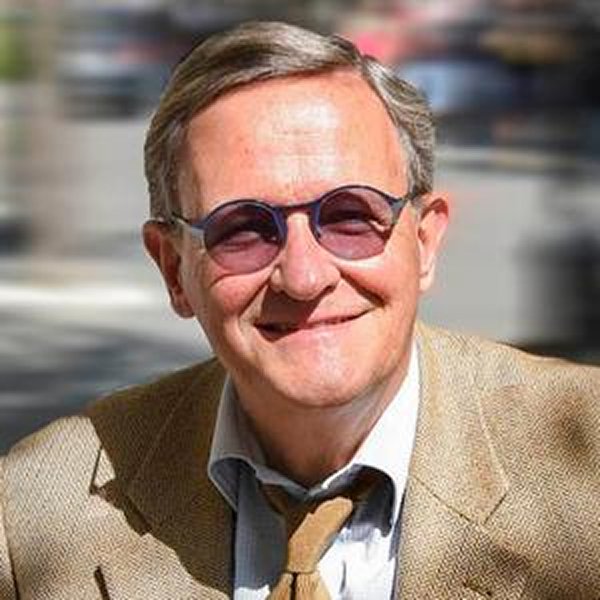
Peace & future researcher + ‌Art Photographer

Related Posts

24. april, 2008 Fatuma Ali Jeg har boet og arbejdet i Grønland i 8 år fra 1997 og til 2005. I de 8 år har jeg været almindelig overlæge i 3 år og administrerende overlæge resten af tiden. Fra 2005 og indtil 2006 har jeg arbejdet for det grønlandske sundhedsvæsen men boet i DK. Ifølge min kontrakt skulle jeg fortsat koordinere den psykiatriske indsats på kysten, være fysisk til stede i Grønland i 1 måned i hvert kvartal og ellers være til rådighed for netkonsultationer hele året. Netkonsultationerne handlede udelukkende om kendte og diagnosticerede patienter, hvor der var behov for at optimere den medikamentelle behandling eller supervisere den psykiatriske sygeplejerske. Jeg tror, at mit største bidrag til den grønlandske psykiatri  har været opbygningen af distriktspsykiatrien i det meste af  landet. Med opbakning fra det politiske system og mine overordnede var det lykkedes at etablere psykiatrisk behandling i patienternes nærmiljø således...
Niels Harrit, Associate professor, PhD, Department of Chemistry, University of Copenhagen When viewed in the rear-view mirror of history, the attack on USA on September 11th, 2001 (9/11) might very well prove to be the single most important political event since World War II. It sparked the so-called “war on terror”, which has left a trail of casualties and refugees, with numbers running into the millions. Military expenses and security budgets have soared. As have the number of terrorists. Civil rights have been curtailed for everybody. Fear is prevalent. Our children and grandchildren are left with a less secure world – and a mountain of debt. In spite of this profound impact, the physical and technical realities of 9/11 have never been satisfactorily explained by the US Government. Before considering this claim and its consequences, it is worthwhile reminding ourselves of the “scientific method”, which has served our western societies...
Marianne With Bindslev, Poliiken.dk, 19 december 2003EU mister folkelig gejstStrid om blandt andet Irakkrigen har blotlagt EU som en institution med mange ord og lidt handling, og det smitter af på befolkningens tillid til unionen. Poul Husted, Politiken.dk, 19 december 2003Iraks nye hær i opløsningMenneskeretsgrupper kritiserer de irakiske dommere for ikke at have den fornødne baggrund. Anders Jerichow & Adam Hannestad, Politiken.dk, 19 december 2003Dansk plan for atabisk demokratiRegeringen gør op med årtiers tilbageholdenhed over for arabiske lande. Nu skal 100 millioner kroner fremme reformer, støtte en fri presse og sikre menneskerettigheder. Henrik Kaufholz & Thomas Lauritzen, Politiken.dk,19 december 2003EU-veteran: Et lykkeligt sammenbrud for EuropaBritisk EU-ekspert mener, at unionen står i en meget alvorlig krise. Vibeke Sperling, Politiken.dk, 19 december 2003Vinde på anklagebænken i HaagMilan Babic, leder af et blodigt forsøg på at løsrive Krajina fra Kroatien, har vidnet imod Milosevic, men onsdag indledte Haag-domstolen en sag imod ham. Marc...

Recent Articles

Tony Robinson October 4, 2026 Violence is easy to recognise when someone is being beaten, shot or killed. It becomes more difficult when nobody is holding a weapon. Poverty, discrimination, exploitation and repression can restrict a human life just as effectively, although they do so in very different ways and with very different consequences. Simply adding more categories to an ever-growing list of forms of violence does not really solve the problem. The more interesting question is what all these different situations have in common and why it makes sense to describe them using the same word. Human beings do not simply react to what happens around them. They remember the past, imagine things that do not yet exist, make plans and undertake projects. Workers organise because they imagine different working conditions; people migrate because they imagine another life somewhere else; social movements emerge because people refuse to accept the...
It’s a matter of principles, courage, vision and pulling together – while the militarist world is falling apart… Peter Langille October 3, 2026 “Here, then, is the problem which we present to you, stark and dreadful and inescapable: Shall we put an end to the human race; or shall mankind renounce war?”The Bertrand Russell—Albert Einstein Manifesto, July 9, 1955 ⁕ The forecast for what’s ahead is worrisome. The sharp rise in armed conflicts over the past three years is adding to what was already the highest level in over seventy years. Genocides, which should be prevented are supported. A shared climate emergency that jeopardises survival is ignored. Diverse polls now suggest that people are war-weary, worried and interested in a more effective United Nations. And, there are viable policy options for a more secure world! Yet governments are doubling-down, betting on more war and investing heavily. If current trends persist,...
Johan Galtung 1930-2024October 2015 Published here on October 3, 2026 Let us focus on Civilization for conflict analysis and remedies. Major forms of disorder use violence; war is state organized violence. The most belligerent states are the United States of America and Israel, both with civilization roots. National Evangelism, the US Protestant Christian civilization– more national than evangelical–justifies US warfare as exceptionalism of a people chosen by God, with a manifest destiny to run the world. Orthodox Judaism justifies Israeli warfare to conquer and expand from Nile to Euphrates as a religious right and duty to the Eternal One. The third most belligerent country, the UK, no longer believes it is God-chosen but chosen by the USA; not quite the same but something. But the root cause of global disorder lies in the Occident–with Islam–seeing itself as the single, universal civilization valid for all at all times, all others being...

TFF on Substack

Discover and subscribe to more peace materials on TFF Substack

Most Popular

Tony Robinson October 4, 2026 Violence is easy to recognise when someone is being beaten, shot or killed. It becomes more difficult when nobody is holding a weapon. Poverty, discrimination, exploitation and repression can restrict a human life just as effectively, although they do so in very different ways and with very different consequences. Simply adding more categories to an ever-growing list of forms of violence does not really solve the problem. The more interesting question is what all these different situations have in common and why it makes sense to describe them using the same word. Human beings do not simply react to what happens around them. They remember the past, imagine things that do not yet exist, make plans and undertake projects. Workers organise because they imagine different working conditions; people migrate because they imagine another life somewhere else; social movements emerge because people refuse to accept the...
It’s a matter of principles, courage, vision and pulling together – while the militarist world is falling apart… Peter Langille October 3, 2026 “Here, then, is the problem which we present to you, stark and dreadful and inescapable: Shall we put an end to the human race; or shall mankind renounce war?”The Bertrand Russell—Albert Einstein Manifesto, July 9, 1955 ⁕ The forecast for what’s ahead is worrisome. The sharp rise in armed conflicts over the past three years is adding to what was already the highest level in over seventy years. Genocides, which should be prevented are supported. A shared climate emergency that jeopardises survival is ignored. Diverse polls now suggest that people are war-weary, worried and interested in a more effective United Nations. And, there are viable policy options for a more secure world! Yet governments are doubling-down, betting on more war and investing heavily. If current trends persist,...
Johan Galtung 1930-2024October 2015 Published here on October 3, 2026 Let us focus on Civilization for conflict analysis and remedies. Major forms of disorder use violence; war is state organized violence. The most belligerent states are the United States of America and Israel, both with civilization roots. National Evangelism, the US Protestant Christian civilization– more national than evangelical–justifies US warfare as exceptionalism of a people chosen by God, with a manifest destiny to run the world. Orthodox Judaism justifies Israeli warfare to conquer and expand from Nile to Euphrates as a religious right and duty to the Eternal One. The third most belligerent country, the UK, no longer believes it is God-chosen but chosen by the USA; not quite the same but something. But the root cause of global disorder lies in the Occident–with Islam–seeing itself as the single, universal civilization valid for all at all times, all others being...
Read More
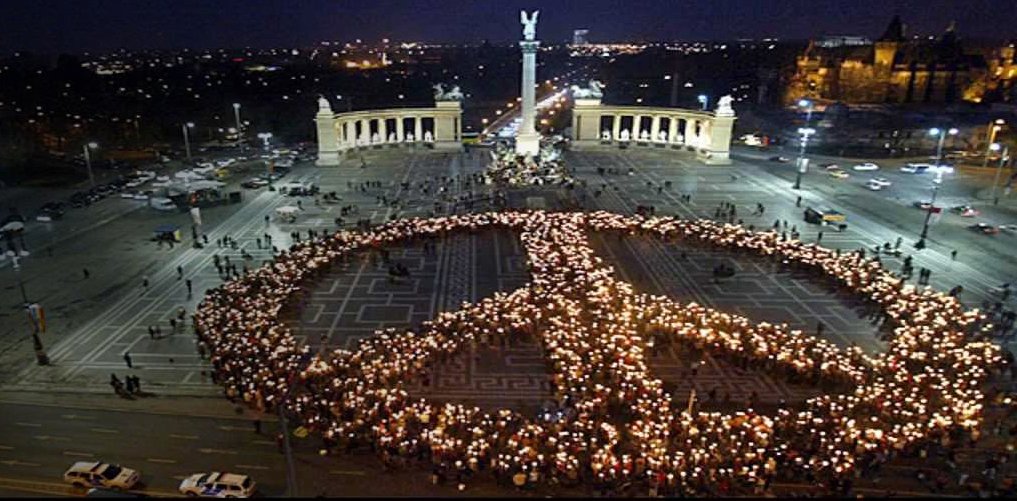
Living-Peace-Sign-Budapest-copy
Tony Robinson October 4, 2026 Violence is easy to recognise when someone is being beaten, shot or killed. It becomes more difficult when nobody is holding a weapon. Poverty, discrimination, exploitation and repression can restrict a human life just as effectively, although they do so in very different ways and with very different consequences. Simply adding more categories to an ever-growing list of forms of violence does not really solve the problem. The more interesting question is what all these different situations have in common and why it makes sense to describe them using the same word. Human beings do not simply react to what happens around them. They remember the past, imagine things that do not yet exist, make plans and undertake projects. Workers organise because they imagine different working conditions; people migrate because they imagine another life somewhere else; social movements emerge because people refuse to accept the...
b54a1f10-8c65-4f0b-9dd5-4abc0a7d04cc_2659x2659
It’s a matter of principles, courage, vision and pulling together – while the militarist world is falling apart… Peter Langille October 3, 2026 “Here, then, is the problem which we present to you, stark and dreadful and inescapable: Shall we put an end to the human race; or shall mankind renounce war?”The Bertrand Russell—Albert Einstein Manifesto, July 9, 1955 ⁕ The forecast for what’s ahead is worrisome. The sharp rise in armed conflicts over the past three years is adding to what was already the highest level in over seventy years. Genocides, which should be prevented are supported. A shared climate emergency that jeopardises survival is ignored. Diverse polls now suggest that people are war-weary, worried and interested in a more effective United Nations. And, there are viable policy options for a more secure world! Yet governments are doubling-down, betting on more war and investing heavily. If current trends persist,...
010
Johan Galtung 1930-2024October 2015 Published here on October 3, 2026 Let us focus on Civilization for conflict analysis and remedies. Major forms of disorder use violence; war is state organized violence. The most belligerent states are the United States of America and Israel, both with civilization roots. National Evangelism, the US Protestant Christian civilization– more national than evangelical–justifies US warfare as exceptionalism of a people chosen by God, with a manifest destiny to run the world. Orthodox Judaism justifies Israeli warfare to conquer and expand from Nile to Euphrates as a religious right and duty to the Eternal One. The third most belligerent country, the UK, no longer believes it is God-chosen but chosen by the USA; not quite the same but something. But the root cause of global disorder lies in the Occident–with Islam–seeing itself as the single, universal civilization valid for all at all times, all others being...
Screenshot 2026-10-02 011738
Jan ObergPhD, director, The Transnational Foundation for Peace and Future Research, TFFLund, Sweden October 2, 2026 This is my full original manuscript. The Chinese Academy of Social Science, CASS, makes two publications out if it. 1. China’s Five-year plan emphasized the capabilities of basic research and original innovation. It is regarded as the goal of the future social development, which, as required, should be significantly enhanced. Can you comment on the importance of original innovation in research and academic study? I believe it is easier to define “original innovation” in the natural sciences than in social sciences. The breaking points of what constitutes something new, or innovative, are not quite as sharp in the latter. But in both fields it is about opening up something that was closed, unseen, unexplored before – making manifest what was earlier latent. Innovations come in many forms and shapes – naming something that was not...
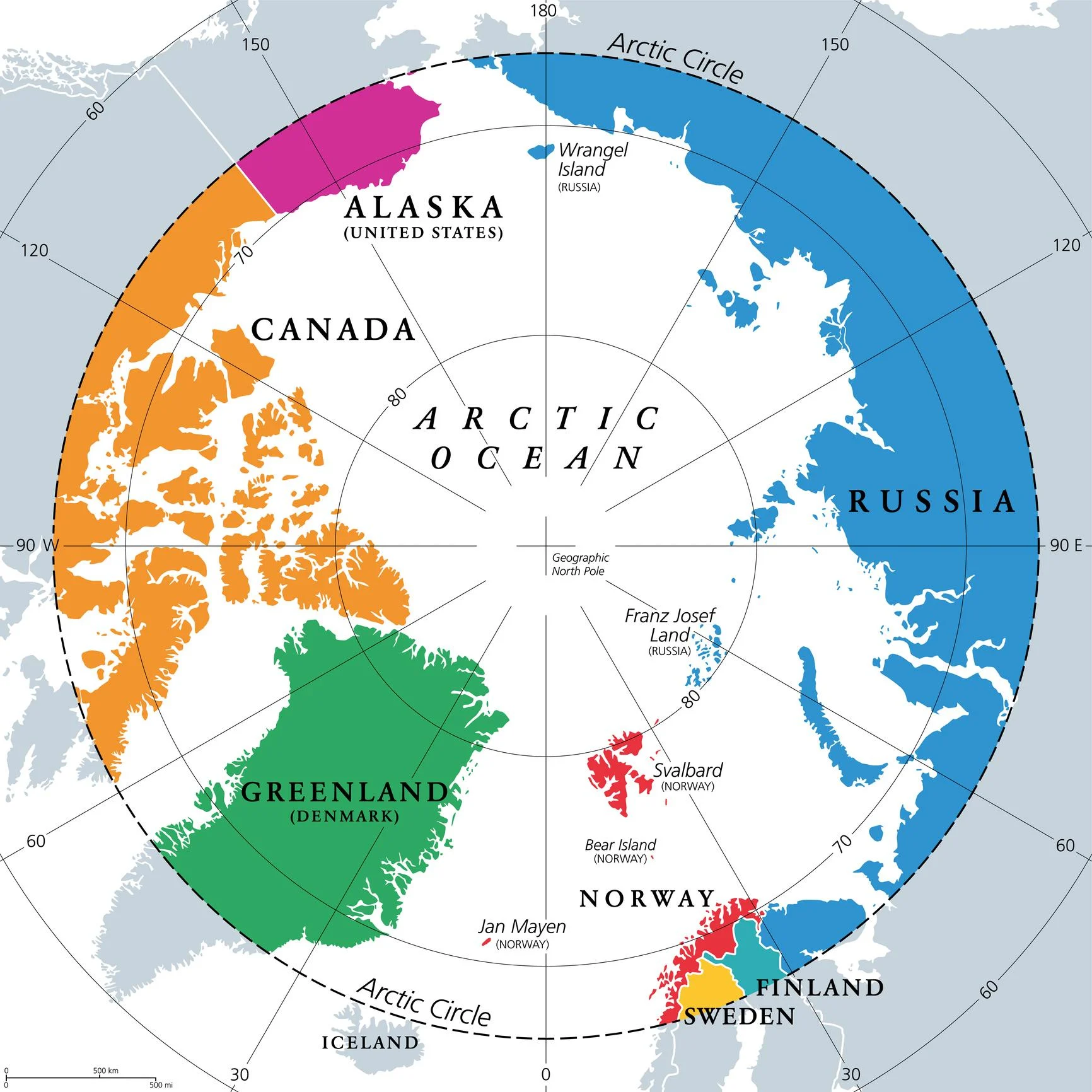
arctic-circle-map
The agreement is catastrophic both because of what it says and what it doesn’t mention. It reduces further the major asset of security policies: Freedom of action. Jan Oberg TFF director September 25, 2026 A couple of hours before the agreement was signed on September 22, 2026, I published the following 13 hypotheses about what it would most likely contain on TFF Substack (in English). I was wrong on only the first point. Contrary to what Trump had written on his Truth Social platform, it does not appear to come into force immediately. In fact, it turned out to be worse than even I had anticipated. After these hypotheses now come a number of reflections in light of what the agreement actually contains, and does not contain, as well as the way in which it has generally been presented by major media outlets and by the public-service broadcaster DR. My...
girl-5894831_1280
Below are TFF-related media mentions, comments, videos and social media posts published elsewhere but not on this homepage. We happen to catch and list only a fraction. Regarding video comments and debates, we recommend that you go to the TFF Video Channel on Substack where many of them are reproduced. Jan Oberg is a contributor to China Daily – 52 million daily clicks – and Global Times, CGTN and CCTV (the national television), China Investment, Xinhua News Agency and several others. Articles and videos on these media very often multiply into countless Chinese (and Western media) that re-post them from these main media. Thanks to The China Academy, his analyses, interviews and comments are frequently posted on YouTube channels such as Thinkers Forum and Wave Media. These videos are often re-posted on Bilibili (China’s YouTube), the China Content Center on TikTok, and on the Chinese edition of TikTok, Douyin.com. This means reaching hundreds of millions of viewers worldwide over a year. While there are too many to catch on all these...