
The Peacemaker of the Pashtun Past By Karl E. Meyer*

New York Times December 7, 2001

As the Afghan war enters into what may be its final days, and the international community begins discussing its next steps, Americans will be learning more about the warrior people known to the British as Pathans, and more correctly nowadays as Pashtuns. Most of the Taliban were Pashtun – as is the new interim leader of Afghanistan, Hamid Karzai, to whom Mullah Muhammad Omar, the Taliban leader, has ceded power.

The Pashtuns number upwards of 20 million, and their squat stony villages straddle the Durand Line that nominally demarcates Pakistan from Afghanistan, where Pashtuns form the largest ethnic group. These are the fighters who inspired reams of fearful and admiring verse from Rudyard Kipling, the sharpshooters blessed with perfect sight who picked off the soldiers of the British Raj. But the Pashtuns also produced one of the most remarkable pacifist movements of the 20th century.

British officers were so impressed by Pashtun valor that in 1847 they created a Pashtun force, the Corps of Guides – its emblem was crossed sabers over the slogan “Rough and Ready” – that was soon celebrated in the Indian Army. They led the way in adopting uniforms in a new color, khaki, and became the prototype for today’s special forces.

The fascination with Pashtuns endured until the Raj’s demise. Sir Olaf Caroe, the last British governor of the North-West Frontier, left a systematic account, “The Pathans” (1958), complete with pullout maps and translations of love poems by the great Pashtun bard, Khushal Khan, who died in the 17th century.

Caroe favored the partition of India and believed that a Muslim state and its frontier warriors would form a firewall blocking a Soviet advance toward the Persian Gulf. The success of this policy depended on Pashtun military prowess – and Caroe’s greatest problem was a Pashtun pacifist, Abdul Ghaffar Khan, who confounded every cliché about Caroe’s favored martial race.

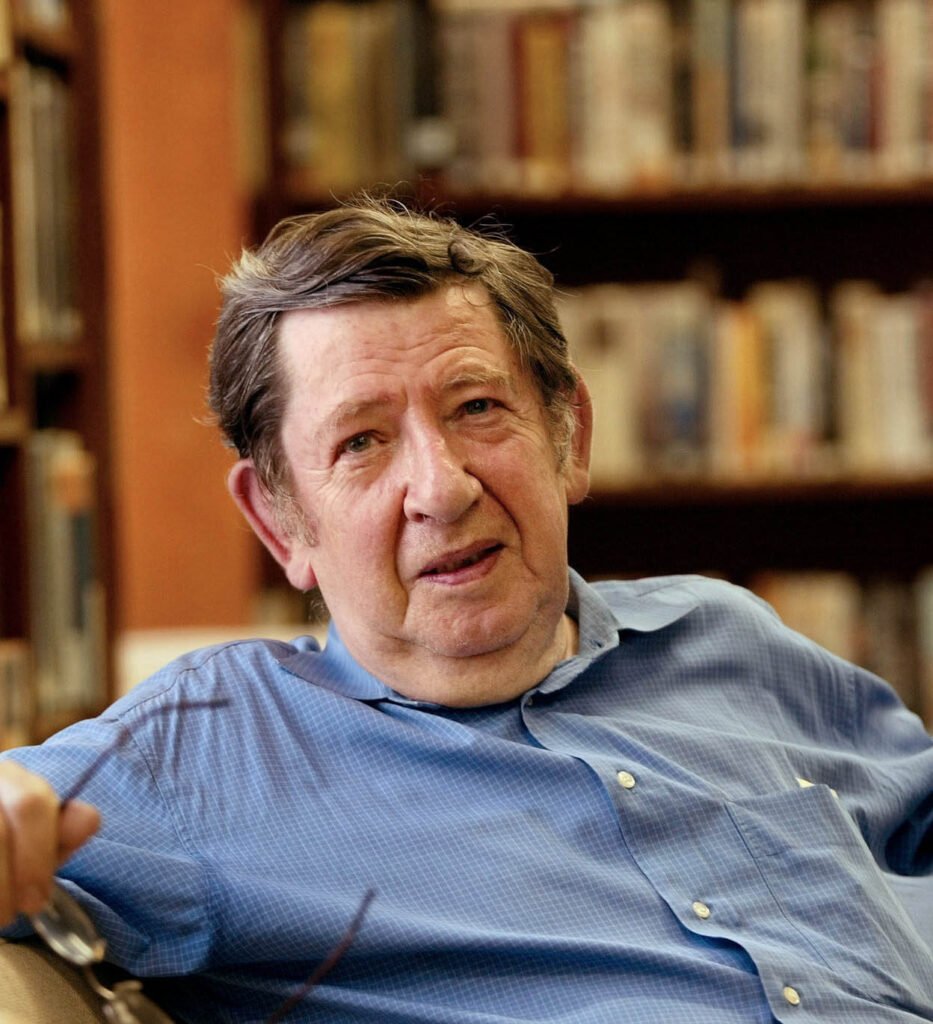
Ghaffar was renowned as “the frontier Gandhi.” His followers, the Servants of God, were nicknamed Red Shirts because of their brick-colored garb. All had to swear: “I shall never use violence. I shall not retaliate or take revenge, and shall forgive anyone who indulges in oppression and excesses against me.”

For two decades, Ghaffar and his Red Shirts dominated the North-West Frontier without resort to violence, enduring prison and torture. Ghaffar’s friend and mentor, Mohandas Gandhi, called his feat “a miracle.” Nevertheless, the most remarkable Pashtun of his era is forgotten, not only because his cause was lost – he sought self-rule for his people within a united, secular India – but because it was an embarrassment to Britain, India and Pakistan alike.

A new biography, “The Pathan Unarmed” by Mukulika Banerjee, adds fresh light. The author began her study as a graduate student in the 1990’s, and after learning Pashto managed to interview 70 surviving Red Shirts. She found that Ghaffar’s pacifism grew out of his concept of jihad, or holy war, because nonviolent resistance “offered the chance of martyrdom in its purest form, since putting one’s life conspicuously in one’s enemy’s hands was itself the key act.”

Using this strategy, the Red Shirts in 1930 shut down Peshawar for five days protesting colonial rule, becoming valued Muslim allies of Gandhi’s predominantly Hindu Congress Party. The movement flourished, and each wave of arrests confirmed Ghaffar Khan’s status as the liberating champion of his people, who now called him Badshah Khan, or the Khan of Khans.

In 1947, in final negotiations for independence, Gandhi acceded to partition and the establishment of Pakistan. A distraught Ghaffar Khan, feeling abandoned by his Hindu allies and angrily aware that Caroe favored a Muslim state, asked his followers to boycott the referendum on joining Pakistan, whose founding he opposed because he wanted a united, secular India.

Now derided as a lackey of “the Hindu Raj,” Ghaffar Khan was imprisoned and charged with sedition by Islamabad’s new masters. When the great rebel insisted that he wanted only autonomy within Pakistan, it was rejected as a ruse, since Afghanistan seized on this moment to revive territorial claims to Peshawar and other areas once held by Kabul.

The sequel was a martial crackdown by Pakistani authorities, echoing the British line about the incorrigible violence and suspect loyalties of Pashtuns. Ghaffar was eventually released from jail but banished from the frontier. In his last years he was allowed to revisit Peshawar, where in 1988 he died at the age of 98. According to an earlier biography by M. S. Korejo, a Pakistani diplomat, a funeral procession stretching for miles carried Badshah Kahn’s body across the border to Jalalabad, the summer home of Afghan kings. It was, the author writes, “a caravan of peace, carrying a message of love” from Pashtuns east of the Khyber to those on the west.

This forgotten chapter suggests that Islam is more mutable than either its radical adherents or its Western detractors allow – and that Pashtun history offers an extraordinary precedent for peace as well as a legacy of war.

* Karl E. Meyer is editor of the World Policy Journal and co-author, with Shareen Brysac, of “Tournament of Shadows: The Great Game and the Race for Empire in Central Asia.”

Share

Leave a Reply

Your email address will not be published. Required fields are marked *

Related Posts

A donors’ conference, co-sponsered by the Burundian government, the Belgian government and UNDP will be held in Brussels January 12-13, 2004. This PressInfo offers a perspective on its urgency. See also TFF’s new Burundi Forum. Imagine for a moment that politics is about goodness and generosity. Where could a few million dollars of government aid and a few civil society organisations – guaranteed – win the hearts of extremely poor millions who want peace and already work hard to achieve it after 10 years of war and genocide? The answer is Burundi, the heart-shaped country in the heart of Africa. Burundi makes a good story from Africa. But what does the world know about Burundi, its problems and struggles? Burundi’s tough reality Here are the basic facts. Burundi’s population is about 7 million and it is number 171 out of the 175 countries on the UNDP’s human development index. Their life...
Peace is promoted by constructive proposals and dialogue Four preceding PressInfos have expressed concern over — and criticised — the ongoing, militarisation of the EU. Some will say: but there are no alternatives. We believe that there are always alternatives, that democracies are characterised by alternatives and choice, and that openly discussed alternatives will improve the quality and legitimacy of society’s decision–making. In addition, it is an intellectual and moral challenge to not only criticise but also be constructive. If we only tell people that we think they are wrong, they are not likely to listen. However, if we say: what are your views on this set of ideas and steps? — we may sometimes engage them in dialogue and sow a seed. Most people in power circles live their daily lives in in a time frame and a social space where certain ideas, viewpoints and concepts are just not...
Photos © TFF 2000 Read PressInfo 90 “Lift the Sanctions and Bring More Aid to Yugoslavia” See Pictures from Belgrade © TFF 2000 Please reprint, copy, archive, quote or re-post this item, but please retain the source.

Recent Articles

Jan Oberg May 15, 2026 Go to this Fox News page and scroll the whole way down: President Donald Trump tells the world that his meeting with President Xi Jinping yielded a lot of very concrete political and economic results – of course, only where the Chinese side, according to him, agreed with him. He does not mention the Taiwan issue, but Secretary of State, Marco Rubio, says that it did not feature prominently in their talks and that the US policy on Taiwan has not changed. Then go to China Daily – or Global Times – and you will see that for the Chinese it is framework, principles, structure of cooperation etc. that matters – all embedded in the overall idea of “constructive bilateral relationship of strategic stability.” Nowhere is any concrete agreement or deal – all that Trump refers to – mentioned. At the general level, this gives you insights into the very different social...
Lena Petrova of “World Affairs In Context” with more than half a million subscribers on YouTube wanted to explore what a peace researcher like me has to say about, among other things, the First and the Second Cold War and why eethics has disappeared from politics. I am particularly happy about this conversation that also yielded an amazing number of very appreciative comments on YouTube. No doubt, people are longing for alternatives, including peace perspectives.
The MIMAC – Military-Industrial-Media-Academic Complex – drives the world’s rampant militarism and wars without end. Here is a short reflection of how it works against all interests of humanity. #5 deals with why there is no real enemy or threat images/analysis. It’s all ex-post constructions. And, btw, theTFF Peace Pulse is now on Rumble.

TFF on Substack

Discover more from TFF Transnational Foundation & Jan Oberg.

Most Popular

Jan Oberg May 15, 2026 Go to this Fox News page and scroll the whole way down: President Donald Trump tells the world that his meeting with President Xi Jinping yielded a lot of very concrete political and economic results – of course, only where the Chinese side, according to him, agreed with him. He does not mention the Taiwan issue, but Secretary of State, Marco Rubio, says that it did not feature prominently in their talks and that the US policy on Taiwan has not changed. Then go to China Daily – or Global Times – and you will see that for the Chinese it is framework, principles, structure of cooperation etc. that matters – all embedded in the overall idea of “constructive bilateral relationship of strategic stability.” Nowhere is any concrete agreement or deal – all that Trump refers to – mentioned. At the general level, this gives you insights into the very different social...
Lena Petrova of “World Affairs In Context” with more than half a million subscribers on YouTube wanted to explore what a peace researcher like me has to say about, among other things, the First and the Second Cold War and why eethics has disappeared from politics. I am particularly happy about this conversation that also yielded an amazing number of very appreciative comments on YouTube. No doubt, people are longing for alternatives, including peace perspectives.
The MIMAC – Military-Industrial-Media-Academic Complex – drives the world’s rampant militarism and wars without end. Here is a short reflection of how it works against all interests of humanity. #5 deals with why there is no real enemy or threat images/analysis. It’s all ex-post constructions. And, btw, theTFF Peace Pulse is now on Rumble.
Read More
Screenshot-2026-05-15-103534
Jan Oberg May 15, 2026 Go to this Fox News page and scroll the whole way down: President Donald Trump tells the world that his meeting with President Xi Jinping yielded a lot of very concrete political and economic results – of course, only where the Chinese side, according to him, agreed with him. He does not mention the Taiwan issue, but Secretary of State, Marco Rubio, says that it did not feature prominently in their talks and that the US policy on Taiwan has not changed. Then go to China Daily – or Global Times – and you will see that for the Chinese it is framework, principles, structure of cooperation etc. that matters – all embedded in the overall idea of “constructive bilateral relationship of strategic stability.” Nowhere is any concrete agreement or deal – all that Trump refers to – mentioned. At the general level, this gives you insights into the very different social...
Screenshot-2026-05-12-104023
Lena Petrova of “World Affairs In Context” with more than half a million subscribers on YouTube wanted to explore what a peace researcher like me has to say about, among other things, the First and the Second Cold War and why eethics has disappeared from politics. I am particularly happy about this conversation that also yielded an amazing number of very appreciative comments on YouTube. No doubt, people are longing for alternatives, including peace perspectives.
Screenshot-2026-04-13-154551 (2)
The MIMAC – Military-Industrial-Media-Academic Complex – drives the world’s rampant militarism and wars without end. Here is a short reflection of how it works against all interests of humanity. #5 deals with why there is no real enemy or threat images/analysis. It’s all ex-post constructions. And, btw, theTFF Peace Pulse is now on Rumble.
Screenshot-2026-04-13-154551 (1)
Jan Oberg, TFF director April 28, 2026 In this third TFF Peace Pulse, I make the important distinction between the violence and the conflict that violence is a symptom of. If you want peace, focus on the underlying conflict because that is the key to resolution, peacemaking, and a better future for the parties. The West is obsessed with violence, just look around you – and 90+ per cent of the public debate is about military issues and other violence – totally wasted for peace. These Peace Pulses will only be published here a few times. You will also not find them on YouTube and Vimeo because both platforms have blocked TFF and me; you know, peace is dangerous these days. Most TFF’s videos since 2007 are now on Rumble.
Screenshot-2026-04-13-154551
In contrast to most, we’ll bring alternatives, solutions, hope and strategies for a better future. Times are dangerous, yes, but that only intensifies the need for constructive thinking and action! Jan Oberg, TFF director April 13, 2026 The new TFF Peace Pulse uses video messages in a new way: Max 3-5-minute-long comments, ideas or perhaps mini-lectures, all about peace – positive peace. We launch them today on April 13, 2026 with a carefully crafted visual aesthetic fitting the content. We hope to publish them regularly from now on. We launch Peace Pulse (PP) – for a number of reasons. The world is in chaos, and there are countless reasons to feel concerned, frustrated, even angry. The atmosphere is saturated with doom and gloom, with negative energy and rear‑mirror thinking, while vision, imagination, alternatives, strategies and genuine future‑mindedness remain in short supply. And without them, we simply can’t save the world. Looking at problems from a hundred angles will...
IMG_5165 (1)
PART II — Publishing Peace in a System That Prioritises Militarism Jan Oberg, TFF director April 10, 2026 How TFF Maintains a Daily Voice in a Digital World Built for Noise This article is part of the series “TFF at 40″ and it invites you to learn about Four Decades of Publishing Peace. It takes a look at how a small, people‑financed peace foundation has communicated across four generations of technology — from wax stencils and fax machines to mass email and Substack — and why TFF continues to publish every single day in a system that rewards noise, conflict, and militarism. ◆ What it means to publish peace every single day in a digital system built for 24/7 news and other noise, confrontation, and militarism. How TFF’s independence, continuity, and global readership defy algorithms, donor cycles, and Western media censorhip — and why the Majority World keeps listening. When the...

