Towards a Comprehensive and Proactive Security Policy

Some have argued that we can never disinvent nuclear weapons and thus will have to live with them as long as civilization exists. But nobody has disinvented cannibalism either, we simply abhor it. We must now learn to abhor equally the thought of incinerating entire cities with nuclear weapons. The abolition of nuclear weapons with thorough verification is a totally realistic goal – we already have treaties banning biological and chemica weapons – and is necessary for human survival.

Why ballistic missile defence is not the answer

Reagan’s defence secretary Caspar Weinberger, arguing for ballistic missile defence (BMD), inadvertently provided a strong argument against it, saying, “If the Soviet Union got such a system first, we would face a grave danger, because they could launch their missiles without fear of retaliation.” The same, of course, is true in reverse.

It is doubtful that such a system would ever work reliably, but even if it does not work, a leader who falsely believed it would work could be tempted to strike first. Therefore Russia and China announced they would have no choice but to increase their nuclear arsenals to make clear to a potential opponent that they could penetrate any such system. Thus if the United States were to embark on a plan to build a ballistic missile defense system, this would precipitate a new nuclear arms race.

BMD would violate the Anti-Ballistic Missile (ABM) treaty and could unravel the whole process of arms control. Yet even if it worked perfectly, it could not protect against bombs in a suitcase, on a truck, or sailboat.

The main beneficiaries and supporters are US defence contractors, who hope to make an estimated $60-billion.

If the nuclear powers break their commitment under the ABM treaty gradually to eliminate all nuclear weapons, this double standard encourages “countries of concern” (formerly called rogue nations) and terrorist groups to acquire their own nuclear weapons.

Focus on prevention

Rather than waiting until war erupts and then responding with military force, it is far preferable to pursue an “active peace policy” that seeks to detect potential violent conflicts early and transform them peacefully. Conflict itself is not necessarily bad –sometimes it helps change unjust conditions–but violent conflict can and must be prevented.

It is unlikely that two NATO members would go to war with each other. If they disagree, there are numerous institutions, including the Organization for Security and Co-operation in Europe (OSCE), the European Union (EU), the Organization for Economic Co-operation and Development (OECD), and NATO itself with mechanisms to resolve differences peacefully. For example, when the UK believed it paid excessive contributions to the then European Economic Union (EEC), Prime Minister Thatcher and President Mitterrand, the rotating EEC chair, negotiated a reduced assessment. Neither side ever dreamt of using its heavy artillery. Such institutions must be expanded, with emphasis on economic and political, not only military cooperation.

Recommendation 1: Hold SUMMIT MEETINGS twice a year among NATO and former Warsaw Treaty members (like the G-8 summits)–with parallel meetings among members of civil society–to address common concerns.

During the 1980s, the greatest fear of a Balkan war focused on Romania with its ethnic Hungarian minority. But a small NGO, the Project on Ethnic Relations, brought senior Rumanian officials together with Hungarian minority representatives and helped them reach an agreement allowing the Hungarians to use their own language in schools and local papers, in return for a promise not to seek secession. This effort, which cost only a few thousand dollars, may well have helped avoid a civil war. By comparison, military interventions can cost billions. Expelling Iraq from Kuwait cost $100-billion, not including the damage caused. Most importantly, preventing war saves many lives.

A similar initiative helped bring peace to Ecuador and Peru, which have fought four border wars since 1941. Although this conflict is outside of the North Atlantic region, similarprinciples apply everywhere. Johan Galtung suggested to Ecuador’s incoming president in 1995 to make the contested territory a binational zone with a natural park. The president was at first skeptical, but proposed it to Peru, which agreed, with minor modifications, leading to a peace treaty. Creative imagination can often help find mutually acceptable outcomes.

Recommendation 2: Create a permanent CENTER FOR CONFLICT RESOLUTION under OSCE auspices where members from conflicting parties from around the world–official and unofficial–can jointly explore peaceful solutions to their problems, assisted by experienced mediators. Combine it with a TRAINING CENTER FOR PEACEFUL CONFLICT TRANSFORMATION for young diplomats, peacekeepers, teachers, and others.

Redundancy

The safest security policy has many redundant components, so that if one fails, others can back it up.

The United Nations has been remarkably successful in preventing aggression across borders, the main task for which it was created, but it was explicitly prevented from helping avoid civil wars, considered interference into member states’ internal affairs. Thus civil wars still abound.

It is recommended to use three successive barriers to help prevent not only international but also internal wars:

(1) Remove the causes of conflict, wherever possible.

(2) If conflicts emerge nevertheless, seek to transform them by peaceful means.

(3) If conflict resolution fails, resist aggression by nonmilitary means, and if that fails by purely defensive military means.

Let us briefly examine these three approaches in turn.

(1) Removing the causes of conflict

A first approach to preventing civil war is to remove the underlying sources of grievance, such as denying minority rights, including the right to use their own language. Sri Lanka’s policy of making Sinhalese the sole national language in 1956 caused deep resentment among the Tamil minority and sparked a civil war that continues. Switzerland prints elementary school textbooks for its one per cent Romansch minority in five different dialects. Though costly, this is far cheaper than fighting a civil war.

Recommendation 3: GRANTING MINORITIES A HIGH DEGREE OF AUTONOMY, if they wish, and treating them well, can avoid discontent that may lead to civil war.

Violence erupted in Kosovo after Milosevic withdrew itsautonomy. When the French-speaking minority in the Jura region of the Canton Bern, Switzerland, chose in a 1978 referendum to form its separate canton, this ended a simmering conflict between French-speaking Catholics and German-speaking Protestants. Similar solutions might defuse tensions in Northern Ireland and Turkey’s Kurdish region.

Granting people self-determination is no guarantee that they will always make the best decisions, but they will learn from their own mistakes. However, they resent a central authority forcing them to act against their own interests. Self-determination can help avoid such conflicts.

Mutually beneficial trade and cooperation can help reduce international conflicts. The EU, which began as Coal and Steel Union–Jean Monnet’s brainchild–has ended the century-old cycle of wars between Germany and France. Similar types of cooperation should now be developed between NATO and the former Warsaw Treaty members, to prevent another Cold War.

Recommendation 4: Expand EAST-WEST COOPERATION through such projects as building a high-speed rail network connecting all of Europe; jointly developing less polluting and energy-saving production methods; expanding the free flow of people, ideas, and goods; joint medical and scientific research, including space exploration; deep mutual arms reductions.

Recommendation 5: BAN WEAPONS EXPORTS to countries at war and to regimes violating human rights (Arias 1997).

(2) Peaceful Conflict Transformation

If conflicts emerge, there are many approaches to resolve them, through negotiations, mediation, or arbitration. For example, the United States and Canada took a dispute over fishing rights before an arbitration panel, both pledging to accept the verdict, whatever it may be. The proposed CENTER FOR CONFLICT RESOLUTION can help defuse potentially violent conflicts at an early stage.

Recommendation 6: Support the INTERNATIONAL CRIMINAL COURT to bring individuals who commit human rights violations, aggression, or genocide to justice.

Recommendation 7: To OPPOSE TERRORISM AT ITS SOURCE, help search for just solutions to conflicts everywhere (Galtung 2000) and refuse to pay ransom which encourages more terrorism.

(3) Resist Aggression

If efforts to remove sources of conflicts or to resolve them peacefully fail and a conflict party resorts to the use of force, there exist a whole range of nonmilitary approaches to resist aggression, including noncooperation with an occupation force, and publicizing gross human rights violations to ostracize internationally those who commit them. But there are situations where the protection of innocent lives requires that violence be stopped with force. It has been estimated that a relatively small armed international peacekeeping force of 5,000 troops could have prevented the genocide in Rwanda that cost over a million lives.

Recommendation 8: Create a STANDING PEACEKEEPING FORCE under United Nations auspices that can rapidly stop genocide, repel aggression or respond to natural or industrial disasters. Preventive stationing–as in Macedonia–may sometimes avert war. Such a force should also include civilians to mediate disputes, maintain law, and provide medical services.

A comprehensive security policy

We must seek protection not only from war, but from any threats to human life or well-being, including disease, pollution, poverty, and human rights violations. The 1918 flu epidemic alone took twice as many lives as World War I! New dangers after the Cold War include drug addiction, AIDS, corruption, terrorism and streams of refugees that strain social services.

Recommendation 9: DRUG EDUCATION AND REHABILITATION to reduce demand is essential to eliminate the profitability of the drug trade, which helps finance many civil wars and organized crime.

Recommendation 10: Greater DEVELOPMENT COOPERATION AND MEASURES TO REDUCE POVERTY, INCLUDING DEBT RELIEF, are necessary to avert huge streams of future economic refugees (Tinbergen 1991). Fences will not suffice. Granting ASYLUM TO THOSE PERSECUTED undermines tyrants by depriving them of their best citizens (Galtung 1996).

Concluding remark

The best security policy seeks to identify potential problems early and to avoid or resolve them before they escalate. Waiting until a disaster occurs before reacting to it would be like driving a car with closed eyes, waiting to hit an obstacle and then calling an ambulance, instead of anticipating and avoiding dangers. ————-

Dietrich Fischer <dfischer@transcend.org> is a Co-Director of TRANSCEND: A Peace and Development Network, and a Professor at Pace University, Pleasantville, New York. This article is based on a statement prepared for the session on Post-nuclear Security Policies in the North Atlantic Region at the Consultation on NATO Nuclear Policy, National Missile Defense, and Alternative Security Arrangements, Ottawa, September 28-30, 2000, convened by the Simons Foundation and Project Plowshares.

References

Arias Sanchez, Oscar (1997) “Some Contributions to a Universal Declaration of Human Obligations.” Tokyo: InterAction Council.

Fischer, Dietrich (1993) Nonmilitary Aspects of Security: A Systems Approach, A report to the United Nations Institute for Disarmament Research. Brookfield, Vermont: Dartmouth.

Galtung, Johan, and Jacobsen, Carl G. (2000) Searching for Peace: The Road to TRANSCEND, With contributions by Kai Frithjof Brand- Jacobsen and Finn Tschudi. London: Pluto Press.

Galtung, Johan (1996) Peace by Peaceful Means. London, New Delhi, and Thousand Oaks CA: Sage.

Tinbergen, Jan (1991) World Security and Equity. Brookfield, Vermont: Gower.

Related Posts

LONDON – So far so good, at least on the wider level. While internally Iraq seems on the edge of chaos, the much heralded clash of civilizations between the Muslim and Judaeo-Christian worlds has yet to become apparent. We have anger and despair aplenty in the Arab and Muslim worlds. But very little rushing to the standard and there was no great pilgrimage of warriors to join the fight, as happened when the Soviet Union invaded Afghanistan twenty years ago, and then, having driven the Red Army out, were left to ferment in that mountainous redoubt. With the armaments supplied by the CIA the mujahidin were transformed into Al Qaeda that became, for a relatively brief moment as these things go, ‘the greatest threat to the homeland that America has ever known.’ Nevertheless a ‘Cold War’ between much of the Muslim world and the West is certainly in full swing. Winston...
The Challenge of Nuclear Weaponsin the Twenty-first CenturyA Path Forward The peoples and governments of the world face an urgent challenge relating to weaponry of mass destruction and particularly to nuclear weaponry.  At the crossroads of technology, terrorism, geopolitical ambition, and policies of preemption are new and potent dangers for humanity. Despite ending the nuclear standoff of the Cold War era, nuclear weaponry is again menacing the peoples of the world with catastrophic possibilities.  We recognize the need for any government to pursue its security interests in accordance with international law; and further, we recognize that distinctive threats to these interests now exist as a result of an active international terrorist network having declared war on the United States and its allies. Nonetheless, we reject the assessment of the current US administration that upgrading a reliance on nuclear weapons is in any sense justified as a response. We find it...
By Karin Wegestal MP, the Social Democratic Partyon behalf of the Swedish Committee for Solidarity with the Yugoslav People During the last decade, the Federal Republic of Yugoslavia has received more than 500,000 refugees from Croatia and Bosnia, and another 300,000 internally displaced persons, mainly from the province Kosovo and Metohia. For a country with about ten million inhabitants, such an influx of homeless people is obviously a very heavy burden – even under peaceful conditions. But in addition to that, the Federal Republic of Yugoslavia has been the subject to sanctions from the western powers for close to ten years and its infrastructure was badly hurt through Nato’s intense bombardment during 78 days in 1999. The result of all this is that Yugoslavia, once the most developed industrial country in Eastern Europe, is today the poorest country in Europe. In Serbia excluding Kosovo, with about ten million inhabitants and...

Recent Articles

Tony Robinson October 4, 2026 Violence is easy to recognise when someone is being beaten, shot or killed. It becomes more difficult when nobody is holding a weapon. Poverty, discrimination, exploitation and repression can restrict a human life just as effectively, although they do so in very different ways and with very different consequences. Simply adding more categories to an ever-growing list of forms of violence does not really solve the problem. The more interesting question is what all these different situations have in common and why it makes sense to describe them using the same word. Human beings do not simply react to what happens around them. They remember the past, imagine things that do not yet exist, make plans and undertake projects. Workers organise because they imagine different working conditions; people migrate because they imagine another life somewhere else; social movements emerge because people refuse to accept the...
It’s a matter of principles, courage, vision and pulling together – while the militarist world is falling apart… Peter Langille October 3, 2026 “Here, then, is the problem which we present to you, stark and dreadful and inescapable: Shall we put an end to the human race; or shall mankind renounce war?”The Bertrand Russell—Albert Einstein Manifesto, July 9, 1955 ⁕ The forecast for what’s ahead is worrisome. The sharp rise in armed conflicts over the past three years is adding to what was already the highest level in over seventy years. Genocides, which should be prevented are supported. A shared climate emergency that jeopardises survival is ignored. Diverse polls now suggest that people are war-weary, worried and interested in a more effective United Nations. And, there are viable policy options for a more secure world! Yet governments are doubling-down, betting on more war and investing heavily. If current trends persist,...
Johan Galtung 1930-2024October 2015 Published here on October 3, 2026 Let us focus on Civilization for conflict analysis and remedies. Major forms of disorder use violence; war is state organized violence. The most belligerent states are the United States of America and Israel, both with civilization roots. National Evangelism, the US Protestant Christian civilization– more national than evangelical–justifies US warfare as exceptionalism of a people chosen by God, with a manifest destiny to run the world. Orthodox Judaism justifies Israeli warfare to conquer and expand from Nile to Euphrates as a religious right and duty to the Eternal One. The third most belligerent country, the UK, no longer believes it is God-chosen but chosen by the USA; not quite the same but something. But the root cause of global disorder lies in the Occident–with Islam–seeing itself as the single, universal civilization valid for all at all times, all others being...

TFF on Substack

Discover and subscribe to more peace materials on TFF Substack

Most Popular

Tony Robinson October 4, 2026 Violence is easy to recognise when someone is being beaten, shot or killed. It becomes more difficult when nobody is holding a weapon. Poverty, discrimination, exploitation and repression can restrict a human life just as effectively, although they do so in very different ways and with very different consequences. Simply adding more categories to an ever-growing list of forms of violence does not really solve the problem. The more interesting question is what all these different situations have in common and why it makes sense to describe them using the same word. Human beings do not simply react to what happens around them. They remember the past, imagine things that do not yet exist, make plans and undertake projects. Workers organise because they imagine different working conditions; people migrate because they imagine another life somewhere else; social movements emerge because people refuse to accept the...
It’s a matter of principles, courage, vision and pulling together – while the militarist world is falling apart… Peter Langille October 3, 2026 “Here, then, is the problem which we present to you, stark and dreadful and inescapable: Shall we put an end to the human race; or shall mankind renounce war?”The Bertrand Russell—Albert Einstein Manifesto, July 9, 1955 ⁕ The forecast for what’s ahead is worrisome. The sharp rise in armed conflicts over the past three years is adding to what was already the highest level in over seventy years. Genocides, which should be prevented are supported. A shared climate emergency that jeopardises survival is ignored. Diverse polls now suggest that people are war-weary, worried and interested in a more effective United Nations. And, there are viable policy options for a more secure world! Yet governments are doubling-down, betting on more war and investing heavily. If current trends persist,...
Johan Galtung 1930-2024October 2015 Published here on October 3, 2026 Let us focus on Civilization for conflict analysis and remedies. Major forms of disorder use violence; war is state organized violence. The most belligerent states are the United States of America and Israel, both with civilization roots. National Evangelism, the US Protestant Christian civilization– more national than evangelical–justifies US warfare as exceptionalism of a people chosen by God, with a manifest destiny to run the world. Orthodox Judaism justifies Israeli warfare to conquer and expand from Nile to Euphrates as a religious right and duty to the Eternal One. The third most belligerent country, the UK, no longer believes it is God-chosen but chosen by the USA; not quite the same but something. But the root cause of global disorder lies in the Occident–with Islam–seeing itself as the single, universal civilization valid for all at all times, all others being...
Read More
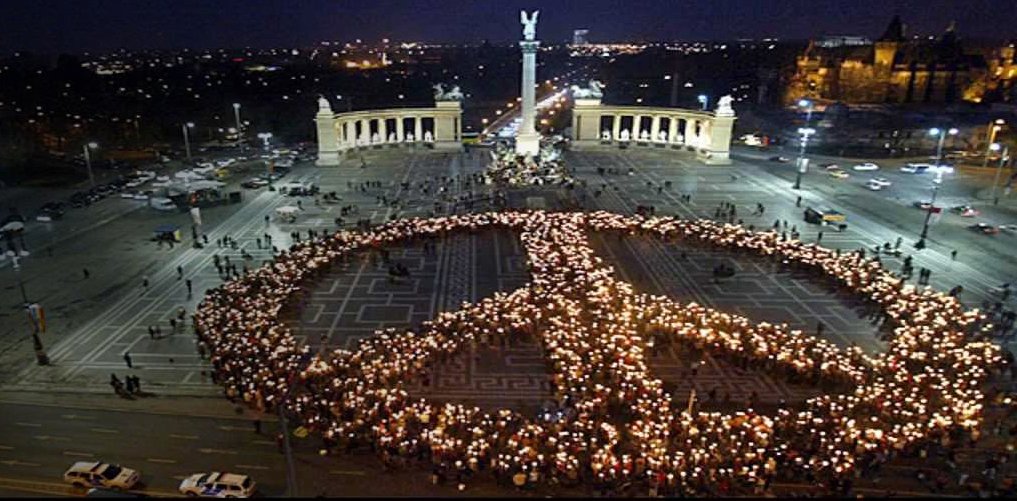
Living-Peace-Sign-Budapest-copy
Tony Robinson October 4, 2026 Violence is easy to recognise when someone is being beaten, shot or killed. It becomes more difficult when nobody is holding a weapon. Poverty, discrimination, exploitation and repression can restrict a human life just as effectively, although they do so in very different ways and with very different consequences. Simply adding more categories to an ever-growing list of forms of violence does not really solve the problem. The more interesting question is what all these different situations have in common and why it makes sense to describe them using the same word. Human beings do not simply react to what happens around them. They remember the past, imagine things that do not yet exist, make plans and undertake projects. Workers organise because they imagine different working conditions; people migrate because they imagine another life somewhere else; social movements emerge because people refuse to accept the...
b54a1f10-8c65-4f0b-9dd5-4abc0a7d04cc_2659x2659
It’s a matter of principles, courage, vision and pulling together – while the militarist world is falling apart… Peter Langille October 3, 2026 “Here, then, is the problem which we present to you, stark and dreadful and inescapable: Shall we put an end to the human race; or shall mankind renounce war?”The Bertrand Russell—Albert Einstein Manifesto, July 9, 1955 ⁕ The forecast for what’s ahead is worrisome. The sharp rise in armed conflicts over the past three years is adding to what was already the highest level in over seventy years. Genocides, which should be prevented are supported. A shared climate emergency that jeopardises survival is ignored. Diverse polls now suggest that people are war-weary, worried and interested in a more effective United Nations. And, there are viable policy options for a more secure world! Yet governments are doubling-down, betting on more war and investing heavily. If current trends persist,...
010
Johan Galtung 1930-2024October 2015 Published here on October 3, 2026 Let us focus on Civilization for conflict analysis and remedies. Major forms of disorder use violence; war is state organized violence. The most belligerent states are the United States of America and Israel, both with civilization roots. National Evangelism, the US Protestant Christian civilization– more national than evangelical–justifies US warfare as exceptionalism of a people chosen by God, with a manifest destiny to run the world. Orthodox Judaism justifies Israeli warfare to conquer and expand from Nile to Euphrates as a religious right and duty to the Eternal One. The third most belligerent country, the UK, no longer believes it is God-chosen but chosen by the USA; not quite the same but something. But the root cause of global disorder lies in the Occident–with Islam–seeing itself as the single, universal civilization valid for all at all times, all others being...
Screenshot 2026-10-02 011738
Jan ObergPhD, director, The Transnational Foundation for Peace and Future Research, TFFLund, Sweden October 2, 2026 This is my full original manuscript. The Chinese Academy of Social Science, CASS, makes two publications out if it. 1. China’s Five-year plan emphasized the capabilities of basic research and original innovation. It is regarded as the goal of the future social development, which, as required, should be significantly enhanced. Can you comment on the importance of original innovation in research and academic study? I believe it is easier to define “original innovation” in the natural sciences than in social sciences. The breaking points of what constitutes something new, or innovative, are not quite as sharp in the latter. But in both fields it is about opening up something that was closed, unseen, unexplored before – making manifest what was earlier latent. Innovations come in many forms and shapes – naming something that was not...
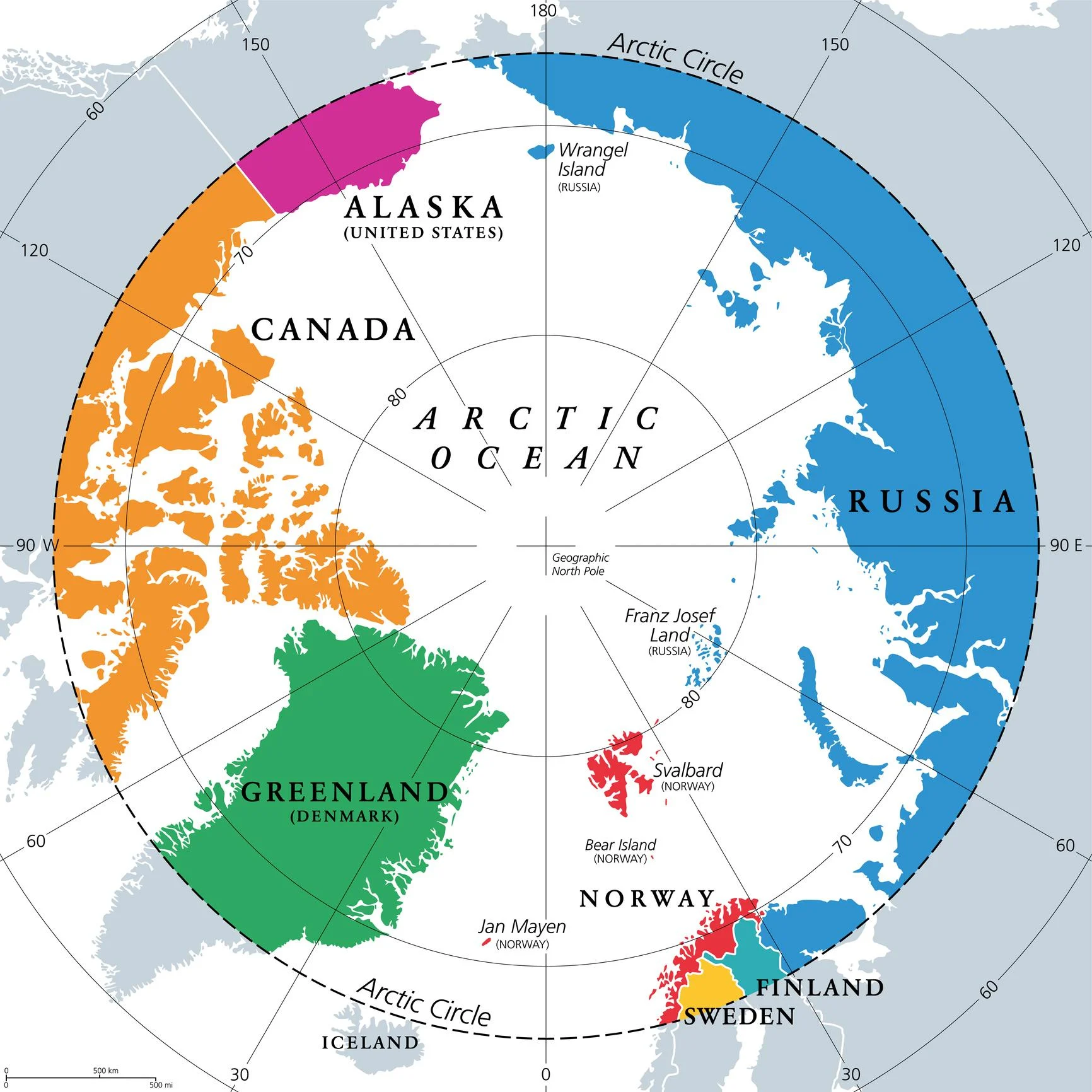
arctic-circle-map
The agreement is catastrophic both because of what it says and what it doesn’t mention. It reduces further the major asset of security policies: Freedom of action. Jan Oberg TFF director September 25, 2026 A couple of hours before the agreement was signed on September 22, 2026, I published the following 13 hypotheses about what it would most likely contain on TFF Substack (in English). I was wrong on only the first point. Contrary to what Trump had written on his Truth Social platform, it does not appear to come into force immediately. In fact, it turned out to be worse than even I had anticipated. After these hypotheses now come a number of reflections in light of what the agreement actually contains, and does not contain, as well as the way in which it has generally been presented by major media outlets and by the public-service broadcaster DR. My...
girl-5894831_1280
Below are TFF-related media mentions, comments, videos and social media posts published elsewhere but not on this homepage. We happen to catch and list only a fraction. Regarding video comments and debates, we recommend that you go to the TFF Video Channel on Substack where many of them are reproduced. Jan Oberg is a contributor to China Daily – 52 million daily clicks – and Global Times, CGTN and CCTV (the national television), China Investment, Xinhua News Agency and several others. Articles and videos on these media very often multiply into countless Chinese (and Western media) that re-post them from these main media. Thanks to The China Academy, his analyses, interviews and comments are frequently posted on YouTube channels such as Thinkers Forum and Wave Media. These videos are often re-posted on Bilibili (China’s YouTube), the China Content Center on TikTok, and on the Chinese edition of TikTok, Douyin.com. This means reaching hundreds of millions of viewers worldwide over a year. While there are too many to catch on all these...