SWEDEN - REFUGEE INTEGRATION

Thanks to both general globalization trends and the use of violent means to solve conflicts in countries around the world, cultural encounters are happening more and more frequently amongst many diverse groups. Living with only your own kin in your home society is a feature that belongs to the past. Mixed, multi-cultural, societies are the norm with the problems as well as the new opportunities that this reality gives rise to.
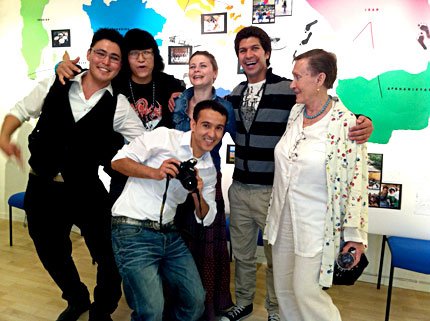
Happy moment at the exhibition “Like Bridges Over Dark Waters” 2011

Since 2004 TFF’s co-founder, Christina Spännar, has led three projects on various aspects of the integration of refugees into Swedish society and everyday life.

The Foundation’s work in conflict areas around the world has made it natural to ask questions such as:

• How can we be helpful to those who knock on Sweden’s doors in the wake of serious, protracted conflict?


• How can we help Swedes to better understand and empathize with these people?


• How can mechanisms be developed that build bridges between Swedes and the others, and how can some of these people then become bridge-builders themselves?


TFF projects in this field are carried out in various places in southern Sweden: Eslöv, Lund and Malmö. Many nationalities have participated over the years: Somalis, Iraqis, ex-Yugoslavs, amongst others.

The current TFF project “Like Bridges Over Dark Waters” which is funded by the Swedish Inheritance Fund focuses mostly on young Afghan boys, who have travelled alone for months and years and have arrived in Sweden without any family members.


The focus has been on developing a sense of community and on facilitating their sharing of their backgrounds and the often extreme hardships encountered on their journey to Sweden.

One of the mediums used is an exhibition of texts, photos and other media that tours around institutions and municipalities.
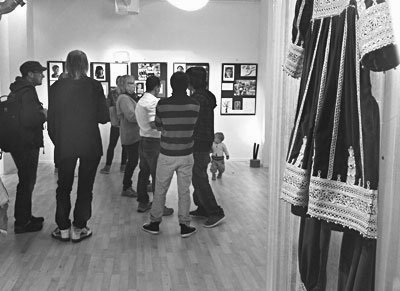
Exhibition at gallery G38 in Malmö, 2011 Sweden

This provides an opportunity for the young Afghans to dialogue with Swedish visitors and explain why and how they have come to the country and what they can do as Swedish citizens.


It goes without saying that this TFF project is public education in a nutshell; however, it also goes a long way down the road to healing and empowering the participants.


Update by 2017

The above-mentioned exhibition took on its own life and by early 2016 it had been shown at more than 30 places, at schools, libraries, municipality centres and other public spaces as well as at the Museum of World Culture in Gothenburg.

At most of the official openings, the young people who had travelled alone to Sweden told their stories of their journeys to various groups of Swedes.

Since autumn 2016, Christina Spännar and a retired teacher friend help young asylum seekers at a reception centre near Malmö with their schoolwork; that is a good simultaneous exercise in learning the language.

Those who later move to Lund to live on their own may continue to receive that sort of help at TFF but can also raise other issues which may be difficult to handle not only because you are young but also because you are not always sure, culturally, what is best to do and how.

In this manner, the foundation continues to contribute to the development of new social networks – which is essential for a successful integration into the new and very different society.

These projects are conducted and described in Swedish (with the use of interpreters where necessary). The English language is not used. Thus, the links to your right offer insights in Swedish only.
Share

Leave a Reply

Your email address will not be published. Required fields are marked *

Related Posts

Associate Editor at Russia in Global Affairs in Moscow. Board member at International Institute for Peace (IPP) in Vienna. 
Board member at Center for Nationalism Studies (CNS) in Sarajevo.
 Editorial Board member at Contemporary World Economy in Moscow.
 EMPLOYMENT University of South-Eastern Norway
 – Professor, April 2020 – ongoing. Russia in Global Affairs
 – Associate Editor Nov 2018 – ongoing. Higher School of Economics, Moscow, Russia – Professor Aug 2018 – April 2020. Higher School of Economics, Moscow, Russia
 – Visiting Scholar, Aug 2017 – Aug 2018. Western Sydney University, Sydney, Australia – Adjunct Research Fellow Aug 2016 – Aug 2019. 
 Macquarie University (PICT), Sydney, Australia
 – Lecturer/Scholarly Teaching Fellow, Feb 2011 –Dec 2017
. EDUCATION Amsterdam Vrije Universiteit, Amsterdam, Netherlands – 
PhD Politics and International Relations (Doctor of Social Sciences) 2010-2014. 

 Macquarie University, Sydney, Australia – 
PhD Politics and International Relations (Doctor of Philosophy) 2010-2014. Macquarie University, Sydney, Australia 
- Master of International...
“>Sino–Indian Agreement 1954, are: • mutual respect for each other’s territorial integrity and sovereignty, • mutual non-aggression, • mutual non-interference in each other’s internal affairs, • equality and co-operation for mutual benefit, and • peaceful co-existence Read more about it here. These principles, also called Panchsheel, are fundamental to Chinese foreign policy and embedded in the preamble of the country’s constitution. Here is an excerpt of the invitation letter: “The commemorative events, to be held under the theme “From the Five Principles of Peaceful Coexistence to Building a Community with a Shared Future for Mankind” will begin with a commemorative conference, followed by a luncheon and sub-forums. His Excellency Xi Jinping, President of the People’s Republic of China, will attend and deliver an important speech at the commemorative conference, and his Excellency Li Qiang, premier of the State Council, will moderate the conference. His Excellency Wang Yi, member of the...
It can safely be assumed that NATO leaders and their media don’t care much about what the President of Serbia, Александар Вучић – Aleksandar Vučić, has to say about the NATO-Russia conflict and the war in Ukraine. Not only do they think that they know everything better than anyone else, but they also have their own experience with Serbia since NATO violated its own defensive Treaty and bombed Kosovo out of Serbia – and blamed Serbia for everything that happened in then Yugoslavia. Serbia and the Serbs have been perceived as the odd man out among the elites of NATO and the EU, as someone you fundamentally look down upon. But perhaps they – and the rest of us – should give Vučić a fair hearing on this particular issue? In my opinion, Vučić here says extremely important things based on analysis and an ability to see things from more...

Recent Articles

PressInfo # 141, December 21, 2001It’s time to prepare reconciliation between Albanians and Serbs PressInfo # 140, December 14, 2001Ibrahim Rugova’s decade-long leadership in Kosovo/a PressInfo # 139, 11. december, 2001En god nyhet: Jugoslaviens Sannings- och försoningskommission PressInfo # 139, 11. december, 2001Gode nyheder: Jugoslaviens Sandheds- og Forsoningskommission PressInfo # 139, December 11, 2001Good news: Yugoslavia’s Truth and Reconciliation Commission PressInfo # 138, November 8, 2001TFF co-founder PhD with thesis about young people with roots in other cultures PressInfo # 138, November 8, 2001TFF:s medstiftare doktor på avhandling om unga med ursprung i andra kulturer PressInfo # 137, October 17, 2001A new Marshall Plan: Advancing human security and controlling terrorism PressInfo # 136, October 15, 2001The UN and Annan really deserve it PressInfo # 135, October 10, 2001Preventing a terrorist mushroom cloud PressInfo # 134, 17 oktober, 2001Sverige og 11. september PressInfo # 134, October 9, 2001Sweden and September 11...
Peace is promoted by constructive proposals and dialogue Four preceding PressInfos have expressed concern over — and criticised — the ongoing, militarisation of the EU. Some will say: but there are no alternatives. We believe that there are always alternatives, that democracies are characterised by alternatives and choice, and that openly discussed alternatives will improve the quality and legitimacy of society’s decision–making. In addition, it is an intellectual and moral challenge to not only criticise but also be constructive. If we only tell people that we think they are wrong, they are not likely to listen. However, if we say: what are your views on this set of ideas and steps? — we may sometimes engage them in dialogue and sow a seed. Most people in power circles live their daily lives in in a time frame and a social space where certain ideas, viewpoints and concepts are just not...
Photos © TFF 2000 Read PressInfo 90 “Lift the Sanctions and Bring More Aid to Yugoslavia” See Pictures from Belgrade © TFF 2000 Please reprint, copy, archive, quote or re-post this item, but please retain the source.

TFF on Substack

Discover more from TFF Transnational Foundation & Jan Oberg.

Most Popular

PressInfo # 141, December 21, 2001It’s time to prepare reconciliation between Albanians and Serbs PressInfo # 140, December 14, 2001Ibrahim Rugova’s decade-long leadership in Kosovo/a PressInfo # 139, 11. december, 2001En god nyhet: Jugoslaviens Sannings- och försoningskommission PressInfo # 139, 11. december, 2001Gode nyheder: Jugoslaviens Sandheds- og Forsoningskommission PressInfo # 139, December 11, 2001Good news: Yugoslavia’s Truth and Reconciliation Commission PressInfo # 138, November 8, 2001TFF co-founder PhD with thesis about young people with roots in other cultures PressInfo # 138, November 8, 2001TFF:s medstiftare doktor på avhandling om unga med ursprung i andra kulturer PressInfo # 137, October 17, 2001A new Marshall Plan: Advancing human security and controlling terrorism PressInfo # 136, October 15, 2001The UN and Annan really deserve it PressInfo # 135, October 10, 2001Preventing a terrorist mushroom cloud PressInfo # 134, 17 oktober, 2001Sverige og 11. september PressInfo # 134, October 9, 2001Sweden and September 11...
Peace is promoted by constructive proposals and dialogue Four preceding PressInfos have expressed concern over — and criticised — the ongoing, militarisation of the EU. Some will say: but there are no alternatives. We believe that there are always alternatives, that democracies are characterised by alternatives and choice, and that openly discussed alternatives will improve the quality and legitimacy of society’s decision–making. In addition, it is an intellectual and moral challenge to not only criticise but also be constructive. If we only tell people that we think they are wrong, they are not likely to listen. However, if we say: what are your views on this set of ideas and steps? — we may sometimes engage them in dialogue and sow a seed. Most people in power circles live their daily lives in in a time frame and a social space where certain ideas, viewpoints and concepts are just not...
Photos © TFF 2000 Read PressInfo 90 “Lift the Sanctions and Bring More Aid to Yugoslavia” See Pictures from Belgrade © TFF 2000 Please reprint, copy, archive, quote or re-post this item, but please retain the source.
Read More
Imagen-thumbnail-The-Transnational-1
PressInfo # 141, December 21, 2001It’s time to prepare reconciliation between Albanians and Serbs PressInfo # 140, December 14, 2001Ibrahim Rugova’s decade-long leadership in Kosovo/a PressInfo # 139, 11. december, 2001En god nyhet: Jugoslaviens Sannings- och försoningskommission PressInfo # 139, 11. december, 2001Gode nyheder: Jugoslaviens Sandheds- og Forsoningskommission PressInfo # 139, December 11, 2001Good news: Yugoslavia’s Truth and Reconciliation Commission PressInfo # 138, November 8, 2001TFF co-founder PhD with thesis about young people with roots in other cultures PressInfo # 138, November 8, 2001TFF:s medstiftare doktor på avhandling om unga med ursprung i andra kulturer PressInfo # 137, October 17, 2001A new Marshall Plan: Advancing human security and controlling terrorism PressInfo # 136, October 15, 2001The UN and Annan really deserve it PressInfo # 135, October 10, 2001Preventing a terrorist mushroom cloud PressInfo # 134, 17 oktober, 2001Sverige og 11. september PressInfo # 134, October 9, 2001Sweden and September 11...
Imagen-thumbnail-The-Transnational-1
Peace is promoted by constructive proposals and dialogue Four preceding PressInfos have expressed concern over — and criticised — the ongoing, militarisation of the EU. Some will say: but there are no alternatives. We believe that there are always alternatives, that democracies are characterised by alternatives and choice, and that openly discussed alternatives will improve the quality and legitimacy of society’s decision–making. In addition, it is an intellectual and moral challenge to not only criticise but also be constructive. If we only tell people that we think they are wrong, they are not likely to listen. However, if we say: what are your views on this set of ideas and steps? — we may sometimes engage them in dialogue and sow a seed. Most people in power circles live their daily lives in in a time frame and a social space where certain ideas, viewpoints and concepts are just not...
Imagen-thumbnail-The-Transnational-1
Photos © TFF 2000 Read PressInfo 90 “Lift the Sanctions and Bring More Aid to Yugoslavia” See Pictures from Belgrade © TFF 2000 Please reprint, copy, archive, quote or re-post this item, but please retain the source.
Imagen-thumbnail-The-Transnational-1
Av FRANK SØHOLM GREVIL 16 augusti 2004  Vi er nu nået til tredje akt i det absurde teaterstykke, der i analogi med de store skueprocesser i Moskva 1936-38 er blevet døbt ‘Grevil-sagen’. Første akt bestod i min anonyme fremlæggelse af egenhændigt nedklassificerede rapporter i Berlingske Tidende i februar og marts. Andet akt udgjordes af min fremtræden med navn og billede i Information i april samt den efterfølgende mediestorm, som uden min direkte medvirken kostede en forsvarsminister taburetten samt en sigtelse for brud på tavshedspligten. Tredje akt bliver en retssag, hvor jeg står tiltalt for at have overtrådt straffelovens bestemmelser om uberettiget videregivelse eller udnyttelse af fortrolige oplysninger. Statsanklageren har ovenikøbet valgt at påberåbe sig særligt skærpende omstændigheder. Da jeg aldrig har modtaget betaling for at stille rapporterne til rådighed eller lade mig interviewe, må det skærpende bestå i, at “videregivelsen eller udnyttelsen er sket under sådanne omstændigheder, at det påfører...
Imagen-thumbnail-The-Transnational-1
Af Svenska Irakkommittén mot de Ekonomiska Sanktionerna (SIES) 13 september 2002 FN:s ekonomiska sanktioner mot Irak har nu pågått i tolv år och drabbat det irakiska folket med svåra lidanden. Enligt FN:s egna siffror har mer än 1,5 miljoner människor, varav ca 600 000 barn, dött som en direkt följd av sanktionerna. Dessutom har ett lågintensivt bombkrig mot landet pågått under dessa år. Av all denna förödelse- orsakad huvudsakligen av amerikansk och brittisk politik- har Saddam Husseins brutala och diktatoriska regim snarast stärkts än försvagats. Nu förbereder USA under president Bushs ledning ett storskaligt bombkrig mot Irak som kommer att innebära ett ännu större lidande för civilbefolkningen. Ett sådant krig kommer dessutom att ytterligare undergräva freden och säkerheten i världen. Att upprätta en demokratisk regim i Irak är det irakiska folkets angelägenhet och får enligt folkrätten inte ske med krigshandlingar utifrån. Folkrätten och FN:s stadgar måste respekteras. Vi vädjar till...