Two ways of looking at the race for the American presidency

#1: as an incredibly dumbing down of the political process, turning the presidential campaigns for the nomination as heavily financed shadow shows, hiding special interests and money management, all about selling the candidate by boast and bluster;

#2: as pre-revolutionary ferment, mobilizing the young, and confronting the established order, finally, with non-establishment choices between the radical right of Trump & Cruz and the moderate social democratic left of Sanders.

This tedious struggle for political prominence and historical name recognition is being played out against a backdrop of the three pillars of America’s global role: the Pentagon, Wall Street, and Israel.

No candidate has managed to shake the pillars, although this time around Sanders has at least launched a genuine attack on the Wall Street pillar, and Trump has gestured toward what might be a mild push against the Israel pillar. This alone makes Sanders and Trump the first outsiders to compete seriously for a run at the White House.

Of course, since Sanders has done so much better than expected, Clinton makes some noises as if she is also taking on Wall Street, but as her unreleased transcripts of her gilt talks at Goldman-Sachs no doubt confirm, no one think she means it, and she doesn’t. This is her way of harmlessly sparring with the man from Vermont until she locks up the machine-driven nomination.

When we look at the candidates from a Hollywood central casting point of view, we have to wonder who is running the show, especially on the Republican side.

Senator Ted Cruz appears to be a credible reincarnation of Tomás de Torquemada, Grand Inquisitor of Spain (1484-1498), grimly ready to deal harshly with the infidels whether within the country or without. He also seems to have a liking for ‘carpet bombing,’ and all out war with ‘the enemies’ of the United States wherever they might be in the world.

Then there is Marco Rubio snapping at the Cruz and Trump heals as if a scrappy dog seeking an evening meal. Rubio reminds one of a high school debating champion, articulate and self-assured, yet so lacking in political gravitas as to be irrelevant.

And I almost forgot John Kasich that redoubtable former governor of Ohio who repeatedly tells his audience in a conversational monotone that he has already solved all of America’s problems in microcosm while he brilliantly managed the public life of Ohio from the state capital in Columbus.

He pledges to do the same for America as a whole, and puts himself forward as the only candidate with the experience and track record. It is not surprising that there is a tendency to forget Kasich as he has so far managed to stay on board the train only because of the listless competition.

Then there is Donald Trump who is hardly in danger of being forgotten. He is leading the pack into some wild terrain of which he is only dimly aware. Trump’s idea of international politics boils down to hard driving real estate deal making backed by an larger, all powerful military machine.

Without exhibiting much command of the political domain there are some mildly encouraging takeaways that almost lost in the bigoted noise – skepticism about regime-changing interventions, opposition to neoliberal international trade agreements, and even casting some doubt on the special relationship with Israel. Of course, it is the Trump thunder that excites his followers and energizes his crowds. He wins his mass following by demonizing Muslims and Latinos, promising to end all Muslim immigration, deport 11 million illegals, and build a high wall along the Mexican border, and send the bill to Mexico.

His reputation for repudiating what liberals espouse as ‘politically correct’ earns him a reputation for talking right-wing nonsense to power, and being perceived as dangerously politically incorrect. The Trump appeal is based totally on the politics of emotion, tapping into resentments, prejudices, and racism, unleashing a venomous tide of proto-fascist activism that should be, but isn’t yet, scaring Americans as much as it seems to be frightening and startling the rest of the world.

The Democrats seem to be doing a little bit better, but only in comparison to the current crop of Republican alternatilves.

Hilary Clinton, running needlessly scared as frontrunner, seems to have that ‘deer in the headlights’ look every time her ‘core beliefs’ are probed or challenged. The unclassified, yet disclosed, truth, is that she doesn’t seem to have any, or at least not yet. Or maybe she had, but lost track, and now can’t find them or lost them along the way.

As an ambitious opportunist par excellence, it seems that her least laundered credential is her steadfast recognition that the three pillars as the absolutes in American politics.

Hence, Hillary is fully credible when promising to improve upon current U.S. relations with Israel and can be trusted never to let down either the Pentagon or Wall Street, or to go wobbly when given the chance of backing a new military intervention.

What more could the Democratic Party establishment want from a candidate, and this is the point that has seemed to resonate so strongly with the so-called superdelegates (elected officials and party luminaries who can vote for whomever they wish, neither being selected by voters or pledged to a particular candidate) who stand shoulder to shoulder with Clinton and virtually extinguish the slight hopes of Sanders however many Michigan style upsets he manages to pull off.

And then there is Bernie Sanders, as genuine a proponent of a decent American society as the political system has produced since FDR, and maybe more so, but he only knows melodies with only a single note, and while it is a high note, pushing hard against the Wall Street pillar, it exhibits too narrow a grasp of the American political challenge to make him qualified to lead the first global state in human history.

His views on the other two pillars seem unthreatening to the mainstream, he goes along, perhaps reluctantly at the margins, seeming to accept the defense budget, alliances and alignments, and unconditional support for Israel.

Of course, shackling Wall Street while universalizing health care and providing free public education at college levels would give the country a vital breath of free air, but it is not enough to validate the claim of delivering ‘a social revolution.’

Let’s ask where all of this leads?

The probable short term result is either Trump or Clinton, with Trump navigating the ship of state through turbulent waters fraught with danger and unpredictability or Clinton sailing full speed ahead as if Barack Obama was still the real president, but somehow has grown more macho while aging.

Either outcome is, of course, problematic. If Trump, the beast of fascism slouches ever closer to Washington; if Clinton, the gods of war will be dancing through the night.

There are a few silver linings that may be merely wishful thinking.

It may be that the Republican Party will implode, or reemerge for what it is becoming in any event, that is, the party of discontent and revenge, shedding its pedigree as the sanctuary of privilege and big business.

For the Democrats, the Sanders defeat might give birth to a break with party politics on the part of the left discontented, adopting an anti-three pillars agenda that expands upon what Bernie began so resolutely initiated.

It this possibility that seems plausible given the extraordinary strength of Sanders’ support among voters 18-25 who will be bound to feel more bitterly frustrated than ever by the dynamics of ‘normal politics.’

The country can again become hopeful about the future if a progressive vision of a better America prevails among the young and is fought for by a strong consensus that gives rise to a militant nonviolent movement for drastic change at home and abroad.

Of course, I may be wrong, my imagination trapped in what now seems most likely.

It is possible that Trump will be stopped and Sanders will prevail, or that some kind of third party will be insinuated in the political process to save the established order from shipwreck. If it happens, then the shape of the future will be different from what is conjectured here, but I doubt that I will have to eat many of these words.
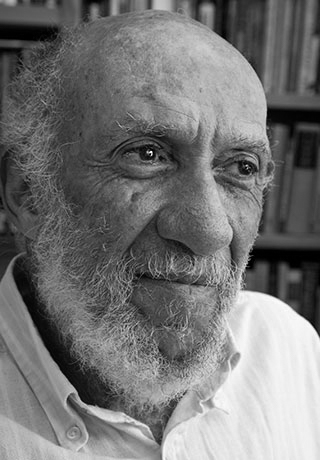
Professor Falk became an adviser to TFF when it was established in 1985.

Related Posts

The agreement is catastrophic both because of what it says and what it doesn’t mention. It reduces further the major asset of security policies: Freedom of action. Jan Oberg TFF director September 25, 2026 A couple of hours before the agreement was signed on September 22, 2026, I published the following 13 hypotheses about what it would most likely contain on TFF Substack (in English). I was wrong on only the first point. Contrary to what Trump had written on his Truth Social platform, it does not appear to come into force immediately. In fact, it turned out to be worse than even I had anticipated. After these hypotheses now come a number of reflections in light of what the agreement actually contains, and does not contain, as well as the way in which it has generally been presented by major media outlets and by the public-service broadcaster DR. My...
Photos © TFF 2000 Read PressInfo 90 “Lift the Sanctions and Bring More Aid to Yugoslavia” See Pictures from Belgrade © TFF 2000 Please reprint, copy, archive, quote or re-post this item, but please retain the source.
By Jan ObergTFF co-founder and director February 11, 2026 PART 3 — ECONOMICS, TRADE & FINANCIAL SOVEREIGNTY A. Trade Measures & Market Signaling Economic pressure can be applied instantly and scaled without violence. Immediate Measures (within a week) Government boycott US goods and services  A very powerful signal which over time will be felt. Targeted tariffs on selected U.S. goods Symbolic but high-visibility sectors send a clear message. Suspend trade facilitation talks A peaceful pause that signals deep concern. Freeze U.S. participation in public procurement – military procurement in particular A nonviolent way to reduce influence. Competition law review of U.S. corporations A legal tool to scrutinise market dominance. Longer-Term Measures EU–Asia–Africa trade corridors Reducing reliance on U.S. markets. European supply chains for critical minerals Strategic autonomy in resource access. European Strategic Trade Authority Monitoring coercive practices globally. Euro-denominated commodity markets Weakening the dollar’s pricing monopoly. The EU must resume contacts and negotiations with Russia, focusing on energy cooperation To...

Recent Articles

Tony Robinson October 4, 2026 Violence is easy to recognise when someone is being beaten, shot or killed. It becomes more difficult when nobody is holding a weapon. Poverty, discrimination, exploitation and repression can restrict a human life just as effectively, although they do so in very different ways and with very different consequences. Simply adding more categories to an ever-growing list of forms of violence does not really solve the problem. The more interesting question is what all these different situations have in common and why it makes sense to describe them using the same word. Human beings do not simply react to what happens around them. They remember the past, imagine things that do not yet exist, make plans and undertake projects. Workers organise because they imagine different working conditions; people migrate because they imagine another life somewhere else; social movements emerge because people refuse to accept the...
It’s a matter of principles, courage, vision and pulling together – while the militarist world is falling apart… Peter Langille October 3, 2026 “Here, then, is the problem which we present to you, stark and dreadful and inescapable: Shall we put an end to the human race; or shall mankind renounce war?”The Bertrand Russell—Albert Einstein Manifesto, July 9, 1955 ⁕ The forecast for what’s ahead is worrisome. The sharp rise in armed conflicts over the past three years is adding to what was already the highest level in over seventy years. Genocides, which should be prevented are supported. A shared climate emergency that jeopardises survival is ignored. Diverse polls now suggest that people are war-weary, worried and interested in a more effective United Nations. And, there are viable policy options for a more secure world! Yet governments are doubling-down, betting on more war and investing heavily. If current trends persist,...
Johan Galtung 1930-2024October 2015 Published here on October 3, 2026 Let us focus on Civilization for conflict analysis and remedies. Major forms of disorder use violence; war is state organized violence. The most belligerent states are the United States of America and Israel, both with civilization roots. National Evangelism, the US Protestant Christian civilization– more national than evangelical–justifies US warfare as exceptionalism of a people chosen by God, with a manifest destiny to run the world. Orthodox Judaism justifies Israeli warfare to conquer and expand from Nile to Euphrates as a religious right and duty to the Eternal One. The third most belligerent country, the UK, no longer believes it is God-chosen but chosen by the USA; not quite the same but something. But the root cause of global disorder lies in the Occident–with Islam–seeing itself as the single, universal civilization valid for all at all times, all others being...

TFF on Substack

Discover and subscribe to more peace materials on TFF Substack

Most Popular

Tony Robinson October 4, 2026 Violence is easy to recognise when someone is being beaten, shot or killed. It becomes more difficult when nobody is holding a weapon. Poverty, discrimination, exploitation and repression can restrict a human life just as effectively, although they do so in very different ways and with very different consequences. Simply adding more categories to an ever-growing list of forms of violence does not really solve the problem. The more interesting question is what all these different situations have in common and why it makes sense to describe them using the same word. Human beings do not simply react to what happens around them. They remember the past, imagine things that do not yet exist, make plans and undertake projects. Workers organise because they imagine different working conditions; people migrate because they imagine another life somewhere else; social movements emerge because people refuse to accept the...
It’s a matter of principles, courage, vision and pulling together – while the militarist world is falling apart… Peter Langille October 3, 2026 “Here, then, is the problem which we present to you, stark and dreadful and inescapable: Shall we put an end to the human race; or shall mankind renounce war?”The Bertrand Russell—Albert Einstein Manifesto, July 9, 1955 ⁕ The forecast for what’s ahead is worrisome. The sharp rise in armed conflicts over the past three years is adding to what was already the highest level in over seventy years. Genocides, which should be prevented are supported. A shared climate emergency that jeopardises survival is ignored. Diverse polls now suggest that people are war-weary, worried and interested in a more effective United Nations. And, there are viable policy options for a more secure world! Yet governments are doubling-down, betting on more war and investing heavily. If current trends persist,...
Johan Galtung 1930-2024October 2015 Published here on October 3, 2026 Let us focus on Civilization for conflict analysis and remedies. Major forms of disorder use violence; war is state organized violence. The most belligerent states are the United States of America and Israel, both with civilization roots. National Evangelism, the US Protestant Christian civilization– more national than evangelical–justifies US warfare as exceptionalism of a people chosen by God, with a manifest destiny to run the world. Orthodox Judaism justifies Israeli warfare to conquer and expand from Nile to Euphrates as a religious right and duty to the Eternal One. The third most belligerent country, the UK, no longer believes it is God-chosen but chosen by the USA; not quite the same but something. But the root cause of global disorder lies in the Occident–with Islam–seeing itself as the single, universal civilization valid for all at all times, all others being...
Read More
Living-Peace-Sign-Budapest-copy
Tony Robinson October 4, 2026 Violence is easy to recognise when someone is being beaten, shot or killed. It becomes more difficult when nobody is holding a weapon. Poverty, discrimination, exploitation and repression can restrict a human life just as effectively, although they do so in very different ways and with very different consequences. Simply adding more categories to an ever-growing list of forms of violence does not really solve the problem. The more interesting question is what all these different situations have in common and why it makes sense to describe them using the same word. Human beings do not simply react to what happens around them. They remember the past, imagine things that do not yet exist, make plans and undertake projects. Workers organise because they imagine different working conditions; people migrate because they imagine another life somewhere else; social movements emerge because people refuse to accept the...
b54a1f10-8c65-4f0b-9dd5-4abc0a7d04cc_2659x2659
It’s a matter of principles, courage, vision and pulling together – while the militarist world is falling apart… Peter Langille October 3, 2026 “Here, then, is the problem which we present to you, stark and dreadful and inescapable: Shall we put an end to the human race; or shall mankind renounce war?”The Bertrand Russell—Albert Einstein Manifesto, July 9, 1955 ⁕ The forecast for what’s ahead is worrisome. The sharp rise in armed conflicts over the past three years is adding to what was already the highest level in over seventy years. Genocides, which should be prevented are supported. A shared climate emergency that jeopardises survival is ignored. Diverse polls now suggest that people are war-weary, worried and interested in a more effective United Nations. And, there are viable policy options for a more secure world! Yet governments are doubling-down, betting on more war and investing heavily. If current trends persist,...
010
Johan Galtung 1930-2024October 2015 Published here on October 3, 2026 Let us focus on Civilization for conflict analysis and remedies. Major forms of disorder use violence; war is state organized violence. The most belligerent states are the United States of America and Israel, both with civilization roots. National Evangelism, the US Protestant Christian civilization– more national than evangelical–justifies US warfare as exceptionalism of a people chosen by God, with a manifest destiny to run the world. Orthodox Judaism justifies Israeli warfare to conquer and expand from Nile to Euphrates as a religious right and duty to the Eternal One. The third most belligerent country, the UK, no longer believes it is God-chosen but chosen by the USA; not quite the same but something. But the root cause of global disorder lies in the Occident–with Islam–seeing itself as the single, universal civilization valid for all at all times, all others being...
Screenshot 2026-10-02 011738
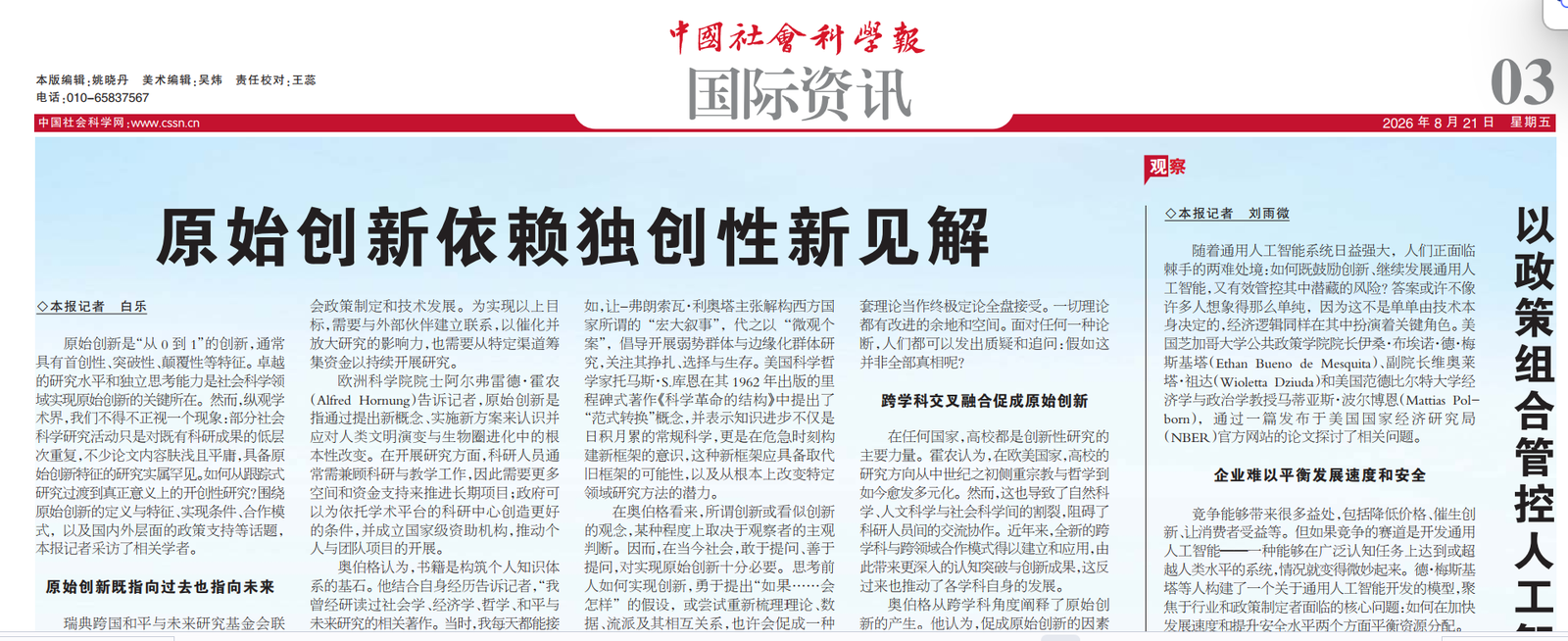
Jan ObergPhD, director, The Transnational Foundation for Peace and Future Research, TFFLund, Sweden October 2, 2026 This is my full original manuscript. The Chinese Academy of Social Science, CASS, makes two publications out if it. 1. China’s Five-year plan emphasized the capabilities of basic research and original innovation. It is regarded as the goal of the future social development, which, as required, should be significantly enhanced. Can you comment on the importance of original innovation in research and academic study? I believe it is easier to define “original innovation” in the natural sciences than in social sciences. The breaking points of what constitutes something new, or innovative, are not quite as sharp in the latter. But in both fields it is about opening up something that was closed, unseen, unexplored before – making manifest what was earlier latent. Innovations come in many forms and shapes – naming something that was not...
arctic-circle-map
The agreement is catastrophic both because of what it says and what it doesn’t mention. It reduces further the major asset of security policies: Freedom of action. Jan Oberg TFF director September 25, 2026 A couple of hours before the agreement was signed on September 22, 2026, I published the following 13 hypotheses about what it would most likely contain on TFF Substack (in English). I was wrong on only the first point. Contrary to what Trump had written on his Truth Social platform, it does not appear to come into force immediately. In fact, it turned out to be worse than even I had anticipated. After these hypotheses now come a number of reflections in light of what the agreement actually contains, and does not contain, as well as the way in which it has generally been presented by major media outlets and by the public-service broadcaster DR. My...
girl-5894831_1280
Below are TFF-related media mentions, comments, videos and social media posts published elsewhere but not on this homepage. We happen to catch and list only a fraction. Regarding video comments and debates, we recommend that you go to the TFF Video Channel on Substack where many of them are reproduced. Jan Oberg is a contributor to China Daily – 52 million daily clicks – and Global Times, CGTN and CCTV (the national television), China Investment, Xinhua News Agency and several others. Articles and videos on these media very often multiply into countless Chinese (and Western media) that re-post them from these main media. Thanks to The China Academy, his analyses, interviews and comments are frequently posted on YouTube channels such as Thinkers Forum and Wave Media. These videos are often re-posted on Bilibili (China’s YouTube), the China Content Center on TikTok, and on the Chinese edition of TikTok, Douyin.com. This means reaching hundreds of millions of viewers worldwide over a year. While there are too many to catch on all these...