
Three hard questions for Hamas

There is no doubt that Hamas has exhibited extraordinary resilience under the most difficult of conditions that have bedeviled its period of political leadership in the Gaza Strip that started in 2007.

It also seems clear as persuasively argued by Sandy Tolan in a valuable Common Dreams article – “Blown Chances in Gaza: Israel & U.S. Miss Many Chances to Avoid War”, Aug. 13, 2014 that Hamas pursued multiple initiatives starting in 2006 designed to achieve calm and quiet in its relations with Israel, and that these initiatives, including back channel reassurance about peaceful intentions, were rebuffed without even being acknowledged by either Israel or the United States.

It also seems the case that Israel acted to provoke the three most sustained military onslaughts directed at Gaza since 2008, and in each has relied on disproportionate force, inflicted numerous civilian casualties, and acted in a manner defiant of international humanitarian law.

For these reasons Israel deserves to be treated as an ‘outlaw state’ for reasons set forth by Akbar Ganji and I argued in a two-part article appearing in the online pages of AlJazeera English [“The Outlaw State of Israel,” Aug. 20,21, 2014].

And yet Hamas also has some explaining to do if it wishes to be more widely accepted throughout the world as entitled to full respect as a legitimate political actor.

This respect is crucial in the ongoing politics of enabling Hamas to play a major role in representing the national movement of the Palestinian people in all diplomatic settings.

The announcement of a unity government between Fatah and Hamas was an important legitimating step in this direction.

The following hard questions deserve convincing responses from those advocating the further legitimation of Hamas:

1. Why provide Israel with an argument for its massive military assaults by firing thousands of rockets that do minimal damage and give Israel a credible argument for recourse to defensive force applied disproportionately and causing intolerable levels of suffering for the people of Gaza? Are there not alternatives and better ways to sustain the spirit and substance of Palestinian resistance?

2. Is it not overdue to modify the language, tone, and substance of the Hamas Charter or Covenant of 1988 so as to reconcile such a foundational document with the more moderate diplomatic postures articulated by Hamas leaders in recent years?

Why leave this gap that Israel can exploit to justify its refusal to deal with Hamas or respond to its frequently articulated political proposal of long-term peaceful co-existence? Either Hamas stands by this exterminist language or it must supersede it by a new formulation of goals and vision.

3. Can Hamas expect to be viewed favorably by public opinion and in diplomatic circles when it engages in grisly forms of revolutionary justice when dealing with Palestinians suspected of collaborating with Israel?

As many as 21 Palestinians were reported to have been hung in prominent public places in Gaza on August 22nd on charges of collaborating with the enemy. Similar issues of summary execution arose in the context of the earlier Israeli aggressions in 2008-09 and 2012, and such behavior was then widely condemned by Palestinian human rights groups and many others in Gaza.

Admittedly, the problems posed by collaborators is a great security threat given the realities of the blockade and vulnerability of Gaza, but Hamas jeopardizes its reputation and claim to be a legitimate political actor by so behaving, and to some extent nullifies the strong effort of its leaders in recent years to project a moderate ethically responsible image by word and deed. Putting the question differently, ‘why is it necessary?’

Many of us are aware that Israel uses all manner of ‘dirty tricks’ to induce collaboration when it recruits informers in Gaza, which should be the basis of empathy on the part of Hamas for compromised individuals or at the very least cause the wheels of justice to await the outcome of an evidence-based trial before imposing death sentences, and then not doing so in such dehumanizing and degrading manner?

I do not raise here the accusations associated with charges and counter-charges relating to the use of ‘human shields’ in the course of the fighting. The evidence is cloudy as to such behavior, and as to whether it occurrence reflects policy, or is a deviation therefrom.

There are difficult issues of applying international criminal law in circumstances of asymmetric urban warfare, and an overall caveat about striking a self-righteous position with respect to the tactics used by either side is that military expediency has consistently prevailed over the constraints of law and morality throughout the history of warfare.

A reading of Kurt Vonnegut’s Slaughterhouse-Five (1969) or a consideration of strategic bombing of German and Japanese cities during World War II, including the use of atomic bombs to incinerate Hiroshima and Nagasaki despite their irrelevance to the outcome of the war and the horrendous impact on the large civilian populations.

In the last several years I have received much criticism, and worse, for urging the adoption of a positive attitude toward the Hamas effort to be treated as a political actor with legitimate grievances, and by observing that the behavior of Hamas in relation to Israel has been of a generally defensive nature in the face of constant harassment, unacceptable abuse, and an extreme campaign of delegitimation, even criminalization.

It remains my judgment on the basis of evidence available to me that Hamas has sought a quiet border with Israel, and that Israel has been principally responsible for the violence, and beyond this, for virtually all of the death and destruction on the Gaza side of the border that has occurred in this period.

It is also encouraging to take note of Hamas agreement to seek recourse to the International Criminal Court in pressing Palestinian grievances against Israel even though if an investigation of allegations goes forward it will include looking into contested aspects of Hamas’ behavior from the perspective of international criminal law.

The efforts of the international community and the UN to impose solutions, up through the failed Kerry initiative that collapsed last April, have not contributed to peace and justice either between Israel and Palestine, or in the wider region.

Whether wittingly or not, the international diplomacy of the West has produced dispossession, violence, and seemingly irreconcilable conflict with disastrous and tragic consequences for the indigenous population of Palestine ever since the end of World War I.
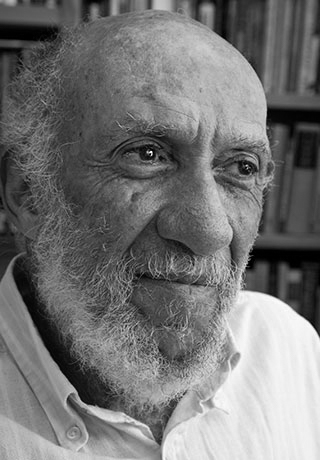

Professor Falk became an adviser to TFF when it was established in 1985.

Share

Leave a Reply

Your email address will not be published. Required fields are marked *

Related Posts

Peace is promoted by constructive proposals and dialogue Four preceding PressInfos have expressed concern over — and criticised — the ongoing, militarisation of the EU. Some will say: but there are no alternatives. We believe that there are always alternatives, that democracies are characterised by alternatives and choice, and that openly discussed alternatives will improve the quality and legitimacy of society’s decision–making. In addition, it is an intellectual and moral challenge to not only criticise but also be constructive. If we only tell people that we think they are wrong, they are not likely to listen. However, if we say: what are your views on this set of ideas and steps? — we may sometimes engage them in dialogue and sow a seed. Most people in power circles live their daily lives in in a time frame and a social space where certain ideas, viewpoints and concepts are just not...
Photos © TFF 2000 Read PressInfo 90 “Lift the Sanctions and Bring More Aid to Yugoslavia” See Pictures from Belgrade © TFF 2000 Please reprint, copy, archive, quote or re-post this item, but please retain the source.
Av FRANK SØHOLM GREVIL 16 augusti 2004  Vi er nu nået til tredje akt i det absurde teaterstykke, der i analogi med de store skueprocesser i Moskva 1936-38 er blevet døbt ‘Grevil-sagen’. Første akt bestod i min anonyme fremlæggelse af egenhændigt nedklassificerede rapporter i Berlingske Tidende i februar og marts. Andet akt udgjordes af min fremtræden med navn og billede i Information i april samt den efterfølgende mediestorm, som uden min direkte medvirken kostede en forsvarsminister taburetten samt en sigtelse for brud på tavshedspligten. Tredje akt bliver en retssag, hvor jeg står tiltalt for at have overtrådt straffelovens bestemmelser om uberettiget videregivelse eller udnyttelse af fortrolige oplysninger. Statsanklageren har ovenikøbet valgt at påberåbe sig særligt skærpende omstændigheder. Da jeg aldrig har modtaget betaling for at stille rapporterne til rådighed eller lade mig interviewe, må det skærpende bestå i, at “videregivelsen eller udnyttelsen er sket under sådanne omstændigheder, at det påfører...

Recent Articles

PressInfo # 141, December 21, 2001It’s time to prepare reconciliation between Albanians and Serbs PressInfo # 140, December 14, 2001Ibrahim Rugova’s decade-long leadership in Kosovo/a PressInfo # 139, 11. december, 2001En god nyhet: Jugoslaviens Sannings- och försoningskommission PressInfo # 139, 11. december, 2001Gode nyheder: Jugoslaviens Sandheds- og Forsoningskommission PressInfo # 139, December 11, 2001Good news: Yugoslavia’s Truth and Reconciliation Commission PressInfo # 138, November 8, 2001TFF co-founder PhD with thesis about young people with roots in other cultures PressInfo # 138, November 8, 2001TFF:s medstiftare doktor på avhandling om unga med ursprung i andra kulturer PressInfo # 137, October 17, 2001A new Marshall Plan: Advancing human security and controlling terrorism PressInfo # 136, October 15, 2001The UN and Annan really deserve it PressInfo # 135, October 10, 2001Preventing a terrorist mushroom cloud PressInfo # 134, 17 oktober, 2001Sverige og 11. september PressInfo # 134, October 9, 2001Sweden and September 11...
Peace is promoted by constructive proposals and dialogue Four preceding PressInfos have expressed concern over — and criticised — the ongoing, militarisation of the EU. Some will say: but there are no alternatives. We believe that there are always alternatives, that democracies are characterised by alternatives and choice, and that openly discussed alternatives will improve the quality and legitimacy of society’s decision–making. In addition, it is an intellectual and moral challenge to not only criticise but also be constructive. If we only tell people that we think they are wrong, they are not likely to listen. However, if we say: what are your views on this set of ideas and steps? — we may sometimes engage them in dialogue and sow a seed. Most people in power circles live their daily lives in in a time frame and a social space where certain ideas, viewpoints and concepts are just not...
Photos © TFF 2000 Read PressInfo 90 “Lift the Sanctions and Bring More Aid to Yugoslavia” See Pictures from Belgrade © TFF 2000 Please reprint, copy, archive, quote or re-post this item, but please retain the source.

TFF on Substack

Discover more from TFF Transnational Foundation & Jan Oberg.

Most Popular

PressInfo # 141, December 21, 2001It’s time to prepare reconciliation between Albanians and Serbs PressInfo # 140, December 14, 2001Ibrahim Rugova’s decade-long leadership in Kosovo/a PressInfo # 139, 11. december, 2001En god nyhet: Jugoslaviens Sannings- och försoningskommission PressInfo # 139, 11. december, 2001Gode nyheder: Jugoslaviens Sandheds- og Forsoningskommission PressInfo # 139, December 11, 2001Good news: Yugoslavia’s Truth and Reconciliation Commission PressInfo # 138, November 8, 2001TFF co-founder PhD with thesis about young people with roots in other cultures PressInfo # 138, November 8, 2001TFF:s medstiftare doktor på avhandling om unga med ursprung i andra kulturer PressInfo # 137, October 17, 2001A new Marshall Plan: Advancing human security and controlling terrorism PressInfo # 136, October 15, 2001The UN and Annan really deserve it PressInfo # 135, October 10, 2001Preventing a terrorist mushroom cloud PressInfo # 134, 17 oktober, 2001Sverige og 11. september PressInfo # 134, October 9, 2001Sweden and September 11...
Peace is promoted by constructive proposals and dialogue Four preceding PressInfos have expressed concern over — and criticised — the ongoing, militarisation of the EU. Some will say: but there are no alternatives. We believe that there are always alternatives, that democracies are characterised by alternatives and choice, and that openly discussed alternatives will improve the quality and legitimacy of society’s decision–making. In addition, it is an intellectual and moral challenge to not only criticise but also be constructive. If we only tell people that we think they are wrong, they are not likely to listen. However, if we say: what are your views on this set of ideas and steps? — we may sometimes engage them in dialogue and sow a seed. Most people in power circles live their daily lives in in a time frame and a social space where certain ideas, viewpoints and concepts are just not...
Photos © TFF 2000 Read PressInfo 90 “Lift the Sanctions and Bring More Aid to Yugoslavia” See Pictures from Belgrade © TFF 2000 Please reprint, copy, archive, quote or re-post this item, but please retain the source.
Read More
Imagen-thumbnail-The-Transnational-1
PressInfo # 141, December 21, 2001It’s time to prepare reconciliation between Albanians and Serbs PressInfo # 140, December 14, 2001Ibrahim Rugova’s decade-long leadership in Kosovo/a PressInfo # 139, 11. december, 2001En god nyhet: Jugoslaviens Sannings- och försoningskommission PressInfo # 139, 11. december, 2001Gode nyheder: Jugoslaviens Sandheds- og Forsoningskommission PressInfo # 139, December 11, 2001Good news: Yugoslavia’s Truth and Reconciliation Commission PressInfo # 138, November 8, 2001TFF co-founder PhD with thesis about young people with roots in other cultures PressInfo # 138, November 8, 2001TFF:s medstiftare doktor på avhandling om unga med ursprung i andra kulturer PressInfo # 137, October 17, 2001A new Marshall Plan: Advancing human security and controlling terrorism PressInfo # 136, October 15, 2001The UN and Annan really deserve it PressInfo # 135, October 10, 2001Preventing a terrorist mushroom cloud PressInfo # 134, 17 oktober, 2001Sverige og 11. september PressInfo # 134, October 9, 2001Sweden and September 11...
Imagen-thumbnail-The-Transnational-1
Peace is promoted by constructive proposals and dialogue Four preceding PressInfos have expressed concern over — and criticised — the ongoing, militarisation of the EU. Some will say: but there are no alternatives. We believe that there are always alternatives, that democracies are characterised by alternatives and choice, and that openly discussed alternatives will improve the quality and legitimacy of society’s decision–making. In addition, it is an intellectual and moral challenge to not only criticise but also be constructive. If we only tell people that we think they are wrong, they are not likely to listen. However, if we say: what are your views on this set of ideas and steps? — we may sometimes engage them in dialogue and sow a seed. Most people in power circles live their daily lives in in a time frame and a social space where certain ideas, viewpoints and concepts are just not...
Imagen-thumbnail-The-Transnational-1
Photos © TFF 2000 Read PressInfo 90 “Lift the Sanctions and Bring More Aid to Yugoslavia” See Pictures from Belgrade © TFF 2000 Please reprint, copy, archive, quote or re-post this item, but please retain the source.
Imagen-thumbnail-The-Transnational-1
Av FRANK SØHOLM GREVIL 16 augusti 2004  Vi er nu nået til tredje akt i det absurde teaterstykke, der i analogi med de store skueprocesser i Moskva 1936-38 er blevet døbt ‘Grevil-sagen’. Første akt bestod i min anonyme fremlæggelse af egenhændigt nedklassificerede rapporter i Berlingske Tidende i februar og marts. Andet akt udgjordes af min fremtræden med navn og billede i Information i april samt den efterfølgende mediestorm, som uden min direkte medvirken kostede en forsvarsminister taburetten samt en sigtelse for brud på tavshedspligten. Tredje akt bliver en retssag, hvor jeg står tiltalt for at have overtrådt straffelovens bestemmelser om uberettiget videregivelse eller udnyttelse af fortrolige oplysninger. Statsanklageren har ovenikøbet valgt at påberåbe sig særligt skærpende omstændigheder. Da jeg aldrig har modtaget betaling for at stille rapporterne til rådighed eller lade mig interviewe, må det skærpende bestå i, at “videregivelsen eller udnyttelsen er sket under sådanne omstændigheder, at det påfører...
Imagen-thumbnail-The-Transnational-1
Af Svenska Irakkommittén mot de Ekonomiska Sanktionerna (SIES) 13 september 2002 FN:s ekonomiska sanktioner mot Irak har nu pågått i tolv år och drabbat det irakiska folket med svåra lidanden. Enligt FN:s egna siffror har mer än 1,5 miljoner människor, varav ca 600 000 barn, dött som en direkt följd av sanktionerna. Dessutom har ett lågintensivt bombkrig mot landet pågått under dessa år. Av all denna förödelse- orsakad huvudsakligen av amerikansk och brittisk politik- har Saddam Husseins brutala och diktatoriska regim snarast stärkts än försvagats. Nu förbereder USA under president Bushs ledning ett storskaligt bombkrig mot Irak som kommer att innebära ett ännu större lidande för civilbefolkningen. Ett sådant krig kommer dessutom att ytterligare undergräva freden och säkerheten i världen. Att upprätta en demokratisk regim i Irak är det irakiska folkets angelägenhet och får enligt folkrätten inte ske med krigshandlingar utifrån. Folkrätten och FN:s stadgar måste respekteras. Vi vädjar till...

