Informed opinion agrees that the response to the presumed Assad regime’s responsibility for the use on August 21st of chemical weapons in Ghuta, a neighborhood in the eastern surrounding suburbs of Damascus, is intended to be punitive. This is a way of signaling that it is a punishment for the use of chemical weapons that does not have the ambition of altering the course of the internal struggle for power in Syria or to decapitate Bashar el-Assad. Of course, if it achieved some larger goal unexpectedly this would likely be welcomed, although not necessarily, by such interested centers of influence on Syrian policy as Washington, Ankara, Riyadh, and Tel Aviv.

Why not necessarily? Because there is a growing belief in influential Western circles, highlighted in a cynical article by Edward Luttwak published a few days ago in the NY Times, [“In Syria, America Loses if Either Side Wins,” Aug. 24, 2013] that it is better for the United States and Israel if the civil war goes on and on, and there are no winners. Accorded to this warped reasoning, if Assad wins, that represents significant regional gains for Iran, Russia, and Hezbollah; if the Syrian Free Army, and its Nusra Front and Al Qaeda allies win, it gives violent extremist forces a base of operations that would likely work strongly against Western interests.

Only Turkey, the frontline opponent of the Assad regime, and Saudi Arabia, the regional champion of Sunni sectarianism, stand to gain by resolving the conflict in favor of the Sunni-led opposition forces as that would both contribute, as Ankara and Riyadh see it, to greater regional stability, a measure of ideological alignment, involving a major setback for Iran and Russia.

Turkey and Saudi Arabia are split on whether it matters that with the fall of Assad a regime is defeated that has repeatedly committed crimes against humanity in waging a war against its own people. Their contradictory responses to the el-Sisi coup and massacres in Egypt is illuminating on this score: Turkey has adhered to principle at the probable expense of its material interests in the Middle East, while Saudi Arabia has rushed in to provide massive economic assistance and diplomatic support a military takeover that is crushing the leading Muslim political organization in the country.

Another way of thinking about the grand strategy of the United States in the Middle East after the dust began to settle in the region is suggested by the noted Israeli peace activist and former Knesset member, Uri Avnery [“Poor Obama,” August 31, 2013]: work frantically behind the scenes to restore the function of governance to military dictators, with Egypt as the poster child. Avnery attributes such Machiavellian machinations to CIA masterminds swimming in dark waters.

The rationale for an American-led attack: a variety of reasons have been given:

– America’s credibility is at stake after Obama ‘red line’ was crossed by launching a large-scale lethal chemical weapons attack;

– America’s credibility is makes important contributions to world order, and should not jeopardized by continued passivity in relation to the criminal conduct of the Assad regime; inaction has been tried and failed [not clearly tried—Hilary Clinton was avowed early supporter of rebel cause, including arms supplies; recent reports indicate American led ‘special forces operations’ being conducted to bolster anti-Assad struggle];

– a punitive strike will deter future reliance on chemical weapons in Syria and elsewhere, teaching Assad and other leaders that serious adverse consequences will follow upon a failure to heed warnings issued by an American president;

– even if the attack will not shift the balance in Syria back to the insurgent forces it will restore their political will to persist in the struggle for political victory over Assad and offset their recently weakened position;

– it is possible that the attack will unexpectedly enhance prospects for a diplomatic compromise, allowing a reconvening of the U.S.-Russia chaired Geneva diplomatic conference, promoting transition to a post-Assad Syria.

Why is this rationale insufficient?

– it does not take account of the fact that a punitive attack of the kind evidently being planned by Washington lacks any foundation in international law as it is neither undertaken in self-defense, nor after authorization by the UN Security Council, nor in a manner that can be justified as humanitarian intervention (in fact, innocent Syrian civilians are almost certain to be among the casualties);

– it presupposes that the U.S. Government rightfully exercises police powers on the global stage, and by unilateral (or ‘coalition of the willing’) decision, can give legitimacy to an other unlawful undertaking; it may be that the United States remains the dominant hard power political actor, but its war making since Vietnam is inconsistent with the global public good; international law and the UNSC are preferable sources of police powers than is reliance on the discretion and leadership of the United States at this stage of world history;

– U.S. foreign policy under President Barack Obama has similarities to that of George W. Bush in relation to international law, despite differences in rhetoric and style: Obama evades the constraints of international law by the practice of ‘reverential interpretations,’ while Bush defied as matter of national self-assertion and the meta-norms of grand strategy; as a result Obama comes off as a hypocrite while Bush as an outlaw or cowboy; in an ideal form of global law both would be held accountable for their violations of international criminal law;

– the impacts of a punitive strike could generate harmful results: weakening diplomatic prospects; increasing spillover effects on Lebanon, Turkey, elsewhere; complicating relations with Iran and Russia; producing retaliatory responses that widen the combat zone; causing a worldwide rise in anti-Americanism.

There is one conceptual issue that deserves further attention. In the aftermath of the Kosovo NATO War of 1999 there was developed by the Independent International Commission the argument that the military attack was ‘illegal, but legitimate.’[1] The argument was that the obstacles to a lawful use of force could not be overcome because the use of force was non-defensive and not authorized by the Security Council.

It was treated as legitimate because of compelling moral reasons (imminent threat of humanitarian catastrophe; regional European consensus; overwhelming Kosovar political consensus – except small Serbian minority) relating to self-determination; Serb record of criminality in Bosnia and Kosovo) coupled with considerations of political feasibility (NATO capabilities and political will; a clear and attainable objective – withdrawal of Serb administrative and political control – that was achieved).

None of these Kosovo elements are present in relation to Syria: it is manifestly unlawful and also illegitimate (the attack will harm innocent Syrians without achieving proportionate political ends benefitting their wellbeing; the principal justifications for using force relate to geopolitical concerns such as ‘credibility,’ ‘deterrence,’ and ‘U.S. leadership.’ [For intelligent counter-argument contending that an attack on Syria at this time would be ‘illegal, but legitimate,’ see Ian Hurd, “Saving Syria, International Law is not the answer,” Aljazeera, August 27, 2013]

Note
[1] In the spirit of ‘truth in advertising’ I should acknowledge that I was a member of the Kosovo Commission, and indeed responsible for drafting the section of the report that developed the ‘illegal, but legitimate’ rationale. I admit to some misgivings at the time, which grew larger during the Iraq War debate in which the distinction was again invoked to rationalize an illegal war. In the larger picture of norm development it was the ‘responsibility to protect’ (R2P) norm that attained the greater influence, especially within inter-governmental and UN circles, providing the rationale for the UN authorized attack on Libya in March 2011.
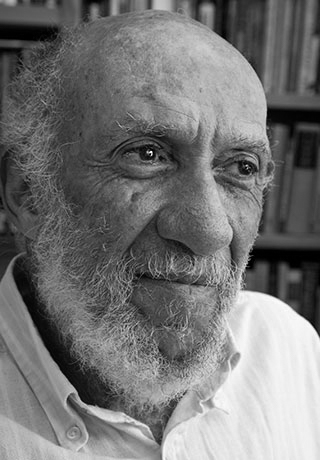
Professor Falk became an adviser to TFF when it was established in 1985.

Related Posts

The agreement is catastrophic both because of what it says and what it doesn’t mention. It reduces further the major asset of security policies: Freedom of action. Jan Oberg TFF director September 25, 2026 A couple of hours before the agreement was signed on September 22, 2026, I published the following 13 hypotheses about what it would most likely contain on TFF Substack (in English). I was wrong on only the first point. Contrary to what Trump had written on his Truth Social platform, it does not appear to come into force immediately. In fact, it turned out to be worse than even I had anticipated. After these hypotheses now come a number of reflections in light of what the agreement actually contains, and does not contain, as well as the way in which it has generally been presented by major media outlets and by the public-service broadcaster DR. My...
Photos © TFF 2000 Read PressInfo 90 “Lift the Sanctions and Bring More Aid to Yugoslavia” See Pictures from Belgrade © TFF 2000 Please reprint, copy, archive, quote or re-post this item, but please retain the source.
By Jan ObergTFF co-founder and director February 11, 2026 PART 3 — ECONOMICS, TRADE & FINANCIAL SOVEREIGNTY A. Trade Measures & Market Signaling Economic pressure can be applied instantly and scaled without violence. Immediate Measures (within a week) Government boycott US goods and services  A very powerful signal which over time will be felt. Targeted tariffs on selected U.S. goods Symbolic but high-visibility sectors send a clear message. Suspend trade facilitation talks A peaceful pause that signals deep concern. Freeze U.S. participation in public procurement – military procurement in particular A nonviolent way to reduce influence. Competition law review of U.S. corporations A legal tool to scrutinise market dominance. Longer-Term Measures EU–Asia–Africa trade corridors Reducing reliance on U.S. markets. European supply chains for critical minerals Strategic autonomy in resource access. European Strategic Trade Authority Monitoring coercive practices globally. Euro-denominated commodity markets Weakening the dollar’s pricing monopoly. The EU must resume contacts and negotiations with Russia, focusing on energy cooperation To...

Recent Articles

Tony Robinson October 4, 2026 Violence is easy to recognise when someone is being beaten, shot or killed. It becomes more difficult when nobody is holding a weapon. Poverty, discrimination, exploitation and repression can restrict a human life just as effectively, although they do so in very different ways and with very different consequences. Simply adding more categories to an ever-growing list of forms of violence does not really solve the problem. The more interesting question is what all these different situations have in common and why it makes sense to describe them using the same word. Human beings do not simply react to what happens around them. They remember the past, imagine things that do not yet exist, make plans and undertake projects. Workers organise because they imagine different working conditions; people migrate because they imagine another life somewhere else; social movements emerge because people refuse to accept the...
It’s a matter of principles, courage, vision and pulling together – while the militarist world is falling apart… Peter Langille October 3, 2026 “Here, then, is the problem which we present to you, stark and dreadful and inescapable: Shall we put an end to the human race; or shall mankind renounce war?”The Bertrand Russell—Albert Einstein Manifesto, July 9, 1955 ⁕ The forecast for what’s ahead is worrisome. The sharp rise in armed conflicts over the past three years is adding to what was already the highest level in over seventy years. Genocides, which should be prevented are supported. A shared climate emergency that jeopardises survival is ignored. Diverse polls now suggest that people are war-weary, worried and interested in a more effective United Nations. And, there are viable policy options for a more secure world! Yet governments are doubling-down, betting on more war and investing heavily. If current trends persist,...
Johan Galtung 1930-2024October 2015 Published here on October 3, 2026 Let us focus on Civilization for conflict analysis and remedies. Major forms of disorder use violence; war is state organized violence. The most belligerent states are the United States of America and Israel, both with civilization roots. National Evangelism, the US Protestant Christian civilization– more national than evangelical–justifies US warfare as exceptionalism of a people chosen by God, with a manifest destiny to run the world. Orthodox Judaism justifies Israeli warfare to conquer and expand from Nile to Euphrates as a religious right and duty to the Eternal One. The third most belligerent country, the UK, no longer believes it is God-chosen but chosen by the USA; not quite the same but something. But the root cause of global disorder lies in the Occident–with Islam–seeing itself as the single, universal civilization valid for all at all times, all others being...

TFF on Substack

Discover and subscribe to more peace materials on TFF Substack

Most Popular

Tony Robinson October 4, 2026 Violence is easy to recognise when someone is being beaten, shot or killed. It becomes more difficult when nobody is holding a weapon. Poverty, discrimination, exploitation and repression can restrict a human life just as effectively, although they do so in very different ways and with very different consequences. Simply adding more categories to an ever-growing list of forms of violence does not really solve the problem. The more interesting question is what all these different situations have in common and why it makes sense to describe them using the same word. Human beings do not simply react to what happens around them. They remember the past, imagine things that do not yet exist, make plans and undertake projects. Workers organise because they imagine different working conditions; people migrate because they imagine another life somewhere else; social movements emerge because people refuse to accept the...
It’s a matter of principles, courage, vision and pulling together – while the militarist world is falling apart… Peter Langille October 3, 2026 “Here, then, is the problem which we present to you, stark and dreadful and inescapable: Shall we put an end to the human race; or shall mankind renounce war?”The Bertrand Russell—Albert Einstein Manifesto, July 9, 1955 ⁕ The forecast for what’s ahead is worrisome. The sharp rise in armed conflicts over the past three years is adding to what was already the highest level in over seventy years. Genocides, which should be prevented are supported. A shared climate emergency that jeopardises survival is ignored. Diverse polls now suggest that people are war-weary, worried and interested in a more effective United Nations. And, there are viable policy options for a more secure world! Yet governments are doubling-down, betting on more war and investing heavily. If current trends persist,...
Johan Galtung 1930-2024October 2015 Published here on October 3, 2026 Let us focus on Civilization for conflict analysis and remedies. Major forms of disorder use violence; war is state organized violence. The most belligerent states are the United States of America and Israel, both with civilization roots. National Evangelism, the US Protestant Christian civilization– more national than evangelical–justifies US warfare as exceptionalism of a people chosen by God, with a manifest destiny to run the world. Orthodox Judaism justifies Israeli warfare to conquer and expand from Nile to Euphrates as a religious right and duty to the Eternal One. The third most belligerent country, the UK, no longer believes it is God-chosen but chosen by the USA; not quite the same but something. But the root cause of global disorder lies in the Occident–with Islam–seeing itself as the single, universal civilization valid for all at all times, all others being...
Read More
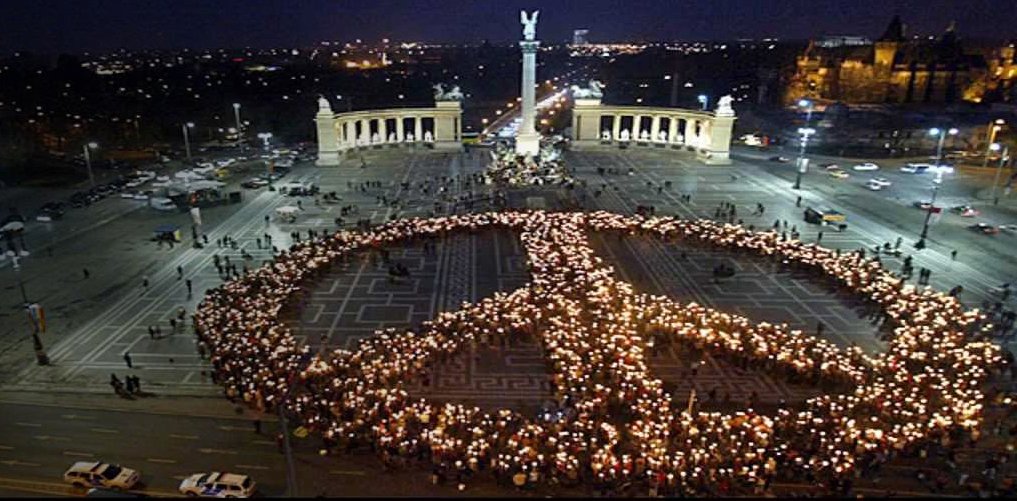
Living-Peace-Sign-Budapest-copy
Tony Robinson October 4, 2026 Violence is easy to recognise when someone is being beaten, shot or killed. It becomes more difficult when nobody is holding a weapon. Poverty, discrimination, exploitation and repression can restrict a human life just as effectively, although they do so in very different ways and with very different consequences. Simply adding more categories to an ever-growing list of forms of violence does not really solve the problem. The more interesting question is what all these different situations have in common and why it makes sense to describe them using the same word. Human beings do not simply react to what happens around them. They remember the past, imagine things that do not yet exist, make plans and undertake projects. Workers organise because they imagine different working conditions; people migrate because they imagine another life somewhere else; social movements emerge because people refuse to accept the...
b54a1f10-8c65-4f0b-9dd5-4abc0a7d04cc_2659x2659
It’s a matter of principles, courage, vision and pulling together – while the militarist world is falling apart… Peter Langille October 3, 2026 “Here, then, is the problem which we present to you, stark and dreadful and inescapable: Shall we put an end to the human race; or shall mankind renounce war?”The Bertrand Russell—Albert Einstein Manifesto, July 9, 1955 ⁕ The forecast for what’s ahead is worrisome. The sharp rise in armed conflicts over the past three years is adding to what was already the highest level in over seventy years. Genocides, which should be prevented are supported. A shared climate emergency that jeopardises survival is ignored. Diverse polls now suggest that people are war-weary, worried and interested in a more effective United Nations. And, there are viable policy options for a more secure world! Yet governments are doubling-down, betting on more war and investing heavily. If current trends persist,...
010
Johan Galtung 1930-2024October 2015 Published here on October 3, 2026 Let us focus on Civilization for conflict analysis and remedies. Major forms of disorder use violence; war is state organized violence. The most belligerent states are the United States of America and Israel, both with civilization roots. National Evangelism, the US Protestant Christian civilization– more national than evangelical–justifies US warfare as exceptionalism of a people chosen by God, with a manifest destiny to run the world. Orthodox Judaism justifies Israeli warfare to conquer and expand from Nile to Euphrates as a religious right and duty to the Eternal One. The third most belligerent country, the UK, no longer believes it is God-chosen but chosen by the USA; not quite the same but something. But the root cause of global disorder lies in the Occident–with Islam–seeing itself as the single, universal civilization valid for all at all times, all others being...
Screenshot 2026-10-02 011738
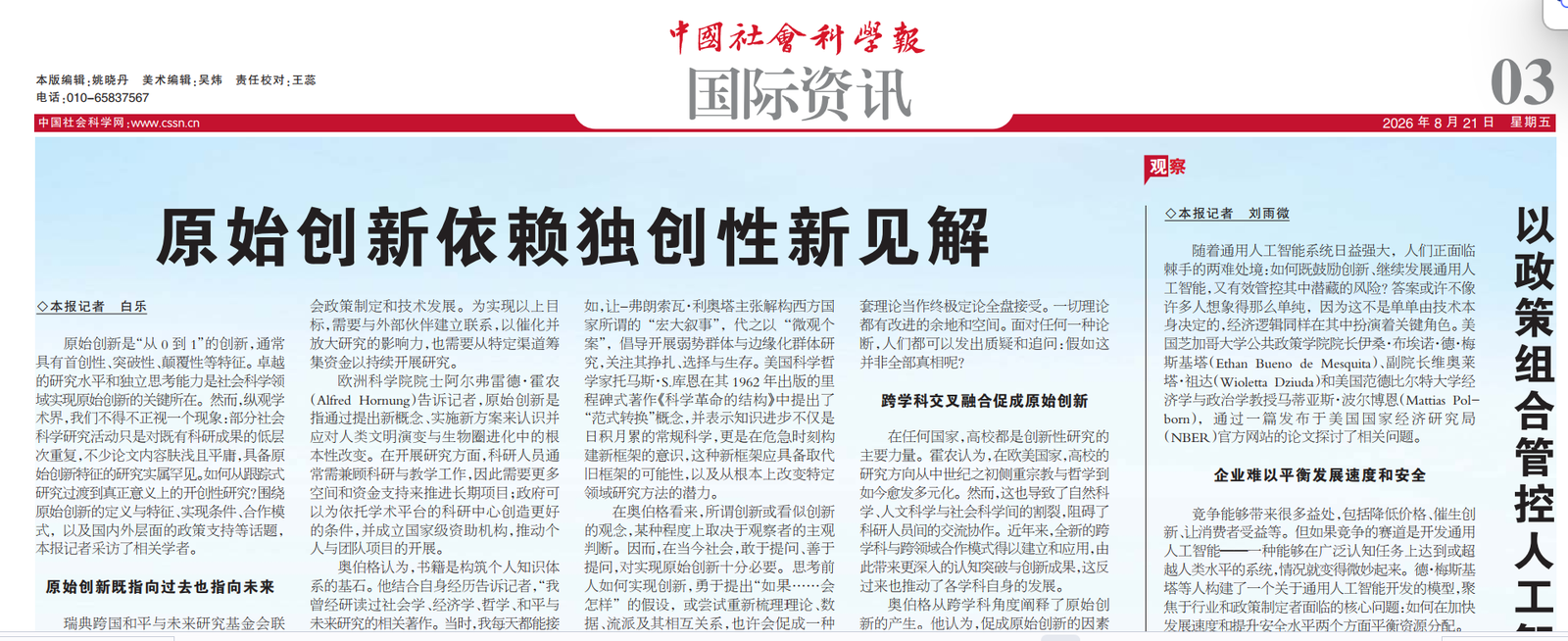
Jan ObergPhD, director, The Transnational Foundation for Peace and Future Research, TFFLund, Sweden October 2, 2026 This is my full original manuscript. The Chinese Academy of Social Science, CASS, makes two publications out if it. 1. China’s Five-year plan emphasized the capabilities of basic research and original innovation. It is regarded as the goal of the future social development, which, as required, should be significantly enhanced. Can you comment on the importance of original innovation in research and academic study? I believe it is easier to define “original innovation” in the natural sciences than in social sciences. The breaking points of what constitutes something new, or innovative, are not quite as sharp in the latter. But in both fields it is about opening up something that was closed, unseen, unexplored before – making manifest what was earlier latent. Innovations come in many forms and shapes – naming something that was not...
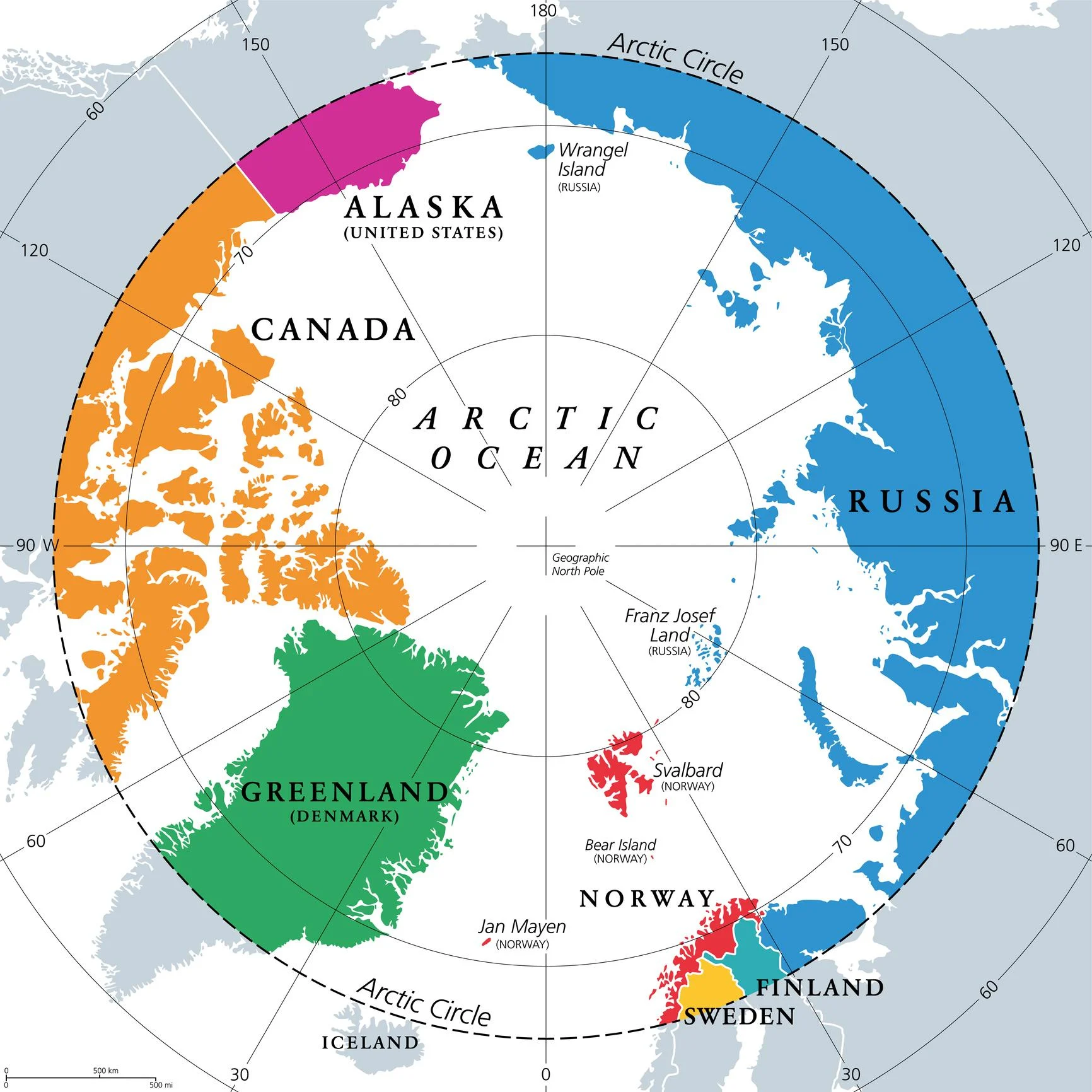
arctic-circle-map
The agreement is catastrophic both because of what it says and what it doesn’t mention. It reduces further the major asset of security policies: Freedom of action. Jan Oberg TFF director September 25, 2026 A couple of hours before the agreement was signed on September 22, 2026, I published the following 13 hypotheses about what it would most likely contain on TFF Substack (in English). I was wrong on only the first point. Contrary to what Trump had written on his Truth Social platform, it does not appear to come into force immediately. In fact, it turned out to be worse than even I had anticipated. After these hypotheses now come a number of reflections in light of what the agreement actually contains, and does not contain, as well as the way in which it has generally been presented by major media outlets and by the public-service broadcaster DR. My...
girl-5894831_1280
Below are TFF-related media mentions, comments, videos and social media posts published elsewhere but not on this homepage. We happen to catch and list only a fraction. Regarding video comments and debates, we recommend that you go to the TFF Video Channel on Substack where many of them are reproduced. Jan Oberg is a contributor to China Daily – 52 million daily clicks – and Global Times, CGTN and CCTV (the national television), China Investment, Xinhua News Agency and several others. Articles and videos on these media very often multiply into countless Chinese (and Western media) that re-post them from these main media. Thanks to The China Academy, his analyses, interviews and comments are frequently posted on YouTube channels such as Thinkers Forum and Wave Media. These videos are often re-posted on Bilibili (China’s YouTube), the China Content Center on TikTok, and on the Chinese edition of TikTok, Douyin.com. This means reaching hundreds of millions of viewers worldwide over a year. While there are too many to catch on all these...