Hunting down the war criminals

/10/jonathanpower2.jpg”>

There can be no question that if President Bashar al-Assad of Syria falls the International Criminal Court will want to put him on trial for war crimes. The long arm of international law will reach him wherever he flees to. The ICC has an unblemished record in bringing to The Hague, the Court’s headquarters, the people they want. As the great heavyweight boxer, Joe Louis, once said, “You can run but you can’t hide”.

This week a new term begins for the justices. In the last couple of years there has been the capture of the alleged war criminals, Ratko Mladic of Serbia, Bernard Munyagishari of Rwanda, Charles Taylor of Liberia and the decision by the UN Security Council to ask the chief prosecutor of the International Criminal Court to send to trial the late Muammar Gadhafi. There was also the killing of Osama bin Laden who, if he had been captured instead, would have been tried as a war criminal. Today will resume the trial of Congolese politician and warlord, Jean-Pierre Bemba.

Not since the days of the Nuremberg trials of the leading Nazis has the public’s interest been so aroused on how to punish the “bad guys” (there are no “bad women!). The change of mood was aptly summed up by the former East Timorese resistance leader and Nobel Peace Prize laureate, Jose Ramos-Horta, who said: “In this day and age you cannot kill tens of thousands of people, destroy a whole country and then just get fired.”

International law, so used to run the common critique, is imprecise, often unenforceable and irrelevant. In 1987 the political scientists Stephen Haggard and Beth Simmons expressed the then prevailing view in academia that the study of international law was “virtually moribund”. Sixteen years later, in the wake of the Pinochet affair and with the trial of former Serbian president, Slobodan Milosevic, these widely held notions underwent a marked sea-change. The media began to treat war crimes as serious issues for the first time since the trial of Nazi war criminals at Nuremberg.

Doubters, not least the US government, have come round to seeing that an ICC arrest and prosecution is a sharp weapon in the quest for furthering democracy, limiting war and furthering the pursuit of human rights. President George W. Bush during his last couple of years in office moved from his total hostility to the Court to quiet cooperation. Under Barack Obama the US has become a public enthusiast, working successfully in the UN Security Council to persuade it to ask the ICC to prosecute Gadhafi. If Obama wins a second term there is a good chance that the US will formally join the ICC.

I recall writing a column in 1992 arguing for an international criminal court to deal with war crimes. I received but one letter – from a law professor at the University of California who said he had had the same idea and had written about it in academic journals but no one in government was responsive and the idea was dead in the water. Then the war in ex-Yugoslavia shook up everyone’s complacency. Quite quickly a war crimes court for ex-Yugoslavia was established. This was the precursor for the subsequent International Criminal Court. It is a mark of how things can change once human rights activists seize a cause.

The notion of universal jurisdiction has been brought out of the cupboard. Once confined to old issues such as piracy, the slave trade and attacks on airplanes it has suddenly blossomed into a tool that enables the prosecution of war crimes at the ICC and on a country’s own territory. President Richard Nixon’s Secretary of State, Henry Kissinger, understanding the significance of this, argued in an article in “Foreign Affairs” that carried to its logical conclusion it will turn traditional notions of statecraft and the making of foreign policy on their head.

So what about Kissinger himself? Many consider him a war criminal. At various times French and Chilean magistrates have announced they want to interview him. Christopher Hitchens wrote a well documented book on Kissinger’s alleged war crimes in Vietnam and Chile.

During the war he and Nixon authorised attacks in Vietnam that were unnecessarily brutal – using napalm against hundreds of thousands of innocent women and children in the villages. They also authorized in secret the massive bombing of neutral, adjacent, Cambodia, which totally destabilized a thriving society.

This is surely worse than what Assad is doing or what Mladic and the Congolese warlords have done. Unfortunately the Court cannot deal with cases that took place before it was created.

Meanwhile, the Court’s reach and confidence is growing. At some point would be- war criminals will surely get the message there is no impunity for them if they engage in war crimes. The penny hasn’t dropped yet but I’m convinced before long it will.

Copyright: Jonathan Power

Foreign affairs columnist, film-maker and author

Share

Leave a Reply

Your email address will not be published. Required fields are marked *

Related Posts

This is not another geopolitical commentary on the Arctic. It is a visionary peace proposal that can save the region from militarised rivalry and ecological ruin. A blueprint for shared security, sustainable development, and human dignity — benefitting Greenland, the Arctic, and the rest of us. Jan Oberg TFF director Lund, Sweden, February 17, 2026 I. Four Principles for a New Arctic Vision The Arctic is often framed as a cold arena of rivalry — a place where great powers test each other’s resolve. But this worldview is outdated, unimaginative, and ultimately self‑defeating. The Arctic is not a vacuum waiting to be militarised; it is a living region, a climate stabiliser, and a cultural homeland whose future will shape the future of humanity. If we begin from that understanding, a far more rational Arctic order becomes possible — one that is peaceful, cooperative, and centred on the people who actually live there. This vision rests...
Peace is promoted by constructive proposals and dialogue Four preceding PressInfos have expressed concern over — and criticised — the ongoing, militarisation of the EU. Some will say: but there are no alternatives. We believe that there are always alternatives, that democracies are characterised by alternatives and choice, and that openly discussed alternatives will improve the quality and legitimacy of society’s decision–making. In addition, it is an intellectual and moral challenge to not only criticise but also be constructive. If we only tell people that we think they are wrong, they are not likely to listen. However, if we say: what are your views on this set of ideas and steps? — we may sometimes engage them in dialogue and sow a seed. Most people in power circles live their daily lives in in a time frame and a social space where certain ideas, viewpoints and concepts are just not...
Photos © TFF 2000 Read PressInfo 90 “Lift the Sanctions and Bring More Aid to Yugoslavia” See Pictures from Belgrade © TFF 2000 Please reprint, copy, archive, quote or re-post this item, but please retain the source.

Recent Articles

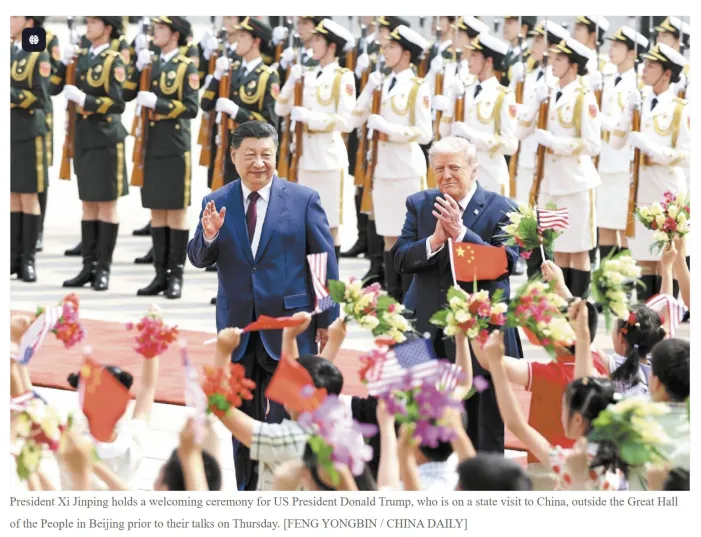
Jan Oberg May 15, 2026 Go to this Fox News page and scroll the whole way down: President Donald Trump tells the world that his meeting with President Xi Jinping yielded a lot of very concrete political and economic results – of course, only where the Chinese side, according to him, agreed with him. He does not mention the Taiwan issue, but Secretary of State, Marco Rubio, says that it did not feature prominently in their talks and that the US policy on Taiwan has not changed. Then go to China Daily – or Global Times – and you will see that for the Chinese it is framework, principles, structure of cooperation etc. that matters – all embedded in the overall idea of “constructive bilateral relationship of strategic stability.” Nowhere is any concrete agreement or deal – all that Trump refers to – mentioned. At the general level, this gives you insights into the very different social...
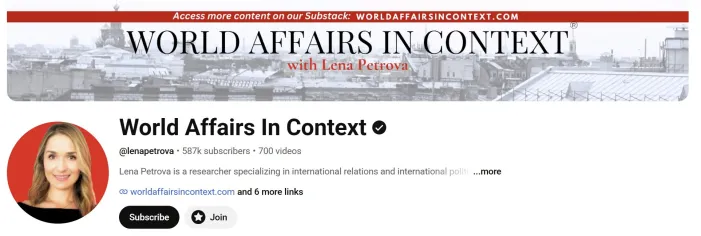
Lena Petrova of “World Affairs In Context” with more than half a million subscribers on YouTube wanted to explore what a peace researcher like me has to say about, among other things, the First and the Second Cold War and why eethics has disappeared from politics. I am particularly happy about this conversation that also yielded an amazing number of very appreciative comments on YouTube. No doubt, people are longing for alternatives, including peace perspectives.
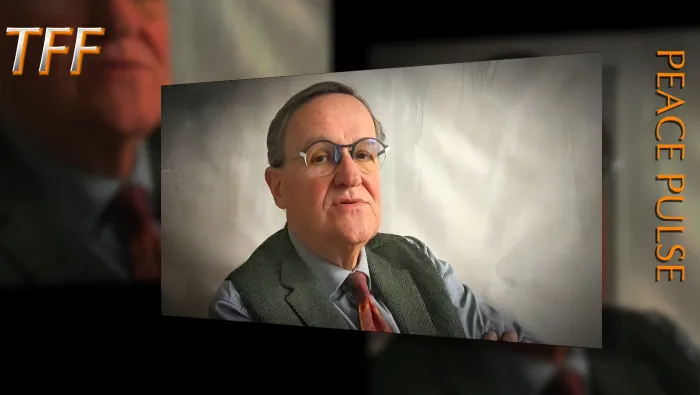
The MIMAC – Military-Industrial-Media-Academic Complex – drives the world’s rampant militarism and wars without end. Here is a short reflection of how it works against all interests of humanity. #5 deals with why there is no real enemy or threat images/analysis. It’s all ex-post constructions. And, btw, theTFF Peace Pulse is now on Rumble.

TFF on Substack

Discover more from TFF Transnational Foundation & Jan Oberg.

Most Popular

Jan Oberg May 15, 2026 Go to this Fox News page and scroll the whole way down: President Donald Trump tells the world that his meeting with President Xi Jinping yielded a lot of very concrete political and economic results – of course, only where the Chinese side, according to him, agreed with him. He does not mention the Taiwan issue, but Secretary of State, Marco Rubio, says that it did not feature prominently in their talks and that the US policy on Taiwan has not changed. Then go to China Daily – or Global Times – and you will see that for the Chinese it is framework, principles, structure of cooperation etc. that matters – all embedded in the overall idea of “constructive bilateral relationship of strategic stability.” Nowhere is any concrete agreement or deal – all that Trump refers to – mentioned. At the general level, this gives you insights into the very different social...
Lena Petrova of “World Affairs In Context” with more than half a million subscribers on YouTube wanted to explore what a peace researcher like me has to say about, among other things, the First and the Second Cold War and why eethics has disappeared from politics. I am particularly happy about this conversation that also yielded an amazing number of very appreciative comments on YouTube. No doubt, people are longing for alternatives, including peace perspectives.
The MIMAC – Military-Industrial-Media-Academic Complex – drives the world’s rampant militarism and wars without end. Here is a short reflection of how it works against all interests of humanity. #5 deals with why there is no real enemy or threat images/analysis. It’s all ex-post constructions. And, btw, theTFF Peace Pulse is now on Rumble.
Read More
Screenshot-2026-05-15-103534
Jan Oberg May 15, 2026 Go to this Fox News page and scroll the whole way down: President Donald Trump tells the world that his meeting with President Xi Jinping yielded a lot of very concrete political and economic results – of course, only where the Chinese side, according to him, agreed with him. He does not mention the Taiwan issue, but Secretary of State, Marco Rubio, says that it did not feature prominently in their talks and that the US policy on Taiwan has not changed. Then go to China Daily – or Global Times – and you will see that for the Chinese it is framework, principles, structure of cooperation etc. that matters – all embedded in the overall idea of “constructive bilateral relationship of strategic stability.” Nowhere is any concrete agreement or deal – all that Trump refers to – mentioned. At the general level, this gives you insights into the very different social...
Screenshot-2026-05-12-104023
Lena Petrova of “World Affairs In Context” with more than half a million subscribers on YouTube wanted to explore what a peace researcher like me has to say about, among other things, the First and the Second Cold War and why eethics has disappeared from politics. I am particularly happy about this conversation that also yielded an amazing number of very appreciative comments on YouTube. No doubt, people are longing for alternatives, including peace perspectives.
Screenshot-2026-04-13-154551 (2)
The MIMAC – Military-Industrial-Media-Academic Complex – drives the world’s rampant militarism and wars without end. Here is a short reflection of how it works against all interests of humanity. #5 deals with why there is no real enemy or threat images/analysis. It’s all ex-post constructions. And, btw, theTFF Peace Pulse is now on Rumble.
Screenshot-2026-04-13-154551 (1)
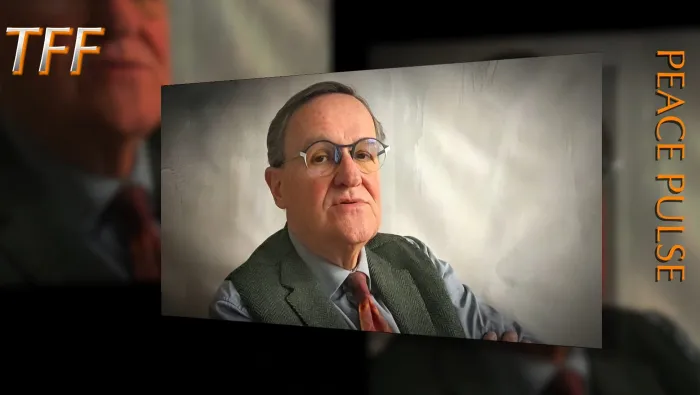
Jan Oberg, TFF director April 28, 2026 In this third TFF Peace Pulse, I make the important distinction between the violence and the conflict that violence is a symptom of. If you want peace, focus on the underlying conflict because that is the key to resolution, peacemaking, and a better future for the parties. The West is obsessed with violence, just look around you – and 90+ per cent of the public debate is about military issues and other violence – totally wasted for peace. These Peace Pulses will only be published here a few times. You will also not find them on YouTube and Vimeo because both platforms have blocked TFF and me; you know, peace is dangerous these days. Most TFF’s videos since 2007 are now on Rumble.
Screenshot-2026-04-13-154551
In contrast to most, we’ll bring alternatives, solutions, hope and strategies for a better future. Times are dangerous, yes, but that only intensifies the need for constructive thinking and action! Jan Oberg, TFF director April 13, 2026 The new TFF Peace Pulse uses video messages in a new way: Max 3-5-minute-long comments, ideas or perhaps mini-lectures, all about peace – positive peace. We launch them today on April 13, 2026 with a carefully crafted visual aesthetic fitting the content. We hope to publish them regularly from now on. We launch Peace Pulse (PP) – for a number of reasons. The world is in chaos, and there are countless reasons to feel concerned, frustrated, even angry. The atmosphere is saturated with doom and gloom, with negative energy and rear‑mirror thinking, while vision, imagination, alternatives, strategies and genuine future‑mindedness remain in short supply. And without them, we simply can’t save the world. Looking at problems from a hundred angles will...
IMG_5165 (1)
PART II — Publishing Peace in a System That Prioritises Militarism Jan Oberg, TFF director April 10, 2026 How TFF Maintains a Daily Voice in a Digital World Built for Noise This article is part of the series “TFF at 40″ and it invites you to learn about Four Decades of Publishing Peace. It takes a look at how a small, people‑financed peace foundation has communicated across four generations of technology — from wax stencils and fax machines to mass email and Substack — and why TFF continues to publish every single day in a system that rewards noise, conflict, and militarism. ◆ What it means to publish peace every single day in a digital system built for 24/7 news and other noise, confrontation, and militarism. How TFF’s independence, continuity, and global readership defy algorithms, donor cycles, and Western media censorhip — and why the Majority World keeps listening. When the...