Photo by Shahab Zolfaghari on Unsplash
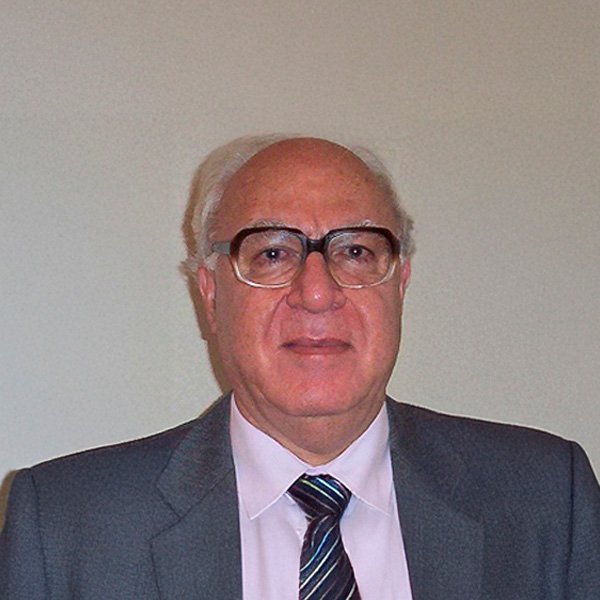
Farhang Jahanpour
TFF Associate since 2006, former Board member. Here his unique homepage.
July 28, 2025
Transcript of a lecture given by Farhang Jahanpour during an online conference on the future of Iran on 16 March 2025.
When we speak about “transition”, some people believe that in fact there is no need for transition and everything will remain as it is forever. Of course, transition is not a precise term and each person can have his/her own interpretation of the term. The way that I interpret this term, transition means moving from one state to another.
History has shown us that nothing, not even the most powerful regimes, such as that of the late Shah or even the British or French empires or the Soviet Union or, dare I say, the current US empire whose decline is being accelerated as the result of the current xenophobia, bullying, chaos and lawlessness, will remain forever. Sooner or later, they will be thrown into history’s dustbin.
In the case of the Islamic Republic, even some of its former friends and supporters have openly concluded that it has overstayed its welcome and its survival in its current form is no longer viable. Recent protests in the country, especially the massive demonstrations concerning the “Women, Life, Freedom” movement, have shown that a majority, maybe a decisive majority, are not satisfied with the status quo and demand change.
The real question is how will the transition to a more democratic government take place. Will it be a violent event such as the French or Russian revolutions, or whether the collapse will happen not with a bang but a whimper, such as the collapse of the British or French empires or the fall of the former Soviet Union? To a large extent, the form that transition takes depends on the behaviour of the people and maybe to a larger extent on the behaviour of the regime, which affects people’s reactions.
Normally, the supporters of most revolutions have the most exaggerated and optimistic views of their revolution and its future, which are seldom realised, while the opponents or victims of revolutions have the worst fears, which often materialise.
When I first started to study English literature at the University of Shiraz nearly 70 years ago, one of the first English novels that I read was the famous novel by Charles Dickens “A Tale of Two Cities”, which became Dickens’s best-known work of historical fiction and one of the best-selling novels of all time. It was published in 1859, set in Paris and London before, during and after the French Revolution.
The book starts with the following words which have become very famous and are in fact common to all revolutions:
“It was the best of times, it was the worst of times, it was the age of wisdom, it was the age of foolishness, it was the epoch of belief, it was the epoch of incredulity, it was the season of Light, it was the season of Darkness, it was the spring of hope, it was the winter of despair, we had everything before us, we had nothing before us, we were all going direct to Heaven, we were all going direct the other way—in short, the period was so far like the present period, that some of its noisiest authorities insisted on its being received, for good or for evil, in the superlative degree of comparison only.”
The book is a comparison between the French Revolution with all its violence, killings and destruction, and peaceful political evolution in England which, according to the author, produced a better and more lasting version of real change, democracy and human rights.
Personally, I prefer peaceful and evolutionary transition because violence always breeds violence and, as we have seen, violent revolutions have caused a great deal of mayhem, death and destruction, and have seldom achieved their ideals, while evolutionary change always safeguards and protects what exists in the society and builds upon it. In violent revolutions, when the swords, guillotines and guns stop, people see that they have lost a great deal and have not gained very much.
As we have seen in the case of the Islamic revolution, despite all the initial hopes and even explicit promises about freedom, independence, social justice, respecting the rights of women, religious and ethnic minorities, economic prosperity and, in short, creating a heaven on earth, the revolution’s leaders violated all their promises and ended up suppressing women and religious and ethnic minorities, and all those who according to them were violating Islamic laws.
One could find many faults with the late Shah’s government, including the lack of political freedom, but from a social point of view, women’s role in society, religious and ethnic freedoms and different forms of social freedoms, it was perhaps the most progressive and enlightened government in the Middle East. Khomeini’s regime did not bring political freedom but took away all social freedoms as well.
As far as political freedom was concerned, there was really a great scope for criticising the government, including the prime minister, as long as you did not insult the Shah. People were free to criticise, even though their criticisms did not change the government’s mind. When the Constitutional Revolution (1906-11) took place and people demanded a parliament, Mohammad Ali Shah who came to power after his father had signed the Constitutional Decree shortly before he died, said: “If they want to have a parliament, they can have one, and they can talk as much as they like, as long as they do not interfere in national affairs and the affairs of the government.” The same was mainly true under the Shah’s government and even more so under the Islamic Republic.
With all its shortcomings, the Constitutional Revolution, which was mainly peaceful, achieved much more than the Islamic Revolution which introduced a reign of terror. The Constitutional Revolution changed the direction of the country and opened the horizons for the rule of law, for democracy. It put limits on the power of the kings and governments and created a much more democratic and more inclusive society.
Above all, for the first time in Iranian history, it got the people involved in politics and gave them a voice about how the government was formed and how it worked. It turned the people from subjects into citizens. It changed the dominance of the clerics and the rule of the Shari’a and empowered the people to legislate laws based on national interests through their elected representatives in the parliament. For the first time, it also instituted a judiciary, not dominated by the clerics implementing the laws of the Shari’a, but one based on modern laws formulated by the parliament and a secular judiciary. Contrary to the Constitutional Revolution, the Islamic Revolution again brought back the rule of the Shari’a, as interpreted by mainly obscurantist and reactionary mullahs.
The problem is that most revolutions, especially those based on religion, create a sense of impunity and excessive optimism in their supporters, and any deviation from the accepted dogma is regarded as an unforgivable sin and a heresy. This was the case with many communist and other secular revolutions, but this feeling of exclusivity and even sanctity is especially strong in religious revolutions that believe that they speak for God and are God’s representatives on earth.
Unfortunately, we see many such tendencies in the Islamic revolution. Now, in the dying days or at least the old age of the Islamic Republic, such tendencies have become more pronounced. Right from the start, when Ayatollah Khomeini was given the title of “Imam”, which in Shi’ism was reserved exclusively for the twelve Shi’a imams who were regarded to be the Prophet’s rightful heirs, his followers referred to his policies and words as “prophet-like” or even “god-like”. He even referred to his own will and testament as my “political-divine will and testament.” He and his successor Ayatollah Ali Khamenei were regarded as “the representatives of the Hidden Imam” and their actions were given such authority which went even beyond what the Imams and even the prophet claimed for themselves.
Domestically, the Islamic revolution turned the clock back and brought oppression, despotism, fanaticism, discrimination and economic misery. In its foreign policy, the Islamic revolution alienated practically all its neighbours and turned them against Iran. The clearest example of that isolation could be seen during Saddam Hussein’s invasion of Iran when, even though Saddam was clearly the aggressor, all regional countries, the United States, European countries and even the Soviet Union supported him with the most sophisticated weapons, while Iran could not even get spare parts for its own weapons which the Shah had purchased from the United States.
Arab countries donated tens of billions of dollars worth of financial aid to Saddam Hussein, provided him with bases, sold Iraq’s oil on its behalf and imposed many restrictions on Iran. The more recent policies of the Islamic Republic in creating some regional proxies, the so-called Resistance Front, have also ended in total failure. As we have seen, during Israel’s aggressive and genocidal war in Gaza, most of Iran’s assets in Palestine, Lebanon, Syria, and the rest of the region were destroyed or massively downgraded.
There is now a new and dangerous propaganda ploy by Israel, alleging that Iran has become weakened and made vulnerable and it is time for Israel and the United States to attack her. This is why President Trump sent a letter to Iran, practically saying “Either surrender to my demands or I will crush you.” In an interview with Fox News, Trump described his message as “I hope you’re going to negotiate because if we have to go in militarily, it’s going to be a terrible thing.”
In a way, throughout history, Iran has been at the centre of regional intrigues and attacks. In the mythical history of the Shah Nameh, Iran was always fighting against Turan in the East. In historical times, Iran has had to fight against the Babylonians, the Greeks, the Romans, the Byzantines, and in more recent times the Ottoman Empire in the West, the Arabs in the South, Russia in the north and various enemies in the East. It was attacked by some Central Asian Turkic groups, such as the Seljuqs, and the Ghaznavids, as well as the Mongols, the Timurids, the Pashtuns, etc.
In a way, Iran has always been isolated and attacked from all directions, because it has been at the crossroads of civilisations, and a link between the East and the West and the North and the South. Before the era of global navigation, Iran provided the only land route between Asia and Europe, which were cut off from each other through the Caspian Sea in the North and the Persian Gulf and the Indian Ocean in the South of Iran.
In order to cope with so many regional enemies, Iran formed various empires that subjugated many of those enemies. Iran has had a longer period of imperial rule than any other empire, including the Roman or the Islamic empires. However, now that the time of empires is over, Iran has to find a way of coexistence with all its neighbours and with the world. Under the new world order, Iranian governments have no option but to compromise and live in peace with all other states in keeping with the UN Charter.
The period of transition requires two fundamental changes of direction. Domestically, Iran must move from the current form of religious despotism towards democracy and human rights. It must adopt a new policy of coexistence and cooperation with all Iranian ethnic and religious groups. Iran has always been a multi-ethnic, multi-religious and multi-linguistic society, and this has been the source of its strength.
Despite all their differences, different Iranian groups, the Persians, the Azeris, the Kurds, the Arabs, the Baluchis, the Turkmen, etc. have lived in unity and solidarity in a country that has survived for thousands of years. It can be argued that there is no other country in the world which has such a long history of existence as a distinct civilisation.
In a regional and international context, Iran has to adopt a new policy of coexistence and cooperation with all its neighbours, including the Arabs, the Turks, the Russians, the Pashtuns, etc., as well as establishing friendly relations with all other countries of the world as a constructive member of the international community. As a country with one of the largest number of neighbours and a long history of coexistence with the world, this is something that Iran is very well qualified to achieve. So, a peaceful transition requires a total overhaul of domestic and foreign policies.
Despite all the problems that I have enumerated, Iran can have a bright, prosperous and peaceful future if it can play its cards right, can make the best use of its regional position, and its enormous oil, gas and other mineral resources, and above all its human resources, which despite so many restrictions over the past few decades have achieved a great deal.
One of the reasons why a peaceful transition has not taken place is the uncompromising and violent reaction of the clerical regime. The other is the disunity of opposition at home and even more so abroad. The third and most important reason is the opposition has not been able to put forward a coherent, positive and realistic alternative so that the majority of people in Iran will believe that any transition will not result in violence, the collapse of the normal and orderly lives of the people, and that it would usher in a much better future than the one they are experiencing now.
In most cases, the message of the opposition has been negative and retaliatory, has involved violence and has not been positive and constructive. It has been based more on wishful thinking than on the actual realities of people’s lives. Instead of constantly talking about the toppling of the regime and even occasionally condoning foreign plans for regime change, the message should provide a positive vision of the future. The details of the future form of government would involve contributions by experts in different legal, social, economic and security fields, but what is needed now is a clear framework for what we would like to see in the future. That message could be summed up in a few slogans or principles: national reconciliation, general amnesty, national solidarity, the rule of law, separation of religion from politics, equality of all the people regardless of gender, ethnicity or religious affiliation, and coexistence with the neighbours and with the rest of the world.
A peaceful transition will be in the interest of the Iranian people and the region and in the interest of the ruling clerics. Because of powerful regional and international enemies that are waiting to deliver a deadly blow at Iran, the alternative to a peaceful transition will damage Iran, may lead in the short term at least to its partition and will leave another violent, negative legacy behind. The sad and disastrous experiences of Afghanistan, Iraq, Libya, Somalia, Sudan and more recently Lebanon, Syria and Yemen must provide a wake-up call to the Iranians.
I hope that those in charge and the Iranian people as a whole will seize the opportunity and pave the way for a fundamental but peaceful transition, both domestically and in their foreign policy.