
How So Many Learned to Stop Worrying and Love the Nukes

Social psychosis is widespread. In the words of the British psychiatrist, RD Laing, “The condition of alienation, of being asleep, of being unconscious, of being out of one’s mind, is the condition of the normal man.” He was not referring to raving, drooling, hitting-your-head-against-the-wall lunacy but a taken-for-granted acceptance of a world long teetering on the edge of nuclear extinction, to take the most extreme example, but surely only one of many. 

The insouciant acceptance and support of psychotic rulers who promote first-strike nuclear war is very common. First strike nuclear policy is United States policy. I recently wrote an article about the dangers of the fourteen US Trident submarines. These subs constantly cruise under the oceans carrying 3,360 nuclear warheads equivalent to 134,400 Hiroshima bombs. All are on first strike triggers. And of course these are supplemented by all the land and air based nukes.

My point was not very complicated: now that the United States government has abrogated all nuclear weapons treaties and continues to escalate its war against Russia in Ukraine, we are closer to nuclear annihilation than ever before. This conclusion is shared by many esteemed thinkers such as the late Daniel Ellsberg who died on June 16, 2023 and whose 2017 book The Doomsday Machine: Confessions of a Nuclear War Planner, makes clear that nuclear war, waged intentionally or by mistake or accident, is very possible.

In the months before he died, he warned that this is now especially true with the situation in Ukraine and the U.S. provocations against China. The Grayzone’s Max Blumenthal recently addressed the UN Security Council on the danger of U.S. actions in Ukraine and asked:

Will we see another Douma deception, but this time in Zaporizhzhia? Why are we doing this? Why are we tempting nuclear annihilation by flooding Ukraine with advanced weapons and sabotaging negotiations at every turn?

Finian Cunningham has just raised the specter of a thermonuclear catastrophe initiated by a U.S./Ukrainian false flag attack on the Zaporozhye Nuclear Power Plant. So my article was in no way unusual, except for my concentration on the Trident submarines. When, against my better judgment, I read some commentators’ responses to my piece at a few websites where my article was posted, I was taken aback when I read the following [all emphases are mine]:

  • Like many other boomers, Edward J Curtin Jr is caught up in ‘nuclear terror’ … whereas on 4chan you see that a large portion of the young generation has come to accept the massive evidence that Hiroshima & Nagasaki were chemically firebombed like Tokyo, and ‘nuclear weapons’ most likely do not exist at all. The 10 alleged ‘nuclear powers’ have had reasons to hoax together, just like the global collusion on ‘covid’ & ‘vaccines’.
  • So, the point is? Subs with nukes have been cruising around the world’s oceans for over 60 years, back to the time when they tried to scare us with the Cuban missile crisis. I was on a fast attack sub during the Vietnam war, friend of mine got boomer duty, which is what they call the ones that carry the missiles. They’re there for show, they aren’t going to use them. Yes, they should be banned internationally, just in case. But as with the Nuremberg trials and principles, that’s not nearly enough. We’re going to need to create our own New World Order
  • This is the way the world ends
    This is the way the world ends
    This is the way the world ends
    Not with a bang but a whimper
    I vote for the bang!
  • The nuke is exaggerated. Reality is that too many will survive a nuclear WWIII.
    There will still be too many useless eaters and psychos left in the underground bunkers no matter how many nukes we drop. Like Chernobyl it will only develop to paradises for animals, natives and homeless on food stamps, while we the exceptionals will suffer from an underground life for 50 years without seeing natural light. A global virus and for double insurance a coupled vaxx, will be a much more effective tool to clean the filth and double shareholders profit..
  • Dear Ed the sea monsters about as real as nukes.
  • Another one of the “elites” hoaxes.

To hear that there are no nuclear weapons and never were; to learn that some in their embrace of nihilism hope for a nuclear holocaust; to read that nuclear weapons are never going to be used because they only exist for show – well, this at least confirmed my suspicion that many who comment on articles are either bonkers or trolls or both.

Some probably have nothing better to do than inform writers how wrong they are. It frightened me. It made me wonder how many of the millions of silent ones think similarly or have come to embrace hopelessness as a way of life – the feeling that they have no power because that has been drilled into them from birth. 

I have long thought that cultural normality can be understood as the use of one’s freedom to create a prison, a cell in which one can convince oneself that one is safe because the authorities have established a sacred umbrella to protect one from an apocalyptic hard rain that they never think is going to fall.

The Pew Research Center recently surveyed the American public on their sixteen greatest fears. Nuclear war was not one them. It was as if nuclear weapons did not exist, as if they have been buried in the cellar of public awareness. As if Mad Magazine’s  Alfred E. Newman’s motto was the national motto: “What? Me worry?” No doubt more Americans are aware of the gross public spectacle of Joey Chestnut stuffing his mouth with sixty-five hot dogs in ten minutes than they are of the Biden administration’s insane escalation toward nuclear war in Ukraine. 

We live in Guy Debord’s “Society of the Spectacle.” Although he was writing years ago, Ronald Laing’s words sound ironically prescient today after so many years of endless propaganda, the destruction of human experience resulting in destructive behavior, and the relentless diminishment of human beings to the status of machines:

At this moment in history, we are all caught in the hell of frenetic passivity. We find ourselves threatened by extermination that will be reciprocal, that no one wishes, that everyone fears, that may just happen to us ‘because’ no one knows how to stop it. There is one possibility of doing so if we can understand the structure of this alienation of ourselves from our experience, our experience from our deeds, our deeds from human authorship. Everyone will be carrying out orders. Where do they come from? Always from elsewhere. Is it still possible to reconstitute our destiny out of the hellish and inhuman fatality?

That is the key question now that more than fifty years have elapsed since Laing penned those words in his now classic book, The Politics of Experience (isbn.nu).  He said then, which is exponentially truer today, that “machines are already becoming better at communicating with each other than human beings with each other.”

Talking about deep things has become passé for so many. If we don’t start worrying and unlove the machines, we are doomed sooner or later. Sooner is probable. Nuclear weapons are very real. They are poised and ready to fly. If we continue to live in denial of the madness of those who provoke their use while calmly promoting first-strike policies as the U.S. government does, we are worse than fools. 

We are suicidal. As Daniel Ellsberg told us, “Don’t wait ‘till the bombs are actually falling.”  That will be too late. There is no doubt that before a nuclear war can happen, we must go insane, normally so. Let’s make the few protest voices in the wilderness the cries of hundreds of millions: End nuclear weapons now before they end us. Stop escalating the war in Ukraine now. Make peace with Russia and China now.

“There is such a thing as being too late,” Martin Luther King, Jr. told us on April 4, 1967, one year to the day before he was assassinated in a U.S. government plot. “We still have a choice today: nonviolent coexistence or violent coannihilation.”

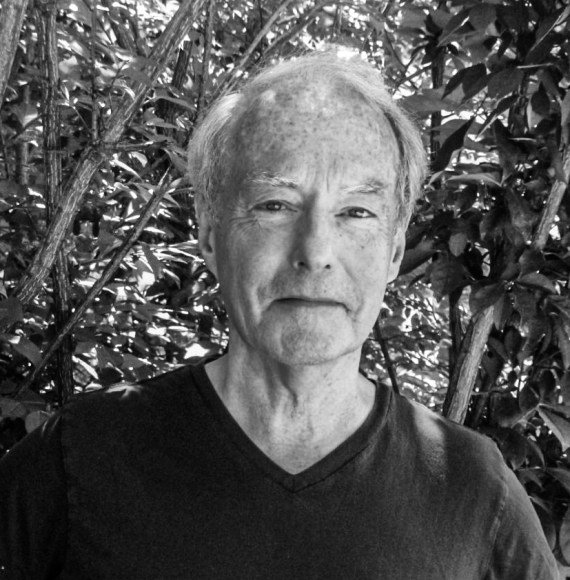
About the author
Please help TFF remain truly independent if you liked this article

Click here now!


Warning: Array to string conversion in /home/u133848308/domains/sandbox-alot.com/public_html/transnational/wp-content/plugins/elementor/core/dynamic-tags/manager.php on line 66

Warning: Array to string conversion in /home/u133848308/domains/sandbox-alot.com/public_html/transnational/wp-content/plugins/elementor/core/dynamic-tags/manager.php on line 66

Warning: Array to string conversion in /home/u133848308/domains/sandbox-alot.com/public_html/transnational/wp-content/plugins/elementor/core/dynamic-tags/manager.php on line 66

Share

Leave a Reply

Your email address will not be published. Required fields are marked *

Related Posts

A friendly quarrel while we agree that the US sanctions are a weapon of mass destruction and kill more people than wars do. And that we must talk much more about sanctions than we have so far. Jan Oberg, TFF director March 16, 2026 John Mearsheimer recently stated that U.S. sanctions murdered around 38 million people between 1971 and 2021 – see the video below. It is a dramatic figure, and it has spread quickly because it captures, in one sentence, the enormous human cost of modern sanctions. I share his concern about the destructive effects of economic coercion. But the specific number he cites — and the way he attributes it — deserves a friendly academic clarification. The figure comes from a 2023 Lancet Global Health article estimating the mortality effects of unilateral U.S. and EU sanctions over the past half‑century. This is the first point where Mearsheimer’s shorthand diverges from the text: the study...
This is not another geopolitical commentary on the Arctic. It is a visionary peace proposal that can save the region from militarised rivalry and ecological ruin. A blueprint for shared security, sustainable development, and human dignity — benefitting Greenland, the Arctic, and the rest of us. Jan Oberg TFF director Lund, Sweden, February 17, 2026 I. Four Principles for a New Arctic Vision The Arctic is often framed as a cold arena of rivalry — a place where great powers test each other’s resolve. But this worldview is outdated, unimaginative, and ultimately self‑defeating. The Arctic is not a vacuum waiting to be militarised; it is a living region, a climate stabiliser, and a cultural homeland whose future will shape the future of humanity. If we begin from that understanding, a far more rational Arctic order becomes possible — one that is peaceful, cooperative, and centred on the people who actually live there. This vision rests...
By Jan ObergTFF co-founder and director February 11, 2026 PART 3 — ECONOMICS, TRADE & FINANCIAL SOVEREIGNTY A. Trade Measures & Market Signaling Economic pressure can be applied instantly and scaled without violence. Immediate Measures (within a week) Government boycott US goods and services  A very powerful signal which over time will be felt. Targeted tariffs on selected U.S. goods Symbolic but high-visibility sectors send a clear message. Suspend trade facilitation talks A peaceful pause that signals deep concern. Freeze U.S. participation in public procurement – military procurement in particular A nonviolent way to reduce influence. Competition law review of U.S. corporations A legal tool to scrutinise market dominance. Longer-Term Measures EU–Asia–Africa trade corridors Reducing reliance on U.S. markets. European supply chains for critical minerals Strategic autonomy in resource access. European Strategic Trade Authority Monitoring coercive practices globally. Euro-denominated commodity markets Weakening the dollar’s pricing monopoly. The EU must resume contacts and negotiations with Russia, focusing on energy cooperation To...

Recent Articles

Burundi – hopp om fred Burundi, var är det nu det ligger? Det är nånting med Hutsier och Tutuer – eller vad de nu heter – som mördar varandra med machete-knivar, nånting med fattigdom, korruption, militärdiktatur, nöd och elände? Det hopplösa, mörka Afrika i ett bananskal, eller hur? Tja. Jag har precis varit där. Det ligger naturligtvis någonting i det. Och det finns en del orsaker till att vi inte ser mycket om landet i massmedia. En av dem är att det inte försiggår något folkmord just nu, ingen naturkatastrofer, ingen kupp. Det finns ingen misslyckad FN-mission, USA och EU har få intressen, Madeleine Halfbright har inte sagt något om det nyss, NATO:s Solana ser inte bombningar i Burundi som viktiga för firandet av alliansens 50-årsdag i april. För en tid sedan då 50 människor mördades strömmade hundratals journalister med CNN i spetsen till Burundi…men för att snabbt försvinna till Kongo...
Burundi – håb forude Burundi, hvor er det nu det ligger? Det er noget med Hutsier og Tutuer – eller hvad de nu hedder – der laver folkemord med machete-knive på hinanden, noget med fattigdom, korruption, militærdiktatur, nød og elendighed? Det håbløse, mørke Afrika i en bananskal, ikke? Tjah. Jeg har lige været der. Der er selvfølgelig noget om snakken. Der er en del årsager til at man ikke hører særligt meget om livet i dette lille land. En af dem er at der ikke foregår noget folkemord for tiden, ingen naturkatastrofer, intet kup. Der er ingen mislykket FN-mission, USA og EU har ingen interesser, Madeleine Halfbright har ikke sagt noget om det, NATO’s Solana ser ikke bombinger i Burundi som afgørende forud for alliancens 50årsdag. For nogen tid siden da et halvt hundrede mennesker var blevet dræbt valfartede hundreder af journalister med CNN i spidsen dertil . . . men...
Rambouillet (Rambo-Yeah) og Rashid Vi skriver fredag den 19. januar. For få dage siden kom jeg hjem fra små tre uger i Skopje, Beograd og Kosovo. Min analyse og min intuition siger mig dét, jeg ikke vil høre: bombningerne nærmer sig. Det var 34. besøg siden 1991. Jeg er delvist uddannet i Dubrovnik, fra 1974. Jeg kan ikke slippe det. Det er altså også mit land, der atter trues af den kulturkreds, jeg tilhører. Radmila og Peca i Beograd, venner siden 1974, intellektuelle der har valgt ikke at forlade landet og netop har sagt nej til et ophold i udlandet. Datteren Anja på 9 skal vokse op hér. "Jeg rejste ned nu," siger jeg, "fordi der enten ville falde bomber eller blive en eller anden slags ‘forhandling’ og jeg vil være hér hvis I blir bombet, for jeg skammer mig over hvad Danmark og andre lande gør." Hun får tårer...

TFF on Substack

Discover more from TFF Transnational Foundation & Jan Oberg.

Most Popular

Burundi – hopp om fred Burundi, var är det nu det ligger? Det är nånting med Hutsier och Tutuer – eller vad de nu heter – som mördar varandra med machete-knivar, nånting med fattigdom, korruption, militärdiktatur, nöd och elände? Det hopplösa, mörka Afrika i ett bananskal, eller hur? Tja. Jag har precis varit där. Det ligger naturligtvis någonting i det. Och det finns en del orsaker till att vi inte ser mycket om landet i massmedia. En av dem är att det inte försiggår något folkmord just nu, ingen naturkatastrofer, ingen kupp. Det finns ingen misslyckad FN-mission, USA och EU har få intressen, Madeleine Halfbright har inte sagt något om det nyss, NATO:s Solana ser inte bombningar i Burundi som viktiga för firandet av alliansens 50-årsdag i april. För en tid sedan då 50 människor mördades strömmade hundratals journalister med CNN i spetsen till Burundi…men för att snabbt försvinna till Kongo...
Burundi – håb forude Burundi, hvor er det nu det ligger? Det er noget med Hutsier og Tutuer – eller hvad de nu hedder – der laver folkemord med machete-knive på hinanden, noget med fattigdom, korruption, militærdiktatur, nød og elendighed? Det håbløse, mørke Afrika i en bananskal, ikke? Tjah. Jeg har lige været der. Der er selvfølgelig noget om snakken. Der er en del årsager til at man ikke hører særligt meget om livet i dette lille land. En af dem er at der ikke foregår noget folkemord for tiden, ingen naturkatastrofer, intet kup. Der er ingen mislykket FN-mission, USA og EU har ingen interesser, Madeleine Halfbright har ikke sagt noget om det, NATO’s Solana ser ikke bombinger i Burundi som afgørende forud for alliancens 50årsdag. For nogen tid siden da et halvt hundrede mennesker var blevet dræbt valfartede hundreder af journalister med CNN i spidsen dertil . . . men...
Rambouillet (Rambo-Yeah) og Rashid Vi skriver fredag den 19. januar. For få dage siden kom jeg hjem fra små tre uger i Skopje, Beograd og Kosovo. Min analyse og min intuition siger mig dét, jeg ikke vil høre: bombningerne nærmer sig. Det var 34. besøg siden 1991. Jeg er delvist uddannet i Dubrovnik, fra 1974. Jeg kan ikke slippe det. Det er altså også mit land, der atter trues af den kulturkreds, jeg tilhører. Radmila og Peca i Beograd, venner siden 1974, intellektuelle der har valgt ikke at forlade landet og netop har sagt nej til et ophold i udlandet. Datteren Anja på 9 skal vokse op hér. "Jeg rejste ned nu," siger jeg, "fordi der enten ville falde bomber eller blive en eller anden slags ‘forhandling’ og jeg vil være hér hvis I blir bombet, for jeg skammer mig over hvad Danmark og andre lande gør." Hun får tårer...
Read More
Burundi – hopp om fred Burundi, var är det nu det ligger? Det är nånting med Hutsier och Tutuer – eller vad de nu heter – som mördar varandra med machete-knivar, nånting med fattigdom, korruption, militärdiktatur, nöd och elände? Det hopplösa, mörka Afrika i ett bananskal, eller hur? Tja. Jag har precis varit där. Det ligger naturligtvis någonting i det. Och det finns en del orsaker till att vi inte ser mycket om landet i massmedia. En av dem är att det inte försiggår något folkmord just nu, ingen naturkatastrofer, ingen kupp. Det finns ingen misslyckad FN-mission, USA och EU har få intressen, Madeleine Halfbright har inte sagt något om det nyss, NATO:s Solana ser inte bombningar i Burundi som viktiga för firandet av alliansens 50-årsdag i april. För en tid sedan då 50 människor mördades strömmade hundratals journalister med CNN i spetsen till Burundi…men för att snabbt försvinna till Kongo...
Burundi – håb forude Burundi, hvor er det nu det ligger? Det er noget med Hutsier og Tutuer – eller hvad de nu hedder – der laver folkemord med machete-knive på hinanden, noget med fattigdom, korruption, militærdiktatur, nød og elendighed? Det håbløse, mørke Afrika i en bananskal, ikke? Tjah. Jeg har lige været der. Der er selvfølgelig noget om snakken. Der er en del årsager til at man ikke hører særligt meget om livet i dette lille land. En af dem er at der ikke foregår noget folkemord for tiden, ingen naturkatastrofer, intet kup. Der er ingen mislykket FN-mission, USA og EU har ingen interesser, Madeleine Halfbright har ikke sagt noget om det, NATO’s Solana ser ikke bombinger i Burundi som afgørende forud for alliancens 50årsdag. For nogen tid siden da et halvt hundrede mennesker var blevet dræbt valfartede hundreder af journalister med CNN i spidsen dertil . . . men...
Rambouillet (Rambo-Yeah) og Rashid Vi skriver fredag den 19. januar. For få dage siden kom jeg hjem fra små tre uger i Skopje, Beograd og Kosovo. Min analyse og min intuition siger mig dét, jeg ikke vil høre: bombningerne nærmer sig. Det var 34. besøg siden 1991. Jeg er delvist uddannet i Dubrovnik, fra 1974. Jeg kan ikke slippe det. Det er altså også mit land, der atter trues af den kulturkreds, jeg tilhører. Radmila og Peca i Beograd, venner siden 1974, intellektuelle der har valgt ikke at forlade landet og netop har sagt nej til et ophold i udlandet. Datteren Anja på 9 skal vokse op hér. "Jeg rejste ned nu," siger jeg, "fordi der enten ville falde bomber eller blive en eller anden slags ‘forhandling’ og jeg vil være hér hvis I blir bombet, for jeg skammer mig over hvad Danmark og andre lande gør." Hun får tårer...
Konflikthåndtering – den ny kolde krig Det internationale såkaldte “samfund” er tilstede som fredsskabere i snart sagt hver eneste konflikt og krig med sine diplomater, soldater, genopbygningshjælp, monitorer, jurister, ambassadører, fredsbevarere, mæglere, politi, eksperter, forhandlere og med agenter, satelliter, hangarfartøjer og kampfly på alert. Fredsforstyrrende fraktioner skal bringes til det berømte forhandlingsbord omkring hvilket de under det internationale samfunds pres skal sige ja til fredsplaner, Den generelle, tidstypiske mediedækning af politiske konflikter og krige befæster mere eller mindre bevidst to dybt misvisende, men funktionelle, opfattelser. (A) Konflikter handler om gode versus mindre gode aktører og konfliktløsning er følgelig et spørgsmål om at straffe de onde og belønne de gode, ofrene. (B) Verden er opdelt i to parter, ja der er to verdener: På den ene side er der "fredsforstyrrerne" – slyngelstater, hitleristiske diktatorer, forfejlede stater, primitive og onde aktører, terrorister, folk der ikke forstår andet end store bogstaver og bomber...
Försoningens tid Att förlåta någon innebär att man accepterar den som handlat felaktigt och som ångrar det. Försoning är ett klarläggande och en accept av det som hänt, ett viljesmässigt beslut om att komma vidare och se framåt. Vi kan förlåta en annan människa hans eller hennes gärningar och därmed erbjuda en ny start. Vi försonas med fakta och med den skyldige och eventuellt också med att vi själva kan ha varit en medverkande orsak till att det gick som det gick. Förlåtelse och försoning handlar emellertid inte om att glömma. Ett par av mina kväkarvänner miste för några år sedan sin son och blivande svärdotter i en bilolycka, ett resultat av en annan bilists helt oansvariga manöver. Det var viktigt för dem att träffa den människa som förvållat dem så stor smärta. Straffet i sig var inte viktigt för dem utan de sade till honom: "vi kan förlåta Dig...
Ett expanderande NATO är konfliktbevarande Nato expanderar i en värld där de samlade militärutgifterna motsvarar årsinkomsten för jordens 49 procent fattigaste, skriver fredsforskaren Jan Øberg. Satsningen på Nato:s utvidgning går ut på att kämpa mot fiktiva hot och skapar exakt det man säger sig vilja undvika, ekonomisk kris, instabilitet och nya hot. Nato expanderar. De globala militära utgifterna har årligen fallit med några få procent. Men den nya teknologins slagkraft ökar. Kärnvapenindustrins forskare hotas inte av arbetslöshet. Enbart USA har en militär budget på drygt 250 miljarder dollar och världens samlade militärutgifter motsvarar årsinkomsten för de 49 procent fattigaste på klotet. Tyskland expanderar. En gång i tiden förstod man att ett förenat Tyskland måste vara neutralt. Men Gorbatjov, som gav Sovjetunionens och Warszawapaktens upplösning till Västvärlden i tron att han skulle få någonting i gengäld, serverade också ett förenat Tyskland till Nato på en silverbricka. Delvis kärnvapen-nedrustning följde liksom ryska...