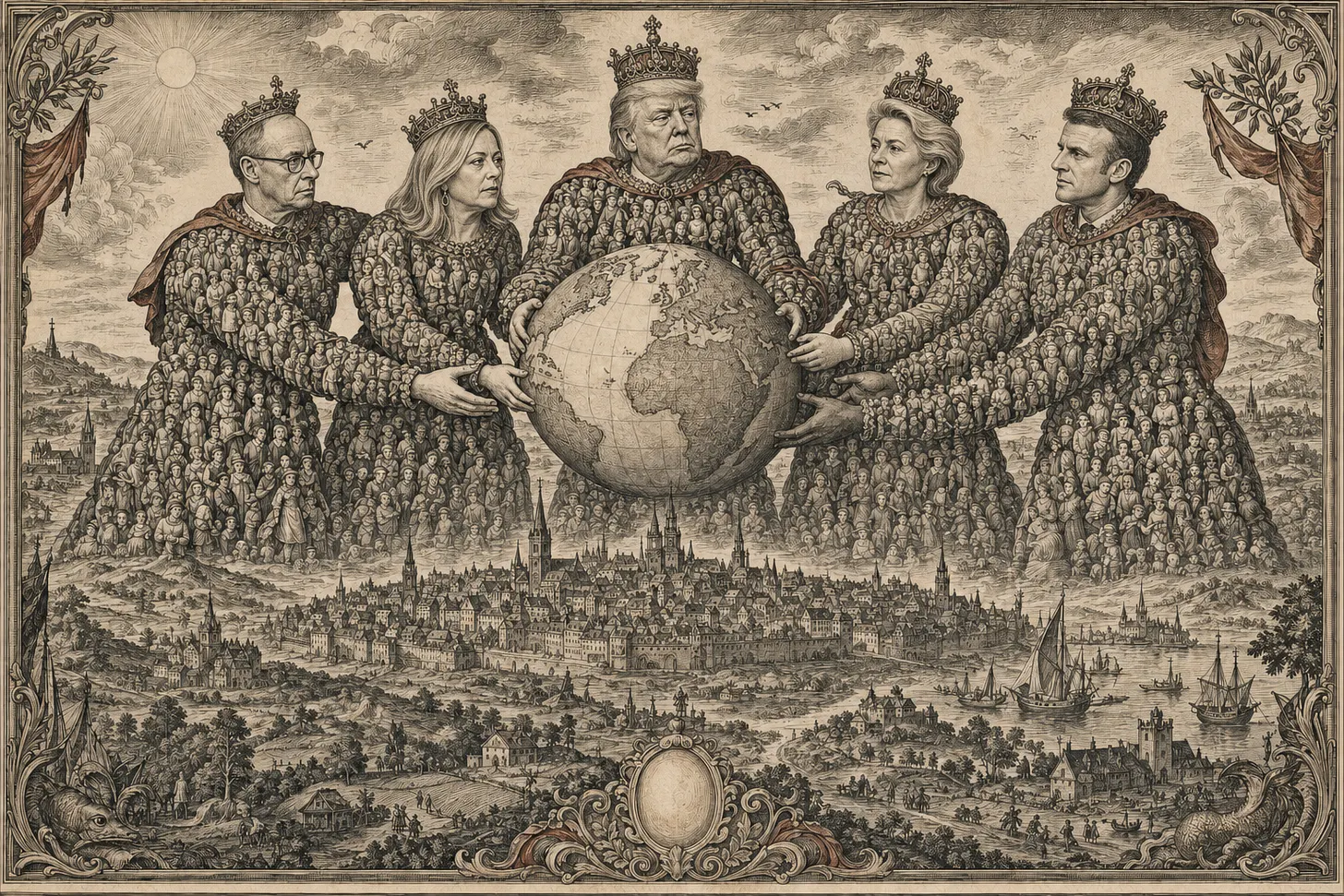
Caitlin Johnstone: Advocating World War Three Is Just Mainstream Punditry Now

Caitlin Johnstone

November 9, 2022

Listen to a reading of this article

Mainstream punditry in the latter half of 2022 is rife with op-eds arguing that the US needs to vastly increase military spending because a world war is about to erupt, and they always frame it as though this would be something that happens to the US, as though its own actions would have nothing to do with it. As though it would not be the direct result of the US-centralized empire continually accelerating towards that horrific event while refusing every possible diplomatic off-ramp due to its inability to relinquish its goal of total unipolar planetary domination.

Originally published in Caitlin Johnstone’s newsletter on October 28, 2022

The latest example of this trend is an article titled “Could America Win a New World War? — What It Would Take to Defeat Both China and Russia” published by Foreign Affairs, a magazine that is owned and operated by the supremely influential think tank Council on Foreign Relations. 

“The United States and its allies must plan for how to simultaneously win wars in Asia and Europe, as unpalatable as the prospect may seem,” writes the article’s author Thomas G Mahnken, adding that in some ways “the United States and its allies will have an advantage in any simultaneous war” in those two continents.

But Mahnken doesn’t claim a world war against Russia and China would be a walk in the park; he also argues that in order to win such a war the US will need to — you guessed it — drastically increase its military spending.

“The United States clearly needs to increase its defense manufacturing capacity and speed,” Mahnken writes. “In the short term, that involves adding shifts to existing factories. With more time, it involves expanding factories and opening new production lines. To do both, Congress will have to act now to allocate more money to increase manufacturing.”

But exploding US weapons spending is still inadequate, Mahnken argues, saying that “the United States should work with its allies to increase their military production and the size of their weapons and munitions stockpiles” as well.

Mahnken says this world war could be sparked “if China initiated a military operation to take Taiwan, forcing the United States and its allies to respond,” as though there would be no other options on the table besides launching into nuclear age World War Three to defend an island next to the Chinese mainland that calls itself the Republic of China.

He writes that “Moscow, meanwhile, could decide that with the United States bogged down in the western Pacific, it could get away with invading more of Europe,” demonstrating the bizarre Schrödinger’s cat western propaganda paradox that Putin is always simultaneously (A) getting destroyed and humiliated in Ukraine and (B) on the cusp of waging hot war with NATO.

Again, this is just the latest in an increasingly common genre of mainstream western punditry.

In “The skeptics are wrong: The U.S. can confront both China and Russia,” The Washington Post’s Josh Rogin wags his finger at Democrats who think aggressions against Russia should be prioritized and Republicans who think that military and financial attention should be devoted to China, arguing porque no los dos?

In “Could The U.S. Military Fight Russia And China At The Same Time?“, 19FortyFive’s Robert Farley answers in the affirmative, writing that “the immense fighting power of the US armed forces would not be inordinately strained by the need to wage war in both theaters” and concluding that “the United States can fight both Russia and China at once… for a while, and with the help of some friends.”

In “Can the US Take on China, Iran and Russia All at Once?” Bloomberg’s Hal Brands answers that it would be very difficult and recommends escalating in Ukraine and Taiwan and selling Israel more advanced weaponry to get a step ahead of Russia, China and Iran respectively.

In “International Relations Theory Suggests Great-Power War Is Coming,” the Atlantic Council’s Matthew Kroenig writes for Foreign Policy that a global democracies-versus-autocracies showdown is coming “with the United States and its status quo-oriented democratic allies in NATO, Japan, South Korea, and Australia on one side and the revisionist autocracies of China, Russia, and Iran on the other,” and that aspiring foreign policy experts should adjust their expectations accordingly.

When they’re not arguing that World War Three is coming and we must all prepare to fight it and win, they’re arguing that a global conflict is already upon us and we must begin acting like it, as in last month’s New Yorker piece “What if We’re Already Fighting the Third World War with Russia?” 

These Beltway swamp monster pontifications are directed not just at the general public but at government policymakers and strategists as well, and it should disturb us all that their audiences are being encouraged to view a global conflict of unspeakable horror like it’s some kind of natural disaster that people don’t have any control over.

Every measure should be taken to avoid a world war in the nuclear age. If it looks like that’s where we’re headed, the answer is not to ramp up weapons production and create entire industries dedicated to making it happen, the answer is diplomacy, de-escalation and detente.

These pundits frame the rise of a multipolar world as something that must inevitably be accompanied by an explosion of violence and human suffering when in reality we’d only wind up there as a result of decisions that were made by thinking human beings on both sides.

It doesn’t have to be this way. There’s no omnipotent deity decreeing from on high that we must live in a world where governments brandish armageddon weapons at each other and humanity must either submit to Washington or resign itself to cataclysmic violence of planetary consequence. We could just have a world where the peoples of all nations get along with each other and work together toward the common good rather than working to dominate and subjugate each other.

As Jeffrey Sachs recently put it, “The single biggest mistake of president Biden was to say ‘the greatest struggle of the world is between democracies and autocracies’. The real struggle of the world is to live together and overcome our common crises of environment and inequality.”

We could have a world where our energy and resources go toward increasing human thriving and learning to collaborate with this fragile biosphere we evolved in. Where all our scientific innovation is directed toward making this planet a better place to live instead of channelling it into getting rich and finding new ways to explode human bodies.

Where our old models of competition and exploitation give way to systems of collaboration and care. Where poverty, toil and misery gradually move from accepted norms of human existence to dimly remembered historical record.

Instead, we’re getting a world where we’re being hammered harder and harder with propaganda encouraging us to accept global conflict as an unavoidable reality, where politicians who voice even the mildest support for diplomacy are shouted down and demonized until they bow to the gods of war, where nuclear brinkmanship is framed as safety and de-escalation is branded as reckless endangerment.

We don’t have to submit to this. We don’t have to keep sleepwalking into dystopia and armageddon to the beat of manipulative sociopaths. There are a whole lot more of us than there are of them, and we’ve got a whole lot more at stake here than they do.

We can have a healthy world. We’ve just got to want it badly enough. They work so hard to manufacture our consent because, ultimately, they absolutely do require it.

Originally published in Caitlin Johnstone’s newsletter on October 28, 2022

About the author

Caitlin Johnstone is an independent writer and poet. She runs her own newsletter. You can read it here.

Please help TFF remain truly independent by contributing if you benefited from this article

[paypal-donation]
Share

Leave a Reply

Your email address will not be published. Required fields are marked *

Related Posts

  Back to the series “Bujumbura, Burundi”
Jan Oberg May 15, 2026 Go to this Fox News page and scroll the whole way down: President Donald Trump tells the world that his meeting with President Xi Jinping yielded a lot of very concrete political and economic results – of course, only where the Chinese side, according to him, agreed with him. He does not mention the Taiwan issue, but Secretary of State, Marco Rubio, says that it did not feature prominently in their talks and that the US policy on Taiwan has not changed. Then go to China Daily – or Global Times – and you will see that for the Chinese it is framework, principles, structure of cooperation etc. that matters – all embedded in the overall idea of “constructive bilateral relationship of strategic stability.” Nowhere is any concrete agreement or deal – all that Trump refers to – mentioned. At the general level, this gives you insights into the very different social...
In contrast to most, we’ll bring alternatives, solutions, hope and strategies for a better future. Times are dangerous, yes, but that only intensifies the need for constructive thinking and action! Jan Oberg, TFF director April 13, 2026 The new TFF Peace Pulse uses video messages in a new way: Max 3-5-minute-long comments, ideas or perhaps mini-lectures, all about peace – positive peace. We launch them today on April 13, 2026 with a carefully crafted visual aesthetic fitting the content. We hope to publish them regularly from now on. We launch Peace Pulse (PP) – for a number of reasons. The world is in chaos, and there are countless reasons to feel concerned, frustrated, even angry. The atmosphere is saturated with doom and gloom, with negative energy and rear‑mirror thinking, while vision, imagination, alternatives, strategies and genuine future‑mindedness remain in short supply. And without them, we simply can’t save the world. Looking at problems from a hundred angles will...

Recent Articles

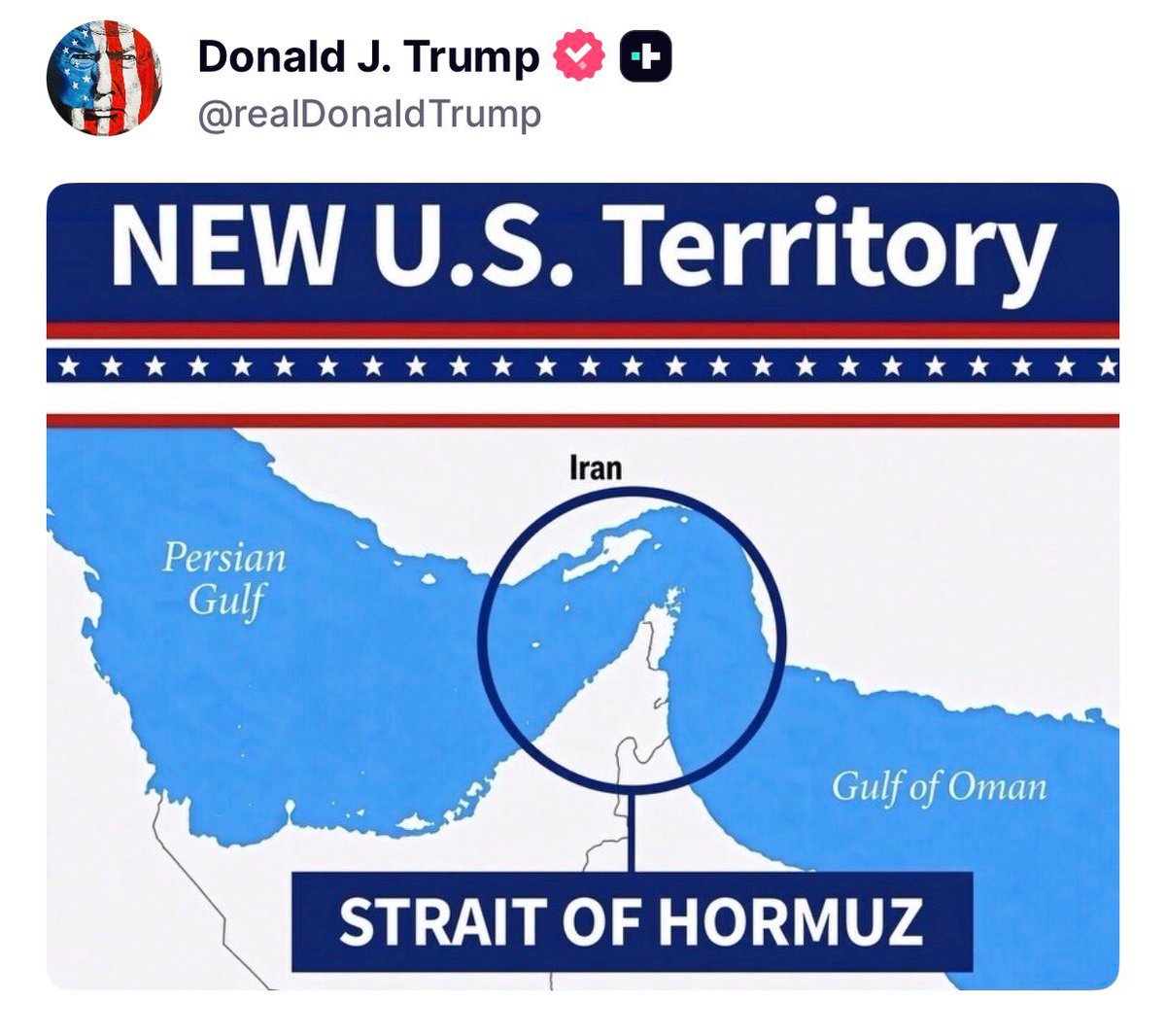
Jan ObergTFF director ☮️ When this morning – August 19, 2026 – I saw the above new US Trump map, I came to think of Frank Zappa, The Mothers of Invention, who said that politics is the entertainment division of the Military-Industrial Complex. That formulation beats many academic analyses – as you will have understood […]
A Civilizational Interpretation of the West’s Body Politic Pascal Lottaz Associate professor at Ritsumeikan University in Kyoto and TFF Board member August 25, 2026 “How do we explain the self-defeating and self-harming policies of Western states? Europe seems to be happily deindustrializing, the US proxy war in Ukraine is killing hundreds of thousands (if not millions) […]
LONDON – Many of the great and the good have dismissed the utility of nuclear weapons as well as finding the idea of their use morally indefensible but still they exist in enormous numbers in the arsenals of the great powers. Secretary of Defence Robert McNamara and Secretary of State Dean Rusk both came to be convinced during their tenure in the Kennedy administration that their use was “unthinkable”. President George H.W. Bush has written that in private he ruled out a nuclear response during the 1991 Gulf War although in public his Administration did not. General Colin Powell, then the chairman of the Joint Chiefs of Staff, in his autobiography recalls chiding his boss, Dick Cheney, for even considering it. Paul Nitze, one of the principal architects of containing the Soviet Union by nuclear deterrence, went even further. He argued in a Washington Post article in 1994 that it...

TFF on Substack

Discover more from TFF Transnational Foundation & Jan Oberg.

Most Popular

Jan ObergTFF director ☮️ When this morning – August 19, 2026 – I saw the above new US Trump map, I came to think of Frank Zappa, The Mothers of Invention, who said that politics is the entertainment division of the Military-Industrial Complex. That formulation beats many academic analyses – as you will have understood […]
A Civilizational Interpretation of the West’s Body Politic Pascal Lottaz Associate professor at Ritsumeikan University in Kyoto and TFF Board member August 25, 2026 “How do we explain the self-defeating and self-harming policies of Western states? Europe seems to be happily deindustrializing, the US proxy war in Ukraine is killing hundreds of thousands (if not millions) […]
LONDON – Many of the great and the good have dismissed the utility of nuclear weapons as well as finding the idea of their use morally indefensible but still they exist in enormous numbers in the arsenals of the great powers. Secretary of Defence Robert McNamara and Secretary of State Dean Rusk both came to be convinced during their tenure in the Kennedy administration that their use was “unthinkable”. President George H.W. Bush has written that in private he ruled out a nuclear response during the 1991 Gulf War although in public his Administration did not. General Colin Powell, then the chairman of the Joint Chiefs of Staff, in his autobiography recalls chiding his boss, Dick Cheney, for even considering it. Paul Nitze, one of the principal architects of containing the Soviet Union by nuclear deterrence, went even further. He argued in a Washington Post article in 1994 that it...
Read More
HQAB7NMWUAA1gSk
Jan ObergTFF director ☮️ When this morning – August 19, 2026 – I saw the above new US Trump map, I came to think of Frank Zappa, The Mothers of Invention, who said that politics is the entertainment division of the Military-Industrial Complex. That formulation beats many academic analyses – as you will have understood […]
21b7244b-c83e-46c1-ba23-556b21b9a0a8_1536x1024
A Civilizational Interpretation of the West’s Body Politic Pascal Lottaz Associate professor at Ritsumeikan University in Kyoto and TFF Board member August 25, 2026 “How do we explain the self-defeating and self-harming policies of Western states? Europe seems to be happily deindustrializing, the US proxy war in Ukraine is killing hundreds of thousands (if not millions) […]
Imagen-thumbnail-The-Transnational-1
LONDON – Many of the great and the good have dismissed the utility of nuclear weapons as well as finding the idea of their use morally indefensible but still they exist in enormous numbers in the arsenals of the great powers. Secretary of Defence Robert McNamara and Secretary of State Dean Rusk both came to be convinced during their tenure in the Kennedy administration that their use was “unthinkable”. President George H.W. Bush has written that in private he ruled out a nuclear response during the 1991 Gulf War although in public his Administration did not. General Colin Powell, then the chairman of the Joint Chiefs of Staff, in his autobiography recalls chiding his boss, Dick Cheney, for even considering it. Paul Nitze, one of the principal architects of containing the Soviet Union by nuclear deterrence, went even further. He argued in a Washington Post article in 1994 that it...
Screenshot-2026-08-22-011310
August 24, 2026 Lena Petrova & Jan Oberg I am truly happy and honoured to have been invited by Lena to her unique channel, World Affairs In Context where she has over 600,000 subscribers. She covers a very wide range of global themes, based not least on her own deep and broad knowledge of economics. I want […]
Logo-Transnational
Greenland – the world’s largest island, a continent of its own with only 57.000 inhabitants. I visited it for the first time in May 2005. I flew across the inland ice to Nuuk, the tiny capital with some 14.000 inhabitants. I was overwhelmed by the pride and kindness of everyone I met as well as by the unique natural beauty. Unfortunately, due to weather conditions during my ten-day stay I could get nowhere else but Nuuk. Fortunately, however, among those I met was Gitte Arvegaard, a Danish lawyer and negotiator employed by the local government, Greenland Home Rule. She turned out to be an enthusiastic photographer with a lot of pictures taken during various trips around Greenland. So this Greeland series is the result of our cooperative effort. We both hope you enjoy it and are stimulated to visit Greenland – about which you may read more here. Finally, if you want to...
p_mccartney_poem
 Jan Oberg’s storyof how he met Sir Paul Liverpool – where else to meet Paul McCartney? Paul’s old class mate and TFF Associate, Jonathan Power introduced me to Paul McCartney in Liverpool at an informal reception. It was held at what used to be their school, now the Liverpool Institute for Performing Arts and we were there to celebrate that Jonathan had written Amnesty International’s 40th Anniversary book. This happy event for “righting wrongs and writing songs” gave me an opportunity to meet Paul and tell him about TFF and get straight to the matter: would he consider making a donation in support of our work for peace? While I was probably the only one with such a wish that day, I was certainly not the only one who wanted to shake hands and talk with him. In the last minutes before Paul was to leave, Jonathan brought us together and we got about three...