Ben Aris: Nine out of ten Russians oppose concessions in exchange for an end of sanctions. Approval of U.S. nosedives

Ben Aris

June 1, 2022

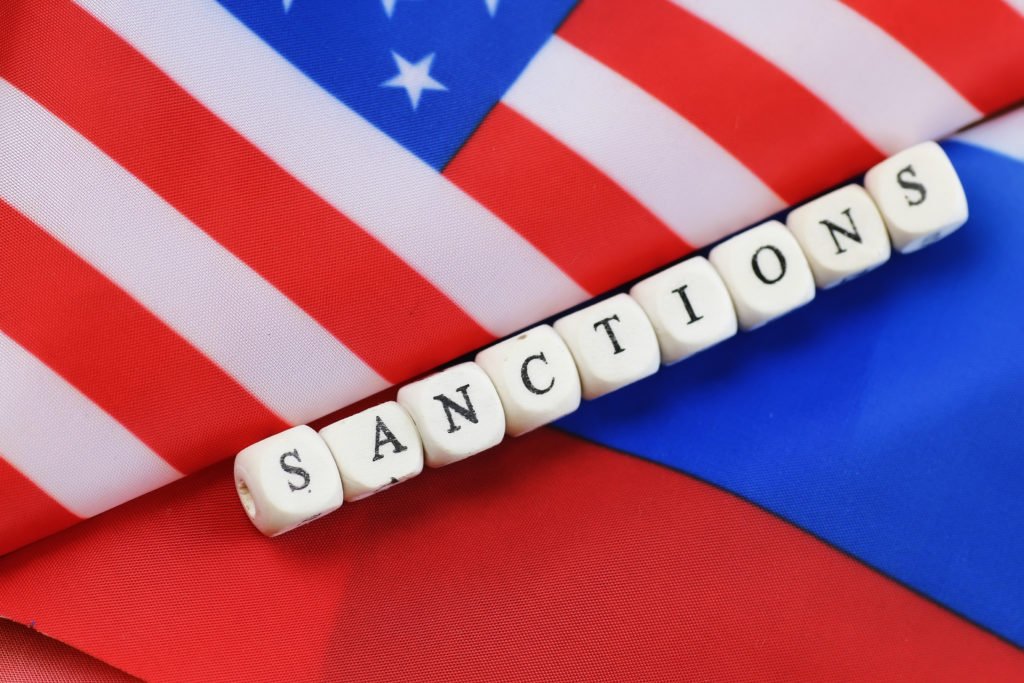
Russians’ attitudes towards the US have nose-dived to their second-worst level on record and the overwhelming majority (87%) believe the Kremlin should not make concessions to the West in order to have the extreme sanctions on Russia lifted.

Only 13% of Russians believe that their country should make concessions to the West. Young respondents under the age of 40 are a little more likely (18%) to believe Russia should make concessions. Older respondents, on the contrary, are the least likely to accept concessions from Russia (only 9% in the age group of 55 years and older), Levada found in its latest survey. 

This was originally published by IntelliNews, May 27, 2022

At the same time, negative feelings towards the US have increased dramatically, with 72% of respondents in March saying their feelings were “bad” against 17% that felt “good” and 1% undecided.

That is a turnabout from a slight majority for “good” (45%) versus “bad” (42%) in November last year right at the beginning of the rising geopolitical tensions.

Indeed, the population’s attitude towards the US has been broadly positive for almost all of the last three decades since the collapse of the Soviet Union in 1991.

In the very early days, Russians were optimistic that after the animosities of the Cold War ended with the fall of the USSR that the US would step in with its famous entrepreneurial skills and actively participate in rebuilding Russia’s collapsed economy. Aid, such as food relief delivered in 1992 to deal with shortages, was seen as a sign of this co-operation. However, those expectations crashed in the 1998 financial crisis when Russia was left to fend for itself after the ruble collapsed on August 17, 1998.

Friendly feelings towards the US recovered during the booming noughties but crashed again in 2008 thanks to the double whammy of the US-induced global economic crisis and Washington’s backing of Georgia during a short war it fought with Russia.

Relations recovered again in the next decade, only to comprehensively collapse for a third time following Russia’s annexation of Crimea and the start of the international sanctions regime, which remains in place to this day. That collapse was a permanent change, as Russia was always willing to give the US the benefit of the doubt until the sanctions were imposed.

Attitudes towards the US started to improve slowly as the last decade wore on, despite the sanctions, as Russia emerged from a four-year long recession and the feel-good factor of returning prosperity in 2018 and 2019 made itself felt. Attitudes to the US even turned a net positive briefly in 2018 and at the start of 2020, until the coronavirus (COVID-19) pandemic broke out. But feelings towards the US have turned sharply negative again since the war broke out on February 24.

The number of Russians that feel it is necessary to co-operate with the US has fallen by 30%, Levada said, since the war started, but worry that dangers to the country are rising. The share of Russians that feel relations with the US are bad now reached 72% in March, the second-worst result since January 2015, when 81% of the population felt negatively about the US and just ahead of April 2018, when 69% said the same.

“Respondents were offered a set of phenomena and processes and asked how dangerous they are for Russia. When comparing the results with the last wave of the survey, which took place in 2016, attention is drawn to the general increase in anxiety and the increase in the proportion of answers “very dangerous” for all the proposed options. At the same time, the greatest increase in fears is associated with foreign policy factors: the actions of the Nato alliance and the growth of US military power,” Levada said in a note.

Older respondents are more optimistic and more likely to expect changes for the better in terms of Russia’s global political influence (42%). Young people, on the contrary, are more sceptical: only 28% expect the strengthening of Russian influence, Levada found.

The number of Russians who believe that Russia was and remains part of Europe has remained virtually unchanged at 68%, against the results of a comparable study conducted in 2016 (64%).

There is noticeable age differentiation in the respondents’ answers: young people are less likely to agree with the statement that Russia is part of Europe than older people.

When asked which countries have respect in the world, most respondents (88%) believed that China enjoys global respect, followed by Russia (66%) and Germany (52%). But only a third of Russians (34%) thought the US was respected with one in five (18%) saying Ukraine was respected.

Amongst respected world leaders, Russian President Vladimir Putin scored best amongst Levada’s respondents with 87% believing the Russian president is respected. Russian allies also scored well with Belarus’ president Alexander Lukashenko’s 82% and China’s President Xi Jinping’s 82%. Attitudes to western leaders did less well: French President Emmanuel Macron (24%), German Chancellor Olaf Scholz (14%), US president Joe Biden and Ukrainian President Volodymyr Zelenskiy (both 6%).

Levada compared the results of its survey amongst Russians with those in the US, in a parallel survey conducted by the Chicago Council on Global Affairs, which found a mirror image amongst American respondents. Asked which world leaders were respected, the US respondents put Zelenskiy at the top of the list with 81%, followed by Biden (52%), Xi (10%) and Putin (4%).
Related Posts

Farhang Jahanpour TFF Associate and former Board member September 8, 2025 On 28 August 2025, France, Germany, and the United Kingdom (the EU Troika) decided to trigger the so-called “snapback mechanism” and reimpose stringent sanctions on Iran after 30 days for its alleged violation of the terms of the Iran nuclear deal, known as the Joint Comprehensive Plan of Action (JCPOA), if Iran did not give in to their demands within 30 days. In the lawless world in which we are living at the moment, discussing the principles of international law is futile and irrelevant. We have reverted to the age of imperial dictatorship and big power dominance. This state of affairs is dangerous for the whole world, especially the Global South, which is at the mercy of the dictates of the superpowers. However, a return to the rivalry between powerful empires outside the scope of international law, which led...
Vijay Prashad April 16, 2024 On March 19, 2024, the head of France’s ground forces, General Pierre Schill, published an article in the newspaper, Le Monde, with a blunt title: “The Army Stands Ready.” Schill cut his teeth in France’s overseas adventures in the Central African Republic, Chad, Côte d’Ivoire, and Somalia. In this article, General Schill wrote that his troops are “ready” for any confrontation and that he could mobilize 60,000 of France’s 121,000 soldiers within a month for any conflict. He quoted the old Latin phrase—“if you want peace, prepare for war”—and then wrote, “The sources of crisis are multiplying and carry with them risks of spiralling or extending.” General Schill did not mention the name of any country, but it was clear that his reference was to Ukraine since his article came out just over two weeks after French President Emmanuel Macron said on February 27 that...
Jan Oberg December 13, 2023 One of the enigmatic aspects of international politics is that big and militarily superior countries have systematically lost wars in smaller countries – the last 50 years, from Vietnam to Ukraine. ’Losing’ here means military defeat, being forced out, losing the struggle for the hearts and minds of the people, and facing fiasco when it comes to achieving the presumed noble motives like introducing human rights, democracy, freedom or liberating women. And given the tremendous human costs, particularly in the Middle East, the US’s Global War On Terror since September 11, 2001, is also an intellectual and moral disaster. The United States – the world’s by far largest military spender, interventionist, warrior, occupier, global base-builder with the most militarised foreign policy – is in a class of its own. In losing wars too. It is now rapidly losing legitimacy, relevance and credibility in the eyes...

Recent Articles

Tony Robinson October 4, 2026 Violence is easy to recognise when someone is being beaten, shot or killed. It becomes more difficult when nobody is holding a weapon. Poverty, discrimination, exploitation and repression can restrict a human life just as effectively, although they do so in very different ways and with very different consequences. Simply adding more categories to an ever-growing list of forms of violence does not really solve the problem. The more interesting question is what all these different situations have in common and why it makes sense to describe them using the same word. Human beings do not simply react to what happens around them. They remember the past, imagine things that do not yet exist, make plans and undertake projects. Workers organise because they imagine different working conditions; people migrate because they imagine another life somewhere else; social movements emerge because people refuse to accept the...
It’s a matter of principles, courage, vision and pulling together – while the militarist world is falling apart… Peter Langille October 3, 2026 “Here, then, is the problem which we present to you, stark and dreadful and inescapable: Shall we put an end to the human race; or shall mankind renounce war?”The Bertrand Russell—Albert Einstein Manifesto, July 9, 1955 ⁕ The forecast for what’s ahead is worrisome. The sharp rise in armed conflicts over the past three years is adding to what was already the highest level in over seventy years. Genocides, which should be prevented are supported. A shared climate emergency that jeopardises survival is ignored. Diverse polls now suggest that people are war-weary, worried and interested in a more effective United Nations. And, there are viable policy options for a more secure world! Yet governments are doubling-down, betting on more war and investing heavily. If current trends persist,...
Johan Galtung 1930-2024October 2015 Published here on October 3, 2026 Let us focus on Civilization for conflict analysis and remedies. Major forms of disorder use violence; war is state organized violence. The most belligerent states are the United States of America and Israel, both with civilization roots. National Evangelism, the US Protestant Christian civilization– more national than evangelical–justifies US warfare as exceptionalism of a people chosen by God, with a manifest destiny to run the world. Orthodox Judaism justifies Israeli warfare to conquer and expand from Nile to Euphrates as a religious right and duty to the Eternal One. The third most belligerent country, the UK, no longer believes it is God-chosen but chosen by the USA; not quite the same but something. But the root cause of global disorder lies in the Occident–with Islam–seeing itself as the single, universal civilization valid for all at all times, all others being...

TFF on Substack

Discover and subscribe to more peace materials on TFF Substack

Most Popular

Tony Robinson October 4, 2026 Violence is easy to recognise when someone is being beaten, shot or killed. It becomes more difficult when nobody is holding a weapon. Poverty, discrimination, exploitation and repression can restrict a human life just as effectively, although they do so in very different ways and with very different consequences. Simply adding more categories to an ever-growing list of forms of violence does not really solve the problem. The more interesting question is what all these different situations have in common and why it makes sense to describe them using the same word. Human beings do not simply react to what happens around them. They remember the past, imagine things that do not yet exist, make plans and undertake projects. Workers organise because they imagine different working conditions; people migrate because they imagine another life somewhere else; social movements emerge because people refuse to accept the...
It’s a matter of principles, courage, vision and pulling together – while the militarist world is falling apart… Peter Langille October 3, 2026 “Here, then, is the problem which we present to you, stark and dreadful and inescapable: Shall we put an end to the human race; or shall mankind renounce war?”The Bertrand Russell—Albert Einstein Manifesto, July 9, 1955 ⁕ The forecast for what’s ahead is worrisome. The sharp rise in armed conflicts over the past three years is adding to what was already the highest level in over seventy years. Genocides, which should be prevented are supported. A shared climate emergency that jeopardises survival is ignored. Diverse polls now suggest that people are war-weary, worried and interested in a more effective United Nations. And, there are viable policy options for a more secure world! Yet governments are doubling-down, betting on more war and investing heavily. If current trends persist,...
Johan Galtung 1930-2024October 2015 Published here on October 3, 2026 Let us focus on Civilization for conflict analysis and remedies. Major forms of disorder use violence; war is state organized violence. The most belligerent states are the United States of America and Israel, both with civilization roots. National Evangelism, the US Protestant Christian civilization– more national than evangelical–justifies US warfare as exceptionalism of a people chosen by God, with a manifest destiny to run the world. Orthodox Judaism justifies Israeli warfare to conquer and expand from Nile to Euphrates as a religious right and duty to the Eternal One. The third most belligerent country, the UK, no longer believes it is God-chosen but chosen by the USA; not quite the same but something. But the root cause of global disorder lies in the Occident–with Islam–seeing itself as the single, universal civilization valid for all at all times, all others being...
Read More
Living-Peace-Sign-Budapest-copy
Tony Robinson October 4, 2026 Violence is easy to recognise when someone is being beaten, shot or killed. It becomes more difficult when nobody is holding a weapon. Poverty, discrimination, exploitation and repression can restrict a human life just as effectively, although they do so in very different ways and with very different consequences. Simply adding more categories to an ever-growing list of forms of violence does not really solve the problem. The more interesting question is what all these different situations have in common and why it makes sense to describe them using the same word. Human beings do not simply react to what happens around them. They remember the past, imagine things that do not yet exist, make plans and undertake projects. Workers organise because they imagine different working conditions; people migrate because they imagine another life somewhere else; social movements emerge because people refuse to accept the...
b54a1f10-8c65-4f0b-9dd5-4abc0a7d04cc_2659x2659
It’s a matter of principles, courage, vision and pulling together – while the militarist world is falling apart… Peter Langille October 3, 2026 “Here, then, is the problem which we present to you, stark and dreadful and inescapable: Shall we put an end to the human race; or shall mankind renounce war?”The Bertrand Russell—Albert Einstein Manifesto, July 9, 1955 ⁕ The forecast for what’s ahead is worrisome. The sharp rise in armed conflicts over the past three years is adding to what was already the highest level in over seventy years. Genocides, which should be prevented are supported. A shared climate emergency that jeopardises survival is ignored. Diverse polls now suggest that people are war-weary, worried and interested in a more effective United Nations. And, there are viable policy options for a more secure world! Yet governments are doubling-down, betting on more war and investing heavily. If current trends persist,...
010
Johan Galtung 1930-2024October 2015 Published here on October 3, 2026 Let us focus on Civilization for conflict analysis and remedies. Major forms of disorder use violence; war is state organized violence. The most belligerent states are the United States of America and Israel, both with civilization roots. National Evangelism, the US Protestant Christian civilization– more national than evangelical–justifies US warfare as exceptionalism of a people chosen by God, with a manifest destiny to run the world. Orthodox Judaism justifies Israeli warfare to conquer and expand from Nile to Euphrates as a religious right and duty to the Eternal One. The third most belligerent country, the UK, no longer believes it is God-chosen but chosen by the USA; not quite the same but something. But the root cause of global disorder lies in the Occident–with Islam–seeing itself as the single, universal civilization valid for all at all times, all others being...
Screenshot 2026-10-02 011738
Jan ObergPhD, director, The Transnational Foundation for Peace and Future Research, TFFLund, Sweden October 2, 2026 This is my full original manuscript. The Chinese Academy of Social Science, CASS, makes two publications out if it. 1. China’s Five-year plan emphasized the capabilities of basic research and original innovation. It is regarded as the goal of the future social development, which, as required, should be significantly enhanced. Can you comment on the importance of original innovation in research and academic study? I believe it is easier to define “original innovation” in the natural sciences than in social sciences. The breaking points of what constitutes something new, or innovative, are not quite as sharp in the latter. But in both fields it is about opening up something that was closed, unseen, unexplored before – making manifest what was earlier latent. Innovations come in many forms and shapes – naming something that was not...
arctic-circle-map
The agreement is catastrophic both because of what it says and what it doesn’t mention. It reduces further the major asset of security policies: Freedom of action. Jan Oberg TFF director September 25, 2026 A couple of hours before the agreement was signed on September 22, 2026, I published the following 13 hypotheses about what it would most likely contain on TFF Substack (in English). I was wrong on only the first point. Contrary to what Trump had written on his Truth Social platform, it does not appear to come into force immediately. In fact, it turned out to be worse than even I had anticipated. After these hypotheses now come a number of reflections in light of what the agreement actually contains, and does not contain, as well as the way in which it has generally been presented by major media outlets and by the public-service broadcaster DR. My...
girl-5894831_1280
Below are TFF-related media mentions, comments, videos and social media posts published elsewhere but not on this homepage. We happen to catch and list only a fraction. Regarding video comments and debates, we recommend that you go to the TFF Video Channel on Substack where many of them are reproduced. Jan Oberg is a contributor to China Daily – 52 million daily clicks – and Global Times, CGTN and CCTV (the national television), China Investment, Xinhua News Agency and several others. Articles and videos on these media very often multiply into countless Chinese (and Western media) that re-post them from these main media. Thanks to The China Academy, his analyses, interviews and comments are frequently posted on YouTube channels such as Thinkers Forum and Wave Media. These videos are often re-posted on Bilibili (China’s YouTube), the China Content Center on TikTok, and on the Chinese edition of TikTok, Douyin.com. This means reaching hundreds of millions of viewers worldwide over a year. While there are too many to catch on all these...