Here’s what the West is intellectually unable – in the midst of its boundlessly self-righteous, militarist mood to see:
NATO’s expansion policy created – and is responsible for – the conflict. Russia created – and is responsible for – the war. There exists no violence which is not rooted in underlying conflicts. Conflict and peace literate people, therefore, talk about both.
And if they want peace, they do not increase the symptoms – the war – they address the real cause, the conflict and ask the conflicting parties to tell what they fear and what they want and then move, step-by-step towards a sustainable solution.
But neither the mainstream media nor politicians have the civil courage to address the conflict. It’s only about the war and only about Russia/Putin who must be punished, no matter the price to be paid by future generations. If we survive.
It’s a banality to point out that it takes at least two to conflict. But that’s the intellectual and moral level decision-makers, media and much of academia operate in these dark times.
This approach has no future and can never bring peace. Period.
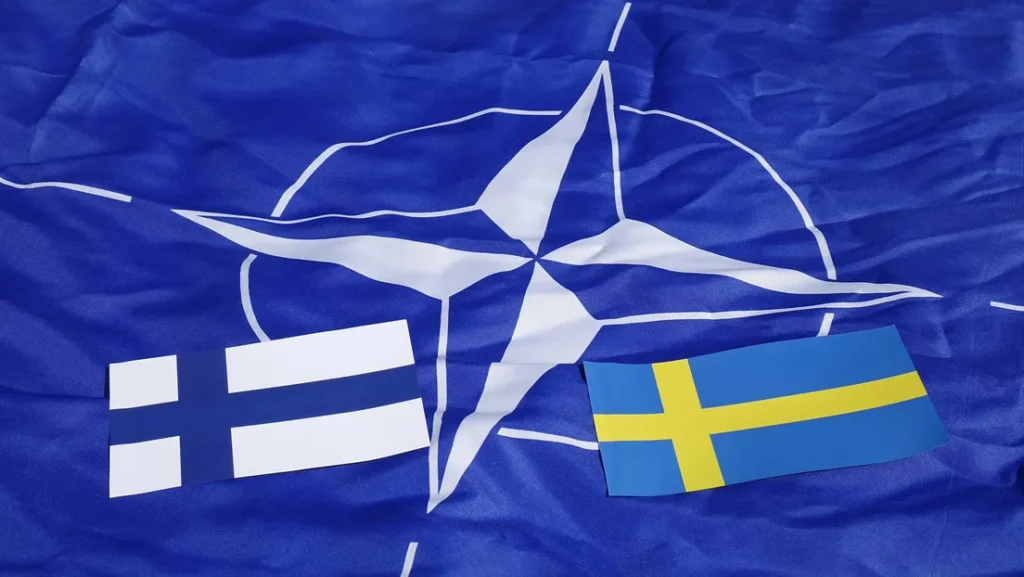
Decisions taken with this irrational approach and emotionalism will only make things worse. Such as Sweden and Finland joining NATO based on the hysteric panic of the moment: There simply exists no credible, realistic scenario that would lead to an isolated, out-of-the-blue Russian attack on either of them if they remained non-aligned as they’ve been for decades.
That some less knowledgeable people – or people who speak for NATO membership – have been talking about even an isolated, out-of-the-blue attack on the Swedish island of Gotland is Monty Python politics.
Why will Sweden and Finland join?
So why will Finland and Sweden now make a disastrous, tension-increasing decision to join NATO? Here are some of the possible reasons:
• Both have been under heavy pressure by NATO and the US in particular. Sweden’s prime minister, Olof Palme, was murdered – a man who stood for the UN goal of international disarmament, nuclear abolition and the intelligent concept of common security. US ambassadors have held secret meetings with Swedish MP, there are many channels, demands and rewards.
• Sweden’s single worst security challenge was the Russian submarine, U 137 Whisky on the Rocks. It was Russian, yes, but the operation was an American PSYOP – Psychological Operation – conducted by the “Navigation Expert” on board who was the only one never interviewed in Sweden and who soon after disappeared.
It was a PSYOP intended to make Sweden recognise that the Soviet Union was a threat, that its defence against the East was deficient and that it should seek protection from the West itself. This is extremely well-documented by professor emeritus, Ola Tunander’s, eminent multi-decade research, latest published in the book, “Navigations-Experten. Hur Sverige lät sig bedras av U 137” (The Navigation Expert. On how Sweden accepted to be deceived by U 137).
Step by step, Sweden was guided in the right direction. Certain Swedish politicians knew what was going on, but the media and the people didn’t.
• Both countries have moved to be wooed by the US and NATO. They have, over the last 20 years, become engaged with NATO in all kinds of ways – so, as the saying goes, why not marry now? In other words, Finland and Sweden now join because they have – incrementally – made one wrong decision after the other, painted themselves into a “no-choice-but-NATO” corner and abdicated every ounce of their historical, independent-minded creative foreign policy thinking. And stopped criticism of warfare and militarism.
That has also been possible because critical, or alternative, independent intellectual input into ministries of foreign affairs has been cut out and substituted by various types of pro-American marketing of policies. For decades, the NATO Echo Chamber has defined the national pro-NATO Groupthink. Nobody was allowed in to ask: Where on earth are we heading in, say, 25 years from now?
• Further, Sweden and Finland are now joining because elites related to the Military-Industrial-Media-Academic Complex, MIMAC, in both countries – rather than the people – decide security and foreign policy matters. Of course, there was extremely little open public discussion; it wasn’t wanted. Decision-makers knew that NATO’s nuclear weapons foundation and its members’ contact wars, particular in the Middle East were seen as basically evil among the citizenry.
• Liberal media suggest that there cannot be a referendum because there is such a time pressure – presumably before that Russian invasion of Sweden and Finland – and, so, just make the most important foreign and security political decision since 1945 in a hurry now there is popular outrage at Russia – the beloved, necessary enemy.
The Swedish decision-makers of course know that there will never be a 75% or so majority for NATO – which is what there should be to make such a fundamental, fateful decision. So much, you may say, for democracy – but no new NATO member has held a referendum where NATO and other alternatives were freely discussed and a 75% majority came out in favour. (According to the Swedish Svenska Dagbladet daily of May 6, 2022, 48% think that Sweden shall join, but in just one week those who are not sure what to think have increased from 22 to 27%).
Finland’s pro-NATO opinion seems to have grown from 53% in February to 76% in May 2022. It was 19% in 2017 according to a report in the Wall Street Journal. Ukraine has played its role.
• A further reason to join is the intellectual disarmament that decision-makers have unified around one alternative, forgotten to leave other doors open and deliberately quelled alternatives. The discourse of peace – in media, politics and research – has been disappeared. Peace has come to mean weapons, deterrence, more and more of it coupled to blind loyalty with every US/NATO war. For instance, then Social Democratic prime minister Göran Persson’s government quickly decided to disable Sweden’s weapons export prohibition legislation in 2001 in order to be able to continue exporting weapons to the US during its invasion of Iraq.
This multi-year intellectual disarmament is manifest – and always tends to favour military over civilian means as well as diplomacy. And not only in these countries, of course.
An institute such as SIPRI – Stockholm International Peace Research Institute – has decayed intellectually into something that should rather be named Stockholm International Military Security Research, SIMSI – as I have suggested years ago.
In other words, the political creativity that was needed to run an independent policy of neutrality, non-alignment and global disarmament coupled with a strong belief in international law vanished years ago.
It’s easier to follow the flock – particularly when, as it seems, the Social Democratic party today exists only by name.
• Without exhausting all those – tragic – reasons, one final reason to mention is the role of the media. Like everywhere else, media from left to right have unified around a pro-Western, non-neutral policy. The present pro-NATO propaganda, not the least in the liberal Dagens Nyheter, is pervasive. Critical voices are marginalised and public information “explainers” are reduced to some high school-like basic facts coupled with FOSI, Fake + Omission + Source Ignorance. Sweden is able to have televised panel discussions where, de facto, all the participants are more or less pro-NATO thus leaving out a large part of public opinion. *)

What will be the consequences of Finland’s and Sweden’s NATO membership?
There are potentially so many – some more likely than others – that they cannot all be listed in a short pointed analysis like this. But let me mention:
• The Swedes and the Finns will become less secure. Why? Because there will be harder confrontation and polarisation instead of soft borders and mediating attitudes. In a serious crisis, they will, for all practical purposes, be occupied and told what to do by the US/NATO.
• To the degree that, at some point in the future, the two countries will be asked to host US bases – like Norway and Denmark now – they won’t be able to say ‘No’! Such bases will be Russia’s first-order targets in a war situation.
• From a Russian point of view, of course, their NATO membership is extremely tension-increasing and confrontational. Russia has 8% (US$ 66 billion) of the military expenditures of the 30 NATO members. Now there will be a huge re-armament throughout NATO; Germany alone plans to increase to almost twice as much as Russia’s expenditures. Ukraine will receive about US$ 50 billion. Add a re-armed Sweden and Finland and we shall see Russia rush down to 4% of NATO’s expenditures – and still be called a formidable threat.
• There will be virtually no confidence-building and conflict-resolution mechanisms left in Europe. No discussion will be possible about a new all-European peace and security system. And whether it is understood and respected or not, Russia will feel even more intimidated, isolated and – in a certain situation – become even more desperate. As does, normally, the weaker party in an a-symmetric conflict. We are living in very dangerous times and these two countries in NATO will only increase the danger, there is no way it could reduce it.
• If Finland and Sweden so strongly want to be “protected” by the United States and/or NATO, it is completely unnecessary for these two countries to join because, if there is a serious crisis, the US/NATO will under all circumstances come to “protect” or rather use their territories to be closer to the Baltic republics. That’s what the Host Nation Support agreements are about.
The only reason to join would be paragraph 5 – but the disadvantage is that paragraph 5 requires that Finland and Sweden will be expected to participate in wars that are not about their defence and perhaps even in future international law-violating wars à la those in Yugoslavia, Iraq and Libya. So, will Finnish and Swedish young people be killed in future NATO-country wars? Are they ready for that?
• It will cost a fortune to convert their military infrastructure to full NATO membership – and when they have joined, they cannot not pay whatever the price will turn out to be. In addition, there will be much less de facto sovereign decision-making possible – here de jure is almost irrelevant. And it was already very self-limited before they joined.
• As NATO members, Finland and Sweden cannot but share the responsibility for nuclear weapons – the deterrence and possible use of them by NATO. It’s also obvious that NATO vessels may bring nuclear weapons into their ports – but they will of course not even ask – they know the arrogant US response is that “we neither confirm nor deny that sort of thing.”
This goes against every fibre of the Swedish people – and Sweden’s decision to not develop nuclear weapons dating some 70 years back.
• The days when Sweden and Finland can – in principle, at least – work for alternatives are numbered. That is, for the UN Treaty on nuclear abolition and the UN goals of general and complete disarmament, any alternative policy concepts like common security, human security, a strong UN etc. They won’t be able to serve as mediators – like, say, Austria and Switzerland. No NATO member can pay anything but lip service to such noble goals. NATO is not an organisation that encourages alternatives. Instead, it seeks monopoly as well as regional and global dominance.
• Finland and Sweden say yes to militarist thinking, to a ‘peace’ paradigm that is imbued with weapons, armament, offensiveness (long-range + large destructive capacity), deterrence and constant threatening: NATO is human history’s most militaristic organisation. Its leader, the United States of America, has been at war 225 out of 243 years since 1776. Every idea about nonviolence, the UN Charter provision of making peace by predominantly peaceful means (Article 1 in the Charter) will be out of the window.
• The political attention, as well as funds, will tend to switch to military matters, away from contributing to solving humanity’s most urgent problems. But – we know it now – the excuse will be Putin’s invasion of Ukraine. Is there any huge change that cannot be justified with reference to that?
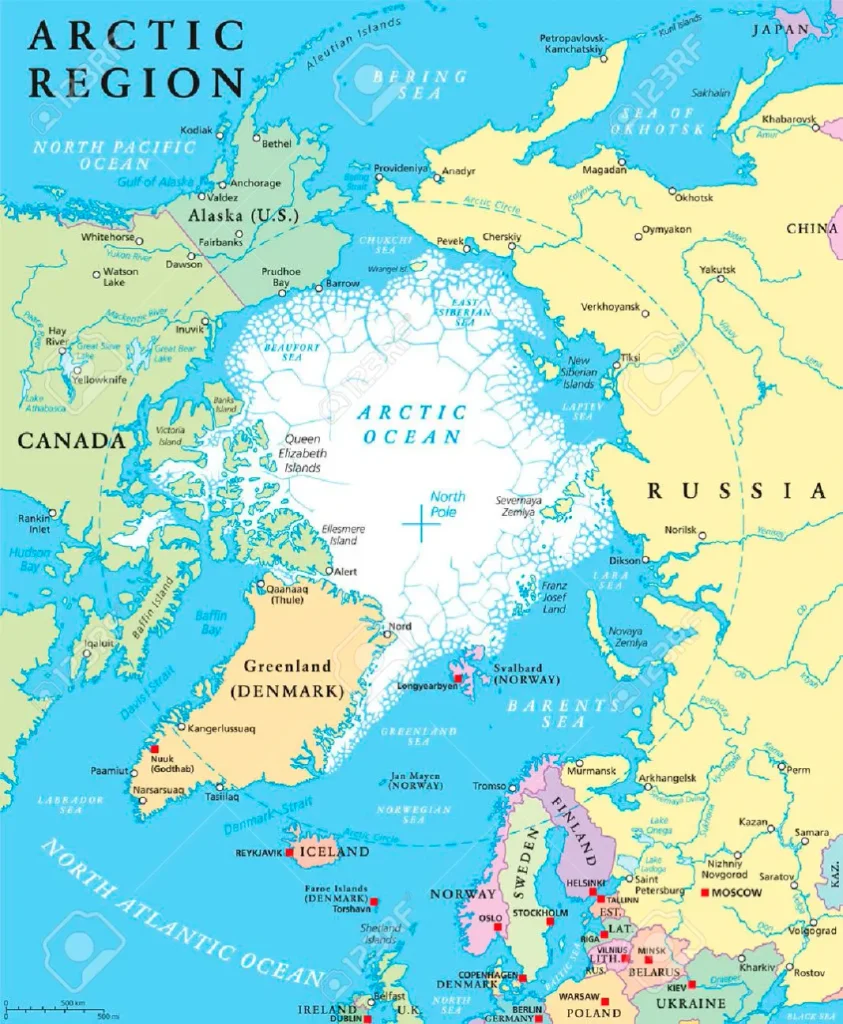
• While everybody knows that the Arctic is going to be a region of central security and peace concerns in the near future, this issue has hardly been discussed in relation to the two countries’ NATO membership. However, it doesn’t require much expertise to see that US/NATO access to Sweden and Finland is a clear advantage in the future confrontation with Russia and China there.
• As NATO members, Sweden and Finland not only accept but reinforce decades of hate of the Russian people, everything Russia including Russian-European culture. It will say yes to the West’s reckless, knee-jerk collective (illegal) punishment of everything Russia, the cancellation of Russia on all dimensions.
Once upon a time, in contrast, Finland’s President Kekkonen stood for policies of active neutrality, a go-between role and initiating the OSCE. Finland was proud that its people felt that neither the East nor the West was an enemy, various kinds of equidistance prevailing. And that was during the height of the First Cold war when the Warsaw Pact was about 10 times stronger vis-a-vis NATO than Russia is today. How and why? One reason was that policies had an intellectual foundation and leaders a consciousness about what war meant. Not so today.
• The prospect that no NATO advocates talk about is this: In all likelihood, we have only seen the hard beginning of an extremely Cold War with an ever-increasing risk of a Hot War too. It is the stated purpose of the US – and that means NATO – to weaken Russia militarily in Ukraine so it can’t rise ever again and to undermine its economy back home through history’s hardest, time-unlimited and unconditional sanctions – that is, sanctions that will not be lifted in a lifetime or more.
• And, finally, by joining NATO, the two countries will be forced to side with the larger West in the future world order change in which China, the Middle East, Africa and South America as well as huge non-Western regional associations will gain strength.
The US priority Number One is China. As NATO members, Sweden and Finland will be unable to walk on two legs in the future, a Western and a Non-Western, and will decline and fall with the West – the US Empire and NATO in particular.
If you think that’s a too daring and pessimistic scenario, you’re not following developments and trends outside the West itself. Also, please consider that a split and problem-torn US, EU and NATO have just come together for one reason: the negative policy of hating Russia and cover-up for its crystal clear co-responsibility for the conflict that brought us where we now are.
The West has no positive vision anymore – its actions are about re-armament, threats, sanctions, demonisation, the self-righteous “we-never-did-anything-wrong” and the concomitant projection of its own dark sides upon others, China in particular.
For small countries to put all their eggs in one basket when they do have alternatives and acting without a clue about the next five-to-ten years has always been a recipe for disaster, for war.
Both NATO and the EU act these days as the passengers did in the restaurant of the elegant, luxurious RMS Titanic.
There were huge problems which should have been solved for humanity to survive: climate, environment, poverty, inequality, militarism, nukes, etc. They are now forgotten. Economic crisis and disruptions followed, and then came the Corona and took a heavy toll on all kinds of resources and energies. And, finally, now this war in Europe with its underlying NATO-created conflict.
This is not the time to make decisions in a moment of historical hysteria and panic. This is indeed a moment to keep cool.
One can only regret that Sweden and Finland lack the intellectual power to see the larger picture in time and space. NATO has had the time since 1949 to prove that it can make peace. We know now that it can’t. Joining it, therefore, is one big gift to militarism and future warfare.
*) Rest assured that an analysis like this will cause no reaction in any NATO country’s media or among decision-makers although sent to thousands of them.
Is this type of reasoning, based on decades of free research and knowledge-building, of merit in a democracy and for the discussion about NATO?
If you think so, TFF would be grateful for your support. Thanks!