The Security Council must stop the US going to war with Iran

Amnesty International reported this week that an Iranian lawyer, Nasrin Sotoudeh, has been sentenced to 38 years in jail and 148 lashes. She has dedicated her life to defending women accused of removing their hijabs in public. The persecution of human rights dissidents in Iran appears to be getting worse.

It makes it harder to feel sorry for Iran, even if President Donald Trump is wielding the heavy stick against it, and even though Trump has sabotaged the Agreement to freeze Iran’s nuclear research and uranium enrichment carefully negotiated by President Barack Obama’s team, the EU, Russia and China.

However, Realpolitik demands us to stand up for this Agreement but who can be happy stepping into the ring to defend the honour of such a regime? Iran executes more people each year than any other country bar China. If Iran wants more enthusiastic outside help it must put its own house in order.

Is the US moving towards war since Iran, pushing back against American sanctions which were supposed to have been removed in return for Iran’s agreement on nuclear research restraint, has now suggested in might start this work again?

This seems to have maddened Trump. The White House keeps reiterating that Iran is secretly set on making a nuclear bomb which will then be mounted on rockets that can threaten Nato and US troops in Europe.

There are only a few in Europe who have ever believed this was the Iranian intention before the Agreement and it certainly isn’t now. Apart from anything else, the Iranians only have short-range rockets and the Iranians have no knowledge of how to miniaturize a bomb (which they don’t have to practice with) to fit on the head of a small rocket.

Trump’s militancy on the issue seems to contradict his campaign promise not to involve America in any more Asian wars, all of which have ended disastrously and counterproductively- Iraq, Afghanistan and Syria. In all of them he’s pushed for reducing American troops. Indeed, if it hadn’t been for hard lobbying by the Pentagon there would zero troops deployed.

But Iran in his mind seems to be a different case. The deployment of an aircraft carrier in the Straits of Hormutz near to Iranian waters is a war threat. This is much more serious than the sanctions. There’s no point in having it there unless he is prepared to use its firepower.

Of course, the US would need far more than one aircraft carrier to overcome Iran’s defence forces. It would mean using long-range bombers. Many of them are based in British-controlled territory. But in 2012 on the last occasion the US thought about a war with Iran, at the time of President George W. Bush, the UK government’s attorney general advised Prime Minister Tony Blair that a preemptive military strike on Iran could violate international law.

The existence of this secret document suggests that the government believed then that Iran didn’t meet the legal threshold for a “clear and present danger” that would merit such an attack – and that was before the big power Agreement with Iran.

The Guardian newspaper’s investigation which was reported on prominently in the Washington Post concluded that the US was asking for access to British airbases that are strategically located on remote islands, but that the UK refused to cooperate. London is unlikely to be helpful today when, like its European partners, it seriously objects to Trump’s decision to abrogate the Agreement with Iran.

One of the strange footnotes in the run up to the Agreement was that for years the CIA in its annual reviews said it found no proof that Iran was developing a bomb.

Iran’s powerful religious leaders have all said loudly that to have a nuclear weapons would go against the teaching of Mohammed. The Iranian public has heard this message time and time again so they are unlikely to give their support to a bomb-making effort now, but they will support the right to develop an independent nuclear program to enable it to build civilian power stations.

They will support the right for Iran to be self-sufficient in energy in a world that is hostile to it.

Iran has made enemies, especially Israel, whose hard line leader, Benjamin Netanyahu, eggs Trump on. It’s true that Iran supports anti-Israeli militias and meddles in other Middle Eastern countries, in particular Syria and Iraq. But Obama’s plan was always to build on the Agreement and then, using the trust that that would create, to go on and negotiate with Iran to be more responsible in its foreign policy.

Trump has got it all back to front. Before the situation escalates to the real danger zone the matter must be put before the Security Council and with a unanimous vote the US be told to stop its confrontation and honour the Agreement.

Foreign affairs columnist, film-maker and author

Share

Leave a Reply

Your email address will not be published. Required fields are marked *

Related Posts

The MIMAC – Military-Industrial-Media-Academic Complex – drives the world’s rampant militarism and wars without end. Here is a short reflection of how it works against all interests of humanity. #5 deals with why there is no real enemy or threat images/analysis. It’s all ex-post constructions. And, btw, theTFF Peace Pulse is now on Rumble.
Jan Oberg, TFF director April 28, 2026 In this third TFF Peace Pulse, I make the important distinction between the violence and the conflict that violence is a symptom of. If you want peace, focus on the underlying conflict because that is the key to resolution, peacemaking, and a better future for the parties. The West is obsessed with violence, just look around you – and 90+ per cent of the public debate is about military issues and other violence – totally wasted for peace. These Peace Pulses will only be published here a few times. You will also not find them on YouTube and Vimeo because both platforms have blocked TFF and me; you know, peace is dangerous these days. Most TFF’s videos since 2007 are now on Rumble.
In contrast to most, we’ll bring alternatives, solutions, hope and strategies for a better future. Times are dangerous, yes, but that only intensifies the need for constructive thinking and action! Jan Oberg, TFF director April 13, 2026 The new TFF Peace Pulse uses video messages in a new way: Max 3-5-minute-long comments, ideas or perhaps mini-lectures, all about peace – positive peace. We launch them today on April 13, 2026 with a carefully crafted visual aesthetic fitting the content. We hope to publish them regularly from now on. We launch Peace Pulse (PP) – for a number of reasons. The world is in chaos, and there are countless reasons to feel concerned, frustrated, even angry. The atmosphere is saturated with doom and gloom, with negative energy and rear‑mirror thinking, while vision, imagination, alternatives, strategies and genuine future‑mindedness remain in short supply. And without them, we simply can’t save the world. Looking at problems from a hundred angles will...

Recent Articles

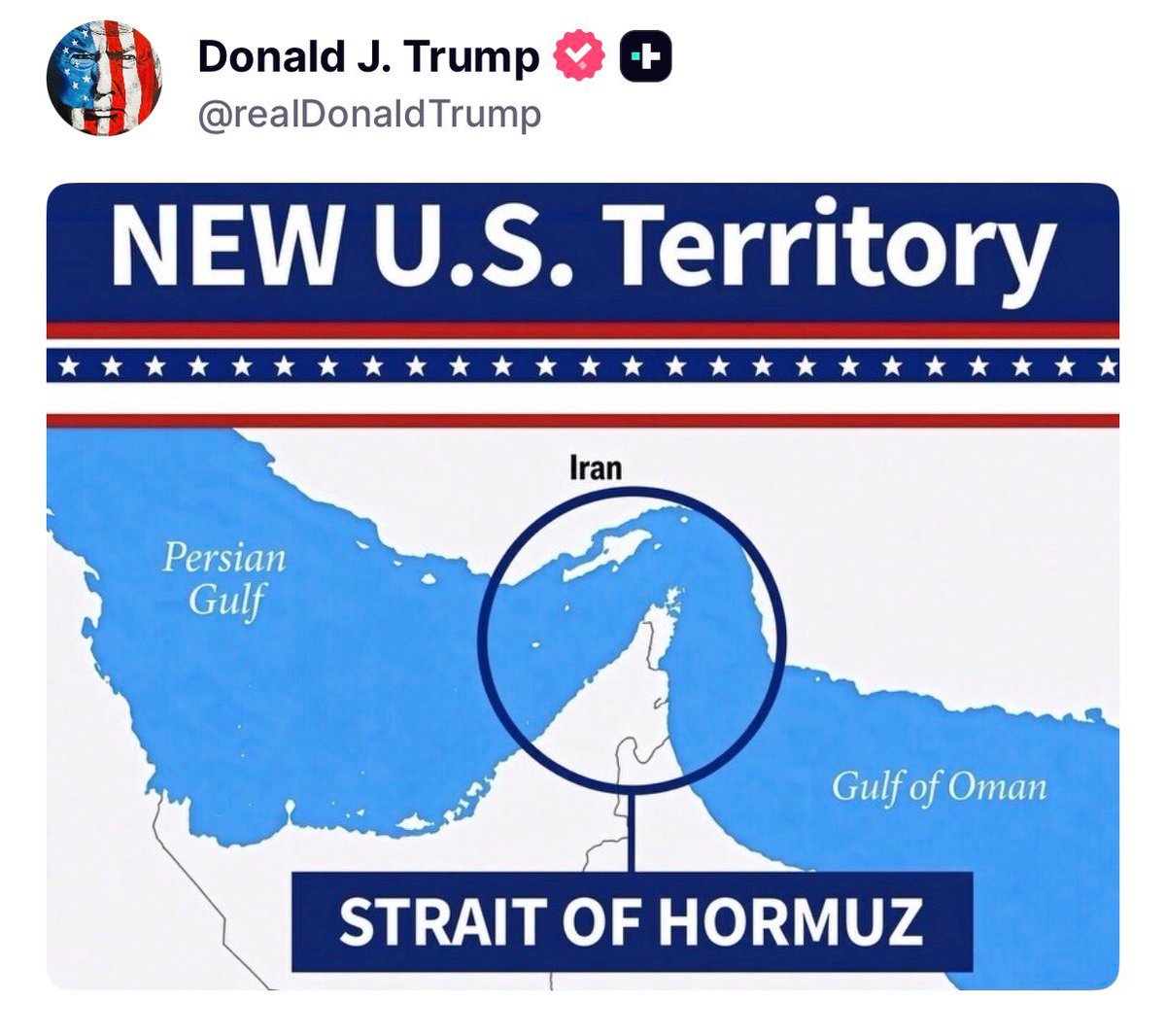
Jan ObergTFF director ☮️ When this morning – August 19, 2026 – I saw the above new US Trump map, I came to think of Frank Zappa, The Mothers of Invention, who said that politics is the entertainment division of the Military-Industrial Complex. That formulation beats many academic analyses – as you will have understood […]
A Civilizational Interpretation of the West’s Body Politic Pascal Lottaz Associate professor at Ritsumeikan University in Kyoto and TFF Board member August 25, 2026 “How do we explain the self-defeating and self-harming policies of Western states? Europe seems to be happily deindustrializing, the US proxy war in Ukraine is killing hundreds of thousands (if not millions) […]
LONDON – Many of the great and the good have dismissed the utility of nuclear weapons as well as finding the idea of their use morally indefensible but still they exist in enormous numbers in the arsenals of the great powers. Secretary of Defence Robert McNamara and Secretary of State Dean Rusk both came to be convinced during their tenure in the Kennedy administration that their use was “unthinkable”. President George H.W. Bush has written that in private he ruled out a nuclear response during the 1991 Gulf War although in public his Administration did not. General Colin Powell, then the chairman of the Joint Chiefs of Staff, in his autobiography recalls chiding his boss, Dick Cheney, for even considering it. Paul Nitze, one of the principal architects of containing the Soviet Union by nuclear deterrence, went even further. He argued in a Washington Post article in 1994 that it...

TFF on Substack

Discover more from TFF Transnational Foundation & Jan Oberg.

Most Popular

Jan ObergTFF director ☮️ When this morning – August 19, 2026 – I saw the above new US Trump map, I came to think of Frank Zappa, The Mothers of Invention, who said that politics is the entertainment division of the Military-Industrial Complex. That formulation beats many academic analyses – as you will have understood […]
A Civilizational Interpretation of the West’s Body Politic Pascal Lottaz Associate professor at Ritsumeikan University in Kyoto and TFF Board member August 25, 2026 “How do we explain the self-defeating and self-harming policies of Western states? Europe seems to be happily deindustrializing, the US proxy war in Ukraine is killing hundreds of thousands (if not millions) […]
LONDON – Many of the great and the good have dismissed the utility of nuclear weapons as well as finding the idea of their use morally indefensible but still they exist in enormous numbers in the arsenals of the great powers. Secretary of Defence Robert McNamara and Secretary of State Dean Rusk both came to be convinced during their tenure in the Kennedy administration that their use was “unthinkable”. President George H.W. Bush has written that in private he ruled out a nuclear response during the 1991 Gulf War although in public his Administration did not. General Colin Powell, then the chairman of the Joint Chiefs of Staff, in his autobiography recalls chiding his boss, Dick Cheney, for even considering it. Paul Nitze, one of the principal architects of containing the Soviet Union by nuclear deterrence, went even further. He argued in a Washington Post article in 1994 that it...
Read More
HQAB7NMWUAA1gSk
Jan ObergTFF director ☮️ When this morning – August 19, 2026 – I saw the above new US Trump map, I came to think of Frank Zappa, The Mothers of Invention, who said that politics is the entertainment division of the Military-Industrial Complex. That formulation beats many academic analyses – as you will have understood […]
21b7244b-c83e-46c1-ba23-556b21b9a0a8_1536x1024
A Civilizational Interpretation of the West’s Body Politic Pascal Lottaz Associate professor at Ritsumeikan University in Kyoto and TFF Board member August 25, 2026 “How do we explain the self-defeating and self-harming policies of Western states? Europe seems to be happily deindustrializing, the US proxy war in Ukraine is killing hundreds of thousands (if not millions) […]
Imagen-thumbnail-The-Transnational-1
LONDON – Many of the great and the good have dismissed the utility of nuclear weapons as well as finding the idea of their use morally indefensible but still they exist in enormous numbers in the arsenals of the great powers. Secretary of Defence Robert McNamara and Secretary of State Dean Rusk both came to be convinced during their tenure in the Kennedy administration that their use was “unthinkable”. President George H.W. Bush has written that in private he ruled out a nuclear response during the 1991 Gulf War although in public his Administration did not. General Colin Powell, then the chairman of the Joint Chiefs of Staff, in his autobiography recalls chiding his boss, Dick Cheney, for even considering it. Paul Nitze, one of the principal architects of containing the Soviet Union by nuclear deterrence, went even further. He argued in a Washington Post article in 1994 that it...
Screenshot-2026-08-22-011310
August 24, 2026 Lena Petrova & Jan Oberg I am truly happy and honoured to have been invited by Lena to her unique channel, World Affairs In Context where she has over 600,000 subscribers. She covers a very wide range of global themes, based not least on her own deep and broad knowledge of economics. I want […]
Logo-Transnational
Greenland – the world’s largest island, a continent of its own with only 57.000 inhabitants. I visited it for the first time in May 2005. I flew across the inland ice to Nuuk, the tiny capital with some 14.000 inhabitants. I was overwhelmed by the pride and kindness of everyone I met as well as by the unique natural beauty. Unfortunately, due to weather conditions during my ten-day stay I could get nowhere else but Nuuk. Fortunately, however, among those I met was Gitte Arvegaard, a Danish lawyer and negotiator employed by the local government, Greenland Home Rule. She turned out to be an enthusiastic photographer with a lot of pictures taken during various trips around Greenland. So this Greeland series is the result of our cooperative effort. We both hope you enjoy it and are stimulated to visit Greenland – about which you may read more here. Finally, if you want to...
p_mccartney_poem
 Jan Oberg’s storyof how he met Sir Paul Liverpool – where else to meet Paul McCartney? Paul’s old class mate and TFF Associate, Jonathan Power introduced me to Paul McCartney in Liverpool at an informal reception. It was held at what used to be their school, now the Liverpool Institute for Performing Arts and we were there to celebrate that Jonathan had written Amnesty International’s 40th Anniversary book. This happy event for “righting wrongs and writing songs” gave me an opportunity to meet Paul and tell him about TFF and get straight to the matter: would he consider making a donation in support of our work for peace? While I was probably the only one with such a wish that day, I was certainly not the only one who wanted to shake hands and talk with him. In the last minutes before Paul was to leave, Jonathan brought us together and we got about three...