The Trump-Kim summit in Vietnam

Kim Jong-un, paramount leader of the North Korean dictatorship, is in Vietnam ready to meet President Donald Trump. Last June the two leaders met, applauded themselves and each other and made some sort of a deal even if it wasn’t the one Trump boasted about – the total elimination of the North’s nuclear weapons.

Nevertheless, the North has stopped nuclear testing. The US only stopped in 1992 and France in 1996, so this is a very important step forward. It should not be minimized as the American “Blob” is doing. (The “Blob”, a creation of the White House of President Barack Obama, is the highly influential industrial/military/legislative/media complex, a majority of whom are hard line on foreign affairs.)

The North also has begun dismantling a missile-engine test site. Set against that, the US intelligence community and independent observers say it is continuing to build intercontinental missiles and is preparing to conceal its nuclear assets and activities.

In the wings of these negotiations will be China.

It has long opposed what North Korea is doing, at one time joining the West and Russia in imposing sanctions. But it has never quite squeezed hard enough to have a real effect.

Some observers wonder how steadfast an ally China will be in the future. If war broke out between the North and South Korea how would it deal with the North’s nuclear weapons? Would it seek to quickly impound them? And if it tried to, does its army have the capability of doing so?

Or would it tolerate US/UN troops crossing the border from south to north to do that job, fearing that the US would then effectively take over the North?

A handful of US scholars, most notably Oriana Skylar Mastro of Georgetown University, who writes in the current issue of Harvard’s “International Security”, believe the evidence shows that China could and would invade if it thought it necessary.

She has interviewed two dozen Chinese scholars – think tank researchers, scientists and military officers- as well as senior people in the main relevant bodies in Washington. From that and a number of international seminars she draws her conclusions.

The US should tolerate a Chinese intervention as being in its own interests. To do the job itself would require nearly 200,000 troops. (It has already in the South a relatively modest 30,000.) Indeed, if necessary, it should provide to China its intelligence and, later, its nuclear demolition expertise.

The US should also accept the fact that if there were reunification between North and South, China would only agree to it if it didn’t swing a unified Korea against China. This would mean no American troops north of the border.

China has a lot to be angry about.

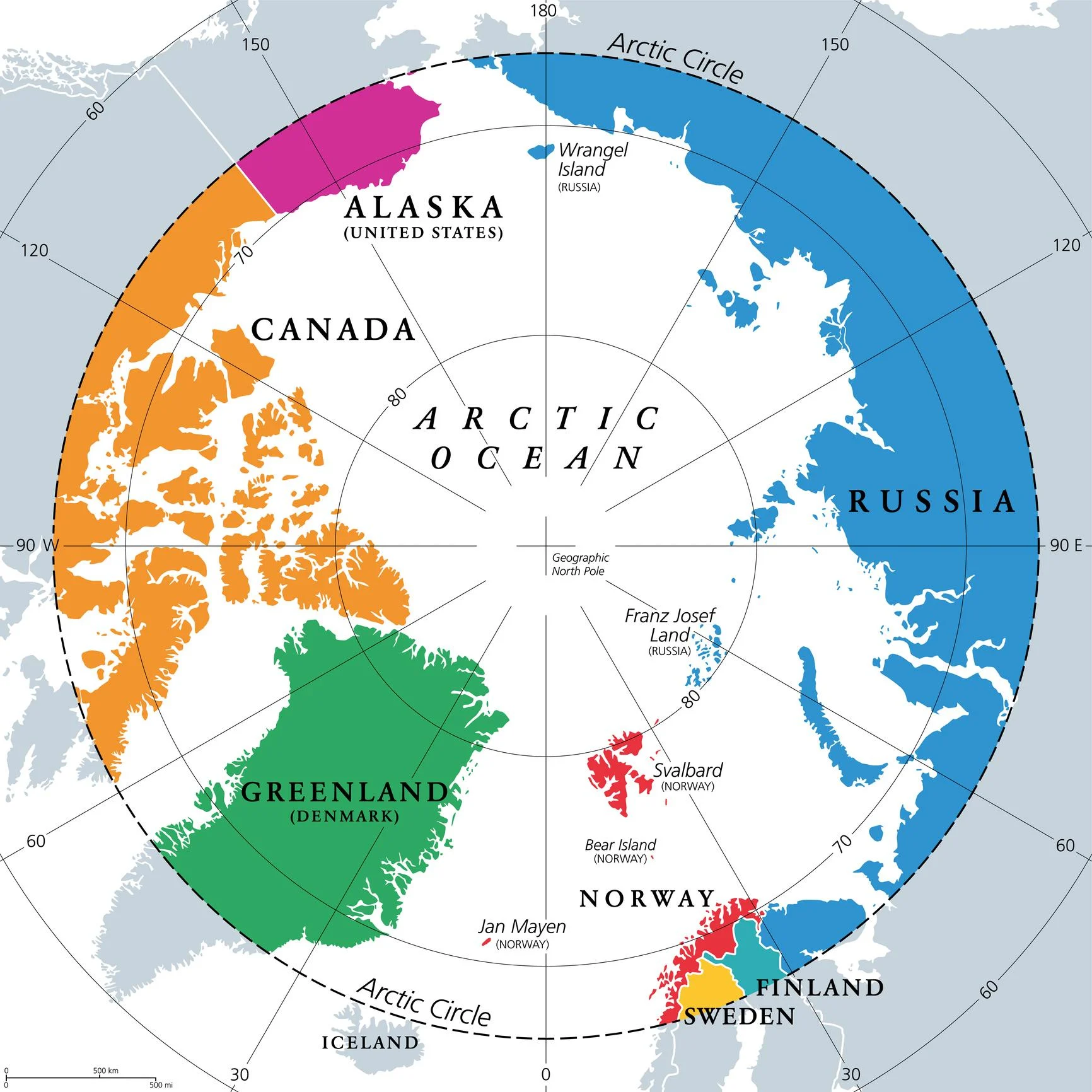
North Korea tests its nuclear tests only 130 km from the Chinese border. The North has constantly refrained from Chinese requests to avoid provocative activities, completing eighty-six missile tests and four nuclear tests. In return China has snubbed the North by courting the South economically. There is no communist brotherhood here.

China has its contingency plans in place in case of a North/South war. China will move troops 50 km across the border. It will probably create two buffer zones. First, to blockade North Korea’s major ports. Second, to intercept and search fleeing refugees and military personnel. 

Within that 50 km the North has a good proportion of its nuclear and missile sites- 45% of the former and 22% of the latter. A fast Chinese invasion, carried out at dawn, could capture these sites within the hour.

China would welcome an improved relationship with the South. Chinese experts expect that trade volumes would increase dramatically after reunification. China would be able to export goods across the North to the South. It could use Korean ports, reducing congestion in its own southern ones.

On the other hand, China does worry that South Korea would seize that part of the North’s bombs and missiles which are located far from its border with China.

China hears about the ongoing debate in the South about whether to be nuclear armed or not. It should not worry. To possess nuclear weapons itself would be a very extremely unpopular decision among the South’s voters. Moreover, the South would confront irresistible international pressure not to call the North’s nuclear arsenal its own.

Chinese diplomats in Hanoi will be tuning in to the summit as much as they can. The meeting place is probably bugged, and their informants among Vietnamese diplomats are many.

It’s important that Trump is well briefed by the Chinese and vice versa. America has power. But in this situation, China probably has the whip hand.

If Trump doesn’t make use of this – with a private agreement from President Xi Jinping to be his proxy – the talks will probably fail.

Trump must make use of China’s strength.

Power’s homepage


Foreign affairs columnist, film-maker and author

Share

Leave a Reply

Your email address will not be published. Required fields are marked *

Related Posts

Jan Oberg May 15, 2026 Go to this Fox News page and scroll the whole way down: President Donald Trump tells the world that his meeting with President Xi Jinping yielded a lot of very concrete political and economic results – of course, only where the Chinese side, according to him, agreed with him. He does not mention the Taiwan issue, but Secretary of State, Marco Rubio, says that it did not feature prominently in their talks and that the US policy on Taiwan has not changed. Then go to China Daily – or Global Times – and you will see that for the Chinese it is framework, principles, structure of cooperation etc. that matters – all embedded in the overall idea of “constructive bilateral relationship of strategic stability.” Nowhere is any concrete agreement or deal – all that Trump refers to – mentioned. At the general level, this gives you insights into the very different social...
The MIMAC – Military-Industrial-Media-Academic Complex – drives the world’s rampant militarism and wars without end. Here is a short reflection of how it works against all interests of humanity. #5 deals with why there is no real enemy or threat images/analysis. It’s all ex-post constructions. And, btw, theTFF Peace Pulse is now on Rumble.
Jan Oberg, TFF director April 28, 2026 In this third TFF Peace Pulse, I make the important distinction between the violence and the conflict that violence is a symptom of. If you want peace, focus on the underlying conflict because that is the key to resolution, peacemaking, and a better future for the parties. The West is obsessed with violence, just look around you – and 90+ per cent of the public debate is about military issues and other violence – totally wasted for peace. These Peace Pulses will only be published here a few times. You will also not find them on YouTube and Vimeo because both platforms have blocked TFF and me; you know, peace is dangerous these days. Most TFF’s videos since 2007 are now on Rumble.

Recent Articles

Jan Oberg May 15, 2026 Go to this Fox News page and scroll the whole way down: President Donald Trump tells the world that his meeting with President Xi Jinping yielded a lot of very concrete political and economic results – of course, only where the Chinese side, according to him, agreed with him. He does not mention the Taiwan issue, but Secretary of State, Marco Rubio, says that it did not feature prominently in their talks and that the US policy on Taiwan has not changed. Then go to China Daily – or Global Times – and you will see that for the Chinese it is framework, principles, structure of cooperation etc. that matters – all embedded in the overall idea of “constructive bilateral relationship of strategic stability.” Nowhere is any concrete agreement or deal – all that Trump refers to – mentioned. At the general level, this gives you insights into the very different social...
Lena Petrova of “World Affairs In Context” with more than half a million subscribers on YouTube wanted to explore what a peace researcher like me has to say about, among other things, the First and the Second Cold War and why eethics has disappeared from politics. I am particularly happy about this conversation that also yielded an amazing number of very appreciative comments on YouTube. No doubt, people are longing for alternatives, including peace perspectives.
The MIMAC – Military-Industrial-Media-Academic Complex – drives the world’s rampant militarism and wars without end. Here is a short reflection of how it works against all interests of humanity. #5 deals with why there is no real enemy or threat images/analysis. It’s all ex-post constructions. And, btw, theTFF Peace Pulse is now on Rumble.

TFF on Substack

Discover more from TFF Transnational Foundation & Jan Oberg.

Most Popular

Jan Oberg May 15, 2026 Go to this Fox News page and scroll the whole way down: President Donald Trump tells the world that his meeting with President Xi Jinping yielded a lot of very concrete political and economic results – of course, only where the Chinese side, according to him, agreed with him. He does not mention the Taiwan issue, but Secretary of State, Marco Rubio, says that it did not feature prominently in their talks and that the US policy on Taiwan has not changed. Then go to China Daily – or Global Times – and you will see that for the Chinese it is framework, principles, structure of cooperation etc. that matters – all embedded in the overall idea of “constructive bilateral relationship of strategic stability.” Nowhere is any concrete agreement or deal – all that Trump refers to – mentioned. At the general level, this gives you insights into the very different social...
Lena Petrova of “World Affairs In Context” with more than half a million subscribers on YouTube wanted to explore what a peace researcher like me has to say about, among other things, the First and the Second Cold War and why eethics has disappeared from politics. I am particularly happy about this conversation that also yielded an amazing number of very appreciative comments on YouTube. No doubt, people are longing for alternatives, including peace perspectives.
The MIMAC – Military-Industrial-Media-Academic Complex – drives the world’s rampant militarism and wars without end. Here is a short reflection of how it works against all interests of humanity. #5 deals with why there is no real enemy or threat images/analysis. It’s all ex-post constructions. And, btw, theTFF Peace Pulse is now on Rumble.
Read More
Screenshot-2026-05-15-103534
Jan Oberg May 15, 2026 Go to this Fox News page and scroll the whole way down: President Donald Trump tells the world that his meeting with President Xi Jinping yielded a lot of very concrete political and economic results – of course, only where the Chinese side, according to him, agreed with him. He does not mention the Taiwan issue, but Secretary of State, Marco Rubio, says that it did not feature prominently in their talks and that the US policy on Taiwan has not changed. Then go to China Daily – or Global Times – and you will see that for the Chinese it is framework, principles, structure of cooperation etc. that matters – all embedded in the overall idea of “constructive bilateral relationship of strategic stability.” Nowhere is any concrete agreement or deal – all that Trump refers to – mentioned. At the general level, this gives you insights into the very different social...
Screenshot-2026-05-12-104023
Lena Petrova of “World Affairs In Context” with more than half a million subscribers on YouTube wanted to explore what a peace researcher like me has to say about, among other things, the First and the Second Cold War and why eethics has disappeared from politics. I am particularly happy about this conversation that also yielded an amazing number of very appreciative comments on YouTube. No doubt, people are longing for alternatives, including peace perspectives.
Screenshot-2026-04-13-154551 (2)
The MIMAC – Military-Industrial-Media-Academic Complex – drives the world’s rampant militarism and wars without end. Here is a short reflection of how it works against all interests of humanity. #5 deals with why there is no real enemy or threat images/analysis. It’s all ex-post constructions. And, btw, theTFF Peace Pulse is now on Rumble.
Screenshot-2026-04-13-154551 (1)
Jan Oberg, TFF director April 28, 2026 In this third TFF Peace Pulse, I make the important distinction between the violence and the conflict that violence is a symptom of. If you want peace, focus on the underlying conflict because that is the key to resolution, peacemaking, and a better future for the parties. The West is obsessed with violence, just look around you – and 90+ per cent of the public debate is about military issues and other violence – totally wasted for peace. These Peace Pulses will only be published here a few times. You will also not find them on YouTube and Vimeo because both platforms have blocked TFF and me; you know, peace is dangerous these days. Most TFF’s videos since 2007 are now on Rumble.
Screenshot-2026-04-13-154551
In contrast to most, we’ll bring alternatives, solutions, hope and strategies for a better future. Times are dangerous, yes, but that only intensifies the need for constructive thinking and action! Jan Oberg, TFF director April 13, 2026 The new TFF Peace Pulse uses video messages in a new way: Max 3-5-minute-long comments, ideas or perhaps mini-lectures, all about peace – positive peace. We launch them today on April 13, 2026 with a carefully crafted visual aesthetic fitting the content. We hope to publish them regularly from now on. We launch Peace Pulse (PP) – for a number of reasons. The world is in chaos, and there are countless reasons to feel concerned, frustrated, even angry. The atmosphere is saturated with doom and gloom, with negative energy and rear‑mirror thinking, while vision, imagination, alternatives, strategies and genuine future‑mindedness remain in short supply. And without them, we simply can’t save the world. Looking at problems from a hundred angles will...
IMG_5165 (1)
PART II — Publishing Peace in a System That Prioritises Militarism Jan Oberg, TFF director April 10, 2026 How TFF Maintains a Daily Voice in a Digital World Built for Noise This article is part of the series “TFF at 40″ and it invites you to learn about Four Decades of Publishing Peace. It takes a look at how a small, people‑financed peace foundation has communicated across four generations of technology — from wax stencils and fax machines to mass email and Substack — and why TFF continues to publish every single day in a system that rewards noise, conflict, and militarism. ◆ What it means to publish peace every single day in a digital system built for 24/7 news and other noise, confrontation, and militarism. How TFF’s independence, continuity, and global readership defy algorithms, donor cycles, and Western media censorhip — and why the Majority World keeps listening. When the...