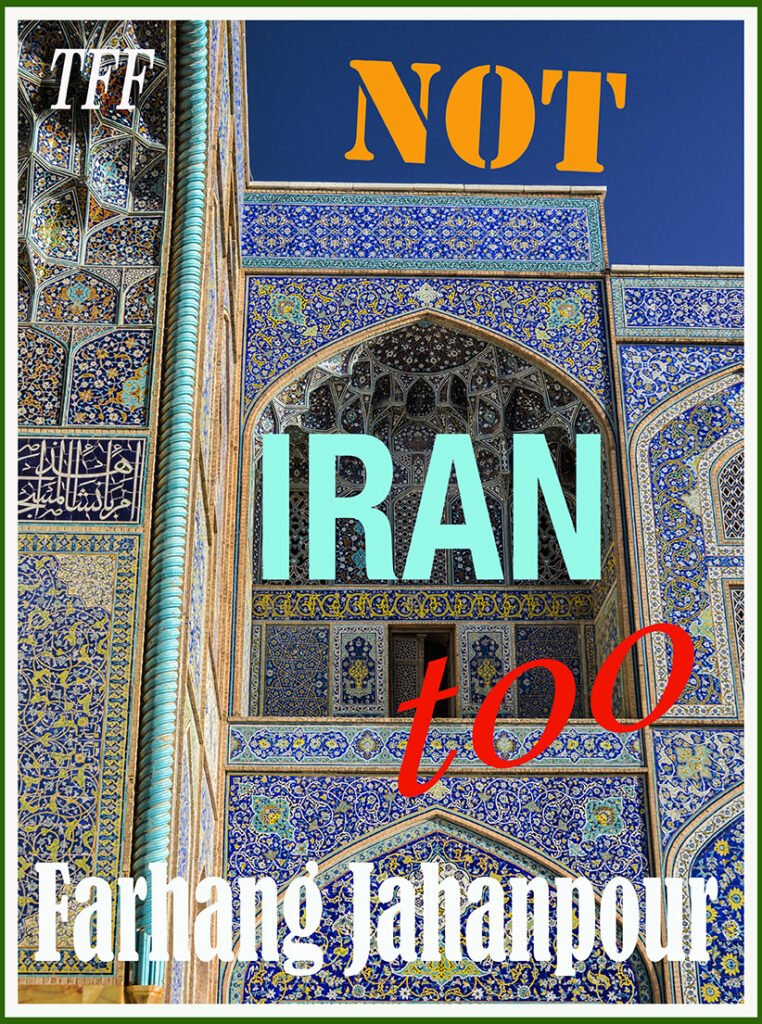
September 18, 2018
1. Some omitted facts and perspectives
Prior to the Iraq war, the only thing that one heard on most Western channels about that country was Saddam Hussein and his alleged chemical and nuclear weapons.
Saddam Hussein became synonymous with Iraq. Nothing was said of Iraq’s long history as a cradle of civilisation or its people who, like people all over the world, simply wished to live in peace and pursue a normal life.
The same was done to Afghanistan, Libya and Syria, when the Taliban, Mu’ammar Qadhafi and Bashar al-Assad were continuously demonised – while it was omitted and forgotten that the West had befriended, and in some cases supported, and sponsored those rulers in the past.
Initially, Saddam Hussein was supported by the CIA to fight against Abd al-Karim Qasim who had toppled the Hashemite monarchy and had formed an alliance with the Iraqi Communist Party.
He withdrew Iraq from the pro-Western Baghdad Pact (later to be called CENTO) that included Iraq, Iran, Pakistan, Turkey, and the United Kingdom, which like NATO was aimed at containing the Soviet Union, and established friendly relations with Moscow.
Later on, Qasim demanded the Anglo American-owned Iraqi Petroleum Company share 20% of the ownership and 55% of the profits with the Iraqi government.
Saddam was a leading member of the plot to assassinate Qasim. When that plot failed, Saddam fled to Egypt where allegedly he received help from the U.S. Embassy, and later on took part in the November 1963 Iraqi coup d’état that toppled Qasim. (See Patrick Cockburn, “Revealed: How the West set Saddam on the bloody road to power”, The Independent, Saturday 28 June 1997).
2. Saddam and the chemical weapons
Shortly after the Islamic revolution in Iran in 1979 when Saddam Hussein invaded Iran, the United States and Europe supplied him with massive amounts of weapons, including precursors for the manufacturing of chemical weapons which he used extensively against Iranian forces and against the Kurds in Halabja on March 16, 1988.
He was visited by high-ranking U.S. officials including Donald Rumsfeld, the then special Middle East Envoy, who conveyed President Ronald Reagan’s message of support to him.
That was at a time when Saddam was using massive amounts of chemical weapons “almost daily” in contravention of international law. Confidential reports that have since been revealed show the extent of the Reagan administration’s knowledge of Iraqi use of chemical weapons and nerve agents. (See Julian Borger, “Rumsfeld offered help to Saddam”, The Guardian, 31 December 2002).
Yet, not only was Iraq not bombed and Saddam not told to stop using chemical weapons, the United States provided him with intelligence on the Iranian troop movements to enable him to target them better.

Due to U.S. pressure, even the Security Council refused to condemn their use until it issued Resolution 582 on 24 February 1986, six years after the start of the war and five years after the use of chemical weapons by Iraqi forces killing and wounding tens of thousands of Iranian military personnel and civilians.
Even then, the Security Council condemned the use of chemical weapons in general terms and without blaming Iraq.
Even Resolution 612 issued on 9th May 1988 stated that it “Expects both sides to refrain from the future use of chemical weapons in accordance with their obligations under the Geneva Protocol.”
However, when American interests changed and Saddam Hussein had outlived his usefulness, he was demonised and ultimately toppled at huge cost to the Iraqi people.
3. Saddam’s invasion of Kuwait
After having survived the war with Iran, Iraq was virtually bankrupt. Nevertheless, Saudi Arabia, the UAE and Kuwait that had paid Saddam tens of billions of dollars to pursue the war against Iran, demanded their money back.
By the end of the war, Iraq had borrowed a total of US $60 billion to finance the war, of which about US $30 billion had been borrowed from Kuwait. Saddam Hussein called on the Emir of Kuwait Jaber Al-Ahmad Al-Jaber Al-Sabah either to forgive his debt, as he had been fighting collectively on behalf of all the Persian Gulf littoral states, or to reduce its share of oil production so that Iraq could make up for the losses that it had suffered during the war.
Saddam Hussein had accused Kuwait of stealing Iraqi oil from their joint Rumaila oilfield by means of alleged slant-drilling to extract oil from the joint oilfield, during the time that Iraq was fighting the war with Iran.
When Kuwait neither forgave the debt nor reduced oil production, Saddam Hussein revived the old Iraqi claim that Kuwait was part of Iraqi territory, as under the Ottoman Empire it had been a part of the Ottoman vilayat or governorate of Basra.
For this reason, its borders with the rest of the Basra province were never clearly defined or mutually agreed.

After signing the Anglo-Ottoman Convention of 1913, the United Kingdom split Kuwait from the Ottoman territories into a separate sheikhdom. After gaining independence in 1932, the Iraqi government immediately declared that Kuwait was rightfully a territory of Iraq as it had been prior to the British creation of Kuwait as a separate sheikhdom under British protection.
Using that excuse, Saddam amassed more than 200,000 troops on the Iraqi-Kuwaiti border. After a meeting that he had with the US Ambassador April Glaspie, he wrongly assumed that America would let him conquer Kuwait.
After being told by Saddam about his dispute with Kuwait, Glaspie reassured Saddam that America would not get involved in inter-Arab problems.
She said: “We have no opinion on your Arab-Arab conflict, such as your dispute with Kuwait. Secretary Baker has directed me to emphasize the instruction, first given to Iraq in the 1960s, that the Kuwait issue is not associated with America.” (See John J. Mearsheimer and Stephen M. Walt, “An Unnecessary War”, Foreign Policy, November 3, 2009).
Feeling reassured by the US response, Saddam Hussein attacked Kuwait on August 2, 1990, and within two days of intense combat most of the Kuwaiti forces were either defeated or fell back to neighbouring Saudi Arabia.
The Emirate of Kuwait was annexed and a few days later Saddam Hussein announced that it was Iraq’s 19th province.
Saddam Hussein attacked Kuwait initially with 200,000 soldiers, subsequently increased to 300,000. (See Tyler Rogoway: “Operation Desert Storm By The Numbers On Its 25th Anniversary”, January 16,2016. )
Osama Bin Laden who believed that his Mujahedin fighters had kicked the Soviet forces out of Afghanistan, in a letter to the Saudi King Fahd offered to send his forces to Kuwait to expel the Iraqis.
His letter was totally ignored and he did not even receive an answer.
That insult, followed by the fact that American forces were stationed in Saudi Arabia, which is regarded as sacred soil by devout Muslims and the likes of Bin Landen, ultimately led to the biggest terrorist attack, namely the Al Qaeda attacks on 9/11.
Instead, Fahd turned to the United States for help.
The result was the so-called First Gulf War, with Operation Desert Shield (2 August 1990 – 17 January 1991), which represented the build-up of Coalition forces in defence of Saudi Arabia, followed by Operation Desert Storm (17 January 1991 – 28 February 1991) which represented the combat phase of the war in order to liberate Kuwait from Iraqi forces. These operations constituted the largest military alliance since World War II.
President George H. W. Bush put together a coalition of 39 countries, of which 28 contributed combat forces, some only small numbers. Out of 670,000 troops, 425,000 of which were from the United States. They attacked Iraqi forces in Kuwait with 2,250 combat aircraft, carrying out more than 100,000 sorties, dropping 88,500 tons of bombs, including napalm bombs, as well as firing 297 Tomahawk, plus 35 CALCMs missiles (Rogoway, ibid.)
4. The costs of war
Nearly all scholarly works on the First Gulf War agree that as many as 200,000 Iraqi conscripts were killed in Kuwait – see “Remembering the Gulf War: The Key Facts and Figures” – as the result of the blanket bombing and mass burial with bulldozers of Iraqi soldiers in their bunkers and foxholes, even when some of the soldiers were still alive. (See Eric Schmidt, “US Army Buried Iraqi Soldiers Alive in Gulf War” in the New York Times, September 15, 1991.
When some Iraqi soldiers and even civilians tried to flee from Kuwait to Basra, they were mowed down on the road that came to be known as Highway Of Death. Over ten hours, scores of US Marine and Air Force aircraft and US Navy pilots from USS Ranger attacked the convoy.
According to Time Magazine, the road was “reduced to a long uninterrupted line of more 300 stuck and abandoned vehicles sometimes called the Mile of Death”. (See “Death Highway Revisited”, Time Magazine, March 18, 1991).
According to UN figures, a further 1.5 million Iraqis – mainly children – also died as the result of the 13 years of US/UN sanctions. (See later).
When the former US Secretary of State Madeleine Albright was asked if the death of more than 500,000 Iraqi children was worth it, she replied: “I think that it is a really hard choice, but we say the price is worth it.” (“Madeleine Albright says 500,000 dead Iraqi children was worth it”, CBS News, 60 Minutes, May 12, 1996).
Meanwhile, it is estimated that between 100,000 and 200,000 civilians were killed as the result of the Kuwait war. (See Greg Allwood, “Remembering The Gulf War: The Key Facts and Figures”, British Forces News, March 7, 2017).
According to a US report, the Iraqi invasion of Kuwait and the resulting Persian Gulf war cost Arab countries $620 billion, not counting all the environmental costs. Another report, put the cost of the war to the region at more than $676 billion. (See “21 Facts about the First Gulf War”, Military.com, 17 September 2015).
According to the Arab Economic Report, the war cost Kuwait US $160 billion and Iraq US $190 billion. Including the deprivation of revenue from oil, the Baghdad Government lost US $256 billion.(See “Gulf War’s Cost to Arabs Estimated at $620 Billion”, The New York Times, 8 September 1992).
Meanwhile, Saudi Arabia, Kuwait and the UAE made US $84 billion in direct payments to the United States in addition to bearing most of the cost of the war.
And remarkably, with more than US $17 billion monetary contributions made by Germany and Japan to the war effort, the United States actually made a big profit out of the war. (See The Library of Congress Report: “Calculating the Cost of the Gulf War”, March 15, 1991).
5. Build-up to the US-led invasion of Iraq
Although Saddam Hussein had not been involved either in the events of 9/11 or in supporting the Taliban, the United States under President George W. Bush and Britain led by Prime Minister Tony Blair concocted some false evidence of possession of chemical and nuclear weapons by Saddam Hussein.
On 3 February 2003, Alastair Campbell, Blair’s Director of Communications Strategy, produced a document about Iraq’s alleged weapons of mass destruction, a document that rightly came to be known as the “Dodgy Dossier”.
That document contained doctored extracts from a thesis by then Iraqi graduate student Ibrahim al-Marashi about Saddam Hussein’s earlier possession of chemical weapons that had been destroyed following the Coalition attacks on Iraqi forces in Kuwait. (Dr Ibrahim al-Marashi is now an associate professor at California State University, San Marcos).
Referring to the fraudulent use of his studies, Dr Marashi who is now an associate professor at California State University, San Marcos, sarcastically said: “I was a bit disenchanted because they never cited my article… any academic, when you publish anything, the only thing you ask for in return is that they include a citation of your work… There are laws and regulations about plagiarism that you would think the UK Government would abide by.” (Quoted in The Times, London, February 7, 2003.)

In the United States, the then Secretary of Defence Donald Rumsfeld, and his deputy Paul Wolfowitz set up the Office of Special Plans in the Pentagon, headed by Douglas Feith, one of the authors of The Clean Break, whose job was to find or concoct evidence of Saddam Hussein’s ties to and possession of chemical, biological and nuclear weapons.
According to Senator Carl Levin, Chair of the Senate Armed Service Committee, “The bottom line is that intelligence relating to the Iraq-al-Qaeda relationship was manipulated by high-ranking officials in the Department of Defense to support the administration’s decision to invade Iraq. The inspector general’s report is a devastating condemnation of inappropriate activities in the DOD policy office that helped take this nation to war.” (Walter Pincus, “Official’s Key Report On Iraq Is Faulted”, Washington Post, February 9, 2007).
It should also be remembered that prior to the Iraq war, Netanyahu claimed that Saddam Hussein was making nuclear weapons, even stressing, “There is no question whatsoever that Saddam is seeking, working and advancing towards the development of nuclear weapons; no question whatsoever” (See “Iraq 2002, Iran 2012: Compare and Contrast Netanyahu’s Speeches”, Haaretz, October 04, 2012).
It is important to remember that the fear of nuclear weapons was used to good effect to get the public on board for the invasion of Iraq, despite the testimonies of chief UN inspectors, Hans Blix and Mohamed ElBaradei.
Otherwise, it would have been difficult to get the American, let alone the world public to support an illegal invasion of the Iraq.
As the then US National Security Advisor Condoleezza Rice said: “I do not want the smoking gun to be a mushroom cloud to appear over Manhattan.” (Top Bush officials push case against Saddam, CNN.com, September 8, 2002).
Such emotional and categorical statements by people in high places persuaded the unsuspecting public that Saddam Hussein was really developing nuclear weapons.
On the basis of such dubious and dishonest claims, the Americans and the British launched an illegal invasion of Iraq on March 20, 2003.
The invasion of Iraq has been described as the worst foreign policy fiasco since the Vietnam War. It killed hundreds of thousands of Iraqis, destroyed huge chunks of the country and greatly weakened civil society.
Saddam Hussein was tried by a Special Tribunal under the US military occupation. Despite his many crimes, including the use of chemical weapons against Iran and the Kurds, he was tried on the sole charge of the killing of some Iraqis allegedly involved in the failed assassination attempt on his life in Dujail in 1982, thus preventing him from spilling the beans about his collaboration with the United States during the Iran-Iraq war, and the massive use of chemical weapons.
L. Paul Bremer who ran Iraq for 14 months after the invasion, dismantled the Iraqi army and also expelled all the officials who had been members of the Ba’thist Party from all government departments.
The de-Ba’thification resulted in the expulsion of between 85,000 to 100,000 Iraqis, including thousands of teachers and mid-level technocrats who were summarily shut out of Iraq’s public-sector future. Iraqi civil society was dismantled and hundreds of thousands of Iraqis were turned into disgruntled opponents of the new regime.
Despicable torture was also carried out in American-instituted torture chambers, such as Abu-Ghraib, and many other black-holes in Iraq and in other countries.
The invasion of Iraq resulted in the death of more than a million Iraqis, the wounding of millions, the creation of hundreds of thousands of widows and orphans, the displacement of more than four million Iraqis, and almost the complete destruction of the country and much of its economy.

When U.S. General Tommy Franks who led the invasion of Iraq was asked about how many Iraqis were killed during the war, his dismissive answer was: “We don’t do body counts.”
In a 2007 poll, Americans estimated the number of killed Iraqis at less than 10,000. (See Nancy Benac, “Americans Underestimate Iraqi Death Toll”, The Huffington Post, February 24, 2007).
Such public apathy and ignorance is clearly due to brainwashing and the lack of proper reporting by the media. However, some academic studies have put the casualty figures at more than one million.
A Lancet study had shown that by 2006, already 601,000 had been killed in Iraq.
The most scholarly work on the number of Iraqi casualties was a joint study carried out by Physicians for Social Responsibility (PSR), International Physicians for the Prevention of Nuclear War (IPPNW), and Physicians for Global Survival, with a preface by Dr Hans-Christof von Sponeck, a former UN Assistant Secretary General, head of the Oil for Food Program and TFF Associate. The study was based on a careful analysis of all previous studies on the subject.
It concluded that the estimated number of 1,033,000 fatalities up to 2015 seemed plausible. (See Body Count of the “War on Terror”: Iraq, Afghanistan, Pakistan, by IPPNW, PSR, and Physicians for Global Survival, March 2015.
The vacuum and the mismanagement created in Iraq gave rise to terrorist organisations that later on spilled over into Syria and have destabilised the Middle East ever since.
In 2003, a Middle East specialist As’ad AbuKhalil, who is now a professor of political science at California State University, wrote:
“The Soviet occupation of Afghanistan gave us the Taliban. The American occupation of Saudi Arabia gave us bin Laden and Al Qaeda. The Israeli occupation of Lebanon gave us Hezbollah. Let us see what the American occupation of Iraq is going to give us.” (Quoted by Neil Swidey, “Tipping points: How military occupations go sour” in The Boston Globe, April 27, 2003).
We now know the answer to that question. Tens of thousands of embittered, unemployed former Iraqi military personnel formed the backbone of ISIS and other terrorist groups.
Those pre-emptive wars and the devastation that they caused also gave rise to Sunni radicalism, which later on manifested itself in various uprisings in Tunisia, Egypt, Bahrain, Libya and Yemen, and eventually led to the emergence of terrorist organisations throughout the Middle East, with devastating consequences in Europe with the rise of terrorism and mass migration.
Although the United States was not able to create a New Middle East in the way that it had hoped, there is no doubt that the entire region has changed as the result of those illegal invasions and wars.
It is sobering to realise that after all the carnage in Iraq and the emergence of ISIS, despite many atrocities that Saddam Hussein committed, many Iraqis have come to believe that life under him was better than what the American invasion brought them. (See Chris Maume, “It was better to live under Saddam”, The Independent, 12 June 2014).
Share and use these hastags
#NotIranToo
#BuildTrustWithIran
#CooperateWithIranNow
Photos
All from today’s Iran by Jan Oberg.
You can see many more here and purchase limited, signed editions here.
© Oberg PhotoGraphics