Still there 25 years later: The dispute about Macedonia’s name


By Biljana Vankovska

Interview with Asahi Shimbun, Tokyo
 

• Do you support the idea of having the accord with Greece over the disputes on the country’s name? If yes/no, please tell us the reason.

It is hard to support an irrational dispute, only because one has a nationalistic idea that the name Macedonia implies irredentism. Apart from that, it is highly asymmetric dispute because Greece has nothing to gain or lose in substantial terms, while the Republic of Macedonia may lose not only its right on self-identification, identity but also to open a Pandora’s box of internal political and ethnic strife.

The dispute has never been only over the name of the state (although a state’s name is a part of its international legal identity). All proposals of Matthew Nimetz has been so-called “ a set of ideas”, containing a range of aspects that directly affect the name of the constituent nation, language, international codes, including the internet domain!

I do not support any change of the constitutional name, because the word “Republic” before “Macedonia” makes the whole difference in the world from the Greek administrative provinces as well as from Alexander’s Empire.
 

• What do you think is the main drive of the current Macedonian government to ease the tension with Greece?

All Macedonian governments have been aware that they are unable/incapable of delivering what the citizens need the most (wellbeing, development, progress, good quality of life, education, public health, etc.) – so the only thing that they could eventually achieve was NATO (and EU) membership on a false pretext that this is going to produce economic growth, foreign investments, and wellbeing.

The current government, in my opinion, owes to the international power-centers its gaining power, so they need to be cooperative even if it goes against the country’s national interests. Unfortunately, the name dispute has now grown into a geopolitical issue, and as such it is of high interest for the US to embrace Macedonia in NATO, at any cost, in order to complete its geopolitical map.
 

• If the two countries reached an accord, what should be done with all the monuments built during the Skopje 2014 project, especially the Warrior on Horse at Macedonian Square? Do you think people would support the removal of the monuments?

The removal of some monuments is a matter of legal, political but also financial estimation. In any case it is not a matter to be resolved on the international or bilateral ground. The whole project has been paid by the tax payers’ money, and it is up to them to decide which part of Skopje 2014 should stay or would be removed.

It is a bit naïve to believe that the though Greek foreign policy stand will soften because of the removal of the Warrior. It could be only a symbolical gesture made by the Macedonian government (at high cost, of course) but it won’t make any decisive influence on the dispute. The warrior and the rest of the Skopje 2014 project is a consequence and not a reason of the dispute.

As for the people, strangely enough, but the Warrior/Alexander as well as the monuments of his father and mother are one of the rare things that bring together Macedonian and Albanian people (they do not argue over Alexander because both sides believe that they may share a bit of the history by his father’s or mother’s side – Olympia was from today’s Epirus, a Greek region populated by Albanians).
 

• If the two countries reach an accord, I understand there would eventually be a referendum held. Do you think people of Macedonia will support the idea of changing the country’s name for the sake of a better relation with a neighboring country?

There has been high level of consensus among the Macedonians not to accept indecent proposal and to exchange their identity for money and/or security promised by NATO.

On the Albanian side, in opposite, the name is something that they would easily give up – because it has no real impact on their identity and ethnic/national interests. A possible referendum would not be constitutional, because there is no constitutional/legal ground for such a move.

Personally, I am against referendum on the name issue, because it will polarize the country, and may even destabilize it due to the lack of confidence in the institutions, electoral administration and the media propaganda.
 

• Do you see any alternative measures other than negotiating with the current Greek government to resolve the country name issue?

Paradoxically enough, the economic exchange, tourism, and other relations between the two states are quite good. It is pity that so much time has been wasted with no substantial confidence-building measures, and second-track diplomacy. The civil society, academia, sportsmen, journalists, intellectuals could have done much good if they were more engaged in building bridges.

Unfortunately, the dispute was given to nationalistic governments on both sides, and they mostly have profited from its existence.


• Could you describe what Macedonia has lost by having the trouble with Greece in this 25 years?

In addition to its economic losses during the unilateral embargo imposed by Greece, and the frustrating awaiting at NATO’s door, blockade on its way to EU negotiation process, Macedonia’s progress and democratic transition have suffered a lot.

This problem has become an apple of discord internally, and has served as a fertile ground for nationalism and inter-ethnic divisions. That is, the Albanians get impatient and blame the Macedonians that because of their stubbornness they are unable to join their Albanian brethren in NATO; and also this denial of Macedonian identity not only by Greece but also by Bulgaria gives ‘ammunition’ for Albanian nationalists’ claims that “you, Macedonians are artificial nation, invented by Tito, while we have deep historical roots from the antique Illyrians.”
 

• Considering the country’s path towards the NATO and EU membership, how do you see the U.S. involvement on the issue? How do you analyze on the intention of the regional players, including Russia?

The Republic of Macedonia’s path towards the NATO and EU is a paradoxical one. It reminds one of the plot in the famous Fitzgerald’s novel “The curious case of Benjamin Button”: the closer it gets, the more pressure it suffers on this painful issue!

Instead of bringing stability and progress, the NATO and EU integration process has transformed this issue into a European security problem. The Second Cold War is now about to turn it into a geopolitical issue, while the Republic of Macedonia and its people may become a collateral damage of greater powers’ games.
 

Related Posts

It’s produced by The China Academy in Shanghai and speaks for itself with no need for an introduction.
The issue of state sovereignty under international law and its inconsistencies and duplicities has become more complex than ever, especially after the outbreak of the Ukraine war and the “Ukrainization” of the Taiwan issue (even though Taiwan is not a sovereign state like Ukraine). However, the focus of this analysis is relatively modest: we examine a region of the Western Balkans in which the countries have already (more or less voluntarily) lost or given up their statehood and sovereignty. The concept of the so-called “Western Balkans” (WB) – comprising Serbia, Montenegro, Albania, Kosovo, North Macedonia, and Bosnia and Herzegovina – was concocted in the corridors of power in Brussels and Washington. This artificial sub-region, with its flexible geography and borders, lacks logical coherence. It effectively creates a buffer zone of weak states that are unlikely to ever meet the criteria for EU integration despite being offered European perspectives and hopes. However, these...
1. Israel: The policy’s background As a small country with a tiny population surrounded by large and hostile countries, Israel’s policy ever since its establishment has been to rely on some external forces, the British Empire at the beginning of its creation and later on the American superpower to protect herself. It has also involved the creation of a nuclear arsenal in contravention of the Non-Proliferation Treaty (the NPT) and by means of lies and deception, while being the most vociferous opponent of any other country in the Middle East to even have a peaceful nuclear programme for producing energy. Another aspect of this policy of self-preservation has been to divide and partition the neighbouring countries so that they would lose their advantage of larger size and greater population vis-à-vis Israel. As early as 1982, the Israeli scholar Oded Yinon authored an essay called “A Strategy for Israel in the...

Recent Articles

Tony Robinson October 4, 2026 Violence is easy to recognise when someone is being beaten, shot or killed. It becomes more difficult when nobody is holding a weapon. Poverty, discrimination, exploitation and repression can restrict a human life just as effectively, although they do so in very different ways and with very different consequences. Simply adding more categories to an ever-growing list of forms of violence does not really solve the problem. The more interesting question is what all these different situations have in common and why it makes sense to describe them using the same word. Human beings do not simply react to what happens around them. They remember the past, imagine things that do not yet exist, make plans and undertake projects. Workers organise because they imagine different working conditions; people migrate because they imagine another life somewhere else; social movements emerge because people refuse to accept the...
It’s a matter of principles, courage, vision and pulling together – while the militarist world is falling apart… Peter Langille October 3, 2026 “Here, then, is the problem which we present to you, stark and dreadful and inescapable: Shall we put an end to the human race; or shall mankind renounce war?”The Bertrand Russell—Albert Einstein Manifesto, July 9, 1955 ⁕ The forecast for what’s ahead is worrisome. The sharp rise in armed conflicts over the past three years is adding to what was already the highest level in over seventy years. Genocides, which should be prevented are supported. A shared climate emergency that jeopardises survival is ignored. Diverse polls now suggest that people are war-weary, worried and interested in a more effective United Nations. And, there are viable policy options for a more secure world! Yet governments are doubling-down, betting on more war and investing heavily. If current trends persist,...
Johan Galtung 1930-2024October 2015 Published here on October 3, 2026 Let us focus on Civilization for conflict analysis and remedies. Major forms of disorder use violence; war is state organized violence. The most belligerent states are the United States of America and Israel, both with civilization roots. National Evangelism, the US Protestant Christian civilization– more national than evangelical–justifies US warfare as exceptionalism of a people chosen by God, with a manifest destiny to run the world. Orthodox Judaism justifies Israeli warfare to conquer and expand from Nile to Euphrates as a religious right and duty to the Eternal One. The third most belligerent country, the UK, no longer believes it is God-chosen but chosen by the USA; not quite the same but something. But the root cause of global disorder lies in the Occident–with Islam–seeing itself as the single, universal civilization valid for all at all times, all others being...

TFF on Substack

Discover and subscribe to more peace materials on TFF Substack

Most Popular

Tony Robinson October 4, 2026 Violence is easy to recognise when someone is being beaten, shot or killed. It becomes more difficult when nobody is holding a weapon. Poverty, discrimination, exploitation and repression can restrict a human life just as effectively, although they do so in very different ways and with very different consequences. Simply adding more categories to an ever-growing list of forms of violence does not really solve the problem. The more interesting question is what all these different situations have in common and why it makes sense to describe them using the same word. Human beings do not simply react to what happens around them. They remember the past, imagine things that do not yet exist, make plans and undertake projects. Workers organise because they imagine different working conditions; people migrate because they imagine another life somewhere else; social movements emerge because people refuse to accept the...
It’s a matter of principles, courage, vision and pulling together – while the militarist world is falling apart… Peter Langille October 3, 2026 “Here, then, is the problem which we present to you, stark and dreadful and inescapable: Shall we put an end to the human race; or shall mankind renounce war?”The Bertrand Russell—Albert Einstein Manifesto, July 9, 1955 ⁕ The forecast for what’s ahead is worrisome. The sharp rise in armed conflicts over the past three years is adding to what was already the highest level in over seventy years. Genocides, which should be prevented are supported. A shared climate emergency that jeopardises survival is ignored. Diverse polls now suggest that people are war-weary, worried and interested in a more effective United Nations. And, there are viable policy options for a more secure world! Yet governments are doubling-down, betting on more war and investing heavily. If current trends persist,...
Johan Galtung 1930-2024October 2015 Published here on October 3, 2026 Let us focus on Civilization for conflict analysis and remedies. Major forms of disorder use violence; war is state organized violence. The most belligerent states are the United States of America and Israel, both with civilization roots. National Evangelism, the US Protestant Christian civilization– more national than evangelical–justifies US warfare as exceptionalism of a people chosen by God, with a manifest destiny to run the world. Orthodox Judaism justifies Israeli warfare to conquer and expand from Nile to Euphrates as a religious right and duty to the Eternal One. The third most belligerent country, the UK, no longer believes it is God-chosen but chosen by the USA; not quite the same but something. But the root cause of global disorder lies in the Occident–with Islam–seeing itself as the single, universal civilization valid for all at all times, all others being...
Read More
Living-Peace-Sign-Budapest-copy
Tony Robinson October 4, 2026 Violence is easy to recognise when someone is being beaten, shot or killed. It becomes more difficult when nobody is holding a weapon. Poverty, discrimination, exploitation and repression can restrict a human life just as effectively, although they do so in very different ways and with very different consequences. Simply adding more categories to an ever-growing list of forms of violence does not really solve the problem. The more interesting question is what all these different situations have in common and why it makes sense to describe them using the same word. Human beings do not simply react to what happens around them. They remember the past, imagine things that do not yet exist, make plans and undertake projects. Workers organise because they imagine different working conditions; people migrate because they imagine another life somewhere else; social movements emerge because people refuse to accept the...
b54a1f10-8c65-4f0b-9dd5-4abc0a7d04cc_2659x2659
It’s a matter of principles, courage, vision and pulling together – while the militarist world is falling apart… Peter Langille October 3, 2026 “Here, then, is the problem which we present to you, stark and dreadful and inescapable: Shall we put an end to the human race; or shall mankind renounce war?”The Bertrand Russell—Albert Einstein Manifesto, July 9, 1955 ⁕ The forecast for what’s ahead is worrisome. The sharp rise in armed conflicts over the past three years is adding to what was already the highest level in over seventy years. Genocides, which should be prevented are supported. A shared climate emergency that jeopardises survival is ignored. Diverse polls now suggest that people are war-weary, worried and interested in a more effective United Nations. And, there are viable policy options for a more secure world! Yet governments are doubling-down, betting on more war and investing heavily. If current trends persist,...
010
Johan Galtung 1930-2024October 2015 Published here on October 3, 2026 Let us focus on Civilization for conflict analysis and remedies. Major forms of disorder use violence; war is state organized violence. The most belligerent states are the United States of America and Israel, both with civilization roots. National Evangelism, the US Protestant Christian civilization– more national than evangelical–justifies US warfare as exceptionalism of a people chosen by God, with a manifest destiny to run the world. Orthodox Judaism justifies Israeli warfare to conquer and expand from Nile to Euphrates as a religious right and duty to the Eternal One. The third most belligerent country, the UK, no longer believes it is God-chosen but chosen by the USA; not quite the same but something. But the root cause of global disorder lies in the Occident–with Islam–seeing itself as the single, universal civilization valid for all at all times, all others being...
Screenshot 2026-10-02 011738
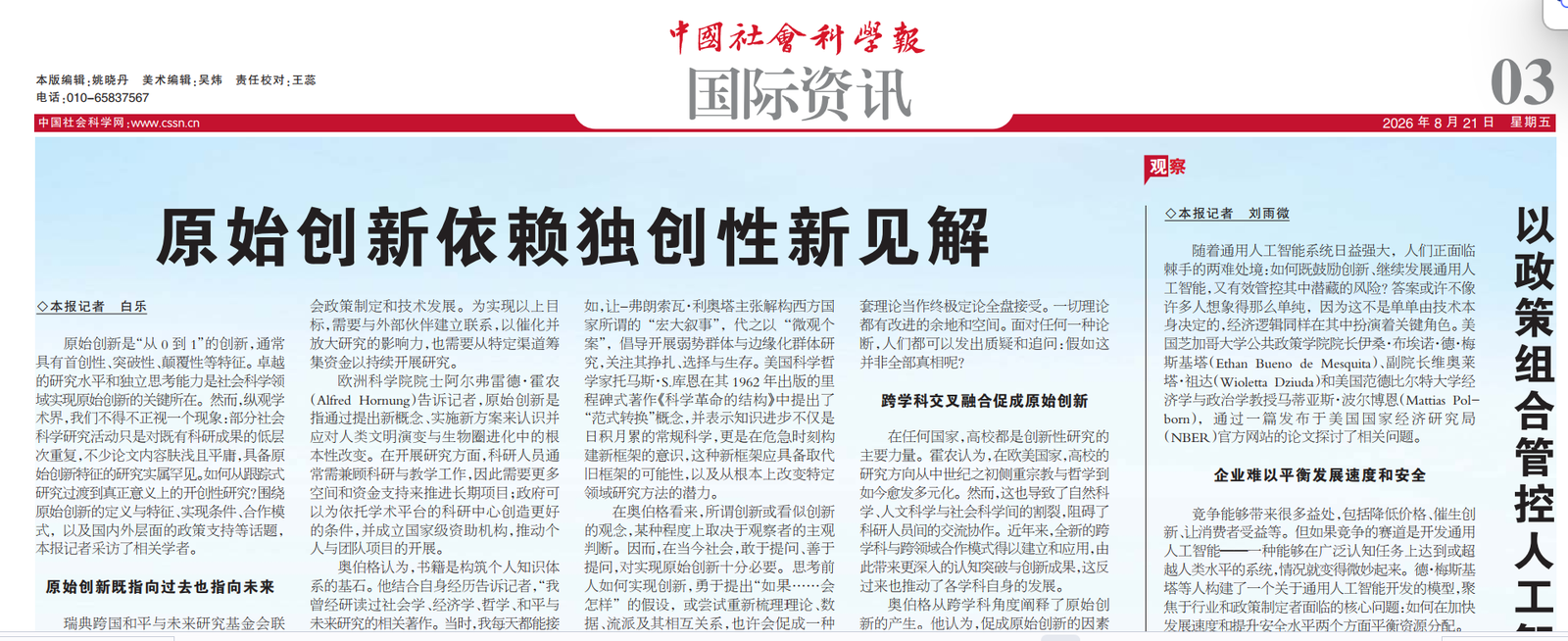
Jan ObergPhD, director, The Transnational Foundation for Peace and Future Research, TFFLund, Sweden October 2, 2026 This is my full original manuscript. The Chinese Academy of Social Science, CASS, makes two publications out if it. 1. China’s Five-year plan emphasized the capabilities of basic research and original innovation. It is regarded as the goal of the future social development, which, as required, should be significantly enhanced. Can you comment on the importance of original innovation in research and academic study? I believe it is easier to define “original innovation” in the natural sciences than in social sciences. The breaking points of what constitutes something new, or innovative, are not quite as sharp in the latter. But in both fields it is about opening up something that was closed, unseen, unexplored before – making manifest what was earlier latent. Innovations come in many forms and shapes – naming something that was not...
arctic-circle-map
The agreement is catastrophic both because of what it says and what it doesn’t mention. It reduces further the major asset of security policies: Freedom of action. Jan Oberg TFF director September 25, 2026 A couple of hours before the agreement was signed on September 22, 2026, I published the following 13 hypotheses about what it would most likely contain on TFF Substack (in English). I was wrong on only the first point. Contrary to what Trump had written on his Truth Social platform, it does not appear to come into force immediately. In fact, it turned out to be worse than even I had anticipated. After these hypotheses now come a number of reflections in light of what the agreement actually contains, and does not contain, as well as the way in which it has generally been presented by major media outlets and by the public-service broadcaster DR. My...
girl-5894831_1280
Below are TFF-related media mentions, comments, videos and social media posts published elsewhere but not on this homepage. We happen to catch and list only a fraction. Regarding video comments and debates, we recommend that you go to the TFF Video Channel on Substack where many of them are reproduced. Jan Oberg is a contributor to China Daily – 52 million daily clicks – and Global Times, CGTN and CCTV (the national television), China Investment, Xinhua News Agency and several others. Articles and videos on these media very often multiply into countless Chinese (and Western media) that re-post them from these main media. Thanks to The China Academy, his analyses, interviews and comments are frequently posted on YouTube channels such as Thinkers Forum and Wave Media. These videos are often re-posted on Bilibili (China’s YouTube), the China Content Center on TikTok, and on the Chinese edition of TikTok, Douyin.com. This means reaching hundreds of millions of viewers worldwide over a year. While there are too many to catch on all these...