Does President Donald Trump (aka “Fire and Fury”) know what a nuclear war would be like?

I ask the question because President Roland Reagan confessed he did not until he decided to look at some movies (once an actor, he was a cinema man), like “On the Beach” that depicted a nuclear war. The exercise changed his thinking and he became an anti-nuclear weapons militant. Together with Soviet President Mikhail Gorbachev they cut their nuclear stockpiles sharply.

They also came near an agreement to destroy all their nuclear weapons.

The blasts at the end of the Second World War in Hiroshima and Nagasaki can now be repeated hundreds of thousand times. The remains would not just be the broken arches of the Caesars, the abandoned viaducts and moss-covered temples of the Incas, the desolation of one of the pulsating hearts of Europe, Dresden, but millions of square miles of uninhabitable desolation and a suffering which would incorporate more agony than the sum of past history.

It would be a time when the living would envy the dead and it would be a world which might well have destroyed the legacy of law, order and love that successive generations have handed over the centuries to one another.

The mayor of Nagasaki recalled his memory of the American nuclear attack: “Nagasaki became a city of death where not even the insects could be heard. After a while, countless men, women and children began to gather for a drink of water at the river. Their hair and clothing scorched and their burnt skin hanging in sheets like rags. Begging for help they died one after the other in the water or in heaps on the banks”.

The chief of the Manhattan project that developed the first American nuclear test, Robert Oppenheimer, wrote, “At that moment there flashed through my mind a passage from the Bhagavad-Gita, the holy book of Hindus, “I am become Death, the Shatterer of Worlds.”

Arundhati Roy, the Booker prize-winning Indian novelist, wrote after the first Indian nuclear test in 1968, “If there is a nuclear war our foes will not be Pakistan, China nor America nor even each other. Our foes will be the earth itself. Our cities and forests, our fields and villages will burn for days. Rivers will turn to poison. The air will become fire. The wind will spread the flames. When everything there is to burn has burnt and the fires die, smoke will rise and shut out the sun. The earth will be enveloped in darkness, there will be no day- only interminable night.”

General George Lee Butler summed up his view of deterrence as head of the US Strategic Command (the man who is responsible for putting into effect a president’s order to begin a nuclear attack): “Here was an intellectual riddle of the most intricate kind – a puzzle to which there seemed to be no solutions. The wonderful title of Herman Khan’s book, “Thinking the Unthinkable”, captured the dilemma perfectly: that it is unthinkable to imagine the wholesale slaughter of societies, yet at the same time it appears necessary to do so, in the hope that you hit upon some formulation that will preclude the act; but in the process you may wind up amassing forces that engender the very outcome you hope to avoid. Perfect invulnerability would spell perfect vulnerability for your opponent, which of course he cannot accept. Consequently any balance struck is extremely unstable”.

What Butler has demonstrated is that although deterrence in the Cold War days was the aim, the competitive nuclear arms race effectively turned the doctrine of deterrence on its head. It became a circle that could never be squared. By conveying to the enemy the ability to retaliate massively when attacked your forces are in a state of alert that from the enemy’s point of view looks like you are preparing for a pre-emptive first strike. So he had better get his strike in first.

North Korea at the moment does not have enough nuclear warheads – around 60 at present – to make a first strike successful.

But over the years it can build enough to make one and to obliterate a good part of the US. The Chinese have a nuclear deterrent but with only around 260 missiles. That, China feels, is enough to do the job.

Threatening North Korea is counterproductive. It will just drive it to step on the gas.

Negotiating a freeze is the only way out. North Korea must freeze its nuclear program. But that means the US has to do its part: no more military exercises, no more overflights and a withdrawal of its anti-missile batteries. In fact they don’t work very well and are just a provocation both to North Korea and China. Without China’s help there will be no settlement.

Foreign affairs columnist, film-maker and author

Share

Related Posts

LONDON – It was the late president of France, Charles de Gaulle, who famously said, “Brazil has a great future, and it always will have.” With the first round of the Brazilian election over with the favourite to win, President Luiz Inacio Lula da Silva, coming under increasing scrutiny for corruption – the seemingly eternal Brazilian political disease – many observers seriously wonder if Brazil can ever unlock its enormous potential. Brazil has long lived out its personal fantasy of the archetypal relaxed, tolerant and gregarious country with Copacabana beach, the samba, the carnival and a great deal of sexual freedom, but all this has come at a price – the lack of discipline in both personal and public morality. The ingrained privileges of those who have already made it, together with the manipulative corruption of the established political class, make it difficult for Brazil to engage in the economic...
Lena Petrova of “World Affairs In Context” with more than half a million subscribers on YouTube wanted to explore what a peace researcher like me has to say about, among other things, the First and the Second Cold War and why eethics has disappeared from politics. I am particularly happy about this conversation that also yielded an amazing number of very appreciative comments on YouTube. No doubt, people are longing for alternatives, including peace perspectives.
Jan Oberg, TFF director April 28, 2026 In this third TFF Peace Pulse, I make the important distinction between the violence and the conflict that violence is a symptom of. If you want peace, focus on the underlying conflict because that is the key to resolution, peacemaking, and a better future for the parties. The West is obsessed with violence, just look around you – and 90+ per cent of the public debate is about military issues and other violence – totally wasted for peace. These Peace Pulses will only be published here a few times. You will also not find them on YouTube and Vimeo because both platforms have blocked TFF and me; you know, peace is dangerous these days. Most TFF’s videos since 2007 are now on Rumble.

Recent Articles

LONDON – It was the late president of France, Charles de Gaulle, who famously said, “Brazil has a great future, and it always will have.” With the first round of the Brazilian election over with the favourite to win, President Luiz Inacio Lula da Silva, coming under increasing scrutiny for corruption – the seemingly eternal Brazilian political disease – many observers seriously wonder if Brazil can ever unlock its enormous potential. Brazil has long lived out its personal fantasy of the archetypal relaxed, tolerant and gregarious country with Copacabana beach, the samba, the carnival and a great deal of sexual freedom, but all this has come at a price – the lack of discipline in both personal and public morality. The ingrained privileges of those who have already made it, together with the manipulative corruption of the established political class, make it difficult for Brazil to engage in the economic...
Below are TFF-related media mentions, comments, videos and social media posts published elsewhere but not on this homepage. We happen to catch and list only a fraction. Regarding video comments and debates, we recommend that you go to the TFF Video Channel on Substack where many of them are reproduced. Jan Oberg is a contributor to China Daily – 52 million daily clicks – and Global Times, CGTN and CCTV (the national television), China Investment, Xinhua News Agency and several others. Articles and videos on these media very often multiply into countless Chinese (and Western media) that re-post them from these main media. Thanks to The China Academy, his analyses, interviews and comments are frequently posted on YouTube channels such as Thinkers Forum and Wave Media. These videos are often re-posted on Bilibili (China’s YouTube), the China Content Center on TikTok, and on the Chinese edition of TikTok, Douyin.com. This means reaching hundreds of millions of viewers worldwide over a year. While there are too many to catch on all these...
How Oxford University Press allowed a personality‑driven narrative to masquerade as scholarship. Jan Oberg, dr hc, TFF director This article has also been published on TFF Substack where more readers react and withdraw their interviews from the project. A Special Issue in a scholarly journal is not an ordinary publication. It is a collective, curated […]

TFF on Substack

Discover more from TFF Transnational Foundation & Jan Oberg.

Most Popular

LONDON – It was the late president of France, Charles de Gaulle, who famously said, “Brazil has a great future, and it always will have.” With the first round of the Brazilian election over with the favourite to win, President Luiz Inacio Lula da Silva, coming under increasing scrutiny for corruption – the seemingly eternal Brazilian political disease – many observers seriously wonder if Brazil can ever unlock its enormous potential. Brazil has long lived out its personal fantasy of the archetypal relaxed, tolerant and gregarious country with Copacabana beach, the samba, the carnival and a great deal of sexual freedom, but all this has come at a price – the lack of discipline in both personal and public morality. The ingrained privileges of those who have already made it, together with the manipulative corruption of the established political class, make it difficult for Brazil to engage in the economic...
Below are TFF-related media mentions, comments, videos and social media posts published elsewhere but not on this homepage. We happen to catch and list only a fraction. Regarding video comments and debates, we recommend that you go to the TFF Video Channel on Substack where many of them are reproduced. Jan Oberg is a contributor to China Daily – 52 million daily clicks – and Global Times, CGTN and CCTV (the national television), China Investment, Xinhua News Agency and several others. Articles and videos on these media very often multiply into countless Chinese (and Western media) that re-post them from these main media. Thanks to The China Academy, his analyses, interviews and comments are frequently posted on YouTube channels such as Thinkers Forum and Wave Media. These videos are often re-posted on Bilibili (China’s YouTube), the China Content Center on TikTok, and on the Chinese edition of TikTok, Douyin.com. This means reaching hundreds of millions of viewers worldwide over a year. While there are too many to catch on all these...
How Oxford University Press allowed a personality‑driven narrative to masquerade as scholarship. Jan Oberg, dr hc, TFF director This article has also been published on TFF Substack where more readers react and withdraw their interviews from the project. A Special Issue in a scholarly journal is not an ordinary publication. It is a collective, curated […]
Read More
Imagen-thumbnail-The-Transnational-1
LONDON – It was the late president of France, Charles de Gaulle, who famously said, “Brazil has a great future, and it always will have.” With the first round of the Brazilian election over with the favourite to win, President Luiz Inacio Lula da Silva, coming under increasing scrutiny for corruption – the seemingly eternal Brazilian political disease – many observers seriously wonder if Brazil can ever unlock its enormous potential. Brazil has long lived out its personal fantasy of the archetypal relaxed, tolerant and gregarious country with Copacabana beach, the samba, the carnival and a great deal of sexual freedom, but all this has come at a price – the lack of discipline in both personal and public morality. The ingrained privileges of those who have already made it, together with the manipulative corruption of the established political class, make it difficult for Brazil to engage in the economic...
girl-5894831_1280
Below are TFF-related media mentions, comments, videos and social media posts published elsewhere but not on this homepage. We happen to catch and list only a fraction. Regarding video comments and debates, we recommend that you go to the TFF Video Channel on Substack where many of them are reproduced. Jan Oberg is a contributor to China Daily – 52 million daily clicks – and Global Times, CGTN and CCTV (the national television), China Investment, Xinhua News Agency and several others. Articles and videos on these media very often multiply into countless Chinese (and Western media) that re-post them from these main media. Thanks to The China Academy, his analyses, interviews and comments are frequently posted on YouTube channels such as Thinkers Forum and Wave Media. These videos are often re-posted on Bilibili (China’s YouTube), the China Content Center on TikTok, and on the Chinese edition of TikTok, Douyin.com. This means reaching hundreds of millions of viewers worldwide over a year. While there are too many to catch on all these...
Screenshot-2026-09-28-145821
How Oxford University Press allowed a personality‑driven narrative to masquerade as scholarship. Jan Oberg, dr hc, TFF director This article has also been published on TFF Substack where more readers react and withdraw their interviews from the project. A Special Issue in a scholarly journal is not an ordinary publication. It is a collective, curated […]
AliA
New pathbreaking theory-of-peace book by Iranian TFF Associate Dr Ali Akbar Alikhani August 27, 2026 Introduction Probably very few Westerners know that Tehran has a peace museum and that Tehran University has pioneered academic peace and conflict studies in the Muslim world, where this field is, regrettably, almost non-existent. Tehran University is the single most […]
HQAB7NMWUAA1gSk
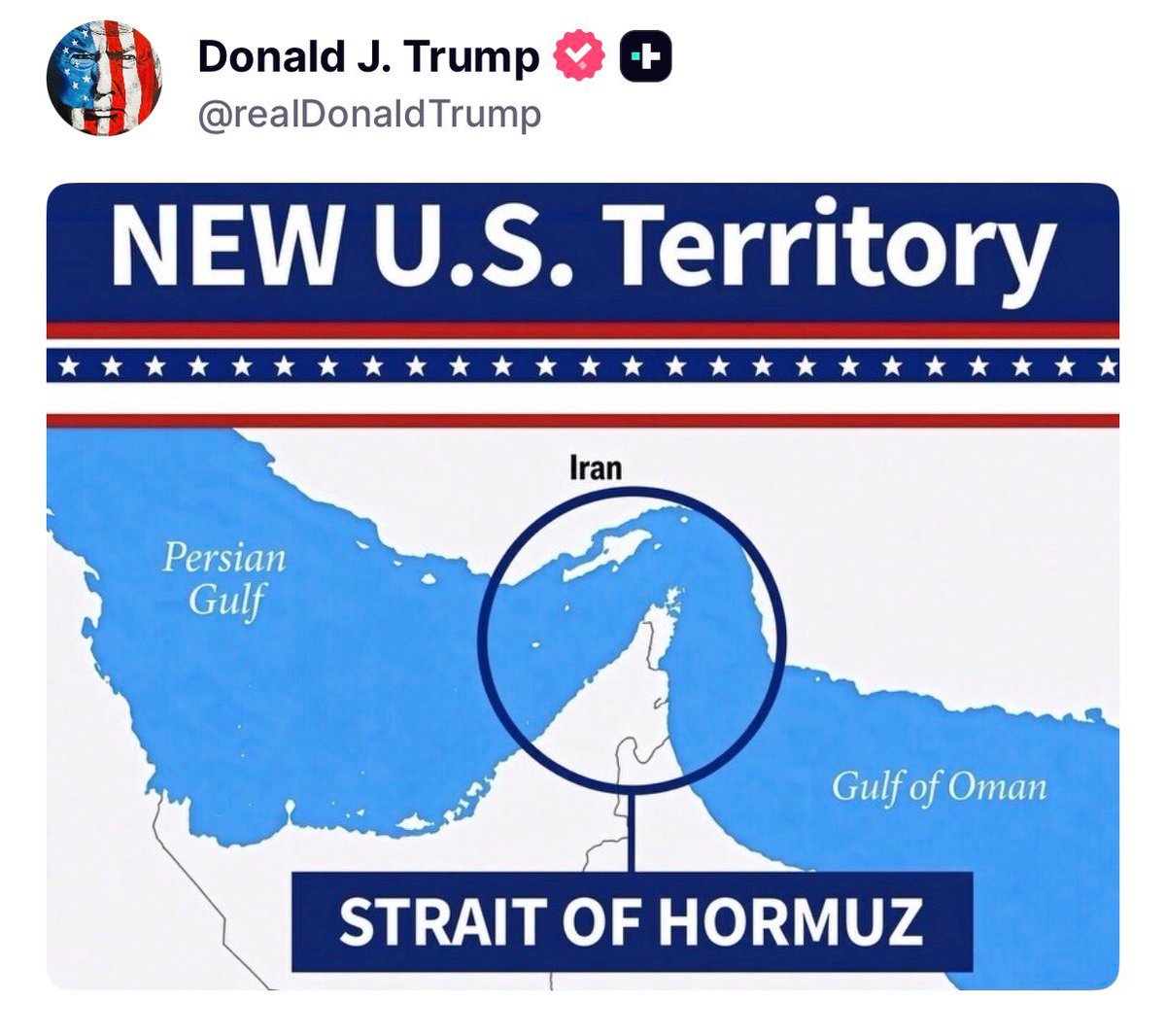
Jan ObergTFF director ☮️ When this morning – August 19, 2026 – I saw the above new US Trump map, I came to think of Frank Zappa, The Mothers of Invention, who said that politics is the entertainment division of the Military-Industrial Complex. That formulation beats many academic analyses – as you will have understood […]
21b7244b-c83e-46c1-ba23-556b21b9a0a8_1536x1024
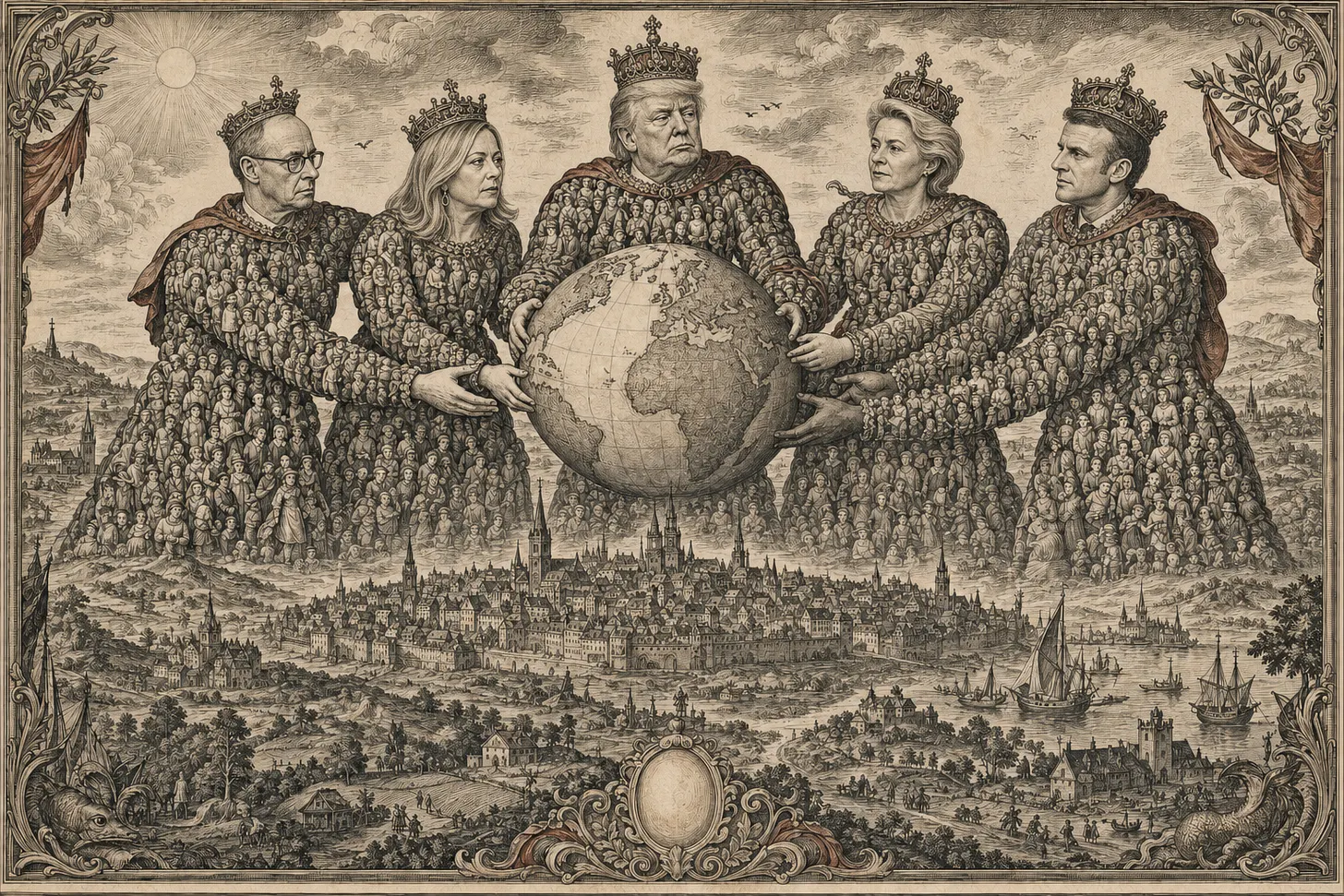
A Civilizational Interpretation of the West’s Body Politic Pascal Lottaz Associate professor at Ritsumeikan University in Kyoto and TFF Board member August 25, 2026 “How do we explain the self-defeating and self-harming policies of Western states? Europe seems to be happily deindustrializing, the US proxy war in Ukraine is killing hundreds of thousands (if not millions) […]