Global Warming – Environment

Showing 1-10 of 22 stories

Sort by
Categories

Year

Author / Contributor

Region

president-xi-climate-and-capital-media-economy-1200x675-1
Peter McKillop November 8, 2021 The Chinese president did not attend COP26, but China already has a master plan for climate action. Do you, President Biden? It may be one of the great ironies of COP26 that the leader of the nation that emits more carbon than the United States, India and the European Union combined is skipping the climate conference in Glasgow. For China and President Xi Jinping, it’s politics as usual. Perhaps it’s about maintaining COVID protocols, or he is still smarting from the new nuclear submarine deal between the U.S. and Australia. For whatever reason, President Xi will limit his COP presence to a video link. But Xi’s physical absence at the summit should not be mistaken for inaction on climate change. Besides a commitment to check the increase in greenhouse gas emissions in 2030 and reach net zero by 2060, China has quietly put together an...
Mahatma-gandhiquote
 Raghav Kaushik May 19, 2021 Gandhi is not well-known for his views on the environment. Indeed, in his vast output, there is little explicit mention of the environment. Yet, in Gandhi’s views, one finds a lot that is relevant to environmentalism. Like most great thinkers, Gandhi’s views are flawed; however we learn a lot by studying his views critically. Let us begin by examining Gandhi’s views on materialism and consumerism. In his lecture on economic and moral progress delivered in 1916, he offers one of the most searing critiques of materialism: “This land of ours was once, we are told, the abode of the gods. It is not possible to conceive gods inhabiting a land which is made hideous by the smoke and the din of mill chimneys and factories and whose roadways are traversed by rushing engines dragging numerous cars crowded with men mostly who know not what they...
itp-cra-china-march2017
The world’s rising powerhouse In 1986 on returning for my first 3-week visit to China, I wrote an article, “China: Key Player in a New World Game” in The Futurist, December 1986. I had been invited by China’s State Council at the recommendation of my good friends, Alvin and Heidi Toffler, best-selling authors of Future Shock (1970), who both had, and still, have a big following in China. This surprise invitation was to speak at “The First International Conference on Creativity”, co-sponsored by the United Nations Education & Scientific Cooperation Organization (UNESCO), along with Edward de Bono of Britain and US psychologist/philosopher Jean Houston, author of The Possible Human (1982). Mystified, I called the phone number in China of Professor Xu, the convenor at Shanghai-based Jiaotong University, and asked why I had been invited to this event, all expenses paid. Professor Xu replied in perfect English, “In China, you are a great scholar and your...

johnavery
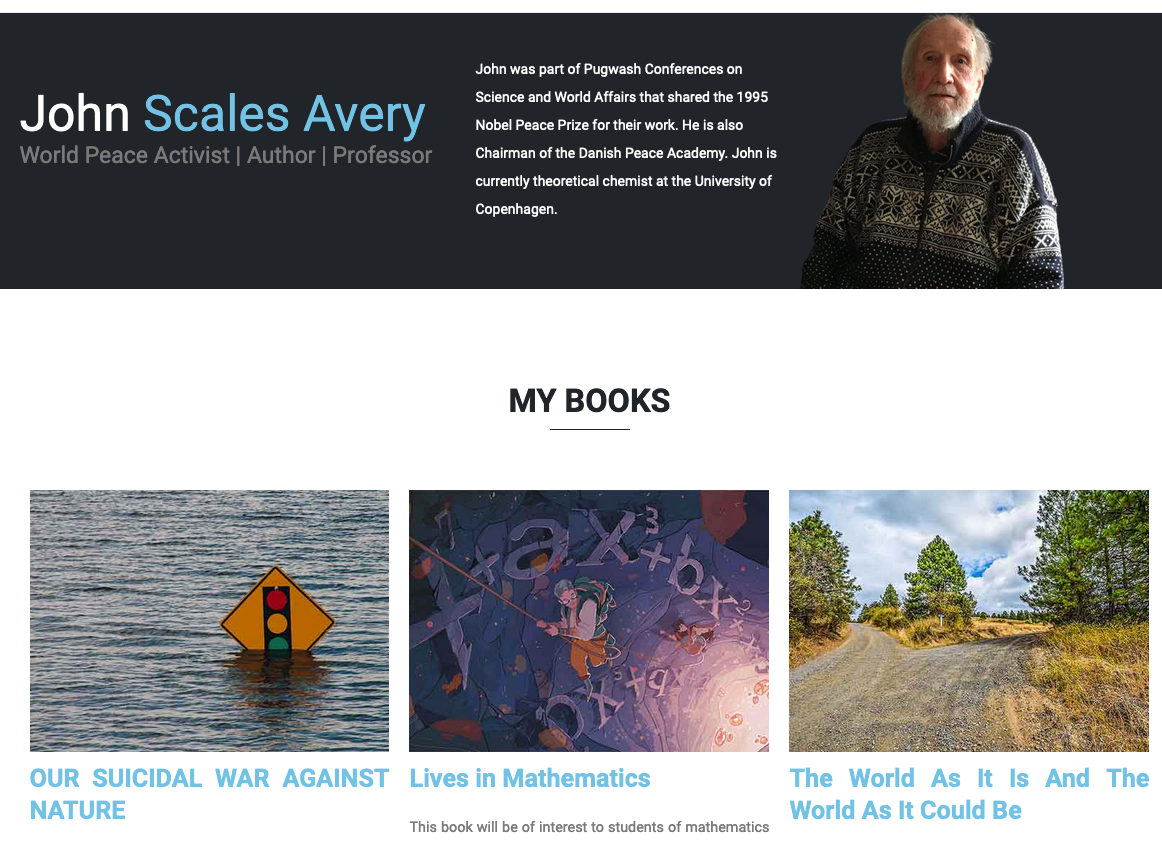
A new report, published on 14 March, 2021, in the Royal Swedish Academy of Sciences’ journal Ambio, points out that humanity is hurtling towards destruction unless we have the collective wisdom to change course quickly. The Ambio article was written as part of the preparation of a meeting of Nobel Prize winners to discuss the state of the planet. The virtual meeting will be held on April 26-28, 2021. We Must Achieve a Steady-State Economic System A steady-state economic system is necessary because neither population growth nor economic growth can continue indefinitely on a finite earth. No one can maintain that exponential industrial growth is sustainable in the long run except by refusing to look more than a short  distance into the future. Of course, it is necessary to distinguish between industrial growth, and growth of culture and knowledge, which can and should continue to grow. Qualitative improvements in human society are possible and...
CLimate-change-850x567-1
Image credit: Pixabay Dr Andrew Glikson January 20, 2021 As the world is trying to hopefully recover from the tragic effects of COVID-19, it is reminded there is no vaccine for the existential threat for its life support systems posed by global warming, nor for the looming threats of future wars and nuclear wars fueled by warmongers and $trillion preparations by military-industrial complexes. Originally published at Countercurrents Between 1740 and 1897 some 230 wars and revolutions in Europe suggested war remained deeply ingrained in the human psyche and civilization. The question is whether the currently approaching catastrophes can be averted. No one wishes to believe in the projections made in the recent book ‘The Uninhabitable Earth’, except that these projections, made by David Wallace-Wells, are disturbingly consistent with the current shift in state of the climate toward +4 degrees and even +6 degrees Celsius above pre-industrial levels, as indicated by the current trends (Figure 1) and...
WomanOnRoad_90cm_2000_150dpi-kopia
When the history of the 21st century is to be written, there is no doubt that the story of China’s eradication of poverty – i.e. lifting about 700 million people out of it – will be seen as a milestone, a turning point for humanity. China’s poverty rate fell from 88 per cent in 1981 to 0.7 per cent in 2015, as measured by the percentage of people living on the equivalent of US$1.90 or less per day in 2011 purchasing price parity terms. On November 23rd 2020, China announced that it had eliminated absolute poverty nationwide by uplifting all of its citizens beyond its set ¥2,300 (CNY) per year, or less than a dollar per day poverty line. This result has been achieved within just four decades, after Chinese leader Deng Xiaoping declared the Open Door Policy in December 1978. Very few Western mainstream media have seen it fit...
AleppoTank2020_1180-72dpi
Against the Institution of War – announcing the publication of the book, The Ecological Impact of Militarism As we start the 21st century and the new millennium, our scientific and technological civilization seems to be entering a period of crisis. Today, for the first time in history, science has given to humans the possibility of a life of comfort, free from hunger and cold, and free from the constant threat of infectious disease. At the same time, science has given us the power to destroy civilization through thermonuclear war, as well as the power to make our planet uninhabitable through pollution and overpopulation. The question of which of these alternatives we choose is a matter of life or death to ourselves and our children. The crisis of civilization, which we face today, has been produced by the rapidity with which science and technology have developed. Our institutions and ideas adjust...
crisis-with-words
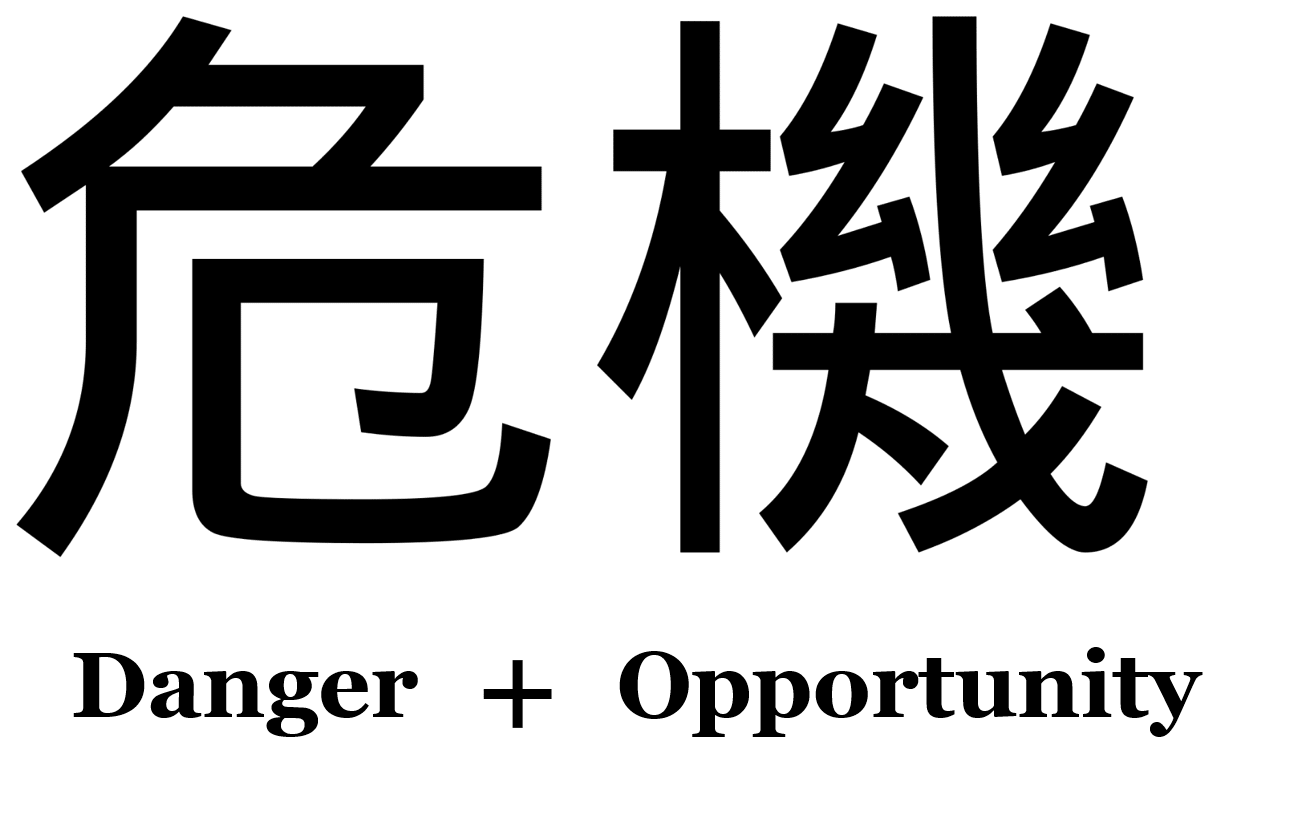
In written Chinese, the word “crisis” is represented by two characters. One of these, taken alone, means “danger”. The other, by itself, means “opportunity”. A crisis nearly always leads to great change. There is a danger that this will be a change for the worse. But there also is the opportunity to change society for the better – to reform and improve it. Both paths are present in a crisis like our present one. We must strive with all our strength to make society take the right path. Our present crisis In the midst of the COVID-19 pandemic, which is in itself a crisis, many American cities have erupted in massive protests over the senseless killing by police of yet another black man – George Floyd. The country is deeply divided. Throughout the world there have been anti-racist protests, partly in sympathy with the US protesters, and partly because racism...
jonathanpower
Shouldn’t we be Panglossian when it comes to the progress now being made to defeat the Coronavirus? Pangloss in his youth was unreasonably optimistic. He was in Voltaire’s novel “Candide” Candide’s mentor, and coined the phrase, “All this is for the best in this best of all possible worlds.” But how can one be Panglossian, you might say, when Russia still seems to be bogged down with the pandemic and Britain now has the developed world’s highest number of deaths per capita, and the US recently reached a total of 100,000 deaths? Partly because there are Panglossian islands, some very large like Germany, Vietnam and South Korea, which started early as soon as the warnings from China came in and chose to have less severe lockdowns or none at all. Germany has shown the way in Europe with its policy of intensive testing and tracing and, as a result, never...
Abby-Brockway
Jeff McMahon March 20, 2020 In a new book, the woman who led the negotiations for the Paris Agreement calls for civil disobedience to force institutions to respond to the climate crisis. Originally posted on Transcend.org on February 24, 2020, here “It’s time to participate in non-violent political movements wherever possible,” Christiana Figueres writes in “The Future We Choose: Surviving the Climate Crisis,” which will be released tomorrow by Knopf. Figueres served as executive secretary of the United Nations Framework Convention on Climate Change (UNFCCC) from 2010-16. She co-authored the book with her strategic advisor, Tom Rivett-Carnac. The two also support voting: “Large numbers of people must vote on climate change as their number one priority,” they write. “As we are in the midst of the most dire emergency, we must urgently demand that those who seek high office offer solutions commensurate with the scale of the problem.” But they...
david-loy
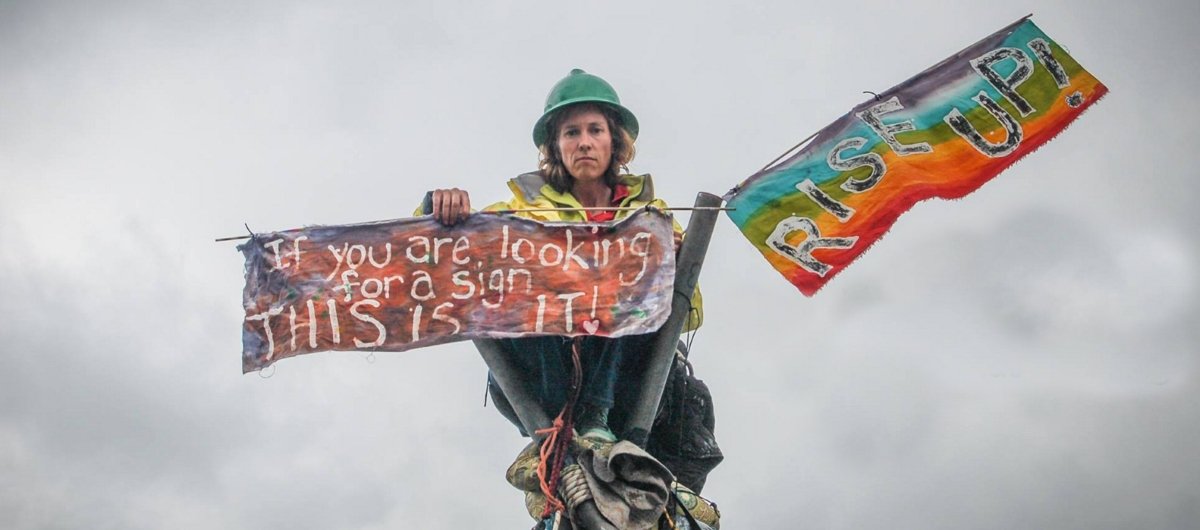
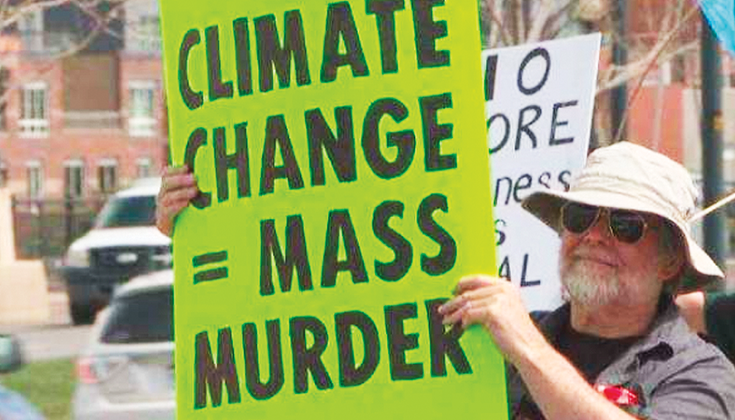
Photo: David Loy at an Extinction Rebellion protest in Denver. Photo by denver.cbslocal.com How do bodhisattvas respond to the greatest crisis of our time? Appropriately, says Buddhist teacher, activist and TFF Associate, David Loy. By David Loy One of my favorite Zen stories is short and simple. A student asks the master, “What is the constant activity of all the buddhas and bodhisattvas?” In other words, what’s special about the day-to-day lives of awakened people? The master replies: “Responding appropriately.” That’s all. No special powers, except being fully attentive to what’s actually happening and acting accordingly. “We don’t know what is possible, we don’t know what will work, but we do our best.” That’s an easy thing to do in a monastery. When the bell rings, you put on your robe and go to the Buddha Hall for meditation. But what about when one leaves the monastery gates and steps...
guerra-del-golfo-naturaleza-viva_1718483347
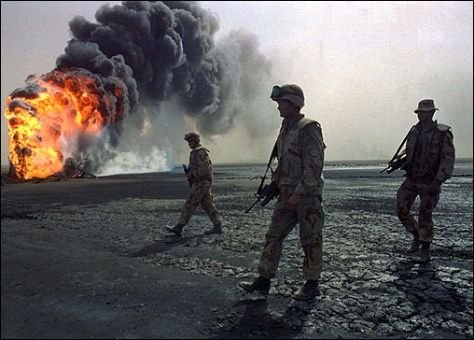
By Caroline Davies February 17, 2020 Extinction Rebellion (XR) US has four Demands for our governments, local and national, the first of which is “Tell the Truth”. One truth that is not being told or spoken about openly, is the carbon footprint and other sustainability impacts of the US Military.  Originally posted on WorldBeyondWar on February 4, 2020 here I was born in the UK and, although I am now a US citizen, I have noticed that people are very uncomfortable saying anything negative about the US Military here. Having worked with many injured veterans as a physical therapist, I know how important it is for us to support our veterans; many Vietnam veterans still feel hurt about being blamed and discriminated against when they came home from that war. As horrific as wars are for everyone involved, especially the civilians in the countries we are attacking, the soldiers follow...
Categories

Year

Author / Contributor

Region