Civilization and philosophy

Showing 1-10 of 23 stories

Sort by
Categories

Year

Author / Contributor

Region

Eclecticism_90cm_300dpi_1200_100dpi
Foreword The Board of The Transnational Foundation in Sweden has decided to publish an easy-to-read, scholarly anthology that addresses one of the most important – and potentially dangerous – issues of our time: Why are the political, economic, and medialised Western images of China so consistently negative – and what can you do to understand China better? These images may be expressions of a political will to present only various shades of grey and black with the aim of building a consciousness about China as an enemy and not a partner. They may also be seen as a sort of world-dominating ethos of ignorance based upon the assumption that “we’ve-got-nothing-to-learn-from-others,’ we are the teacher. Another possibility is that the West, deep down, feels that it is getting relatively weaker from a macro-historical perspective and comforts itself with denial and accusations against “the other” of being the reason for its manifest...
freepik__primitive-violent-caveman__10528
AI generated imagine on Freepik A 2-minute “appetiser” for an extended interview by China’s CGTN. More to come!
WechatIMG754
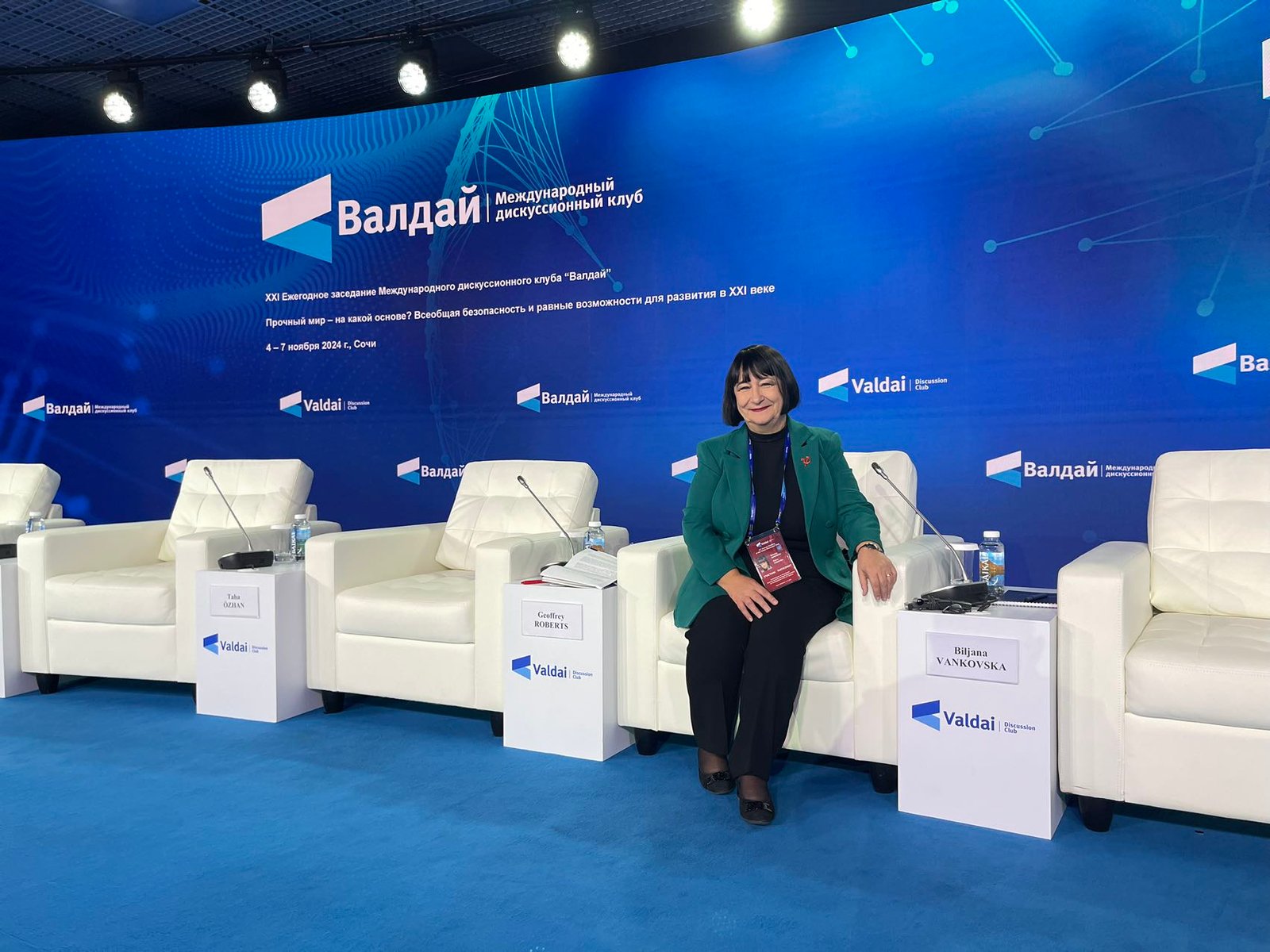
A report from the Valdai Discussion Club event in November 2024 Professor and director of the Global Changes Centre in Skopje, Macedonia and TFF Board member The intelligence services have probably noted this meticulously, but let me publicly share my experience of attending, for the first time, the annual conference of the renowned Valdai Discussion Club in Russia. For 20 years now, it has convened near Sochi, nestled among the stunning mountain peaks of the Russian Caucasus. Personally, this year stands out for many reasons. My first visits to China, and now to Russia, are undoubtedly among the most significant. Due to the format of the conference, I can’t describe Russia to you in the same way I recounted my experience in China. Over four days, around 130 participants (professors, analysts, strategists, diplomats, former generals, journalists—mostly from foreign countries, with fewer from Russia) representing over 50 nations engaged in discussions...

Rapport-Top_small
I. Introduction The initiative for the “Nordic Delegation to China, September 7-15, 2024” was taken from the Norwegian side. Journalist and former editor Arild Vollan wanted to investigate claims in the media about an ongoing genocide against the Uyghurs in the autonomous region of Xinjiang in western China. Vollan selected an independent, cross-disciplinary and cross-political delegation group consisting of people who have worked with China and who wanted to get personal impressions of the conditions described in the previous section. The delegation consisted of: The delegation itself developed the project’s mandate. Following an excursion to Xinjiang province, the delegation’s mandate was to clarify whether observations made during the trip substantiated claims in the media that there is an ongoing genocide in Xinjiang today. Arild Vollan prepared the excursion program in dialogue with Thore Vestby, who has previously visited the province. The logistics were set up in dialogue with the Chinese Embassy in...
WarColl_PaixQuand_small_100dpi
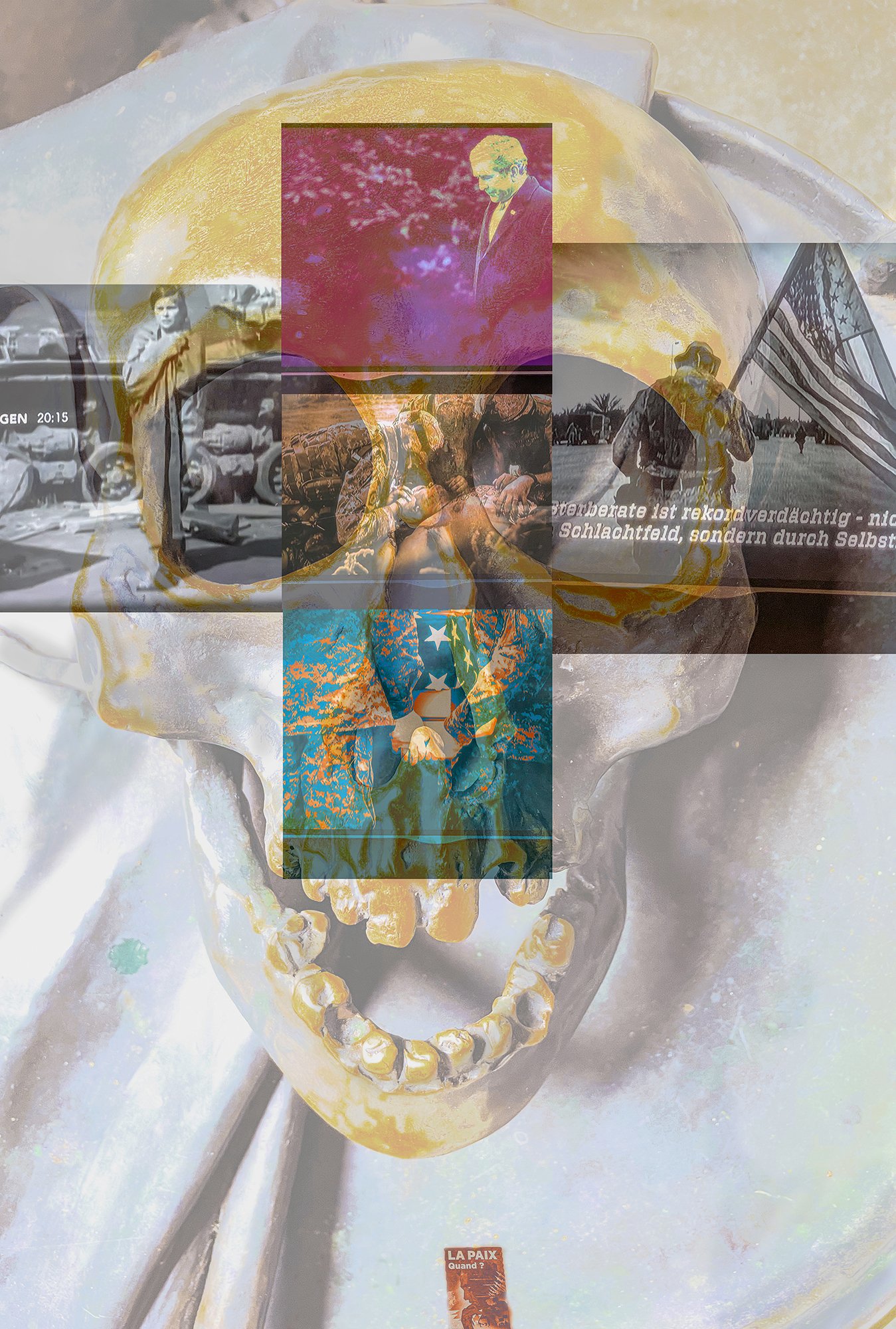
Throughout modern world history, great powers, empires and civilisations have succeeded each other. No one has stayed on top indefinitely – there is a birth, the new thing grows creatively and materially until it reaches a peak and perhaps begins to relax, and then sooner or later it goes downhill – in relation to new powers that emerge – only to lose the leadership role completely and become one among many in a new world order. This is the natural law of global society – of humanity – and it is quite inexorable. The downturn can have many (combinations) of causes, here are some of the classic ones in macro-history: weakening innovation and economic growth; over-militarisation and lost wars; wanting to rule the whole world but lacking the necessary leadership capacity; declining legitimacy in the eyes of others; others learning from us but coming up with new social constructs that...
Eclecticism_90cm_300dpi_1200_100dpi
Making sense of China by snapshot is impossiblewithout watching the film This is a chapter in a TFF anthology in the making – “If You Want To Understand China.” Foreword, Introduction, Authors and Table of Content here. Peter PeverelliEnemy or Mirror Image? ‘Scholars once thought secularisation is an irreversible trend in the age of modernity,’ a note by Chinese sociologist Zhao Dingxin (赵鼎新), Professor in Sociology at Zheijiang University (Hangzhou) and the University of Chicago when explaining the Daoist perspective that history does not progress toward some teleological terminus that can “lay claim to universal or eternal truths … because the significance and function of any causal forces invariably change with different contexts.” The Daoist perspective stands in stark contrast with the essay “The End of History” written by American political scientist Francis Yoshihiro Fukuyama in 1989. Fukuyama mentioned that the triumph of the West, of the Western idea, is evident first of all in...
pavel-homenko-ZScaWhnb5Xg-unsplash
Moscow by night. Photo by Pavel Homenko on Unsplash And it means turning its back to the West once and for all, finding itself and joining the non-West Majority World Dmitry Trenin April 23, 2024 When President Vladimir Putin, back in February 2022, launched Russia’s military operation in Ukraine, he had specific, but limited objectives in mind. It was essentially about assuring Russia’s security vis-à-vis NATO. However, the drastic, expansive and well-coordinated Western reaction to Moscow’s moves – the torpedoing of the Russo-Ukrainian peace deal and the mounting escalation of the US-led bloc’s involvement in the conflict, including its role in deadly attacks inside Russia – have fundamentally changed our country’s attitude towards our former partners. We no longer hear talk about “grievances” and complaints about “failures in understanding.” The last two years have produced nothing less than a revolution in Moscow’s foreign policy, more radical and far-reaching than anything...
mcompass
With the superego dissolved, there is no felt obligation to judge oneself in reference to any external or abstract standard. Narcissistic tendencies flourish. A similar psychology removes the requisite for experiencing shame. Is there now a moral void at the heart of Western societies?  That question haunts us as governments in the United States and Europe act as accomplices in Israel’s atrocious crimes against the Palestinians. The Jewish state’s conduct meets the standard of genocide as stated in the United Nations Convention on Genocide, of which they all are signatories. Confirmation is likely to come soon in a conclusive determination by the International Court of Justice. The ICJ already in January recognized a prime facie case for genocide. The UN’s top court ordered Israel to take all measures to prevent genocidal acts in Gaza. The ICJ found it did have jurisdiction on the matter, and decided there was a plausible case under the 1948 Genocide Convention. At...
cti
This 7-minute video was shot , posted on Wave Media on YouTube and then picked up by Taiwan’s CTi News and the Chinese Global Times magazine. This means a very large audience. Here is the link to see the many comments it created. I’m simply trying, in the shortest possible manner, to summarise what is happening these years from a macrohistorical perspective. If you think this way of thinking is interesting, why not reward TFF for bringing you fresh, different perspectives and always with a touch of a better future and a more peaceful world? It’s fast, simple and safe. Just hit this Big Red Button
ussoldiers_afghanistan_military_08202021getty-696x391-1
Richard E. Rubenstein October 23, 2023 Everyone knows that the United States is the world’s leading military power, with an annual “defense” budget approaching one trillion dollars, considerably more than the arms budgets of the next 144 nations combined. The U.S. employs more than 3.5 million active military and civilian personnel and maintains more than 750 military bases located in some 80 nations around the world. The nation’s most profitable and fastest-growing manufacturing sector is the military-industrial complex, which employs more than 4 million workers and supplies approximately 40 percent of the total weaponry used by the world’s armed forces. In the production and deployment of nuclear weapons, of course, the U.S. is absolutely dominant. Originally published at Transcend on October 2, 2023 All this is common knowledge. Yet, in the heartland of arms production and preparation for war, there is virtually no debate about militarism. Only a handful of...
fred-ger
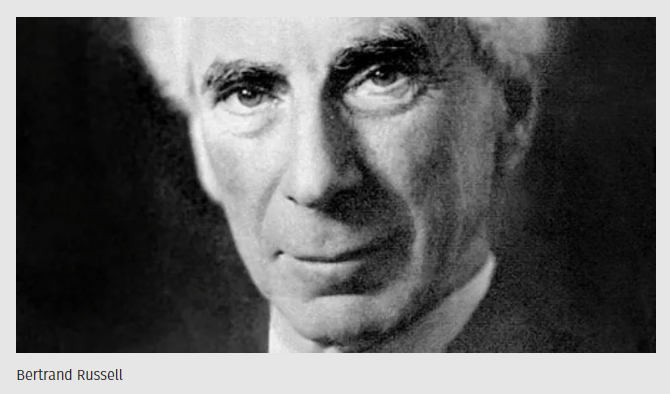
Maria Popova October 19, 2023 “To be a good human being is to have a kind of openness to the world, an ability to trust uncertain things beyond your own control,” philosopher Martha Nussbaum concluded in considering how to live with our human fragility. And yet in the face of overwhelming uncertainty, when the world seems to splinter and crumble in the palm of our civilization’s hand, something deeper and more robust than blind trust is needed to keep us anchored to our own goodness — something pulsating with rational faith in the human spirit and a profound commitment to goodness. Originally published at The Marginalian That is what Bertrand Russell (May 18, 1872–February 2, 1970) explores in the out-of-print treasure New Hopes for a Changing World (public library), composed a year after he received the Nobel Prize, while humanity was still shaking off the dust and dread of its Second World War and already shuddering with the catastrophic...
the-starry-night
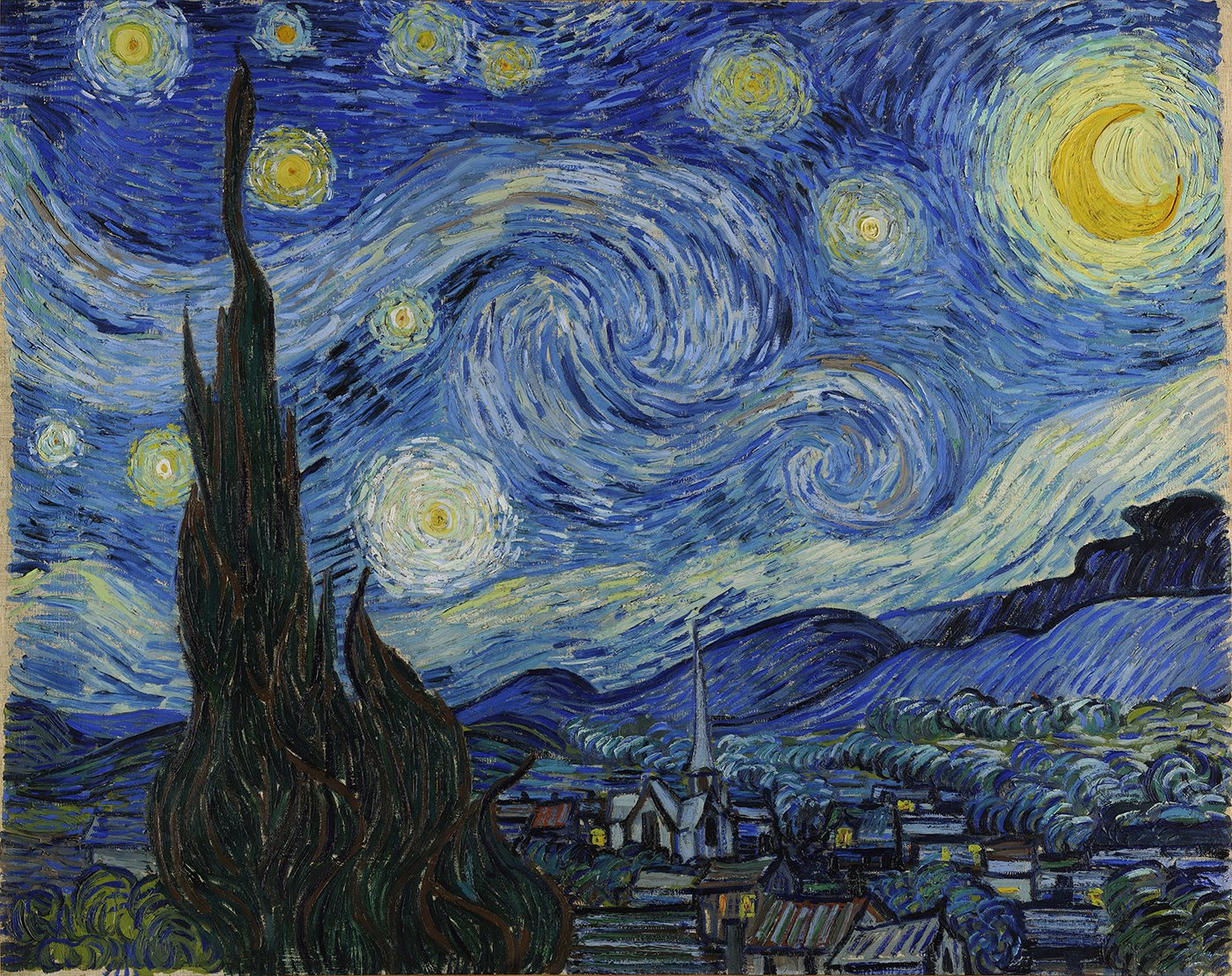
The Starry Night by Vincent van Gogh, 1889 Edward J. Curtin, Jr. August 29, 2023 Originally published on Curtin’s homepage on August 11, 2023 Because there is so much personal anguish, unhappiness, and human mental and physical suffering in the world, many people often wonder how they might personally change to find happiness, contentment, or some elusive something. Or even how to change other people, as if that arrogant illusion could ever work. This question of significant personal change is usually couched within the context of narrow psychological analyses.  This is very common and is a habit of mind that grows stronger over the years.  People are reduced to their family upbringings and their personal relationships, while the social history they have lived through is dismissed as irrelevant. The United States is very much a psychological society.  Sociological and historical analyses are considered insignificant to people’s identities.  It’s as if...
Categories

Year

Author / Contributor

Region