LONDON– Those who sweated blood and tears to bring peace to Cambodia six years ago can be forgiven if they now say they see very little causal relationship between the magnitude of their efforts and the result now at hand–the coup d’etat by Hun Sen and the effective suspension of civil liberties.

The Cambodian veterans and the rest of those who labor wearily in the vineyard of peacemaking are manifestly at a loss what to do next. It is somewhat of a cruel irony that the Secretary-General of the United Nations has deployed as his envoy to Cambodia Thomas Hammarberg who for years, as a brilliantly effective secretary-general of Amnesty International, did much to focus the spotlight of global attention on the gruesome details of the Cambodian genocide. Now it is if, in a perverse retribution for those days, he has to pay personal penance and go back and watch, perhaps, a new round of the “killing fields,” this time only to wring his hands on behalf of an impotent international community.

But Mr. Hammerberg, like most of those in the peacemnaking industry, is of patient disposition. He knows full well that the relationship between external intervention and the outcome of a conflict is an uncertain science. What we do know, alas, is that negotiated settlements have led to renewed warfare within five years in about 50% of cases. Most civil wars in history have ended with the outright military victory of one side over another. And the most stable peace settlements in civil wars have been those achieved by military victory, rather than by negotiations. If it weren’t for the fact that these military victories usually come with wide-spread human rights abuses, atrocities, genocide and environmental degradation, then we should probably just let nature run its course. Indeed, this was effectively the outside world’s attitude during the recent crisis in Zaire, as it was not so long ago in Uganda and, more recently, in Ethiopia, both now, as it happens, very successful economic recovery stories.

Nevertheless, in eight out of ten cases the results of military victory are not as in Uganda or Ethiopia. It is on-going murder and mayhem, as it is right now in Zaire, Rwanda and Afghanistan and, as it shows all the signs of being, in Cambodia.

If peacemaking is an infant industry, all the more reason to try and fashion some new tools–what Georgetown University professor, Charles King, calls antidotes to “the array of incentives to continue the violence.” While outsiders have little leverage over the central elements of irrationality, contested values and identities that propel the conflict, they can work at the margins to build incentives that will dampen the violence. In this way it is possible to influence the calculations of belligerents on the pluses of a negotiated settlement.

Of course, as Clausewitz wrote, everything in war is simple, but the simplest thing is very difficult. Applying the above approach to a situation as complex and bloody as Cambodia is never going to be straightforward. But, to paraphrase Clausewitz again, war is not just an act of senseless passion. Belligerents often calculate the relative costs of continuing the conflict versus reaching some kind of compromise settlement. This certainly seems to fit the case of Hun Sen who was ready to live with the compromise of the last elections, as long as he got more than his 50% share out of it.

This is why outsiders must stay engaged with Cambodia. Already the threat of a cut-off of foreign aid has seemed to have had a sobering effect on Hun Sen, despite all his bluster. He has now promised new elections.

The post-Cold War international community should take heart not just from this new commitment by Hun Sen but from its recent string of negotiating successes. Since 1988 major civil wars in Namibia, El Salvador, Nicaragua, Mozambique, Guatemala and South Africa have been wound up, all, apart from South Africa, because of direct outside assistance. The actual number of hot wars–both inter-state and intra-state–has decreased considerably since 1989. Without a shadow of doubt the new environment of international cooperation has produced a more benign world than existed in the dark days of the Cold War. No superpower is there to stir things up in order to throw mud in its rival’s eyes. According to a 1996 U.S. government report the number of persons threatened by on-going wars is now down to 42 million. Despite Rwanda, despite Zaire, Afghanistan, Liberia, Bosnia and Cambodia, and all the other places that grabbed the headlines, only around 0.7% of humanity is being hurt by war at the present time, the lowest figure in its recorded history.

This suggests that this is not the moment to give up on Cambodia. The most intractable of all the civil wars now in process, it may well be. Hun Sen’s military victory may be indeed the quickest road to peace, as the thin science of peacemaking suggests. But the international community has leverage to demand more than peace as the absence of war. Democracy and human rights must be allowed to flourish in Cambodia once again. We must keep muscling in on that until we get it.

Foreign affairs columnist, film-maker and author

Share

Related Posts

Photos © TFF 2000 Read PressInfo 90 “Lift the Sanctions and Bring More Aid to Yugoslavia” See Pictures from Belgrade © TFF 2000 Please reprint, copy, archive, quote or re-post this item, but please retain the source.
LONDON – So far so good, at least on the wider level. While internally Iraq seems on the edge of chaos, the much heralded clash of civilizations between the Muslim and Judaeo-Christian worlds has yet to become apparent. We have anger and despair aplenty in the Arab and Muslim worlds. But very little rushing to the standard and there was no great pilgrimage of warriors to join the fight, as happened when the Soviet Union invaded Afghanistan twenty years ago, and then, having driven the Red Army out, were left to ferment in that mountainous redoubt. With the armaments supplied by the CIA the mujahidin were transformed into Al Qaeda that became, for a relatively brief moment as these things go, ‘the greatest threat to the homeland that America has ever known.’ Nevertheless a ‘Cold War’ between much of the Muslim world and the West is certainly in full swing. Winston...
The Challenge of Nuclear Weaponsin the Twenty-first CenturyA Path Forward The peoples and governments of the world face an urgent challenge relating to weaponry of mass destruction and particularly to nuclear weaponry.  At the crossroads of technology, terrorism, geopolitical ambition, and policies of preemption are new and potent dangers for humanity. Despite ending the nuclear standoff of the Cold War era, nuclear weaponry is again menacing the peoples of the world with catastrophic possibilities.  We recognize the need for any government to pursue its security interests in accordance with international law; and further, we recognize that distinctive threats to these interests now exist as a result of an active international terrorist network having declared war on the United States and its allies. Nonetheless, we reject the assessment of the current US administration that upgrading a reliance on nuclear weapons is in any sense justified as a response. We find it...

Recent Articles

LONDON – It was the late president of France, Charles de Gaulle, who famously said, “Brazil has a great future, and it always will have.” With the first round of the Brazilian election over with the favourite to win, President Luiz Inacio Lula da Silva, coming under increasing scrutiny for corruption – the seemingly eternal Brazilian political disease – many observers seriously wonder if Brazil can ever unlock its enormous potential. Brazil has long lived out its personal fantasy of the archetypal relaxed, tolerant and gregarious country with Copacabana beach, the samba, the carnival and a great deal of sexual freedom, but all this has come at a price – the lack of discipline in both personal and public morality. The ingrained privileges of those who have already made it, together with the manipulative corruption of the established political class, make it difficult for Brazil to engage in the economic...
Below are TFF-related media mentions, comments, videos and social media posts published elsewhere but not on this homepage. We happen to catch and list only a fraction. Regarding video comments and debates, we recommend that you go to the TFF Video Channel on Substack where many of them are reproduced. Jan Oberg is a contributor to China Daily – 52 million daily clicks – and Global Times, CGTN and CCTV (the national television), China Investment, Xinhua News Agency and several others. Articles and videos on these media very often multiply into countless Chinese (and Western media) that re-post them from these main media. Thanks to The China Academy, his analyses, interviews and comments are frequently posted on YouTube channels such as Thinkers Forum and Wave Media. These videos are often re-posted on Bilibili (China’s YouTube), the China Content Center on TikTok, and on the Chinese edition of TikTok, Douyin.com. This means reaching hundreds of millions of viewers worldwide over a year. While there are too many to catch on all these...
How Oxford University Press allowed a personality‑driven narrative to masquerade as scholarship. Jan Oberg, dr hc, TFF director This article has also been published on TFF Substack where more readers react and withdraw their interviews from the project. A Special Issue in a scholarly journal is not an ordinary publication. It is a collective, curated […]

TFF on Substack

Discover more from TFF Transnational Foundation & Jan Oberg.

Most Popular

LONDON – It was the late president of France, Charles de Gaulle, who famously said, “Brazil has a great future, and it always will have.” With the first round of the Brazilian election over with the favourite to win, President Luiz Inacio Lula da Silva, coming under increasing scrutiny for corruption – the seemingly eternal Brazilian political disease – many observers seriously wonder if Brazil can ever unlock its enormous potential. Brazil has long lived out its personal fantasy of the archetypal relaxed, tolerant and gregarious country with Copacabana beach, the samba, the carnival and a great deal of sexual freedom, but all this has come at a price – the lack of discipline in both personal and public morality. The ingrained privileges of those who have already made it, together with the manipulative corruption of the established political class, make it difficult for Brazil to engage in the economic...
Below are TFF-related media mentions, comments, videos and social media posts published elsewhere but not on this homepage. We happen to catch and list only a fraction. Regarding video comments and debates, we recommend that you go to the TFF Video Channel on Substack where many of them are reproduced. Jan Oberg is a contributor to China Daily – 52 million daily clicks – and Global Times, CGTN and CCTV (the national television), China Investment, Xinhua News Agency and several others. Articles and videos on these media very often multiply into countless Chinese (and Western media) that re-post them from these main media. Thanks to The China Academy, his analyses, interviews and comments are frequently posted on YouTube channels such as Thinkers Forum and Wave Media. These videos are often re-posted on Bilibili (China’s YouTube), the China Content Center on TikTok, and on the Chinese edition of TikTok, Douyin.com. This means reaching hundreds of millions of viewers worldwide over a year. While there are too many to catch on all these...
How Oxford University Press allowed a personality‑driven narrative to masquerade as scholarship. Jan Oberg, dr hc, TFF director This article has also been published on TFF Substack where more readers react and withdraw their interviews from the project. A Special Issue in a scholarly journal is not an ordinary publication. It is a collective, curated […]
Read More
Imagen-thumbnail-The-Transnational-1
LONDON – It was the late president of France, Charles de Gaulle, who famously said, “Brazil has a great future, and it always will have.” With the first round of the Brazilian election over with the favourite to win, President Luiz Inacio Lula da Silva, coming under increasing scrutiny for corruption – the seemingly eternal Brazilian political disease – many observers seriously wonder if Brazil can ever unlock its enormous potential. Brazil has long lived out its personal fantasy of the archetypal relaxed, tolerant and gregarious country with Copacabana beach, the samba, the carnival and a great deal of sexual freedom, but all this has come at a price – the lack of discipline in both personal and public morality. The ingrained privileges of those who have already made it, together with the manipulative corruption of the established political class, make it difficult for Brazil to engage in the economic...
girl-5894831_1280
Below are TFF-related media mentions, comments, videos and social media posts published elsewhere but not on this homepage. We happen to catch and list only a fraction. Regarding video comments and debates, we recommend that you go to the TFF Video Channel on Substack where many of them are reproduced. Jan Oberg is a contributor to China Daily – 52 million daily clicks – and Global Times, CGTN and CCTV (the national television), China Investment, Xinhua News Agency and several others. Articles and videos on these media very often multiply into countless Chinese (and Western media) that re-post them from these main media. Thanks to The China Academy, his analyses, interviews and comments are frequently posted on YouTube channels such as Thinkers Forum and Wave Media. These videos are often re-posted on Bilibili (China’s YouTube), the China Content Center on TikTok, and on the Chinese edition of TikTok, Douyin.com. This means reaching hundreds of millions of viewers worldwide over a year. While there are too many to catch on all these...
Screenshot-2026-09-28-145821
How Oxford University Press allowed a personality‑driven narrative to masquerade as scholarship. Jan Oberg, dr hc, TFF director This article has also been published on TFF Substack where more readers react and withdraw their interviews from the project. A Special Issue in a scholarly journal is not an ordinary publication. It is a collective, curated […]
AliA
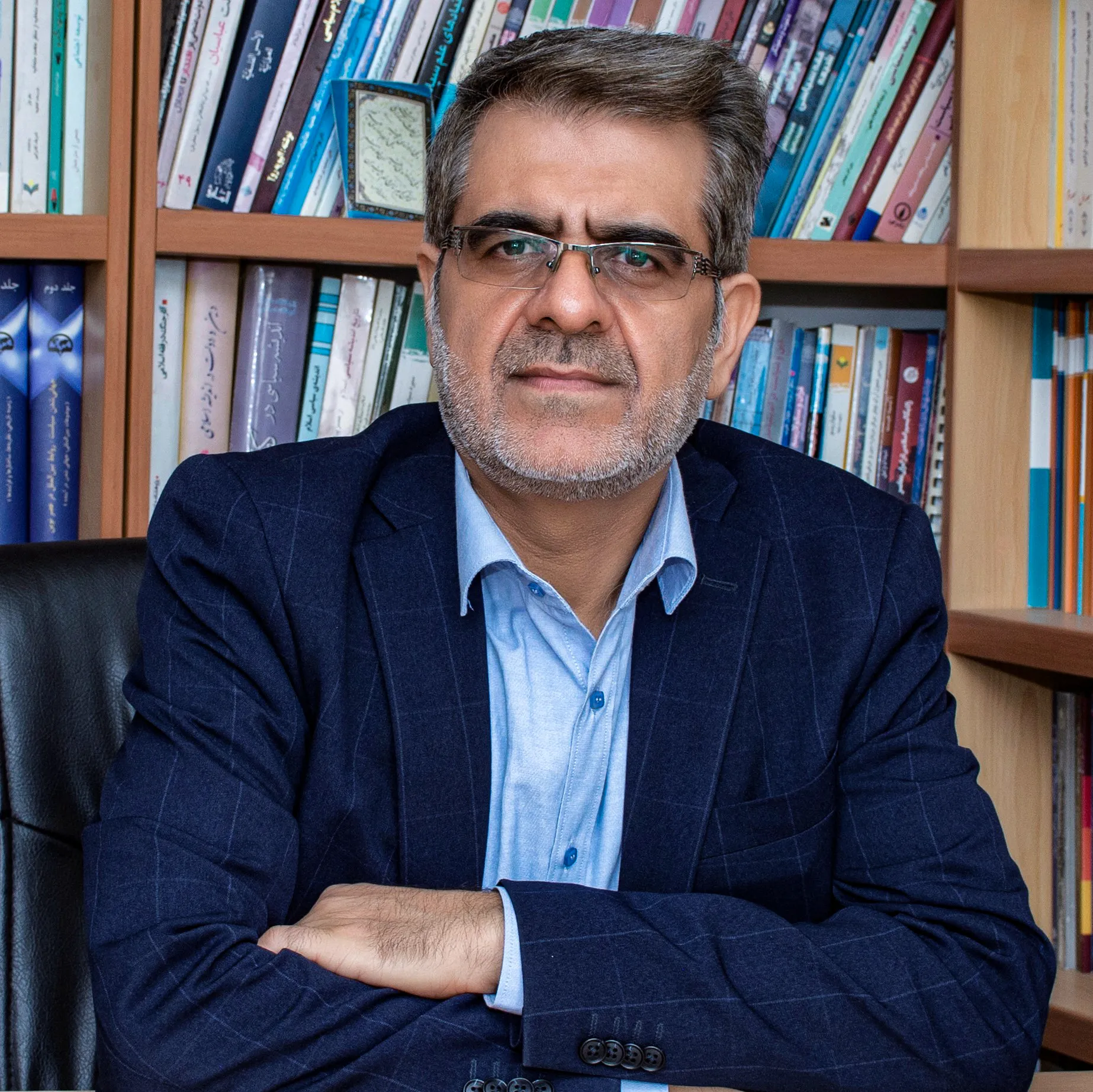
New pathbreaking theory-of-peace book by Iranian TFF Associate Dr Ali Akbar Alikhani August 27, 2026 Introduction Probably very few Westerners know that Tehran has a peace museum and that Tehran University has pioneered academic peace and conflict studies in the Muslim world, where this field is, regrettably, almost non-existent. Tehran University is the single most […]
HQAB7NMWUAA1gSk
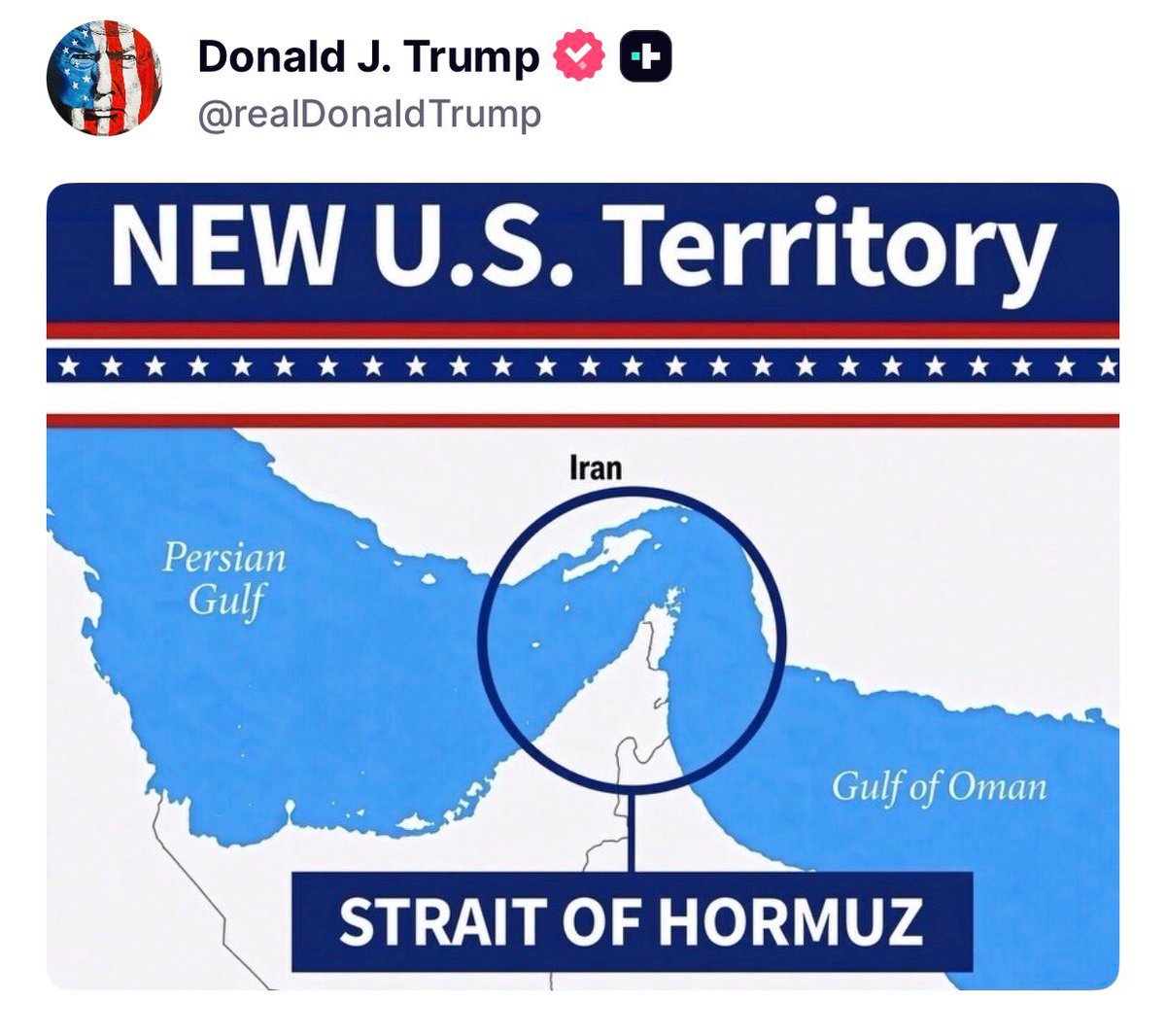
Jan ObergTFF director ☮️ When this morning – August 19, 2026 – I saw the above new US Trump map, I came to think of Frank Zappa, The Mothers of Invention, who said that politics is the entertainment division of the Military-Industrial Complex. That formulation beats many academic analyses – as you will have understood […]
21b7244b-c83e-46c1-ba23-556b21b9a0a8_1536x1024
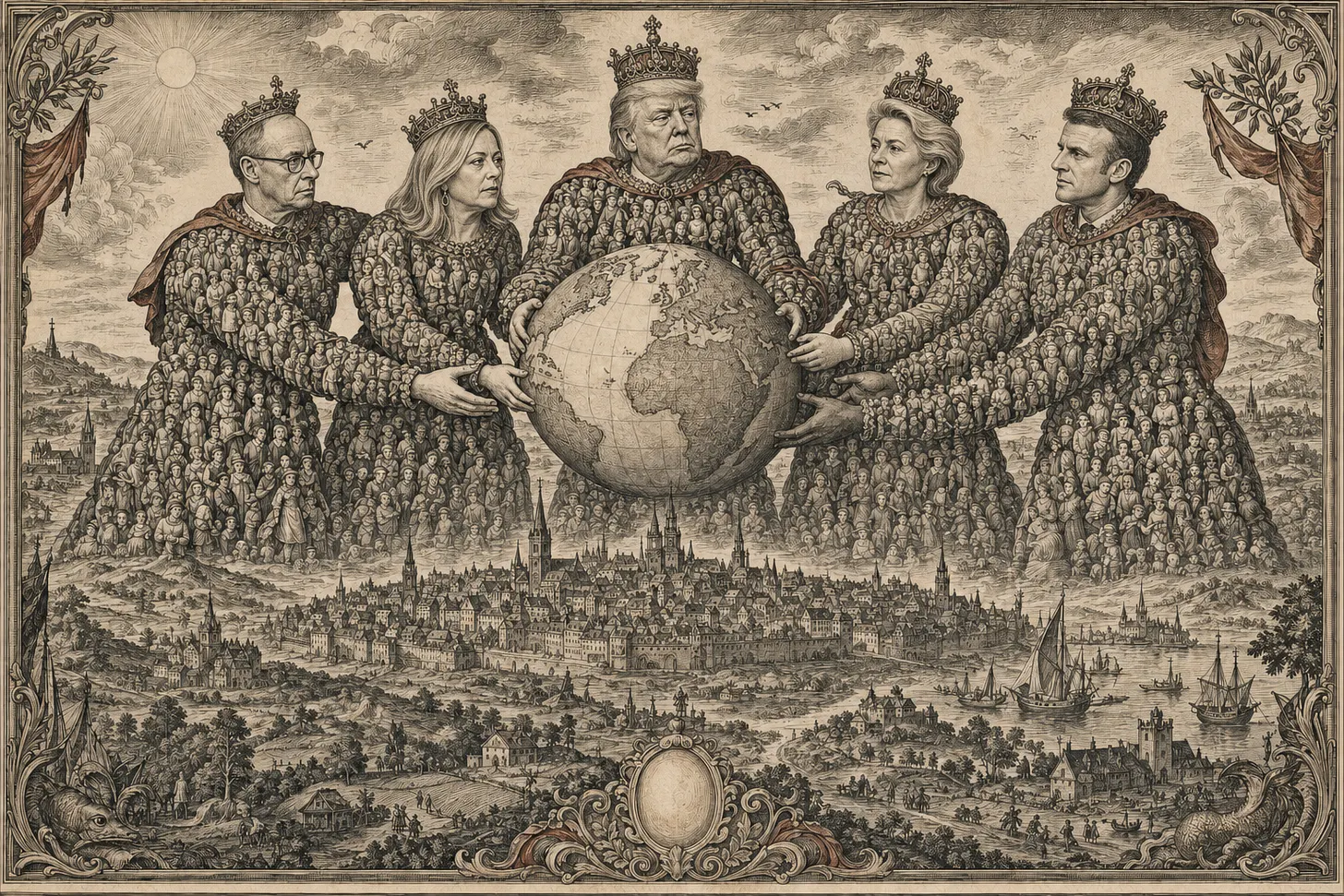
A Civilizational Interpretation of the West’s Body Politic Pascal Lottaz Associate professor at Ritsumeikan University in Kyoto and TFF Board member August 25, 2026 “How do we explain the self-defeating and self-harming policies of Western states? Europe seems to be happily deindustrializing, the US proxy war in Ukraine is killing hundreds of thousands (if not millions) […]