Pakistan

Showing 1-10 of 47 stories

Sort by
Categories

Year

Author / Contributor

Region

1551
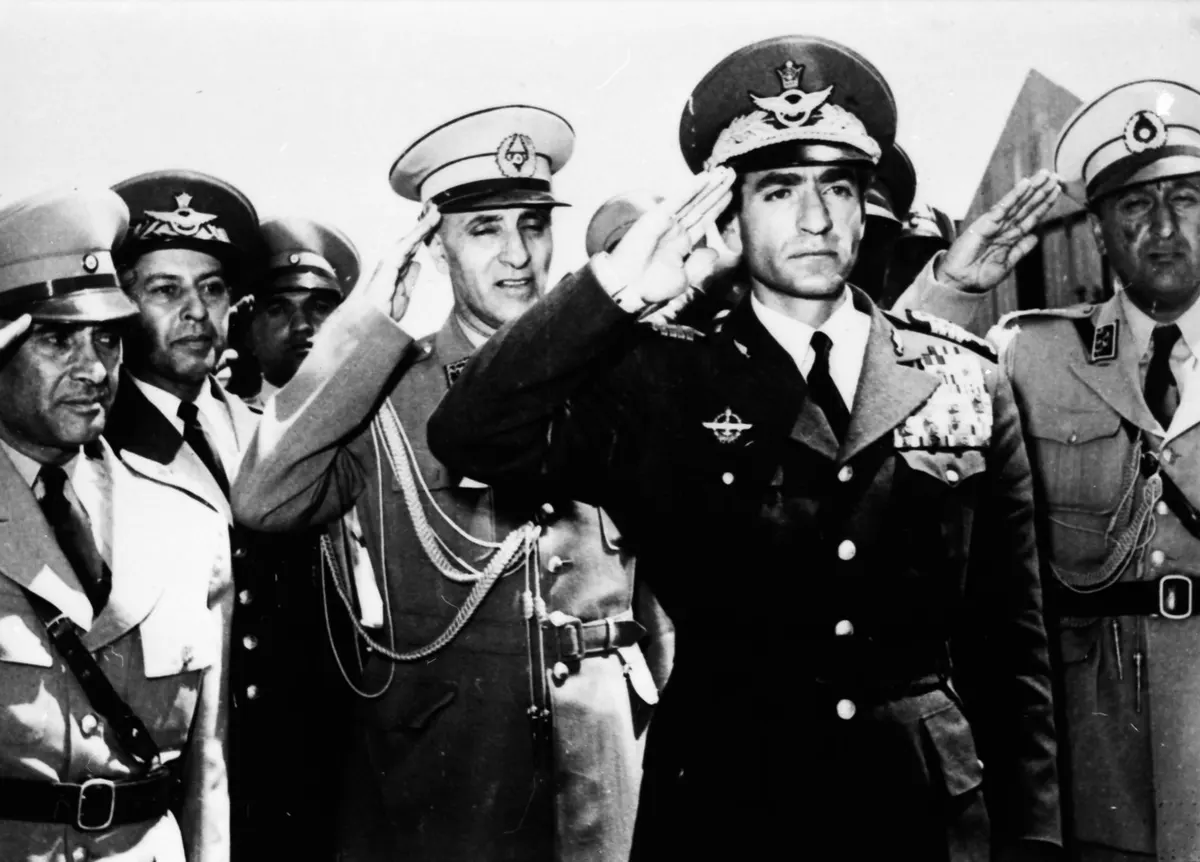
On August 19, 2023, it is 70 years ago that the US/CIA and others, with the assistance of their British peers, did one of its countless regime changes worldwide, namely in Iran: The U.S.- and UK-instigated, Iranian army-led overthrow of the democratically elected Prime Minister Mohammad Mosaddegh in favour of strengthening the monarchical rule of the shah, Mohammad Reza Pahlavi. Here is Wikipedia’s detailed account of this shameful act. And with the exception of the years under the Shah’s rule, relations between the West and Iran have been utterly conflictual ever since, and every potential for cooperation has been squandered. The US has felt its usual exceptionalist privilege to harass the country decade after decade, telling it that it will never acquire nuclear weapons, which the US itself and Israel have plenty of – and which it’s doubtful that Iran ever wanted to acquire – scrapping the JCPOA nuclear accords...
64a415e8e3e1f.image_
M. K. Bhadrakumar July 6, 2023 To be out of sync with the contemporary life anywhere at anytime becomes indeed a despairing situation. That was the tragic predicament of the Austrian writer of the inter-war period, Stefan Zweig, who once wrote, “One must be convinced to convince, to have enthusiasm to stimulate the others” — alluding to the rising tide of fascism in Europe in the twenties and thirties which culminated in World War 2.  Zweig couldn’t reconcile his inner contradiction, which ultimately drove him to take his life in faraway Brazil,  barely escaping the Nazi hunt of the Jewish bourgeoisie in Vienna to which his wealthy family belonged, after handing over to the publisher his great memoirs The World of Yesterday, which is regarded even today as a most evocative book on the Habsburg Empire.  Zweig’s tragedy should not be India’s destiny, as it runs away from the complexities...
gandhi-writing-letter
May 18, 2020 Steven Youngblood When asked to describe Mahatma Gandhi, most would say he was an Indian independence leader, human rights defender, and spiritual guide. However, “People don’t think of him as a journalist” even though “he was a journalist from an early age, and died as a journalist.” Originally posted on The Peace Journalist magazine, published by the Center for Global Peace Journalism on February 6, 2020, here This is according to professor, historian, and author Rajmohan Gandhi, the grandson of Mahatma Gandhi. Professor Gandhi was the featured speaker at a program titled “Gandhi: The First Peace Journalist,” held at Park University on Aug. 26. The evening began with a presentation by Gandhi documentarian, Cynthia Lukas, about Gandhi’s background as a journalist. Gandhi was a prolific journalist and editor who was well-known in India for his articles stressing social justice in such publications as Indian Opinion, Young India,...
death
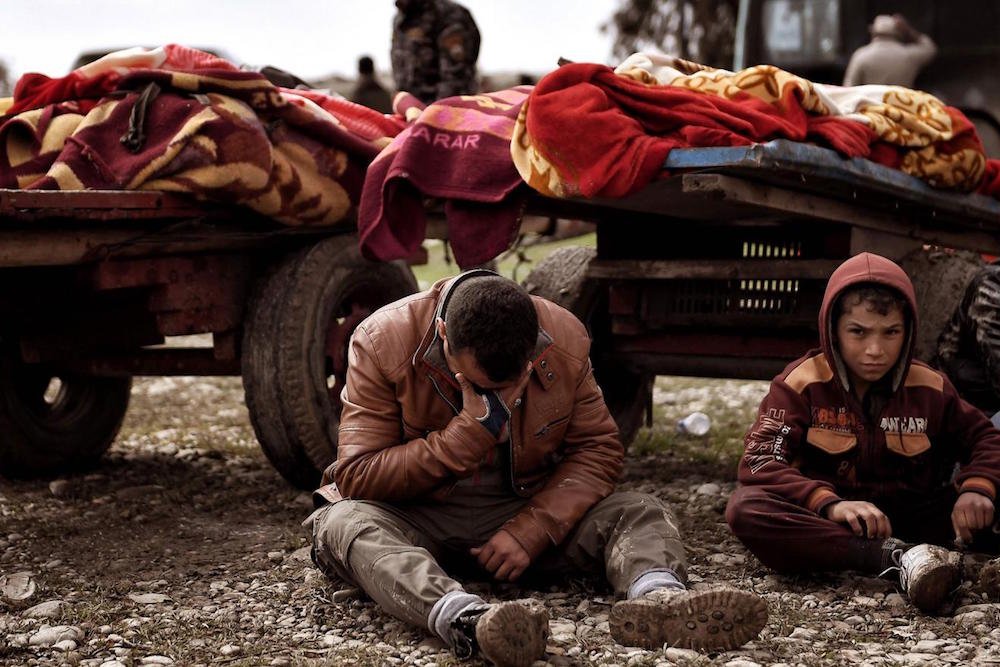
By Nicolas J.S. Davies January 27, 2020 The numbers of casualties of U.S. wars since Sept. 11, 2001, have largely gone uncounted, but coming to terms with the true scale of the crimes committed remains an urgent moral, political and legal imperative, argues Nicolas J.S. Davies, in part two of his series. Originally posted on Consortium News April 3, 2018 here Part One here In the first part of this series, I estimated that about 2.4 million Iraqis have been killed as a result of the illegal invasion of their country by the United States and the United Kingdom in 2003. I turn now to Afghan and Pakistani deaths in the ongoing 2001 U.S. intervention in Afghanistan. In part three, I will examine U.S.-caused war deaths in Libya, Somalia, Syria and Yemen.  According to Ret. U.S. General Tommy Franks, who led the war against the Taliban in Afghanistan in reaction to 9/11, the U.S. government...
jonathanpower
when only a rare foreign journalist was interested in him despite his fame as having been the world’s best cricketer. Now he has won a handsome political victory. We did talk about Kashmir, the number one foreign policy issue then and today. He didn’t think the Indian government of that time, when Manmohan Singh was prime minister, was strong enough to make a deal. On the Pakistani side he didn’t think an army man could do it despite the army’s large influence on politics. He went on to say, ”a civilian prime minister could do it if a real leader emerged like Zulfikar Ali Bhutto” (who was prime minister in the 1960s). Maybe he meant himself. The issue of Kashmir has dominated Pakistani and Indian foreign policy ever since colonial India was partitioned into predominantly Hindu India and Moslem Pakistan in 1947. The British left Kashmir with a majority Muslim...
jonathanpower2
By Jonathan Power Does President Donald Trump (aka “Fire and Fury”) know what a nuclear war would be like? I ask the question because President Roland Reagan confessed he did not until he decided to look at some movies (once an actor, he was a cinema man), like “On the Beach” that depicted a nuclear war. The exercise changed his thinking and he became an anti-nuclear weapons militant. Together with Soviet President Mikhail Gorbachev they cut their nuclear stockpiles sharply. They also came near an agreement to destroy all their nuclear weapons. The blasts at the end of the Second World War in Hiroshima and Nagasaki can now be repeated hundreds of thousand times. The remains would not just be the broken arches of the Caesars, the abandoned viaducts and moss-covered temples of the Incas, the desolation of one of the pulsating hearts of Europe, Dresden, but millions of square...
jonathanpower2
By Jonathan Power The United Nations is often scapegoated for the falling short of its peacekeeping troops and deployments. Why are they not in Syria or Yemen, Libya or along the Palestinian/Israeli border? Why did the US and the UK make it impossible for the few UN troops present at the onset of the genocide in Rwanda to have their numbers significantly augmented? As a result those few on the ground had no choice but to withdraw when some of their members were killed and their genitals stuffed in their mouths. All good questions if not easy to answer. In Syria, for example, where exactly would they be deployed? But a better question is why didn’t they go in at the beginning of the civil war when things weren’t so complicated and Al Qaeda and ISIS were not around? Then there is the bad behaviour of UN troops. In Mali,...
RichardFalk20141
By Richard Falk* and David Krieger** TFF PressInfo # 420 Prefatory NoteThis jointly authored essay was initially published in The Hill on May 30, 2017 under the title, “Averting the Ticking Time Bomb of Nukes in North Korea.” We did not choose such a title that is doubly misleading: our contention is not that North Korea is the core of the problem, but rather the retention of nuclear weapons by all of the states pose both crises in the context of counter-proliferation geopolitics and with respect to the possession, deployment, and development of the weaponry itself; a second objection is with the title given the piece by editors at The Hill. While acknowledging the practice of media outlets to decide on titles without seeking prior approval from authors, this title is particularly objectionable. The term ‘nukes’ gives an almost friendly shorthand to these most horrific of weapons, and strikes a...
jonathanpower2
It was all smiles out on the range last week when, against a deep blue sky, an American interceptor rocket took out an incoming “enemy” long-range, missile (which in a real attack would be carrying a nuclear warhead). Generals and Congressmen and women jumped for joy. But what was there to be joyous about? Over the decades of the Cold War the nuclear deterrent was supposed to be the instrument that kept the peace. MAD, it was called- Mutually Assured Destruction. Simply put, if you attacked me you might catch me by surprise and destroy many of my cities and military bases, but in fact you wouldn’t dare do it because beyond surprise is my “second-strike force”. Hidden away, deep underground, invulnerable to attack, I can retaliate with that. So in real life you will not dare attack me and I won’t attack you. That is a stalemate. That is...
jonathanpower2
. There are 29 states which have at one time or another set about becoming nuclear weapons powers or have explored the possibility. Most have failed or drawn back. Only the US, Russia, France, UK, China, India, Israel, Pakistan and North Korea have crossed the threshold. Only the first five have long range, nuclear-tipped, missiles. North Korea wants to walk in their footsteps. The common belief that when a state has decided to do so it goes for it as fast as it can is wrong. Sweden, Japan, Algeria, Australia, Italy, Yugoslavia, West Germany, Egypt, Iraq, Switzerland, Syria, Brazil, Argentina, Taiwan, South Korea, Norway, South Africa, Pakistan and India all sought to acquire nuclear weapons but their pace and commitment were different. In the end all but Pakistan and India became convinced to kill their programs off. For many years Indian leaders, unconvinced of their value or of the morality...

jonathanpower2
. The state of being vigorously anti the Russian president, Vladimir Putin, is becoming out of control. It is in danger of becoming pathological and self-destructive. What does the West gain in the long run if it sees nothing ahead but being anti-Russia? The West is in danger of having embarked on a journey to nowhere. Russia is not going to change significantly in the near future. The very close Putin/ Dimitri Medvedev team are going to remain in the saddle for a long time. We are not yet in a second Cold War. Those who say we are don’t know their history. The Cold War was years of military confrontation, not least with nuclear arms. It was a competition for influence that stretched right around the globe and it was done with guns. There was the Cuban missile crisis when nuclear weapons were nearly used. If Putin is here...
Hans_von_Sponeck
By Hans Graf Sponeck Freiburg, 1 October 2016 1. The global sky is full of dark clouds. There is reason, there must be reason, for concern. Humanity has to take time out to reflect. To-day is a good occasion to do so, especially since we have among us Haifa al Mansour and Solmaz Panahi who, together with her mother, has joined us on behalf of Jafar Panahi, her father. The Kant Foundation is honouring two artists from the Middle East, one from Saudi Arabia, the other from Iran. They have taken Immanuel Kant’s demand of yesteryear seriously and have shown the courage to use their minds with all the consequences that this has entailed. They have been swimming against the currents, they have built bridges and they have climbed mountains that try to separate people. 2. The community of nations has created an impressive body of law which is as...