Afghanistan

Showing 1-10 of 73 stories

Sort by
Categories

Year

Author / Contributor

Region

USEmpire-Fall-kopia
Jomo Kwame Sundaram and Anis Chowdhury June 17, 2022 Food crises, economic stagnation and price increases are worsening unevenly, almost everywhere, following the Ukraine war. Sanctions against Russia have especially hurt those relying on wheat and fertilizer imports. Unilateral sanctions illegal Unilateral sanctions – not approved by the UN Security Council – are illegal under international law. Besides contravening the UN Charter, unilateral sanctions inflict much human loss. Countless civilians – many far from target countries – are at risk, depriving them of much, even life itself. Sanctions, embargos and blockades – ‘sold’ as non-violent alternatives to waging war by military means – economically isolate and punish targeted countries, supposedly to force them to acquiesce. But most sanctions hurt the innocent majority, much more than the ruling elites. Originally published at Human Wrongs Watch on June 7, 2022 Like laying siege on enemy settlements, sanctions are ‘weapons of mass starvation’. They “are...
IUV3TWOBYVAKNF4VPDRMRKEB7E
William J. Astore December 3, 2021 Who is America’s god? The Christian god of the beatitudes, the one who healed the sick, helped the poor, and preached love of neighbor? Not in these (dis)United States. In the Pledge of Allegiance, we speak proudly of One Nation under God, but in the aggregate, this country doesn’t serve or worship Jesus Christ, or Allah, or any other god of justice and mercy. In truth, the deity America believes in is the five-sided one headquartered in Arlington, Virginia. In God We Trust is on all our coins. But, again, which god? The one of “turn the other cheek”? The one who found his disciples among society’s outcasts? The one who wanted nothing to do with moneychangers or swords? As Joe Biden might say, give me a break. Originally published at Responsible Statecraft America’s true god is a deity of wrath, whose keenest followers profit mightily...
Afghanistan2
Handover ceremony at Camp Anthonic, from US Army to Afghan Special Forces, Helmand province, Afghanistan, May 2, 2021. Tom Engelhardt October 27, 2021 They weren’t kidding when they called Afghanistan the “graveyard of empires.” Indeed, that cemetery has just taken another imperial body. And it wasn’t pretty, was it? Not that anyone should be surprised. Even after 20 years of preparation, a burial never is. In fact, the shock and awe(fulness) in Kabul and Washington over these last weeks shouldn’t have been surprising, given our history. After all, we were the ones who prepared the ground and dug the grave for the previous interment in that very cemetery. Originally published at Countercurrents That, of course, took place between 1979 and 1989 when Washington had no hesitation about using the most extreme Islamists — arming, funding, training, and advising them — to ensure that one more imperial carcass, that of the Soviet Union, would be buried...

3b0f695ce7f541c1a1bd31bc1d662d69
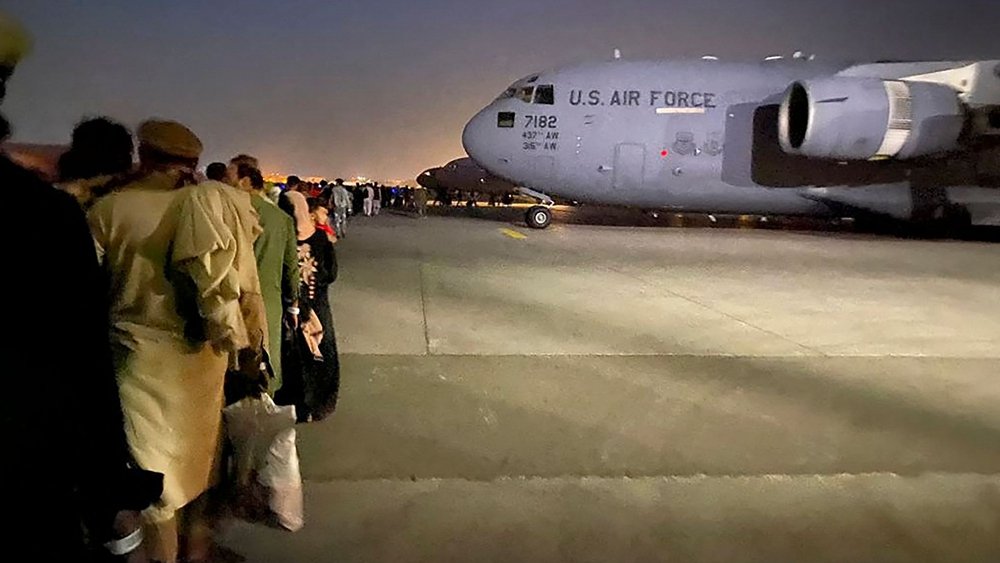
CGTN Think Tank October 3rd, 2021 Images of Afghans chasing a U.S. transport plane at Kabul airport shocked the world after Taliban took over Kabul on August 15. As for the costly and longest-ever war waged by the U.S., 84.6 percent of global poll respondents believe it failed. Originally posted on CGTN on August 27, 2021 here The CGTN Think Tank conducted a global survey in Chinese, English, Spanish, French, Arabic and Russian on social media platforms including Twitter, Facebook, YouTube and Weibo from August 20 to August 26. There have been more than 140,000 responses including liking, sharing and commenting on this online poll consisting of three questions. 80% say U.S. failed Afghanistan War The United States launched the Afghanistan war in the name of counterterrorism in 2001 and made a hasty troop withdrawal in 2021. The first question is, do you think the U.S. war against terrorism in...
1a795db03cd9bb5ae20cbcd064053cc5.2-1-super.1-1
Jeffrey D. Sachs September 29, 2021 For decades, the American political class has intervened relentlessly and recklessly in countries whose people they hold in contempt. And once again they are being aided by America’s credulous mass media, which is uniformly blaming the Taliban victory on Afghanistan’s incorrigible corruption. Originally posted on Project Syndicate on August 17, 2021 NEW YORK – The magnitude of the United States’ failure in Afghanistan is breathtaking. It is not a failure of Democrats or Republicans, but an abiding failure of American political culture, reflected in US policymakers’ lack of interest in understanding different societies. And it is all too typical. Almost every modern US military intervention in the developing world has come to rot. It’s hard to think of an exception since the Korean War. In the 1960s and first half of the 1970s, the US fought in Indochina – Vietnam, Laos, and Cambodia –...
afghanistan-026-1
Neta C. Crawford Listen to this article here September 24, 2021 The U.S. invaded Afghanistan in late 2001 to destroy al-Qaida, remove the Taliban from power and remake the nation. On Aug. 30, 2021, the U.S. completed a pullout of troops from Afghanistan, providing an uncertain punctuation mark to two decades of conflict. For the past 11 years I have closely followed the post-9/11 conflicts for the Costs of War Project, an initiative that brings together more than 50 scholars, physicians and legal and human rights experts to provide an account of the human, economic, budgetary and political costs and consequences of the Iraq and Afghanistan wars. Originally published by The Conversation Of course, by themselves figures can never give a complete picture of what happened and what it means, but they can help put this war in perspective. The 20 numbers highlighted below, some drawn from figures released on Sept. 1, 2021,...
2D3CC331-64D5-45DE-B53D-A361772DAC1C
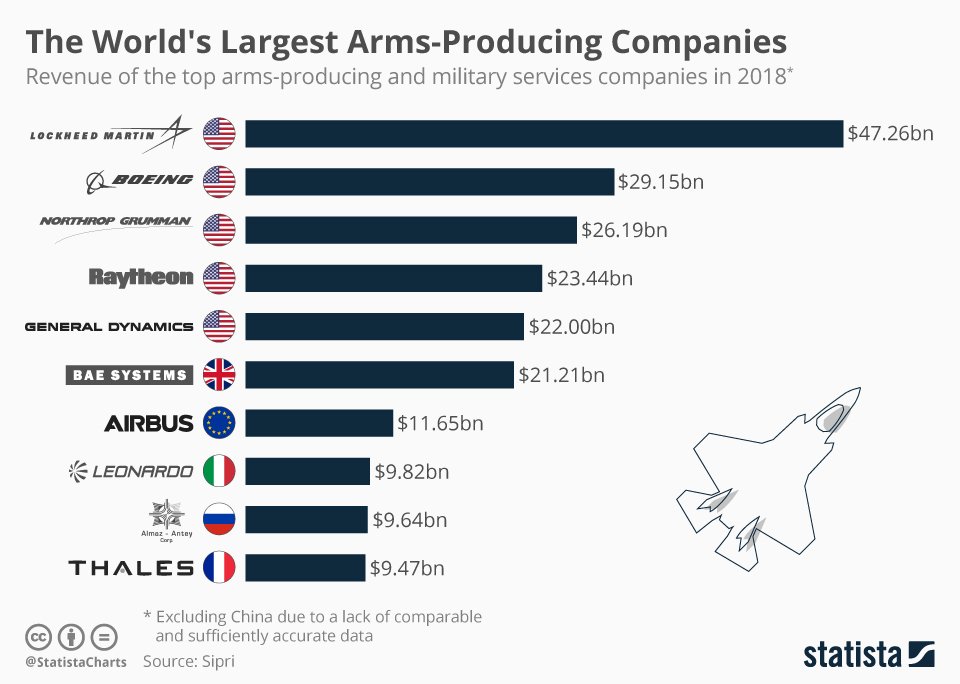
Listen to this article here With the end of the failed ‘forever war’ in Afghanistan, the US military-industrial complex needs to find another struggle to further enrich itself, and China now fits that bill Alex Lo September 24, 2021 “In the councils of government, we must guard against the acquisition of unwarranted influence, whether sought or unsought, by the military-industrial complex. The potential for the disastrous rise of misplaced power exists and will persist.” – President Dwight D. Eisenhower, farewell address, 1961 The “potential” of the military-industrial complex for mischief that Eisenhower warned against in his famous speech is now actual; indeed, it has been for some time now. Much of the “war on terror”, including the occupations of Iraq and Afghanistan, have been a gravy train for private contractors and arms makers. “The Forever War” may not have made America and Americans safer, but it has made the military-industrial complex...
Mashood
Massoud leaving Bazarak in the Panjshir after our interview in August 2001, roughly three weeks before his assassination. Photo: Pepe Escobar We may never know the full contours of the whole riddle inside an enigma when it comes to 9/11 and related issues Pepe Escobar September 13, 2021 It’s impossible not to start with the latest tremor in a series of stunning geopolitical earthquakes.  Exactly 20 years after 9/11 and the subsequent onset of the Global War on Terror (GWOT), the Taliban will hold a ceremony in Kabul to celebrate their victory in that misguided Forever War. Four key exponents of Eurasia integration – China, Russia, Iran and Pakistan – as well as Turkey and Qatar, will be officially represented, witnessing the official return of the Islamic Emirate of Afghanistan. As blowbacks go, this one is nothing short of intergalactic. Originally published at Asia Times The plot thickens when we...
Day_after_Saur_revolution_in_Kabul_773
Hear this on Spotify John Pilger September 9, 2021 More than a generation ago, Afghanistan won its freedom, which the U.S., Britain and their “allies” destroyed. As a tsunami of crocodile tears engulfs Western politicians, history is suppressed. More than a generation ago, Afghanistan won its freedom, which the United States, Britain and their “allies” destroyed. In 1978, a liberation movement led by the People’s Democratic Party of Afghanistan (PDPA) overthrew the dictatorship of Mohammad Dawd, the cousin of King Zahir Shah. It was an immensely popular revolution that took the British and Americans by surprise. Foreign journalists in Kabul, reported The New York Times, were surprised to find that “nearly every Afghan they interviewed said [they were] delighted with the coup.” The Wall Street Journal reported that “150,000 persons … marched to honor the new flag … the participants appeared genuinely enthusiastic.” The Washington Post reported that “Afghan loyalty to the government can...
us-army
U.S. Army NATO, the United States and its vassal-states in Afghanistan Håkan Wiberg †2010 Former TFF Board member and Associate 9 september, 2021 AS FAR BACK as it is possible to trace the history of what is now Afghanistan, it has alternately been invaded — by among others the Median, Persian, Mongol, British and U.S. empires — and served as the base of expanding regional powers. The history of modern Afghanistan begins in 1747, with the coronation of Ahmed Abdali of the Durrani clan. Re-published online at Nordic News Network British expansion in India soon presented Afghanistan with a new threat — which became a reality in 1839 with the first large-scale British invasion. Shortly thereafter came the Russian expansion into Central Asia, leading to the “Great Game” between the two empires for control of the region. Afghanistan was drawn into minor clashes and some major wars with both of...
afghan
Sarah Chayes August 25, 2021 I have been silent for a while. I’ve been silent about Afghanistan for longer. But too many things are going unsaid. I won’t try to evoke the emotions, somehow both swirling and yet leaden: the grief, the anger, the sense of futility. Instead, as so often before, I will use my mind to shield my heart. And in the process, perhaps help you make some sense of what has happened. For those of you who don’t know me, here is my background — the perspective from which I write tonight. I covered the fall of the Taliban for NPR, making my way into their former capital, Kandahar, in December 2001, a few days after the collapse of their regime. Descending the last great hill into the desert city, I saw a dusty ghost town. Pickup trucks with rocket-launchers strapped to the struts patrolled the streets....
ungraph1
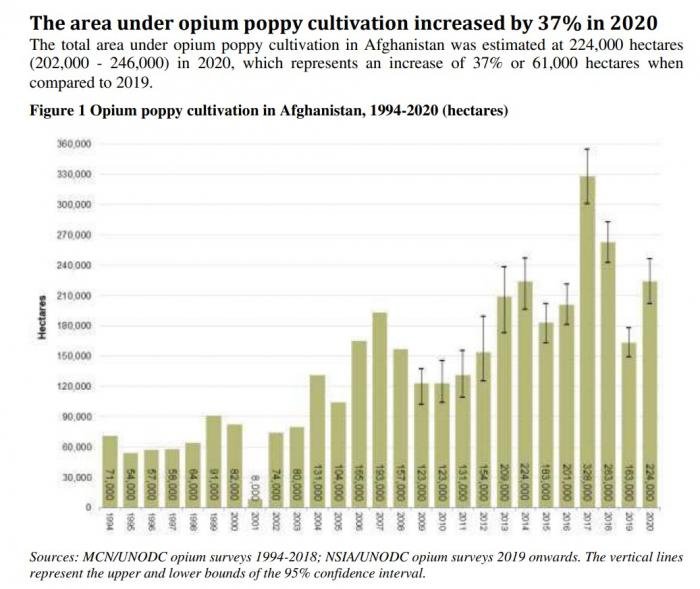
Pepe Escobar August 25, 2021 The Persian Gulf harbors an array of extremely compromising secrets. Near the top is the Afghan heroin ratline – with the United Arab Emirates (UAE) positioned as the golden node of a transnational, trillion dollar heroin money laundering operation. Originally posted on LewRockwell homepage on January 18, 2021 In this 21st century Opium War, crops harvested in Afghanistan are essentially feeding the heroin market not only in Russia and Iran but especially in the US. Up to 93% of the world’s opium comes from Afghanistan. Contrary to predominant Western perception, this is not an Afghan Taliban operation. The key questions — never asked by Atlanticist circles — are who buys the opium harvests; refines them into heroin; controls the export routes; and then sell them for humongous profit compared to what the Taliban have locally imposed in taxes. The hegemonic narrative rules that Washington bombed Afghanistan in 2001 in “self-defense” after 9/11; installed a “democratic” government; and after 16 years never de facto left because this is a key node...