PressInfo #213 - The arguments for quick and total independence are not credible

 Kosovo Solution Series # 5

Relevant background links for this series here.

While the ICG, the International Crisis Group, and other pro-Albanian lobby groups argue that the independence of Kosovo is a means or necessity in order to avoid another “March 2004” and general chaos, the counterargument would be this: wouldn’t the granting of full independence to Kosovo be a reward for years of policies of ethno-nationalism and ethnic cleansing led by Albanian extremists? Would it not mean rewarding violent struggle by the KLA and punishment of the largest non-violent movement in ex-Yugoslavia – that of the Kosovo-Albanians before KLA became the dominating force? Would it not mean rewarding the two aggressions that to a large extent was instigated by factors in Kosovo, namely that in Southern Serbia and that in the 8 months war in Macedonia?

When the Hague war crime indictee and Kosovo’s now former Prime minister Ramush Haradinaj promises that “in an independent Kosovo the situation of the Serbs will be better”, did he simply send a warning message: give us independence or the Serbs will continue to face violence, intimidation and life in ghettos? The Albanian political class should not be rewarded for a stance like that. All the mechanisms that the majority Albanian leadership needs to protect the minorities already exist today. The Kosovo Albanians do not need full independence to start respecting human dignity and human rights.

Would the independence of Kosovo be an implicit reward for its impoverished population or for the powerful crime groups which need political support to control the prostitution, arms, drugs and human trafficking? With UN estimates of an unemployment rate of 60-70%, even 90% in some regions, with an energy crisis, economic dependency and stagnation, with close to zero minority security if it were not for 17.000 NATO troops – what could one imagine would be the real top priorities of all Kosovo’s population beyond the elite mantra that everything will be solved the day it becomes the independent state of Kosova?

Would an independence of Kosovo mean a true long-lasting and just solution, or just an exit strategy for the international community that seems to fear Albanian extremism and violence? Would it amount to little but a recipe for new violence in a generation or two ahead based on disillusions with the independence on the Albanian side and traumas and humiliation on the Serb (and other minorities’) side? We are not saying that it will be the case, we are saying that immediate and complete independence is not half as unproblematic as some would have us believe. And we are saying that it cannot be a means to achieve all the qualities that should have been achieved after six years under protection and other uniquely positive circumstances.

If someone cannot imagine Albanians working in multi-ethnic public institutions with their colleagues from central Serbia and Montenegro, how can these same Albanians work together with the Serbs in a multiethnic Kosovo? How can these Albanians work one day in the future with other European colleagues? Let us take a look in Bosnia-Herzegovina, where Serbs, Muslims and Croats work together in police, customs and embassies abroad. It is possible that they do not like it, but the international community made them work together, and there is no reason why it should not do the same with the Kosovo Albanians in Serbia-Montenegro.

If Kosovo Albanians are not ready to talk about a compromise – but only insist on full independence (“conditional” or not) now – where is the negotiation process? What will Belgrade and Pristina be negotiating about? What kinds of sentiments, tolerance and promises would that hold for the future of the region?

Are the Kosovo Albanians ready for a dialogue on substantial, human-interest issues or just status and borders? And what leverage is the UN and other international actors able and prepared to exercise should the Kosovo-Albanian leaders announce that full independence now is the “only solution”? At the moment of writing, there is not one Albanian politician in Kosovo who can say that models containing less than full independence deserve to be discussed.

If the Kosovo Albanian elites are not ready to share sovereignty with Belgrade, how will they be able to share sovereignty one day in the European Union? Why do they need full sovereignty if they will need to share it in a matter of years? Are they ready for shared sovereignty and multilateralism or are their stated wish to join the EU merely convenient rhetoric?

Many media and the pro-Albanian lobbyists usually convey the image of Belgrade leaders being stubborn and inflexible or purposely dragging their feet on the issue. Fact is, however, that various leaders in Belgrade have clearly recognised in public that they know Kosovo will not come back to the pre-1999 situation and that there should be a solution between high autonomy and full independence. In late March 2005, deputy prime minister, Miroljub Labus, advocated a division of Kosovo into two entities and added that “in such a case Serbia could have full communication with the Serb entity.” For years former president and author Dobrica Cosic – often designated patriot or nationalist by Westerners, have advocated partition.

In short, the Albanians – the winners of the war – have monotonously argued the same thing for decades while the Serbs side – losers of the war – have moved positions and views in accordance with changes on the ground.

Pro-Albanian lobbyists like Richard Holbrooke and other, primarily American, policymakers and lobbyists are often using the argument of Serbia as “a traditional Russian ally” to argue that the West must put itself on the side of the Serb opponents. This “metaphor of Russia ” must be rejected. Serbia indeed respects Russia due to historical, religious and Slavic ties, but Serbia is far from Russia and punishing Serbia does not mean punishing Russia.

Finally, attempts to give independence to Muslim-dominated Kosovo in order to balance the aggressive policy towards the Islamic world in the Middle East should be rejected no matter how convenient they appear to geo-strategic analysts in Washington.

The TFF Kosovo Solution Series

# 1
Why the solution in Kosovo matters to the world

# 2
The media – strategic considerations

# 3
The main preconditions for a sustainable solution to the Kosovo conflict

# 4
The situation as seen from Serbia

# 5
The arguments for quick and total independence are not credible

# 6
What must be Belgrade’s minimum conditions and its media strategy

# 7
Nations and states, sovereignty and self-determination

# 8
Positive scenarios: Turn to the future, look at the broader perspectives

# 1
Why the solution in Kosovo matters to the world

# 2
The media – strategic considerations

# 3
The main preconditions for a sustainable solution to the Kosovo conflict

# 4
The situation as seen from Serbia

# 5
The arguments for quick and total independence are not credible

# 6
What must be Belgrade’s minimum conditions and its media strategy

# 7
Nations and states, sovereignty and self-determination

# 8
Positive scenarios: Turn to the future, look at the broader perspectives

# 9
Many thinkable models for future Kosovo

# 10
Summary: From “Only one solution” towards democracy and peace

NOTE
Relevant background links for this series.

"September 2003 - present: PhD in Journalism and Communications, University of Belgrade. Working on the PhD thesis « Journalistic Responsibility in Crisis Situations : a Case-study Analysis of the Relationship between Media Management and Ethical Reporting ». 1996- 1997: Masters (M.A.) in International Affairs-Conflict Analysis, Carleton University, Ottawa Norman Paterson School of International Affairs, Carleton University, Ottawa. A-level GPA - Defended thesis ""with distinction"": ""Influence of the Media on Preventive Diplomacy: Three Cases from the Yugoslav Conflict"". 1992-1996: Bachelor of Journalism (B.J.) - Highest Honors in Journalism and Political Science, Carleton University, Ottawa"

Peace & future researcher + ‌Art Photographer

Share

Leave a Reply

Your email address will not be published. Required fields are marked *

Related Posts

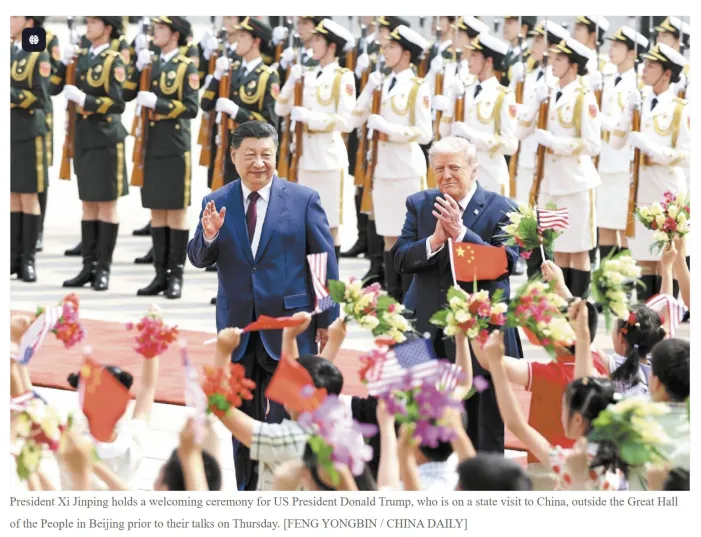
Jan Oberg May 15, 2026 Go to this Fox News page and scroll the whole way down: President Donald Trump tells the world that his meeting with President Xi Jinping yielded a lot of very concrete political and economic results – of course, only where the Chinese side, according to him, agreed with him. He does not mention the Taiwan issue, but Secretary of State, Marco Rubio, says that it did not feature prominently in their talks and that the US policy on Taiwan has not changed. Then go to China Daily – or Global Times – and you will see that for the Chinese it is framework, principles, structure of cooperation etc. that matters – all embedded in the overall idea of “constructive bilateral relationship of strategic stability.” Nowhere is any concrete agreement or deal – all that Trump refers to – mentioned. At the general level, this gives you insights into the very different social...
The MIMAC – Military-Industrial-Media-Academic Complex – drives the world’s rampant militarism and wars without end. Here is a short reflection of how it works against all interests of humanity. #5 deals with why there is no real enemy or threat images/analysis. It’s all ex-post constructions. And, btw, theTFF Peace Pulse is now on Rumble.
Jan Oberg, TFF director April 28, 2026 In this third TFF Peace Pulse, I make the important distinction between the violence and the conflict that violence is a symptom of. If you want peace, focus on the underlying conflict because that is the key to resolution, peacemaking, and a better future for the parties. The West is obsessed with violence, just look around you – and 90+ per cent of the public debate is about military issues and other violence – totally wasted for peace. These Peace Pulses will only be published here a few times. You will also not find them on YouTube and Vimeo because both platforms have blocked TFF and me; you know, peace is dangerous these days. Most TFF’s videos since 2007 are now on Rumble.

Recent Articles

Jan Oberg May 15, 2026 Go to this Fox News page and scroll the whole way down: President Donald Trump tells the world that his meeting with President Xi Jinping yielded a lot of very concrete political and economic results – of course, only where the Chinese side, according to him, agreed with him. He does not mention the Taiwan issue, but Secretary of State, Marco Rubio, says that it did not feature prominently in their talks and that the US policy on Taiwan has not changed. Then go to China Daily – or Global Times – and you will see that for the Chinese it is framework, principles, structure of cooperation etc. that matters – all embedded in the overall idea of “constructive bilateral relationship of strategic stability.” Nowhere is any concrete agreement or deal – all that Trump refers to – mentioned. At the general level, this gives you insights into the very different social...
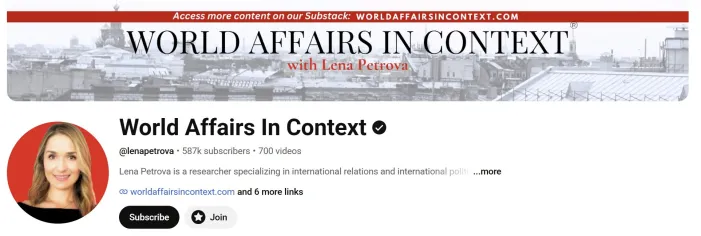
Lena Petrova of “World Affairs In Context” with more than half a million subscribers on YouTube wanted to explore what a peace researcher like me has to say about, among other things, the First and the Second Cold War and why eethics has disappeared from politics. I am particularly happy about this conversation that also yielded an amazing number of very appreciative comments on YouTube. No doubt, people are longing for alternatives, including peace perspectives.
The MIMAC – Military-Industrial-Media-Academic Complex – drives the world’s rampant militarism and wars without end. Here is a short reflection of how it works against all interests of humanity. #5 deals with why there is no real enemy or threat images/analysis. It’s all ex-post constructions. And, btw, theTFF Peace Pulse is now on Rumble.

TFF on Substack

Discover more from TFF Transnational Foundation & Jan Oberg.

Most Popular

Jan Oberg May 15, 2026 Go to this Fox News page and scroll the whole way down: President Donald Trump tells the world that his meeting with President Xi Jinping yielded a lot of very concrete political and economic results – of course, only where the Chinese side, according to him, agreed with him. He does not mention the Taiwan issue, but Secretary of State, Marco Rubio, says that it did not feature prominently in their talks and that the US policy on Taiwan has not changed. Then go to China Daily – or Global Times – and you will see that for the Chinese it is framework, principles, structure of cooperation etc. that matters – all embedded in the overall idea of “constructive bilateral relationship of strategic stability.” Nowhere is any concrete agreement or deal – all that Trump refers to – mentioned. At the general level, this gives you insights into the very different social...
Lena Petrova of “World Affairs In Context” with more than half a million subscribers on YouTube wanted to explore what a peace researcher like me has to say about, among other things, the First and the Second Cold War and why eethics has disappeared from politics. I am particularly happy about this conversation that also yielded an amazing number of very appreciative comments on YouTube. No doubt, people are longing for alternatives, including peace perspectives.
The MIMAC – Military-Industrial-Media-Academic Complex – drives the world’s rampant militarism and wars without end. Here is a short reflection of how it works against all interests of humanity. #5 deals with why there is no real enemy or threat images/analysis. It’s all ex-post constructions. And, btw, theTFF Peace Pulse is now on Rumble.
Read More
Screenshot-2026-05-15-103534
Jan Oberg May 15, 2026 Go to this Fox News page and scroll the whole way down: President Donald Trump tells the world that his meeting with President Xi Jinping yielded a lot of very concrete political and economic results – of course, only where the Chinese side, according to him, agreed with him. He does not mention the Taiwan issue, but Secretary of State, Marco Rubio, says that it did not feature prominently in their talks and that the US policy on Taiwan has not changed. Then go to China Daily – or Global Times – and you will see that for the Chinese it is framework, principles, structure of cooperation etc. that matters – all embedded in the overall idea of “constructive bilateral relationship of strategic stability.” Nowhere is any concrete agreement or deal – all that Trump refers to – mentioned. At the general level, this gives you insights into the very different social...
Screenshot-2026-05-12-104023
Lena Petrova of “World Affairs In Context” with more than half a million subscribers on YouTube wanted to explore what a peace researcher like me has to say about, among other things, the First and the Second Cold War and why eethics has disappeared from politics. I am particularly happy about this conversation that also yielded an amazing number of very appreciative comments on YouTube. No doubt, people are longing for alternatives, including peace perspectives.
Screenshot-2026-04-13-154551 (2)
The MIMAC – Military-Industrial-Media-Academic Complex – drives the world’s rampant militarism and wars without end. Here is a short reflection of how it works against all interests of humanity. #5 deals with why there is no real enemy or threat images/analysis. It’s all ex-post constructions. And, btw, theTFF Peace Pulse is now on Rumble.
Screenshot-2026-04-13-154551 (1)
Jan Oberg, TFF director April 28, 2026 In this third TFF Peace Pulse, I make the important distinction between the violence and the conflict that violence is a symptom of. If you want peace, focus on the underlying conflict because that is the key to resolution, peacemaking, and a better future for the parties. The West is obsessed with violence, just look around you – and 90+ per cent of the public debate is about military issues and other violence – totally wasted for peace. These Peace Pulses will only be published here a few times. You will also not find them on YouTube and Vimeo because both platforms have blocked TFF and me; you know, peace is dangerous these days. Most TFF’s videos since 2007 are now on Rumble.
Screenshot-2026-04-13-154551
In contrast to most, we’ll bring alternatives, solutions, hope and strategies for a better future. Times are dangerous, yes, but that only intensifies the need for constructive thinking and action! Jan Oberg, TFF director April 13, 2026 The new TFF Peace Pulse uses video messages in a new way: Max 3-5-minute-long comments, ideas or perhaps mini-lectures, all about peace – positive peace. We launch them today on April 13, 2026 with a carefully crafted visual aesthetic fitting the content. We hope to publish them regularly from now on. We launch Peace Pulse (PP) – for a number of reasons. The world is in chaos, and there are countless reasons to feel concerned, frustrated, even angry. The atmosphere is saturated with doom and gloom, with negative energy and rear‑mirror thinking, while vision, imagination, alternatives, strategies and genuine future‑mindedness remain in short supply. And without them, we simply can’t save the world. Looking at problems from a hundred angles will...
IMG_5165 (1)
PART II — Publishing Peace in a System That Prioritises Militarism Jan Oberg, TFF director April 10, 2026 How TFF Maintains a Daily Voice in a Digital World Built for Noise This article is part of the series “TFF at 40″ and it invites you to learn about Four Decades of Publishing Peace. It takes a look at how a small, people‑financed peace foundation has communicated across four generations of technology — from wax stencils and fax machines to mass email and Substack — and why TFF continues to publish every single day in a system that rewards noise, conflict, and militarism. ◆ What it means to publish peace every single day in a digital system built for 24/7 news and other noise, confrontation, and militarism. How TFF’s independence, continuity, and global readership defy algorithms, donor cycles, and Western media censorhip — and why the Majority World keeps listening. When the...