Book Review: Democratisation in the Middle East

By

Julie Dyer & Michel Tavir

TFF Friends

Anmeldelsen på dansk

March 16, 2006

The book Democratisation in the Middle East, Dilemmas and Perspectives comprises a collection of papers which were originally presented at a Plum Foundation sponsored conference held in Copenhagen in February 2005.  The volume is edited by Birgitte Rahbek, Middle East scholar, author and member of the executive committee of the Plum Foundation.

The purpose of this conference was to provide an independent platform for a discussion of recent developments in the Middle East, particularly with respect to the prospects for and the challenges connected with democratisation in the region.  

The authors represent a broad spectrum of Middle Eastern and European scholars and others with first-hand knowledge of the region and its history.

The contributing authors approach the subject of democratisation from a variety of viewpoints, but are all characterised by their openness toward the concept of a democratic and secular Middle East.

However, many of the contributions question the motives of the United States and Europe in their push for – often superficial – democratic reforms, as well as the purpose and effect of foreign aid programmes. The appropriateness of imposing a US model of government for countries with radically different histories and traditions is also discussed.  A common thread running though the various articles implies that real and lasting change in the direction of a more democratic society must be based on gradual internal reforms and not imposed as a mandate by a foreign power.

However, critical words are not restricted to the West’s involvement in the region. Democratic deficiencies and the causes thereof, particularly in Saudi Arabia, Iraq and occupied Palestine are discussed, with several authors taking up the issue of women’s rights.

The best of the articles provide an insight into social and historical events that are seldom discussed in the Western media, and allow the reader to place current events in a both broader and deeper perspective.

The contribution by the dissident Samir Aita on the history of democracy in Syria presents a fascinating review of the intricate power structure in that country. British journalist Graham Usher delivers a timely analysis of the Palestinian struggle, and Saudi research fellow Mai Yamani provides a glimpse behind the “game of democracy” played by the Saudi royal family. The last contribution by Jørgen S. Nielsen, newly appointed director for the Danish Institute in Damascus, offers some thought-provoking observations on “Islamophobia” in the West.  

Due to contingencies connected with editing contributions from authors living under extremely difficult situations, a couple of articles went to press in a style which may challenge the casual reader. However, this criticism is insignificant in consideration of the rarity and depth of insight contained in this collection of essays.  

In summary, the book is replete with constructive spirit and contains the sort of acumen sorely needed by most of the decision-makers of our time.  

It is, therefore, warmly recommended.

Birgitte Rahbek, editor
Democratisation in the Middle East,
Dilemmas and Perspectives,
Aarhus University Press, 2005
168 pages
EUR 26.95 (incl. 25 % VAT)
ISBN 87 7934 230 2.

More about the book in English here


Boganmeldelse

Democratisation in the
Middle East
 

Af

Julie Dyer & Michel Tavir

TFF Venner

Bogen Democratisation in the Middle East, Dilemmas and Perspectives er en antologi med bidrag fra oplægsholdere på en konference arrangeret af Plumfonden i København i februar 2005. Den er redigeret af Mellemøsteksperten Birgitte Rahbek, der også har skrevet bogens indledning.

Formålet med konferencen var at skabe et forum for først og fremmest repræsentanter fra mellemøsten som her frit kunne debattere de seneste udviklinger i området. Der blev især lagt vægt på udsigterne for en demokratisering i regionen, samt de hermed forbundne udfordringer. Forfatterne dækker et bredt spektrum af mellemøstlige og europæiske eksperter på området.

Bidragyderne griber emnet demokratisering an ud fra en række forskellige synspunkter, men kendetegnes alle ved deres åbenhed over for tanken om en mellemøstlig region, der som udgangspunkt er både demokratisk og sekulær.

Det forhindrer ikke flere af indlæggene i at stille spørgsmål til USA’S og Europas bevæggrunde, når de – som oftest overfladisk – synes at skubbe i retning af demokratiske reformer. De udenlandske hjælpeorganisationers mål og virkninger anfægtes ligeledes, og der debatteres også om det behørige i at forsøge at påtvinge en model for regeringsførelse med udgangspunkt i det nordamerikanske, til lande med vidt forskellige historier, kulturer og traditioner. En fælles forudsætning kan spores i alle indlæggene: det er gradvise, interne reformer, der skal danne fundamentet for ægte og vedvarende ændringer i retning af et mere demokratisk samfund. Ændringerne kan ikke påtvinges i form af en fremmed magts befalinger.

Men de kritiske formuleringer er ikke forbeholdt Vestens indblandning i regionen. Det demokratiske underskud og årsagerne hertil, især i Saudiarabien, Irak og det besatte Palæstina, er også til diskussion, og debatten om kvinderettigheder tages op af flere af forfatterne.

Ved at skabe et indblik i sociale og historiske begivenheder, der sjældent kommer frem i de vestlige medier, sørger de bedste blandt indlæggene for at sætte læseren i stand til at placere nutidens hændelser i et bredere og dybere perspektiv.

Systemkritikeren Samir Aitas bidrag om demokratiets udvikling i Syrien byder på et spændende tilbageblik på landets aldeles indviklede magtspil. Den engelske journalist Graham Usher leverer en yderst aktuel analyse af den palæstinensiske kamp, medens den saudiarabiske forsker Mai Yamanis indlæg løfter sløret for “demokratispillet”, i den særlige form det udøves af den saudiske kongelige familie. Det sidste bidrag, ved Jørgen S. Nielsen, nyudnævnt leder af det Danske Institut i Damaskus, udmærker sig ved sine tankevækkende iagttagelser af fænomenet “islamofobi” i Vesten.

Grundet de specielle omstændigheder, der er forbundet med udgivelsen af indlæg fra forfattere, der sommetider lever under meget svære forhold, endte et par af artiklerne med at blive sendt i trykken i en form der gør, at de kræver læserens særlige opmærksomhed.

Vi kan afslutte denne korte anmeldelse med at understrege at Democratisation in the Middle East syder af positiv tænkning, og at den indeholder den form for klarsyn, der er så hårdt tiltrængt hos vor tids beslutningstagere.

Den kan, med andre ord, varmt anbefales.

Democratisation in the Middle East, Dilemmas and Perspectives
Redigeret af Birgitte Rahbek
Aarhus University Press, 2005
168 sider
DKK 198.- (inkl. 25 % dansk moms)
ISBN 87 7934 230 2.

Mere om bogen her på dansk
Share

Leave a Reply

Your email address will not be published. Required fields are marked *

Related Posts

Peace is promoted by constructive proposals and dialogue Four preceding PressInfos have expressed concern over — and criticised — the ongoing, militarisation of the EU. Some will say: but there are no alternatives. We believe that there are always alternatives, that democracies are characterised by alternatives and choice, and that openly discussed alternatives will improve the quality and legitimacy of society’s decision–making. In addition, it is an intellectual and moral challenge to not only criticise but also be constructive. If we only tell people that we think they are wrong, they are not likely to listen. However, if we say: what are your views on this set of ideas and steps? — we may sometimes engage them in dialogue and sow a seed. Most people in power circles live their daily lives in in a time frame and a social space where certain ideas, viewpoints and concepts are just not...
Photos © TFF 2000 Read PressInfo 90 “Lift the Sanctions and Bring More Aid to Yugoslavia” See Pictures from Belgrade © TFF 2000 Please reprint, copy, archive, quote or re-post this item, but please retain the source.
Av FRANK SØHOLM GREVIL 16 augusti 2004  Vi er nu nået til tredje akt i det absurde teaterstykke, der i analogi med de store skueprocesser i Moskva 1936-38 er blevet døbt ‘Grevil-sagen’. Første akt bestod i min anonyme fremlæggelse af egenhændigt nedklassificerede rapporter i Berlingske Tidende i februar og marts. Andet akt udgjordes af min fremtræden med navn og billede i Information i april samt den efterfølgende mediestorm, som uden min direkte medvirken kostede en forsvarsminister taburetten samt en sigtelse for brud på tavshedspligten. Tredje akt bliver en retssag, hvor jeg står tiltalt for at have overtrådt straffelovens bestemmelser om uberettiget videregivelse eller udnyttelse af fortrolige oplysninger. Statsanklageren har ovenikøbet valgt at påberåbe sig særligt skærpende omstændigheder. Da jeg aldrig har modtaget betaling for at stille rapporterne til rådighed eller lade mig interviewe, må det skærpende bestå i, at “videregivelsen eller udnyttelsen er sket under sådanne omstændigheder, at det påfører...

Recent Articles

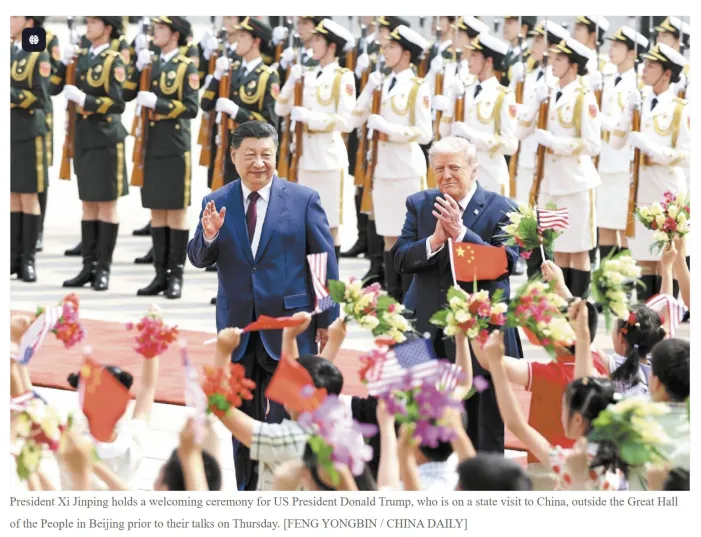
Jan Oberg May 15, 2026 Go to this Fox News page and scroll the whole way down: President Donald Trump tells the world that his meeting with President Xi Jinping yielded a lot of very concrete political and economic results – of course, only where the Chinese side, according to him, agreed with him. He does not mention the Taiwan issue, but Secretary of State, Marco Rubio, says that it did not feature prominently in their talks and that the US policy on Taiwan has not changed. Then go to China Daily – or Global Times – and you will see that for the Chinese it is framework, principles, structure of cooperation etc. that matters – all embedded in the overall idea of “constructive bilateral relationship of strategic stability.” Nowhere is any concrete agreement or deal – all that Trump refers to – mentioned. At the general level, this gives you insights into the very different social...
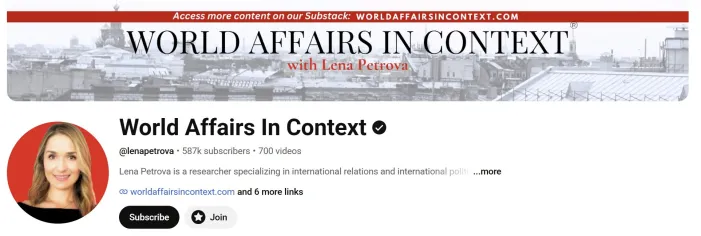
Lena Petrova of “World Affairs In Context” with more than half a million subscribers on YouTube wanted to explore what a peace researcher like me has to say about, among other things, the First and the Second Cold War and why eethics has disappeared from politics. I am particularly happy about this conversation that also yielded an amazing number of very appreciative comments on YouTube. No doubt, people are longing for alternatives, including peace perspectives.
The MIMAC – Military-Industrial-Media-Academic Complex – drives the world’s rampant militarism and wars without end. Here is a short reflection of how it works against all interests of humanity. #5 deals with why there is no real enemy or threat images/analysis. It’s all ex-post constructions. And, btw, theTFF Peace Pulse is now on Rumble.

TFF on Substack

Discover more from TFF Transnational Foundation & Jan Oberg.

Most Popular

Jan Oberg May 15, 2026 Go to this Fox News page and scroll the whole way down: President Donald Trump tells the world that his meeting with President Xi Jinping yielded a lot of very concrete political and economic results – of course, only where the Chinese side, according to him, agreed with him. He does not mention the Taiwan issue, but Secretary of State, Marco Rubio, says that it did not feature prominently in their talks and that the US policy on Taiwan has not changed. Then go to China Daily – or Global Times – and you will see that for the Chinese it is framework, principles, structure of cooperation etc. that matters – all embedded in the overall idea of “constructive bilateral relationship of strategic stability.” Nowhere is any concrete agreement or deal – all that Trump refers to – mentioned. At the general level, this gives you insights into the very different social...
Lena Petrova of “World Affairs In Context” with more than half a million subscribers on YouTube wanted to explore what a peace researcher like me has to say about, among other things, the First and the Second Cold War and why eethics has disappeared from politics. I am particularly happy about this conversation that also yielded an amazing number of very appreciative comments on YouTube. No doubt, people are longing for alternatives, including peace perspectives.
The MIMAC – Military-Industrial-Media-Academic Complex – drives the world’s rampant militarism and wars without end. Here is a short reflection of how it works against all interests of humanity. #5 deals with why there is no real enemy or threat images/analysis. It’s all ex-post constructions. And, btw, theTFF Peace Pulse is now on Rumble.
Read More
Screenshot-2026-05-15-103534
Jan Oberg May 15, 2026 Go to this Fox News page and scroll the whole way down: President Donald Trump tells the world that his meeting with President Xi Jinping yielded a lot of very concrete political and economic results – of course, only where the Chinese side, according to him, agreed with him. He does not mention the Taiwan issue, but Secretary of State, Marco Rubio, says that it did not feature prominently in their talks and that the US policy on Taiwan has not changed. Then go to China Daily – or Global Times – and you will see that for the Chinese it is framework, principles, structure of cooperation etc. that matters – all embedded in the overall idea of “constructive bilateral relationship of strategic stability.” Nowhere is any concrete agreement or deal – all that Trump refers to – mentioned. At the general level, this gives you insights into the very different social...
Screenshot-2026-05-12-104023
Lena Petrova of “World Affairs In Context” with more than half a million subscribers on YouTube wanted to explore what a peace researcher like me has to say about, among other things, the First and the Second Cold War and why eethics has disappeared from politics. I am particularly happy about this conversation that also yielded an amazing number of very appreciative comments on YouTube. No doubt, people are longing for alternatives, including peace perspectives.
Screenshot-2026-04-13-154551 (2)
The MIMAC – Military-Industrial-Media-Academic Complex – drives the world’s rampant militarism and wars without end. Here is a short reflection of how it works against all interests of humanity. #5 deals with why there is no real enemy or threat images/analysis. It’s all ex-post constructions. And, btw, theTFF Peace Pulse is now on Rumble.
Screenshot-2026-04-13-154551 (1)
Jan Oberg, TFF director April 28, 2026 In this third TFF Peace Pulse, I make the important distinction between the violence and the conflict that violence is a symptom of. If you want peace, focus on the underlying conflict because that is the key to resolution, peacemaking, and a better future for the parties. The West is obsessed with violence, just look around you – and 90+ per cent of the public debate is about military issues and other violence – totally wasted for peace. These Peace Pulses will only be published here a few times. You will also not find them on YouTube and Vimeo because both platforms have blocked TFF and me; you know, peace is dangerous these days. Most TFF’s videos since 2007 are now on Rumble.
Screenshot-2026-04-13-154551
In contrast to most, we’ll bring alternatives, solutions, hope and strategies for a better future. Times are dangerous, yes, but that only intensifies the need for constructive thinking and action! Jan Oberg, TFF director April 13, 2026 The new TFF Peace Pulse uses video messages in a new way: Max 3-5-minute-long comments, ideas or perhaps mini-lectures, all about peace – positive peace. We launch them today on April 13, 2026 with a carefully crafted visual aesthetic fitting the content. We hope to publish them regularly from now on. We launch Peace Pulse (PP) – for a number of reasons. The world is in chaos, and there are countless reasons to feel concerned, frustrated, even angry. The atmosphere is saturated with doom and gloom, with negative energy and rear‑mirror thinking, while vision, imagination, alternatives, strategies and genuine future‑mindedness remain in short supply. And without them, we simply can’t save the world. Looking at problems from a hundred angles will...
IMG_5165 (1)
PART II — Publishing Peace in a System That Prioritises Militarism Jan Oberg, TFF director April 10, 2026 How TFF Maintains a Daily Voice in a Digital World Built for Noise This article is part of the series “TFF at 40″ and it invites you to learn about Four Decades of Publishing Peace. It takes a look at how a small, people‑financed peace foundation has communicated across four generations of technology — from wax stencils and fax machines to mass email and Substack — and why TFF continues to publish every single day in a system that rewards noise, conflict, and militarism. ◆ What it means to publish peace every single day in a digital system built for 24/7 news and other noise, confrontation, and militarism. How TFF’s independence, continuity, and global readership defy algorithms, donor cycles, and Western media censorhip — and why the Majority World keeps listening. When the...