Implications of Lula’s failure to triumph in Brazil’s election

LONDON – It was the late president of France, Charles de Gaulle, who famously said, “Brazil has a great future, and it always will have.” With the first round of the Brazilian election over with the favourite to win, President Luiz Inacio Lula da Silva, coming under increasing scrutiny for corruption – the seemingly eternal Brazilian political disease – many observers seriously wonder if Brazil can ever unlock its enormous potential.

Brazil has long lived out its personal fantasy of the archetypal relaxed, tolerant and gregarious country with Copacabana beach, the samba, the carnival and a great deal of sexual freedom, but all this has come at a price – the lack of discipline in both personal and public morality. The ingrained privileges of those who have already made it, together with the manipulative corruption of the established political class, make it difficult for Brazil to engage in the economic surge forward that should be at its beck and call. If ever a country has needed the somewhat mythical “Protestant ethic” it is Brazil.

Brazil once appeared to have everything – a nation of vast dimensions, the size of Europe, bounded by the steamy tropical rain forests of the Amazon to the north, and the cool, temperate, munificent, prairies to the south. No other country in the world offers such geographic contrasts, or probably such an abundance of raw materials and raw opportunities. But for the best part of four centuries too much of this has been squandered- the Amazon raped, the poor exploited and the rich indulged.

Despite all this Brazil has had periods of sustained growth. For the first 80 years of the 20th century it was, along with Taiwan, the fastest growing economy in the world.

But the Brazilian middle and upper class, riding on the subjugation of both the indigenous Indians and the descendants of black slaves, became corrupted by their own greed. By the 1980s the country had ossified into separate societies- one poor and often quite terribly violent (Sao Paulo is the most violent city in the world). The other cosseted and privileged and prepared through their political representatives to use very devious means to stay on top. Too many politicians are beholden to special interests- the self-important, slow moving, judiciary, the powerful landed class, inept and often brutal police forces, the public sector workers with their 100% state pensions and the well to do students who get a disproportionate share of state handouts while working class children are unable to afford a university education.

Hence an interlocking system of privileged that has made it difficult for Lula to break through. Tragically, the impasse has led to his senior party officials, in an attempt to break the stranglehold of an opposition that is powerful enough to stymie many of his parliamentary initiatives, to engage in the same underhand tactics. Although so far Lula has escaped being held to account, successive scandals have claimed the scalps of senior members of his administration. It is quite on the cards that before the second round of this election in a month’s time the opposition and the press will succeed in exposing Lula’s own complicity.

Brazil is the most unequal country in Latin America, and Latin America the most unequal region in the world. “There is increasing evidence that inequality adversely affects economic growth, undermines social cohesion and increases crime,” observes a World Bank report.


Lula has done his upmost to change this situation. If he does win the election it is in large part because his programme, the Bolsa Família, which gives a small handout to poor families who promise in return to send their children to school has been a magnificent success. The poor have also benefited from the low inflation engineered by Lula’s economic team and the economic stability, marked by current account surpluses, achieved by both his administration and that of his immediate predecessor, Fernando Henrique Cardoso. Thanks to this discipline food prices have actually fallen and the government has had the money to spend on making primary education and basic rural health services almost universal.

But for the country to make the next big step forward and sustain the advances in poverty reduction it needs to increase its annual growth rate from under 3% to over 5%. This it can only do if Lula can break the back of entrenched interests and that he can only do if his party his strong in Congress and if he himself has a strong enough mandate to push through what he and his most intimate advisors know they have to do. With Lula now being forced into a second round this now looks unlikely. It is a sad day for Brazil if de Gaulle got it right.

Copyright © 2006 By JONATHAN POWER

I can be reached by phone +44 7785 351172 and e-mail: JonatPower@aol.com

Get free articles & updatesFollow this link to read about – and order –
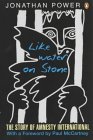
Jonathan Power’s book written for the
40th Anniversary of Amnesty International

“Like Water on Stone – The Story of Amnesty International”
Här kan du läsa om – och köpa –
Jonathan Powers bok på svenska

“Som Droppen Urholkar Stenen“

Foreign affairs columnist, film-maker and author

Share

Related Posts

LONDON – So far so good, at least on the wider level. While internally Iraq seems on the edge of chaos, the much heralded clash of civilizations between the Muslim and Judaeo-Christian worlds has yet to become apparent. We have anger and despair aplenty in the Arab and Muslim worlds. But very little rushing to the standard and there was no great pilgrimage of warriors to join the fight, as happened when the Soviet Union invaded Afghanistan twenty years ago, and then, having driven the Red Army out, were left to ferment in that mountainous redoubt. With the armaments supplied by the CIA the mujahidin were transformed into Al Qaeda that became, for a relatively brief moment as these things go, ‘the greatest threat to the homeland that America has ever known.’ Nevertheless a ‘Cold War’ between much of the Muslim world and the West is certainly in full swing. Winston...
The Challenge of Nuclear Weaponsin the Twenty-first CenturyA Path Forward The peoples and governments of the world face an urgent challenge relating to weaponry of mass destruction and particularly to nuclear weaponry.  At the crossroads of technology, terrorism, geopolitical ambition, and policies of preemption are new and potent dangers for humanity. Despite ending the nuclear standoff of the Cold War era, nuclear weaponry is again menacing the peoples of the world with catastrophic possibilities.  We recognize the need for any government to pursue its security interests in accordance with international law; and further, we recognize that distinctive threats to these interests now exist as a result of an active international terrorist network having declared war on the United States and its allies. Nonetheless, we reject the assessment of the current US administration that upgrading a reliance on nuclear weapons is in any sense justified as a response. We find it...
By Karin Wegestal MP, the Social Democratic Partyon behalf of the Swedish Committee for Solidarity with the Yugoslav People During the last decade, the Federal Republic of Yugoslavia has received more than 500,000 refugees from Croatia and Bosnia, and another 300,000 internally displaced persons, mainly from the province Kosovo and Metohia. For a country with about ten million inhabitants, such an influx of homeless people is obviously a very heavy burden – even under peaceful conditions. But in addition to that, the Federal Republic of Yugoslavia has been the subject to sanctions from the western powers for close to ten years and its infrastructure was badly hurt through Nato’s intense bombardment during 78 days in 1999. The result of all this is that Yugoslavia, once the most developed industrial country in Eastern Europe, is today the poorest country in Europe. In Serbia excluding Kosovo, with about ten million inhabitants and...

Recent Articles

LONDON – It was the late president of France, Charles de Gaulle, who famously said, “Brazil has a great future, and it always will have.” With the first round of the Brazilian election over with the favourite to win, President Luiz Inacio Lula da Silva, coming under increasing scrutiny for corruption – the seemingly eternal Brazilian political disease – many observers seriously wonder if Brazil can ever unlock its enormous potential. Brazil has long lived out its personal fantasy of the archetypal relaxed, tolerant and gregarious country with Copacabana beach, the samba, the carnival and a great deal of sexual freedom, but all this has come at a price – the lack of discipline in both personal and public morality. The ingrained privileges of those who have already made it, together with the manipulative corruption of the established political class, make it difficult for Brazil to engage in the economic...
Below are TFF-related media mentions, comments, videos and social media posts published elsewhere but not on this homepage. We happen to catch and list only a fraction. Regarding video comments and debates, we recommend that you go to the TFF Video Channel on Substack where many of them are reproduced. Jan Oberg is a contributor to China Daily – 52 million daily clicks – and Global Times, CGTN and CCTV (the national television), China Investment, Xinhua News Agency and several others. Articles and videos on these media very often multiply into countless Chinese (and Western media) that re-post them from these main media. Thanks to The China Academy, his analyses, interviews and comments are frequently posted on YouTube channels such as Thinkers Forum and Wave Media. These videos are often re-posted on Bilibili (China’s YouTube), the China Content Center on TikTok, and on the Chinese edition of TikTok, Douyin.com. This means reaching hundreds of millions of viewers worldwide over a year. While there are too many to catch on all these...
How Oxford University Press allowed a personality‑driven narrative to masquerade as scholarship. Jan Oberg, dr hc, TFF director This article has also been published on TFF Substack where more readers react and withdraw their interviews from the project. A Special Issue in a scholarly journal is not an ordinary publication. It is a collective, curated […]

TFF on Substack

Discover more from TFF Transnational Foundation & Jan Oberg.

Most Popular

LONDON – It was the late president of France, Charles de Gaulle, who famously said, “Brazil has a great future, and it always will have.” With the first round of the Brazilian election over with the favourite to win, President Luiz Inacio Lula da Silva, coming under increasing scrutiny for corruption – the seemingly eternal Brazilian political disease – many observers seriously wonder if Brazil can ever unlock its enormous potential. Brazil has long lived out its personal fantasy of the archetypal relaxed, tolerant and gregarious country with Copacabana beach, the samba, the carnival and a great deal of sexual freedom, but all this has come at a price – the lack of discipline in both personal and public morality. The ingrained privileges of those who have already made it, together with the manipulative corruption of the established political class, make it difficult for Brazil to engage in the economic...
Below are TFF-related media mentions, comments, videos and social media posts published elsewhere but not on this homepage. We happen to catch and list only a fraction. Regarding video comments and debates, we recommend that you go to the TFF Video Channel on Substack where many of them are reproduced. Jan Oberg is a contributor to China Daily – 52 million daily clicks – and Global Times, CGTN and CCTV (the national television), China Investment, Xinhua News Agency and several others. Articles and videos on these media very often multiply into countless Chinese (and Western media) that re-post them from these main media. Thanks to The China Academy, his analyses, interviews and comments are frequently posted on YouTube channels such as Thinkers Forum and Wave Media. These videos are often re-posted on Bilibili (China’s YouTube), the China Content Center on TikTok, and on the Chinese edition of TikTok, Douyin.com. This means reaching hundreds of millions of viewers worldwide over a year. While there are too many to catch on all these...
How Oxford University Press allowed a personality‑driven narrative to masquerade as scholarship. Jan Oberg, dr hc, TFF director This article has also been published on TFF Substack where more readers react and withdraw their interviews from the project. A Special Issue in a scholarly journal is not an ordinary publication. It is a collective, curated […]
Read More
girl-5894831_1280
Below are TFF-related media mentions, comments, videos and social media posts published elsewhere but not on this homepage. We happen to catch and list only a fraction. Regarding video comments and debates, we recommend that you go to the TFF Video Channel on Substack where many of them are reproduced. Jan Oberg is a contributor to China Daily – 52 million daily clicks – and Global Times, CGTN and CCTV (the national television), China Investment, Xinhua News Agency and several others. Articles and videos on these media very often multiply into countless Chinese (and Western media) that re-post them from these main media. Thanks to The China Academy, his analyses, interviews and comments are frequently posted on YouTube channels such as Thinkers Forum and Wave Media. These videos are often re-posted on Bilibili (China’s YouTube), the China Content Center on TikTok, and on the Chinese edition of TikTok, Douyin.com. This means reaching hundreds of millions of viewers worldwide over a year. While there are too many to catch on all these...
Screenshot-2026-09-28-145821
How Oxford University Press allowed a personality‑driven narrative to masquerade as scholarship. Jan Oberg, dr hc, TFF director This article has also been published on TFF Substack where more readers react and withdraw their interviews from the project. A Special Issue in a scholarly journal is not an ordinary publication. It is a collective, curated […]
AliA
New pathbreaking theory-of-peace book by Iranian TFF Associate Dr Ali Akbar Alikhani August 27, 2026 Introduction Probably very few Westerners know that Tehran has a peace museum and that Tehran University has pioneered academic peace and conflict studies in the Muslim world, where this field is, regrettably, almost non-existent. Tehran University is the single most […]
HQAB7NMWUAA1gSk
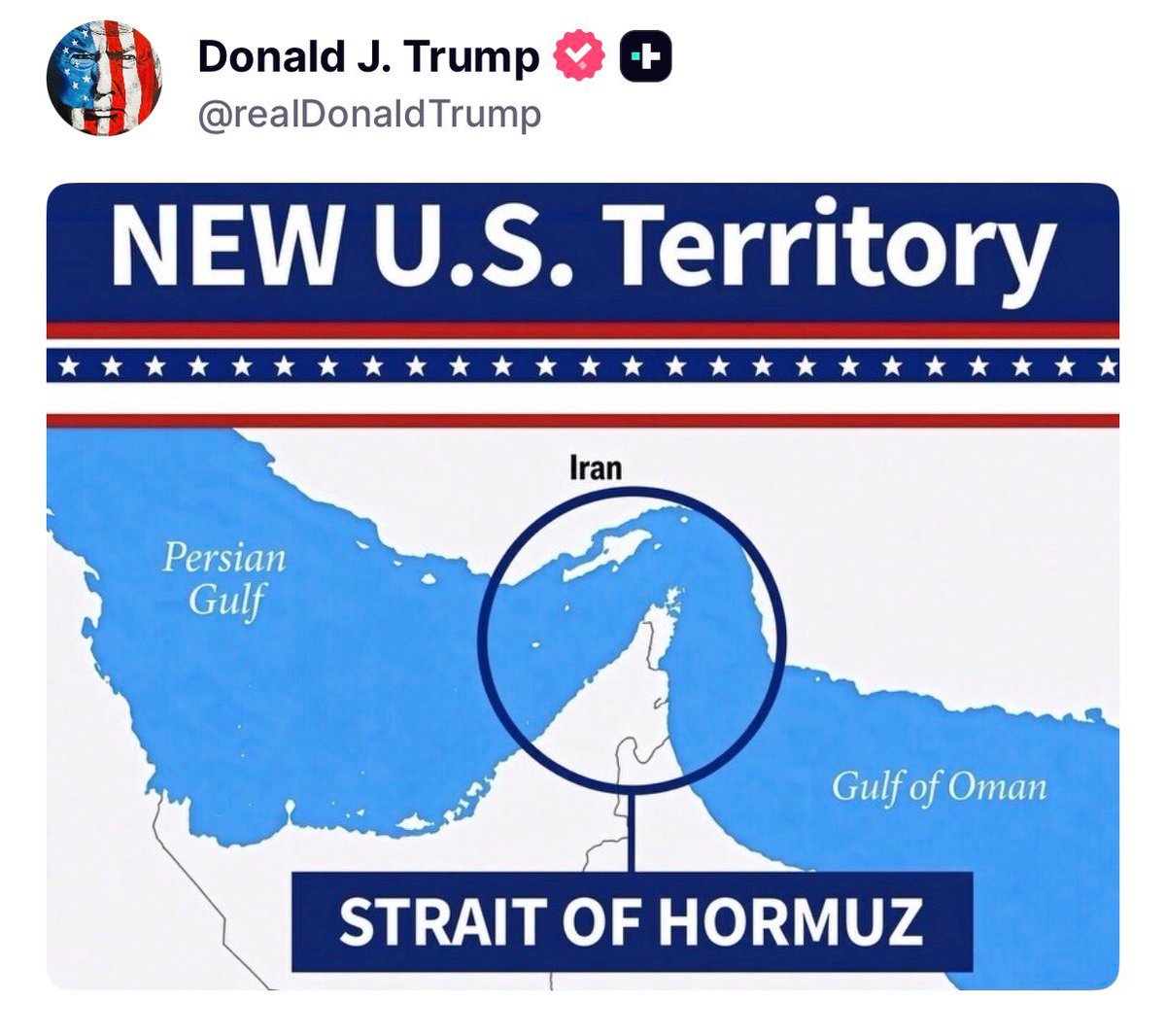
Jan ObergTFF director ☮️ When this morning – August 19, 2026 – I saw the above new US Trump map, I came to think of Frank Zappa, The Mothers of Invention, who said that politics is the entertainment division of the Military-Industrial Complex. That formulation beats many academic analyses – as you will have understood […]
21b7244b-c83e-46c1-ba23-556b21b9a0a8_1536x1024
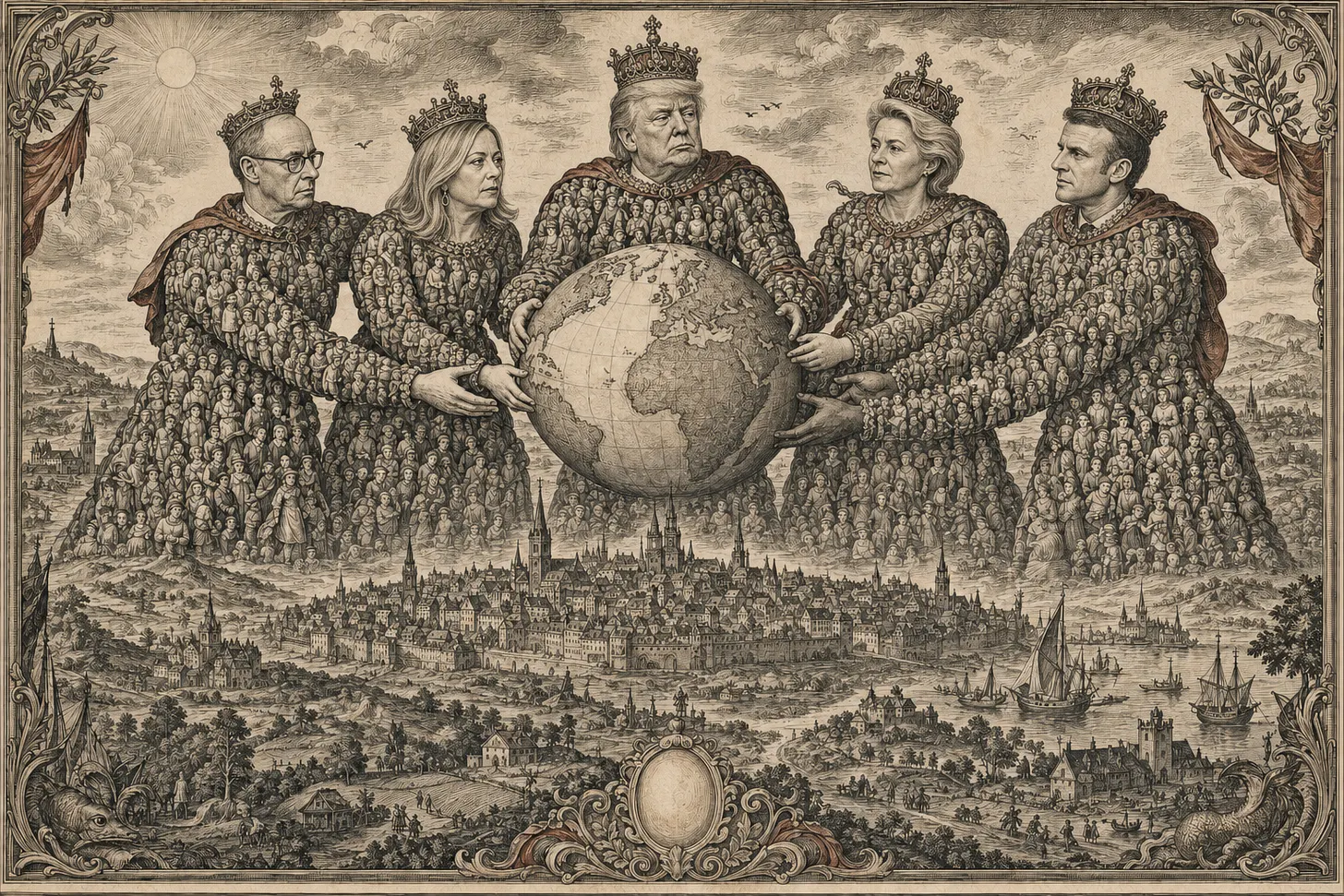
A Civilizational Interpretation of the West’s Body Politic Pascal Lottaz Associate professor at Ritsumeikan University in Kyoto and TFF Board member August 25, 2026 “How do we explain the self-defeating and self-harming policies of Western states? Europe seems to be happily deindustrializing, the US proxy war in Ukraine is killing hundreds of thousands (if not millions) […]
Screenshot-2026-08-22-011310
August 24, 2026 Lena Petrova & Jan Oberg I am truly happy and honoured to have been invited by Lena to her unique channel, World Affairs In Context where she has over 600,000 subscribers. She covers a very wide range of global themes, based not least on her own deep and broad knowledge of economics. I want […]