To tribe or not to tribe in Africa

LONDON – There was a time, not that long ago, when African leaders insisted that it was politically incorrect to discuss tribalism. Tribalism was the face of old Africa that the modernizers, inheriting their domains from the departing colonialists, refused to accept.

Forty years later, the independence movement has more than come of age and today’s African leaders have learnt to be not so glib. Sudan is the latest turn of the screw that started with Katanga and Biafra and went on to Angola, Rwanda and Burundi with passing stops in Zimbabwe, Uganda and Senegal. One hundred years of colonialism (less in many countries) and the creation later of four dozen new national states, each insisting on the sanctity of colonial boundaries as a sensible way of avoiding future inter state conflicts, could not blot out 800 natural tribal boundaries.

On Africa’s left it has been a common jibe that the Europeans “divided” Africa. In fact they brought Africa together. Indeed, as in Nigeria, where Lord Lugard forced into one political unit over 250 ethnic groups involving today’s 130 million people, you could argue that the colonialists went overboard in the quest for unity. In Uganda, the young Winston Churchill’s “pearl of Africa”, the British fashioned a country out of the mixture of Nilotic and Bantu peoples, despite the fact they’d been hostile for centuries. Once the British left it was not long before the country fell apart. Idi Amin’s murderous regime was the product of tribal enmity not the cause. In the Sudan the British tried to push together not just diverse African tribes but Arab peoples too. War erupted 50 years ago, long before oil or China came on the scene.

Sudan is African tribalism in its extreme form. But everywhere on the continent tribalism lives and breathes in everyday life. It is the glue that holds ordinary society together. It is also the gunpowder that can tear it part when politics, economics or the increasing pressures of a degraded, overcrowded, environment combine to ignite the charge.

In day to day village life (and in much urban) tribalism operates like free-masonry or the old school-tie: helping each other with jobs, introductions and sweethearts, sharing the burden of harvest or building a new house, resolving disputes (whether marital or material) and, not least, fashioning art and music. It is only when conflict erupts that these virtues mutate into a virulent, spare-no-quarter, contagion and the wrong tribal scar becomes a death warrant.

This is not to argue that Africa should now be broken up again into 800 parts. This theoretically might work in parts of Nigeria where a tribe like the Igbo, who unsuccessfully fought for their own state of Biafra nearly 40 years ago, is as large as such European nations as Sweden and Holland, but African leaders, and indeed the voters, given the choice, have tried to keep old colonial boundaries intact, deciding that the virtues outweighed the negatives.

If the northern Muslim states were not part of Nigeria it is clear that life under the emirs would be even more old fashioned and less receptive to modern ideas on the necessity for education and health services than it already is. Traditional leaders, even if “closer” to the people, are not necessarily models of virtue. Who, after all, would want to be ruled these days by the late paramount chief of the Lunda, Mwatayamvo, who wore a necklace of human testicles passed down by his ancestors? His writ ran from Zambia to Angola to Zaire and his power was such as to give pause to Zaire’s late dictator, Mobuto Sese Seko.

Still some redrawing of the map of Africa could be a good thing if quietly negotiated. President Olusegun Obasanjo of Nigeria took his dispute with neighbouring Cameroon over ownership of the Bakassi peninsular to the World Court and has accepted a ruling that will give this oil rich land to Cameroon in July.

Nigeria, in fact, despite its many simmering tribal disputes, shows that most of them can be contained and the enmity softened, as long as the political leadership works on the problems, using as it does the negotiating skills of its ranks of experienced politicians and clergymen combined with the financial patronage of the centre. People today forget how terrible the war in Biafra was, yet, despite losing one quarter of their population, Igbos are today well integrated into Nigeria and many of the scars have healed. Moroever, given Nigeria’s large and diverse population, the number of deaths in recent inter-tribal disputes remains modest. Africans are better at forgiveness than most other people.

Even in Sudan peace may be possible. All of us, inside and outside Africa, must persist in trying to achieve it.

Foreign affairs columnist, film-maker and author

Share

Leave a Reply

Your email address will not be published. Required fields are marked *

Related Posts

Peace is promoted by constructive proposals and dialogue Four preceding PressInfos have expressed concern over — and criticised — the ongoing, militarisation of the EU. Some will say: but there are no alternatives. We believe that there are always alternatives, that democracies are characterised by alternatives and choice, and that openly discussed alternatives will improve the quality and legitimacy of society’s decision–making. In addition, it is an intellectual and moral challenge to not only criticise but also be constructive. If we only tell people that we think they are wrong, they are not likely to listen. However, if we say: what are your views on this set of ideas and steps? — we may sometimes engage them in dialogue and sow a seed. Most people in power circles live their daily lives in in a time frame and a social space where certain ideas, viewpoints and concepts are just not...
Photos © TFF 2000 Read PressInfo 90 “Lift the Sanctions and Bring More Aid to Yugoslavia” See Pictures from Belgrade © TFF 2000 Please reprint, copy, archive, quote or re-post this item, but please retain the source.
Av FRANK SØHOLM GREVIL 16 augusti 2004  Vi er nu nået til tredje akt i det absurde teaterstykke, der i analogi med de store skueprocesser i Moskva 1936-38 er blevet døbt ‘Grevil-sagen’. Første akt bestod i min anonyme fremlæggelse af egenhændigt nedklassificerede rapporter i Berlingske Tidende i februar og marts. Andet akt udgjordes af min fremtræden med navn og billede i Information i april samt den efterfølgende mediestorm, som uden min direkte medvirken kostede en forsvarsminister taburetten samt en sigtelse for brud på tavshedspligten. Tredje akt bliver en retssag, hvor jeg står tiltalt for at have overtrådt straffelovens bestemmelser om uberettiget videregivelse eller udnyttelse af fortrolige oplysninger. Statsanklageren har ovenikøbet valgt at påberåbe sig særligt skærpende omstændigheder. Da jeg aldrig har modtaget betaling for at stille rapporterne til rådighed eller lade mig interviewe, må det skærpende bestå i, at “videregivelsen eller udnyttelsen er sket under sådanne omstændigheder, at det påfører...

Recent Articles

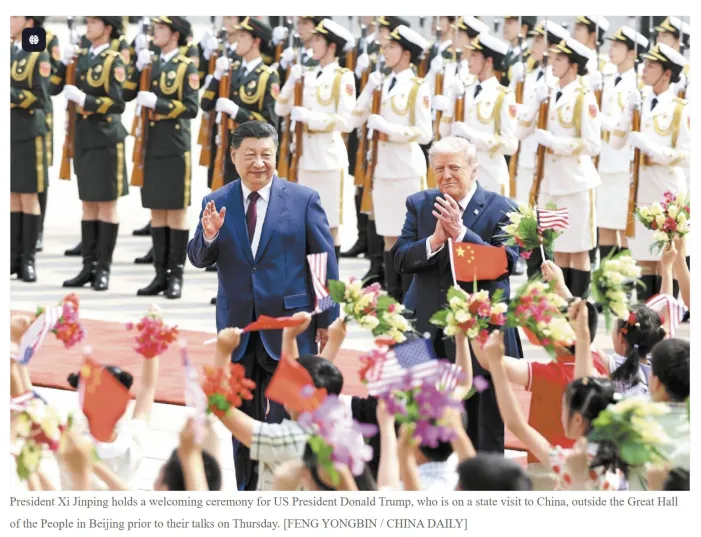
Jan Oberg May 15, 2026 Go to this Fox News page and scroll the whole way down: President Donald Trump tells the world that his meeting with President Xi Jinping yielded a lot of very concrete political and economic results – of course, only where the Chinese side, according to him, agreed with him. He does not mention the Taiwan issue, but Secretary of State, Marco Rubio, says that it did not feature prominently in their talks and that the US policy on Taiwan has not changed. Then go to China Daily – or Global Times – and you will see that for the Chinese it is framework, principles, structure of cooperation etc. that matters – all embedded in the overall idea of “constructive bilateral relationship of strategic stability.” Nowhere is any concrete agreement or deal – all that Trump refers to – mentioned. At the general level, this gives you insights into the very different social...
Lena Petrova of “World Affairs In Context” with more than half a million subscribers on YouTube wanted to explore what a peace researcher like me has to say about, among other things, the First and the Second Cold War and why eethics has disappeared from politics. I am particularly happy about this conversation that also yielded an amazing number of very appreciative comments on YouTube. No doubt, people are longing for alternatives, including peace perspectives.
The MIMAC – Military-Industrial-Media-Academic Complex – drives the world’s rampant militarism and wars without end. Here is a short reflection of how it works against all interests of humanity. #5 deals with why there is no real enemy or threat images/analysis. It’s all ex-post constructions. And, btw, theTFF Peace Pulse is now on Rumble.

TFF on Substack

Discover more from TFF Transnational Foundation & Jan Oberg.

Most Popular

Jan Oberg May 15, 2026 Go to this Fox News page and scroll the whole way down: President Donald Trump tells the world that his meeting with President Xi Jinping yielded a lot of very concrete political and economic results – of course, only where the Chinese side, according to him, agreed with him. He does not mention the Taiwan issue, but Secretary of State, Marco Rubio, says that it did not feature prominently in their talks and that the US policy on Taiwan has not changed. Then go to China Daily – or Global Times – and you will see that for the Chinese it is framework, principles, structure of cooperation etc. that matters – all embedded in the overall idea of “constructive bilateral relationship of strategic stability.” Nowhere is any concrete agreement or deal – all that Trump refers to – mentioned. At the general level, this gives you insights into the very different social...
Lena Petrova of “World Affairs In Context” with more than half a million subscribers on YouTube wanted to explore what a peace researcher like me has to say about, among other things, the First and the Second Cold War and why eethics has disappeared from politics. I am particularly happy about this conversation that also yielded an amazing number of very appreciative comments on YouTube. No doubt, people are longing for alternatives, including peace perspectives.
The MIMAC – Military-Industrial-Media-Academic Complex – drives the world’s rampant militarism and wars without end. Here is a short reflection of how it works against all interests of humanity. #5 deals with why there is no real enemy or threat images/analysis. It’s all ex-post constructions. And, btw, theTFF Peace Pulse is now on Rumble.
Read More
Screenshot-2026-05-15-103534
Jan Oberg May 15, 2026 Go to this Fox News page and scroll the whole way down: President Donald Trump tells the world that his meeting with President Xi Jinping yielded a lot of very concrete political and economic results – of course, only where the Chinese side, according to him, agreed with him. He does not mention the Taiwan issue, but Secretary of State, Marco Rubio, says that it did not feature prominently in their talks and that the US policy on Taiwan has not changed. Then go to China Daily – or Global Times – and you will see that for the Chinese it is framework, principles, structure of cooperation etc. that matters – all embedded in the overall idea of “constructive bilateral relationship of strategic stability.” Nowhere is any concrete agreement or deal – all that Trump refers to – mentioned. At the general level, this gives you insights into the very different social...
Screenshot-2026-05-12-104023
Lena Petrova of “World Affairs In Context” with more than half a million subscribers on YouTube wanted to explore what a peace researcher like me has to say about, among other things, the First and the Second Cold War and why eethics has disappeared from politics. I am particularly happy about this conversation that also yielded an amazing number of very appreciative comments on YouTube. No doubt, people are longing for alternatives, including peace perspectives.
Screenshot-2026-04-13-154551 (2)
The MIMAC – Military-Industrial-Media-Academic Complex – drives the world’s rampant militarism and wars without end. Here is a short reflection of how it works against all interests of humanity. #5 deals with why there is no real enemy or threat images/analysis. It’s all ex-post constructions. And, btw, theTFF Peace Pulse is now on Rumble.
Screenshot-2026-04-13-154551 (1)
Jan Oberg, TFF director April 28, 2026 In this third TFF Peace Pulse, I make the important distinction between the violence and the conflict that violence is a symptom of. If you want peace, focus on the underlying conflict because that is the key to resolution, peacemaking, and a better future for the parties. The West is obsessed with violence, just look around you – and 90+ per cent of the public debate is about military issues and other violence – totally wasted for peace. These Peace Pulses will only be published here a few times. You will also not find them on YouTube and Vimeo because both platforms have blocked TFF and me; you know, peace is dangerous these days. Most TFF’s videos since 2007 are now on Rumble.
Screenshot-2026-04-13-154551
In contrast to most, we’ll bring alternatives, solutions, hope and strategies for a better future. Times are dangerous, yes, but that only intensifies the need for constructive thinking and action! Jan Oberg, TFF director April 13, 2026 The new TFF Peace Pulse uses video messages in a new way: Max 3-5-minute-long comments, ideas or perhaps mini-lectures, all about peace – positive peace. We launch them today on April 13, 2026 with a carefully crafted visual aesthetic fitting the content. We hope to publish them regularly from now on. We launch Peace Pulse (PP) – for a number of reasons. The world is in chaos, and there are countless reasons to feel concerned, frustrated, even angry. The atmosphere is saturated with doom and gloom, with negative energy and rear‑mirror thinking, while vision, imagination, alternatives, strategies and genuine future‑mindedness remain in short supply. And without them, we simply can’t save the world. Looking at problems from a hundred angles will...
IMG_5165 (1)
PART II — Publishing Peace in a System That Prioritises Militarism Jan Oberg, TFF director April 10, 2026 How TFF Maintains a Daily Voice in a Digital World Built for Noise This article is part of the series “TFF at 40″ and it invites you to learn about Four Decades of Publishing Peace. It takes a look at how a small, people‑financed peace foundation has communicated across four generations of technology — from wax stencils and fax machines to mass email and Substack — and why TFF continues to publish every single day in a system that rewards noise, conflict, and militarism. ◆ What it means to publish peace every single day in a digital system built for 24/7 news and other noise, confrontation, and militarism. How TFF’s independence, continuity, and global readership defy algorithms, donor cycles, and Western media censorhip — and why the Majority World keeps listening. When the...