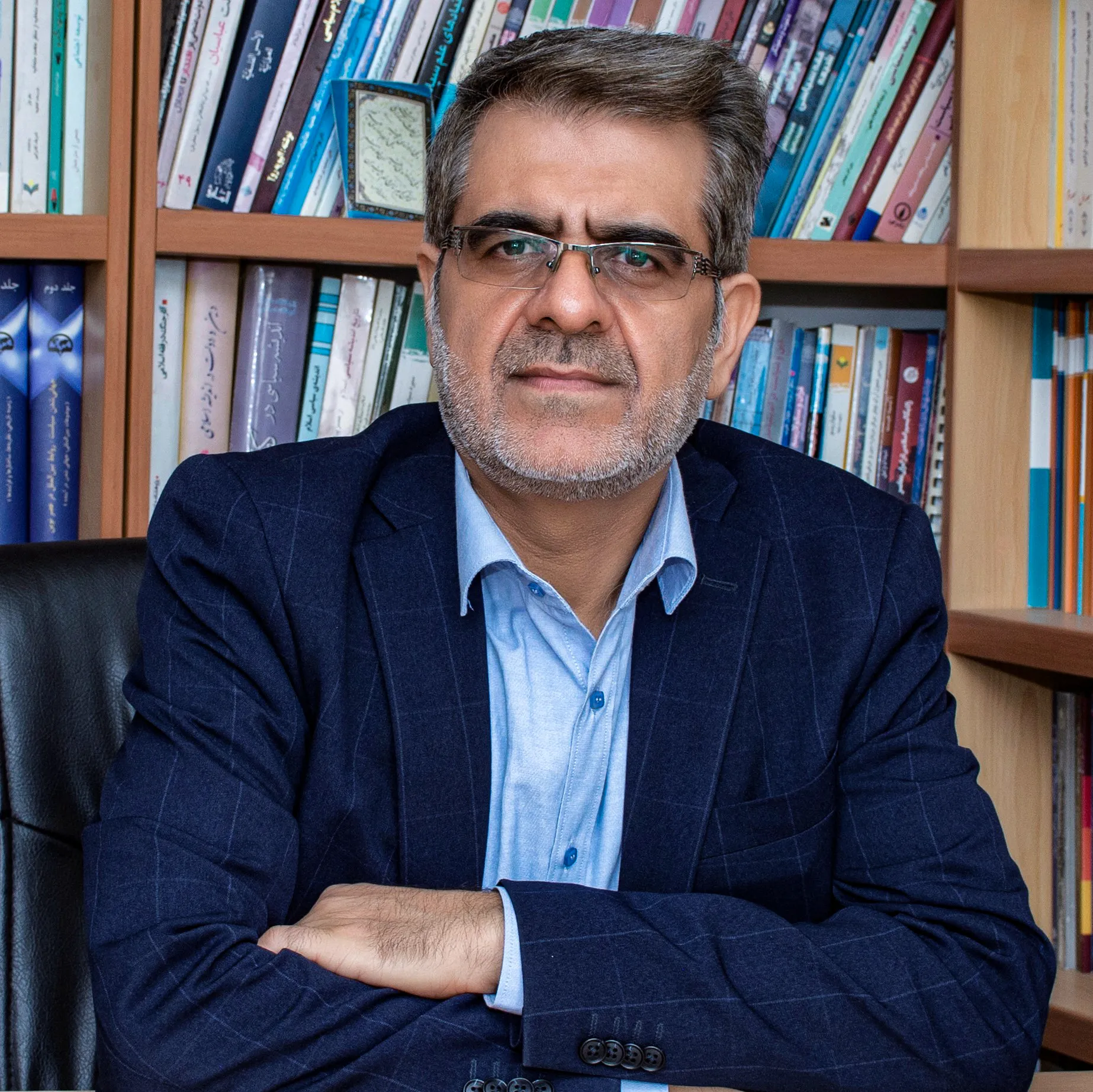
Director of Peace Information Center, Foundation for Democracy and Development Studies
Faculty of Political Science, Thammasat University
TFF associate
On January 22, 2004, two men on a motorcycle used a long knife to slit the throat of a 64 year-old Buddhist monk to death. The monk just returned from his early morning round of alms-begging. Then on January 24, three more monks were attacked, two were dead. A young novice aged only 13 died in a hospital after being attacked in the head by a youth wielding a machete on a motorcycle while another 65-year-old monk was killed in the same manner. A third machete attack put another 25 year-old monk in a hospital with serious injuries. The January 22 incident occurred in Bacho, Narathiwat while the other took place in different areas of Yala, both are Thailand’s Southernmost provinces.
On the very same day, there were other killings in Yala using knives or machetes, two of the victims were non-Muslims, while the third was a Muslim policeman. Rumors of all sorts have been spreading including the whispers that there had been more attacks and some of the victims were just children.
In the recent context of continuing violence against state authorities, mostly policemen, Prime Minister Thaksin Shinnawat aptly described the visible absence of popular support for state authorities in the Muslim South as a symptom of “accumulated weakness” suffered by the Thai state. On the other hand, Deputy Prime Minister Chavalit Yongchaiyut remarked that cold-blooded attacks on Buddhist monks were too unusual to be the works of locally trained rebels. While the Prime Minister’s opinion reflected a keen understanding of failures of state machinery, the latter expressed a disbelief in local capabilities for such extreme and explosive violence and thus relegated them to foreign influence.
I believe these recent incidents need to be critically construed by taking into account the cultural politics at work. The question I am interested is not who committed this horrendous act and why. The culprits’ identities and their motivations, though important, are mainly of police interest. I am more interested in understanding the damages done to the body politic of Thai society and how the impending destructive effects could be mitigated. To understand this extreme violence means, among other things, to be able to “read” the cultural meanings of these brutal attacks on the monks. To mitigate its destructive effects means finding an alternative, such as peace cultures, sufficiently comprehensive to ensure a sustainable peace and security understood as the creation of a political society where people with diverse cultural and historical backgrounds could proudly call it their home.
The Cultural Politics of Monk Killings
The lexicon of killings as events in Southern Thailand has changed. Two decades ago, there were incidents such as those of bus robberies where Thai Buddhist passengers were separated from the Muslims and then shot. In 2003, the main targets of killings were policemen, both Muslims and non-Muslims. Then in the first week of 2004, soldiers became targets. While violence in the South has been recurring, what has transpired in January this year has been glaringly unusual, beginning with the well-organised attack of an army camp in Narathiwat, stealing a hundred, if not more than three hundred guns, and killing four soldiers.
It was obviously the work of at least some highly organized 40-50 men, yet it was silently carried out in secrecy that seems to loudly echo the lack of trust that exists between the state and local people. But the most dangerous are these recent killings of Buddhist monks in provinces where Muslims are the majority. Excluding a fire at a temple in Satun, it seems that the province in the deep South where such violence has not taken place is Pattani.
This weekend the province, and the rest of the Muslim world, will celebrate Eid-ul Adha, the conclusion of the Hajj Pilgrimage to Mecca. In Pattani, however, there will be an important local festival of the Chinese goddess, Lim Kaw Niew, whose dominant mythical story intertwines with the unfinished Kru-ze mosque, which gave rise to a huge protest in the early 1990s. The festival will normally be celebrated 14 days after January 22-23 Chinese New Year.
The following facts about violence in Narathiwat and Yala need to be carefully registered. First, monks were killed and injured, the youngest who died was 13 and the oldest was 65. Second, they were killed while returning from or going through their daily alms-begging in the mornings. Third, weapons used by the youths on motorcycles were either knives or machetes. Though shocking in the Thai context, it is not difficult to see that such an attack signifies that, in the eyes of the killers, neither the religious robes nor the ages could offer cultural protection for the victims, as it might have thought to be.
In addition, the timing of the killing showed it was intentional without regard for the sacred duties the monks were performing. But the most culturally brutal aspect of this killing is the choice of weapon. In addition to their availability, the ease with which they could be concealed, the silence which accompanies its uses, knives and machetes reproduce another chilling quality: proximity between the victims and the perpetrators.
In using the knives or the machetes, the killers/attackers have to be close enough to their victims. It has been demonstrated that even in war, killing with a knife is extremely rare. Most knife kills appear to be of the commando nature: killing from behind which is less traumatic than a kill from the front, since the face and all its messages and contortions cannot be seen by the soldiers.
The use of modern weapons is dangerous precisely because it creates a physical distance between their users and victims such that the former could be morally shielded from the act of killing. Seen from this perspective, the choice of knives and machetes indicate the fact that the killers did not want to be morally shielded. It could therefore be seen as an amoral act, or much more dangerously, a moral act in a world torn asunder by cultural prejudices. Either way, the cultural significance of killing monks with knives or machetes lie in the situation when the killer could look right into the eyes of their victims, young and old, and see nothing that could deter their violence.
In a most fascinating account on war, genocide and modern identity, Mirrors of Destruction (Oxford University Press, 2000), Omer Bartov described a chilling experience when a former Nazi concentration camp inmate, Elie Wiesel, looked into the mirror for the first time after he was liberated from the concentration camp and could not reconcile his reflection of the dead face that stared back at him from the mirror with his self-awareness. Yehiel Dinur recounted the moment when he stares into the eyes of the SS man responsible for sending him to the gas chamber and realised that had their roles been reversed, the universe would not have been different.
This phenomenon could perhaps be called “the vampirisation of humanity.” Like vampires in folktales who look into the mirror and see no reflection, “we are deprived of our humanity when it is no longer reflected in the eyes of the beholder.”
If this is indeed the cultural connotation of such violence, the knives did more than killing Buddhist monks. They cut deep into the cultural ties that bind community of differences together. Conflicts in Southern Thailand, at times violent, have mainly been vertical – between state authorities and the local people, both Muslims and non-Muslims. In the communities, workplaces, markets and other public space, though prejudices among peoples of differences naturally exist, violent conflicts have been rare. This is perhaps due to the fact that Muslims and non-Muslims alike in the South possess a sufficiently high degree of cultural sensitivity necessary for living together in just such a context.
It is a time like this when the sense of community is being seriously tested. The question is this: in order to ensure peace and security in Southern Thailand, how could this sense of community be strengthened?
Relying on Peace Cultures to Fight the Demon Within?
As an attempt to shatter a sense of community among peoples of differences, the most devastating consequences of violence against Buddhist monks are primarily cultural. Therefore to respond with state violence, given past history of injustices in the South, present level of abject poverty and the tide of global Islamic resurgence in some forms, might contribute to furthering the existing cultural rift.
Peace cultures, on the other hand, could serve as an alternative that would be conducive to the restoration of a sense of community among the Muslims and non-Muslims in the South.
According to the eminent peace researcher- Elise Boulding, peace culture is a mosaic, made up of various ingredients which include historical memories of peaceful peoplehood, teachings and practice of communities of faith on gentleness, compassion, forgiveness and the inward disciplines of reflection and prayers, and most relevant here, forms of governance that ensure justice and means of dealing with conflicts, differences, strangers in a problem solving and reconciling manners.
From a Muslim’s perspective, strengthening peace cultures would mean finding religious injunctions that would de-legitimise such senseless violence. In Islamic tradition, the companion of the Prophet Muhammad and the first Caliph, Abu Bakr, laid down ten rules as guidance in the battlefield. He said: “You must not mutilate dead bodies. Neither kill a child, nor a woman, nor an aged man. Bring no harm to the trees, nor burn them with fire, especially those which are fruitful. Slay not any of the enemy’s flock , save for your food. You are likely to pass by people who have devoted their lives to monastic services, leave them alone.”
This means that in Islam, killing those who are innocent, unrelated to the war, even trees and animals, and especially monks or priests or clergy are unacceptable.
But in the present situation of Southern Thailand, de-legitimising violence with peace cultures alone may not be sufficient. More innovative cultural actions are needed. It is therefore important to underscore the cultural elements that would foster and legitimise the working together of Muslims and non-Muslims in a collaborative effort to defend local cultures against violence, especially places of worship and all types of religious personnel, Buddhist monks as well as Islamic teachers, among others.
The initiative and the action should be carried out from within the existing civil society since there is a world of difference between a Buddhist temple in Pattani protected by guns of state authorities or by the joining hands of members of different communities of faith.
Once the cultural meaning of such killing is adequately understood, once the use of violence as a solution to political problems culturally is de-legitimised, and once cultural elements conducive to the strengthening of civil society working together to defend local cultures are fostered and nurtured, perhaps the demon within that made some of us look into the eyes of the victims and see nothing, could be exorcised and devastating effects of violence in the South mitigated.
Printed on the op-ed. page of Bangkok Post, http://www.bangkokpost.net January 30, 2004.