
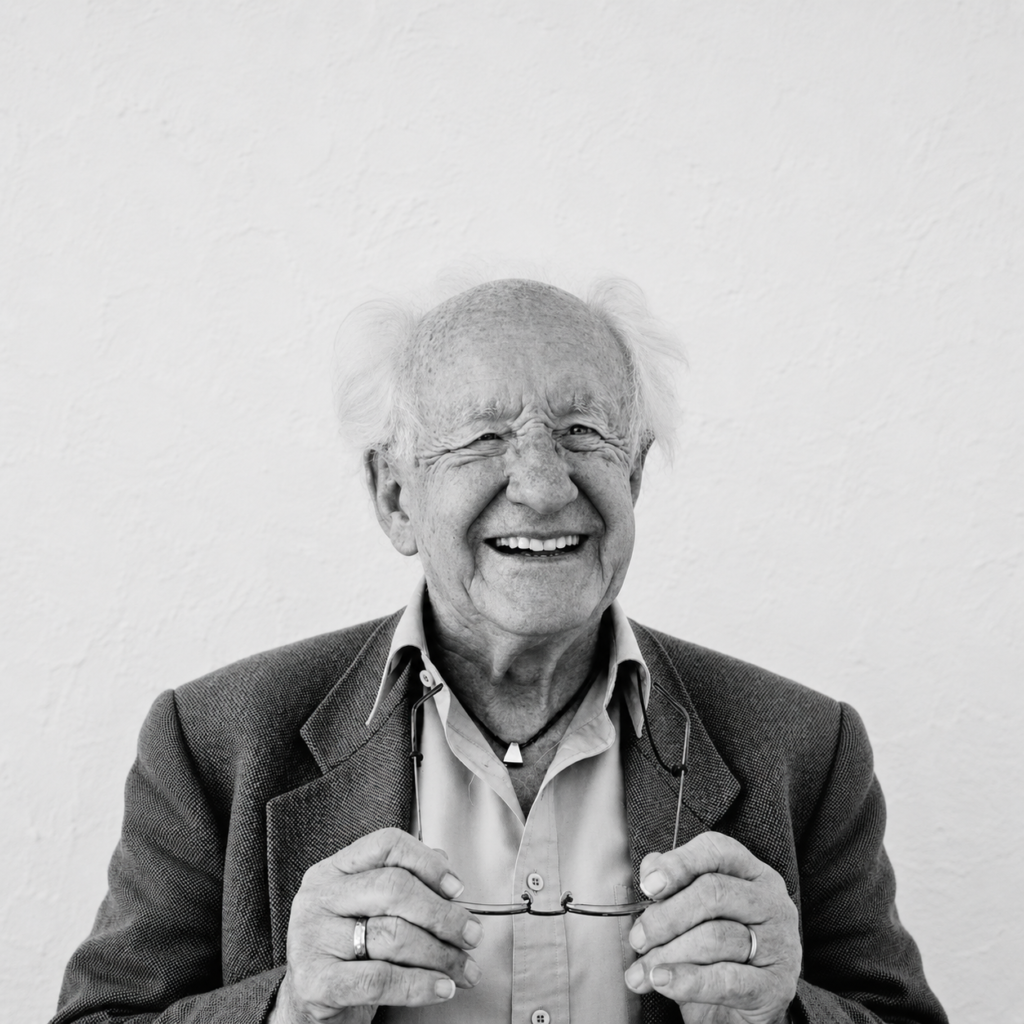
Review Zelim Skurbaty's "As If People Mattered"

AS IF PEOPLES MATTERED
By Zelim Skurbaty
Published by Kluwer Law International
Martinus Nijhoff Publishers
The Hague/Boston/London, 2000, xxvii + 498pp.
The Raoul Wallenberg Institute Human Rights Library Vol. 4

Dr Skurbaty has written a very important book, probably destined to become something of a classic. He draws upon an enormous amount of philosophy, humanities and social science and footnotes everything, including his frequent use of Latin.

He is a learned, not only educated, man, up to a level I have only experienced in academies in the old Soviet Union, leaning on the older Russian tradition now disappearing rapidly, yielding to business administration and computer science there as elsewhere. As a learned man Skurbaty belongs to an endangered species; his is not the kind of knowledge picked up by a voracious reader but knowledge with purpose. He mobilizes his intellectual apparatus to explore well-mined territory occupied by international law.

Then there are the many philosophical and social science excursions, whether read as refresher courses or as initiation, always important. For him the whole legal approach is located in the interphase between philosophy and the “machine” — the legal machinery, he quotes Le Corbusier on the house as a machine for living. The philosophy defines our values, the machine implements them. And Skurbaty’s analysis of how they then proceed to play games is masterly, using the whole machinery for non-implementation rather than implementation.

My first doubt centers on the word “our”. Where is this majestic “we”? I see for my inner eye armies of lawyers, white upper/middle class Western Big Power male from uniervsities serving the state, and those trained by them. I smell class, “ours” for sure, in people taking sleep and toilet so much for granted that they do not even figure as universal human rights. Take an example: the Badinter commission on Yugoslavia, quoted at some length. Imagine they had been courageous and creative enough to acknowledge the Chinese boxes nature of “peoples”, with peoples within peoples within peoples, and not so scared by the word-pair secession-independence that they cannot open for a wide range of types of autonomy. The Croats had an obvious right to self-determination, but so do the Serbsin Krajina and Slavonija (and, problematic for those Serbs, how about Croat minorities inside those territories?) Being French, as Skurbaty indicates, they of course had Basques and Corsicans in mind when they were writing their “opinion” (a correct term, see p. 257). Uti possidetis, the disastrous Damocles sword hanging over the whole self-determination exercise, serves as a protection of status quo, and was used–possibly with the whole Yugoslav disaster as a result. The Badinter commission did a lousy job because they could play that game with impunity.

The book is not easy reading. But then it can be read in at least two ways. Each part, each section and sub-section, is self-contained and conveys enormous, useful information, for instance his “clinical” cases, such as Yugoslavia, Palestine, and above all Chechnya. Or, take footnote 11 on p. 76: the list of 32 peoples nested inside European nation-states – with very violent, or distant premonitions of coming struggles between nationalism for autonomy, sovereignty, even – God forbid -independence. To me they are like the famous seeds under asphalt or water in the crevices of a mountain: come spring and they sprout, come winter and the water freezes. And the asphalt bursts and so does the mountain because of some very simple properties of seeds and water. Well, not always. Smear on layers of asphalt and granite and some flexibility and it helps. What is this force? Skurbaty deals not only with peoples, but also with minorities. For the latter he quotes Asbjoern Eide’s very useful definition pointing to the obvious but often forgotten: minority is an artihmetic entity, it means less than half. Why that concern? Because democracy has a built-in obsession with more than half, called the “will of the people.” If the people is the Sovereign then there have to be limitations on that sovereign power lest it ends in despotic absolutism. Hence human rights protection also in, and for, democracies.

But that is not the end of the story, as Skurbaty’s title, a skilful play on Schumacher’s famous “Economics as if people mattered”, indicates. So, what constitutes a “people”? Well, they are different from people around them. And they seem to have one simple characteristic in common that I wish Skurbaty had highlighted more: they want at least their proximate rulers to be of their own kind; they detest rule by other peoples. Some of them may say that to be ruled by their kind at local or district level is enough and claim autonomy, others may say the state level is needed and claim independence, still others, like Americans, want nobody in any form on top of them, not the UN for instance, and claim universal sovereignty, highly compatible with building a universal empire (to want nobody on top can also be a cloak for wanting to be on top of others.)

Let us face it: given the choice, many people would prefer being ruled by their own dictator to being ruled democratically by a majority not of their own kind. To use a well-known quote: he may be a son-of-a-bitch but he is our son-of-a-bitch. Human right and democracy will be seen as a game, one more majority way of legitimizing the state as a prison of peoples. But most seem to want both: a democracy, of, for and by their own demos. And that may spell secession, unless the ruling majority has sufficient skill to be flexible and work out some scheme for (con)federation, territorial or–much more promising–non- territorial. Very often not even that is needed. Even individual human rights may do: give them the right to talk their own language and practice their own religion in private and public space, and the quest may start withering away. Go one step further, give them group rights, e.g., to run their own schools in their own idiom with full recognition and that may be a successful conflict transformation.

For those believing in humanism and humanist ethics rather than theism and theocratic ethics the quest for recognition is satisfied when major rites- naming, confirmation, wedding, burial–are run by themselves, their way. Homosexuals are in the early stages of that struggle. But what happens if humanists, gays and lesbians want to be governed by their own kind, and only their own kind?

That quest for religious autonomy was exactly the pillar on which the USA was founded. But, and Skurbaty might have given more attention to that, the problem is not so much that the difficulty defining a people when they are also playing games (will this definition destabilize my country?) as the fact that the criteria are changing. The world may become polyglot and ecumenical. But that is not the end of the story. New criteria of people-ness, like sexual orientation, may come up any time.

One criterion plays a surprisingly minor role in Skurbaty’s dense, rich volume: territorial attachment (the index has few references to territory). With tourism being the biggest world industry, and migration a major fact of life, one may argue that people become poly-spatial, ecu-territorial. This may be true, but we are not there yet. There is asynchrony in the world. Globalized upper/middle class Big Power males, poly-glot, secularized and poly-jet, may project their sense of non- ttachment to such “tribal” characteristics as idiom, faith and territorial attachment to some plains or hills on the rest of humanity, and proclaim some new universal principle. But to those others, billions of them, they look like a power-greedy ayer of global foam floating on top of the world, attached to nothing but their own egocentric greed, suffering from advanced anomie (no compelling values) and atomie (no social tissue).

And that is where my second objection enters: Skurbaty’s use of “individuation”. He mentions e pluribus unum and collective-in-the individual, indicative of sensitivity to the I-we dialectic. But there are cultures leaning more to the I side and cultures leaning more to the we-side. Skurbaty’s individuation favors I-cultures and sounds like a plea for individuals to escape from collective strait-jackets. The problem is whether this is not also a plea for anomie (culture-lessness) and atomie (structure-lessness) in the present reality of postmodernism, favoring the egocentric cost-benefit amoral code of economism considerably more than the Scripture Skurbaty appeals to. Skurbaty might have benefitted from the literature on Cambodia, a Buddhist we-culture exposed to a Western I- culture in the form of Western democracy and individualized human rights that in the longer run may prove as lethal as the killing fields of US bombing and the Khmer Rouge. I sense culture-blindness behind “individuation”, added to the structure-blindness of “our” mentioned above.

But I leave this aside. Skurbaty’s book remains a tour de force. A gold mine of nuggets to be polished for years to come. Whoever reads the book will be grateful that the book exists.

Share

Leave a Reply

Your email address will not be published. Required fields are marked *

Related Posts

Peace is promoted by constructive proposals and dialogue Four preceding PressInfos have expressed concern over — and criticised — the ongoing, militarisation of the EU. Some will say: but there are no alternatives. We believe that there are always alternatives, that democracies are characterised by alternatives and choice, and that openly discussed alternatives will improve the quality and legitimacy of society’s decision–making. In addition, it is an intellectual and moral challenge to not only criticise but also be constructive. If we only tell people that we think they are wrong, they are not likely to listen. However, if we say: what are your views on this set of ideas and steps? — we may sometimes engage them in dialogue and sow a seed. Most people in power circles live their daily lives in in a time frame and a social space where certain ideas, viewpoints and concepts are just not...
Photos © TFF 2000 Read PressInfo 90 “Lift the Sanctions and Bring More Aid to Yugoslavia” See Pictures from Belgrade © TFF 2000 Please reprint, copy, archive, quote or re-post this item, but please retain the source.
Av FRANK SØHOLM GREVIL 16 augusti 2004  Vi er nu nået til tredje akt i det absurde teaterstykke, der i analogi med de store skueprocesser i Moskva 1936-38 er blevet døbt ‘Grevil-sagen’. Første akt bestod i min anonyme fremlæggelse af egenhændigt nedklassificerede rapporter i Berlingske Tidende i februar og marts. Andet akt udgjordes af min fremtræden med navn og billede i Information i april samt den efterfølgende mediestorm, som uden min direkte medvirken kostede en forsvarsminister taburetten samt en sigtelse for brud på tavshedspligten. Tredje akt bliver en retssag, hvor jeg står tiltalt for at have overtrådt straffelovens bestemmelser om uberettiget videregivelse eller udnyttelse af fortrolige oplysninger. Statsanklageren har ovenikøbet valgt at påberåbe sig særligt skærpende omstændigheder. Da jeg aldrig har modtaget betaling for at stille rapporterne til rådighed eller lade mig interviewe, må det skærpende bestå i, at “videregivelsen eller udnyttelsen er sket under sådanne omstændigheder, at det påfører...

Recent Articles

Jan Oberg May 15, 2026 Go to this Fox News page and scroll the whole way down: President Donald Trump tells the world that his meeting with President Xi Jinping yielded a lot of very concrete political and economic results – of course, only where the Chinese side, according to him, agreed with him. He does not mention the Taiwan issue, but Secretary of State, Marco Rubio, says that it did not feature prominently in their talks and that the US policy on Taiwan has not changed. Then go to China Daily – or Global Times – and you will see that for the Chinese it is framework, principles, structure of cooperation etc. that matters – all embedded in the overall idea of “constructive bilateral relationship of strategic stability.” Nowhere is any concrete agreement or deal – all that Trump refers to – mentioned. At the general level, this gives you insights into the very different social...
Lena Petrova of “World Affairs In Context” with more than half a million subscribers on YouTube wanted to explore what a peace researcher like me has to say about, among other things, the First and the Second Cold War and why eethics has disappeared from politics. I am particularly happy about this conversation that also yielded an amazing number of very appreciative comments on YouTube. No doubt, people are longing for alternatives, including peace perspectives.
The MIMAC – Military-Industrial-Media-Academic Complex – drives the world’s rampant militarism and wars without end. Here is a short reflection of how it works against all interests of humanity. #5 deals with why there is no real enemy or threat images/analysis. It’s all ex-post constructions. And, btw, theTFF Peace Pulse is now on Rumble.

TFF on Substack

Discover more from TFF Transnational Foundation & Jan Oberg.

Most Popular

Jan Oberg May 15, 2026 Go to this Fox News page and scroll the whole way down: President Donald Trump tells the world that his meeting with President Xi Jinping yielded a lot of very concrete political and economic results – of course, only where the Chinese side, according to him, agreed with him. He does not mention the Taiwan issue, but Secretary of State, Marco Rubio, says that it did not feature prominently in their talks and that the US policy on Taiwan has not changed. Then go to China Daily – or Global Times – and you will see that for the Chinese it is framework, principles, structure of cooperation etc. that matters – all embedded in the overall idea of “constructive bilateral relationship of strategic stability.” Nowhere is any concrete agreement or deal – all that Trump refers to – mentioned. At the general level, this gives you insights into the very different social...
Lena Petrova of “World Affairs In Context” with more than half a million subscribers on YouTube wanted to explore what a peace researcher like me has to say about, among other things, the First and the Second Cold War and why eethics has disappeared from politics. I am particularly happy about this conversation that also yielded an amazing number of very appreciative comments on YouTube. No doubt, people are longing for alternatives, including peace perspectives.
The MIMAC – Military-Industrial-Media-Academic Complex – drives the world’s rampant militarism and wars without end. Here is a short reflection of how it works against all interests of humanity. #5 deals with why there is no real enemy or threat images/analysis. It’s all ex-post constructions. And, btw, theTFF Peace Pulse is now on Rumble.
Read More
Screenshot-2026-05-15-103534
Jan Oberg May 15, 2026 Go to this Fox News page and scroll the whole way down: President Donald Trump tells the world that his meeting with President Xi Jinping yielded a lot of very concrete political and economic results – of course, only where the Chinese side, according to him, agreed with him. He does not mention the Taiwan issue, but Secretary of State, Marco Rubio, says that it did not feature prominently in their talks and that the US policy on Taiwan has not changed. Then go to China Daily – or Global Times – and you will see that for the Chinese it is framework, principles, structure of cooperation etc. that matters – all embedded in the overall idea of “constructive bilateral relationship of strategic stability.” Nowhere is any concrete agreement or deal – all that Trump refers to – mentioned. At the general level, this gives you insights into the very different social...
Screenshot-2026-05-12-104023
Lena Petrova of “World Affairs In Context” with more than half a million subscribers on YouTube wanted to explore what a peace researcher like me has to say about, among other things, the First and the Second Cold War and why eethics has disappeared from politics. I am particularly happy about this conversation that also yielded an amazing number of very appreciative comments on YouTube. No doubt, people are longing for alternatives, including peace perspectives.
Screenshot-2026-04-13-154551 (2)
The MIMAC – Military-Industrial-Media-Academic Complex – drives the world’s rampant militarism and wars without end. Here is a short reflection of how it works against all interests of humanity. #5 deals with why there is no real enemy or threat images/analysis. It’s all ex-post constructions. And, btw, theTFF Peace Pulse is now on Rumble.
Screenshot-2026-04-13-154551 (1)
Jan Oberg, TFF director April 28, 2026 In this third TFF Peace Pulse, I make the important distinction between the violence and the conflict that violence is a symptom of. If you want peace, focus on the underlying conflict because that is the key to resolution, peacemaking, and a better future for the parties. The West is obsessed with violence, just look around you – and 90+ per cent of the public debate is about military issues and other violence – totally wasted for peace. These Peace Pulses will only be published here a few times. You will also not find them on YouTube and Vimeo because both platforms have blocked TFF and me; you know, peace is dangerous these days. Most TFF’s videos since 2007 are now on Rumble.
Screenshot-2026-04-13-154551
In contrast to most, we’ll bring alternatives, solutions, hope and strategies for a better future. Times are dangerous, yes, but that only intensifies the need for constructive thinking and action! Jan Oberg, TFF director April 13, 2026 The new TFF Peace Pulse uses video messages in a new way: Max 3-5-minute-long comments, ideas or perhaps mini-lectures, all about peace – positive peace. We launch them today on April 13, 2026 with a carefully crafted visual aesthetic fitting the content. We hope to publish them regularly from now on. We launch Peace Pulse (PP) – for a number of reasons. The world is in chaos, and there are countless reasons to feel concerned, frustrated, even angry. The atmosphere is saturated with doom and gloom, with negative energy and rear‑mirror thinking, while vision, imagination, alternatives, strategies and genuine future‑mindedness remain in short supply. And without them, we simply can’t save the world. Looking at problems from a hundred angles will...
IMG_5165 (1)
PART II — Publishing Peace in a System That Prioritises Militarism Jan Oberg, TFF director April 10, 2026 How TFF Maintains a Daily Voice in a Digital World Built for Noise This article is part of the series “TFF at 40″ and it invites you to learn about Four Decades of Publishing Peace. It takes a look at how a small, people‑financed peace foundation has communicated across four generations of technology — from wax stencils and fax machines to mass email and Substack — and why TFF continues to publish every single day in a system that rewards noise, conflict, and militarism. ◆ What it means to publish peace every single day in a digital system built for 24/7 news and other noise, confrontation, and militarism. How TFF’s independence, continuity, and global readership defy algorithms, donor cycles, and Western media censorhip — and why the Majority World keeps listening. When the...

