TFF PressInfo # 370: If Obama visits Hiroshima (Part 1)

There are mounting hopes that Barack Obama will use the occasion of the Group of 7 meeting in Japan next month to visit Hiroshima, and become the first American president to do so.

It is remarkable that it required a wait of over 60 years until John Kerry became the first high American official to make such a visit, which he termed ‘gut-wrenching,’ while at the same time purposely refraining from offering any kind of apology to the Japanese people for one of the worse acts of state terror against a defenseless population in all of human history.

Let’s hope that Obama goes, and displays more remorse than Kerry who at least deserves some credit for paving the way.

The contrast between the many pilgrimages of homage by Western leaders, including those of Germany, to Auschwitz and other notorious death camps, and the absence of comparable pilgrimages to Hiroshima and Nagasaki underscores the difference between winning and losing a major war. This contrast cannot be properly accounted for by insisting on a hierarchy of evils that the Holocaust dominates.

The United States, in particular, has a more generalized aversion to revisiting its darker hours, although recent events have illuminated some of the shadows cast by the racist legacies of slavery.

The decimation of native Americans has yet to be properly addressed at official levels, and recent reports of soaring suicide rates suggests that the native American narrative continues to unfold tragically.

The New York Times in an unsigned editorial on April 12 urged President Obama to make this symbolic visit to Hiroshima, and in their words “to make it count” by doing more than making a ritual appearance. Recalling accurately that Obama “won the Nobel Peace Prize in 2009 largely because of his nuclear agenda” the editorial persuasively criticized Obama for failing to follow through on his Prague vision of working toward a world free of nuclear weapons.

A visit to Hiroshima is, in effect, a second chance, perhaps a last chance, to satisfy the expectation created early in his presidency.

When it came to specifics as to what Obama might do the Times offered a typical arms control set of recommendations of what it called “small but doable advances”: canceling the new air-launched, nuclear-armed cruise missile and ensuring greater compliance with the prohibition on nuclear testing by its endorsement coupled with a recommendation that future compliance be monitored by the UN Security Council.

The Times leaves readers with the widely shared false impression that such measures can be considered incremental steps that will lead the world over time to a nuclear-free world. Such a view is unconvincing, and diversionary.

In opposition, I believe these moves serve to stabilize the nuclear status quo have a negative effect on disarmament prospects. By making existing realities somewhat less prone to accidents and irresponsibly provocative weapons innovations, the posture of living with nuclear weapons gains credibility and the arguments for nuclear disarmament are weakened even to the extent of being irrelevant.

I believe that it is a dangerous fallacy to suppose that arms control measures, even if beneficial in themselves, can be thought of as moving the world closer to nuclear disarmament.

Instead, what such measures do, and have been doing for decades, is to reinforce nuclear complacency by making nuclear disarmament either seem unnecessary or utopian, and to some extent even undesirably destabilizing. In other words, contrary to conventional wisdom, moving down the arms control path is a sure way to make certain that disarmament will never occur!

As mentioned, many arms control moves are inherently worthwhile. It is only natural to favor initiatives that cancel the development of provocative weapons systems, disallow weapons testing, and cut costs. Without such measures there would occur a dangerous erosion of the de facto taboo that has prevented (so far) any use of nuclear weaponry since 1945.

At the same time it is vital to understand that the taboo and the arms control regime of managing the nuclear weapons environment does not lead to the realization of disarmament and the vision of a world without nuclear weapons.

Let me put it this way, if arms control is affirmed for its own sake or as the best way to put the world on a path of incremental steps that will lead over time to disarmament, then such an approach is nurturing the false consciousness that has unfortunately prevailed in public discourse ever since the Nonproliferation Treaty came into force in 1970.

The point can be express in more folksy language: we have been acting for decades as if the horse of disarmament is being pulled by the cart of arms control. In fact, it is the horse of disarmament that should be pulling the cart of arms control, which would make arms control measures welcome as place holders while the primary quest for nuclear disarmament was being toward implementation.

There is no reason to delay putting the horse in front of the cart, and Obama’s failure to do so at Prague was the central flaw of his otherwise justly applauded speech.

Where Obama went off the tracks in my view was when he consigned nuclear disarmament to the remote future, and proposed in the interim reliance on the deterrent capability of the nuclear weapons arsenal and this alleged forward momentum of incremental arms control steps.

What is worse, Obama uncritically endorsed the nonproliferation treaty regime, lamenting only that it is being weakened by breakout countries, especially North Korea, and this partly explains why he felt it necessary back in 2009 to consider nuclear disarmament as a practical alternative to a continued reliance on nonproliferation, although posited disarmament more as a goal beyond reach and not as a serious present political option.

He expressed this futuristic outlook in these words: “I am not naïve. This goal will not be reached quickly – perhaps not in my lifetime.” He never clarifies why such a goal is not attainable within the term of his presidency, or at least its explicit pursuit.

In this regard, and with respect to Obama’s legacy, the visit to Hiroshima provides an overdue opportunity to disentangle nuclear disarmament from arms control.
Part 2

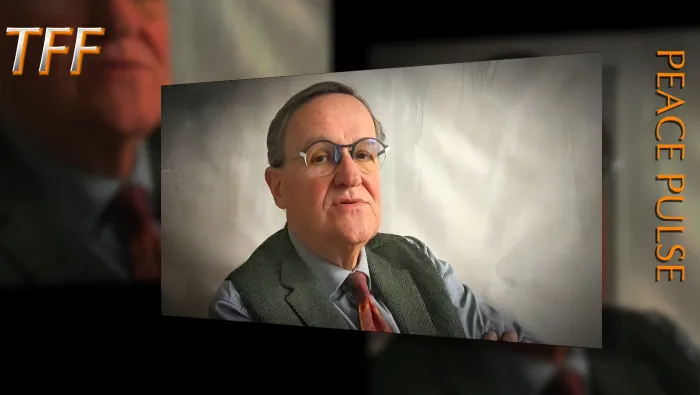
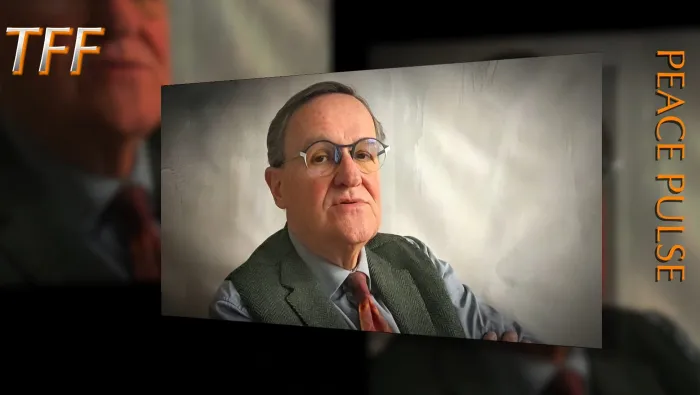
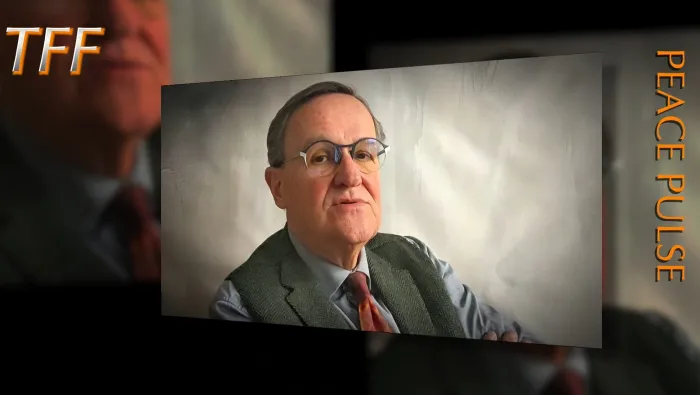
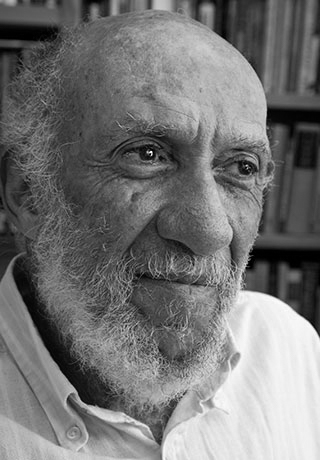
Professor Falk became an adviser to TFF when it was established in 1985.

Share

Leave a Reply

Your email address will not be published. Required fields are marked *

Related Posts

Jan Oberg May 15, 2026 Go to this Fox News page and scroll the whole way down: President Donald Trump tells the world that his meeting with President Xi Jinping yielded a lot of very concrete political and economic results – of course, only where the Chinese side, according to him, agreed with him. He does not mention the Taiwan issue, but Secretary of State, Marco Rubio, says that it did not feature prominently in their talks and that the US policy on Taiwan has not changed. Then go to China Daily – or Global Times – and you will see that for the Chinese it is framework, principles, structure of cooperation etc. that matters – all embedded in the overall idea of “constructive bilateral relationship of strategic stability.” Nowhere is any concrete agreement or deal – all that Trump refers to – mentioned. At the general level, this gives you insights into the very different social...
Lena Petrova of “World Affairs In Context” with more than half a million subscribers on YouTube wanted to explore what a peace researcher like me has to say about, among other things, the First and the Second Cold War and why eethics has disappeared from politics. I am particularly happy about this conversation that also yielded an amazing number of very appreciative comments on YouTube. No doubt, people are longing for alternatives, including peace perspectives.
The MIMAC – Military-Industrial-Media-Academic Complex – drives the world’s rampant militarism and wars without end. Here is a short reflection of how it works against all interests of humanity. #5 deals with why there is no real enemy or threat images/analysis. It’s all ex-post constructions. And, btw, theTFF Peace Pulse is now on Rumble.

Recent Articles

Jan Oberg May 15, 2026 Go to this Fox News page and scroll the whole way down: President Donald Trump tells the world that his meeting with President Xi Jinping yielded a lot of very concrete political and economic results – of course, only where the Chinese side, according to him, agreed with him. He does not mention the Taiwan issue, but Secretary of State, Marco Rubio, says that it did not feature prominently in their talks and that the US policy on Taiwan has not changed. Then go to China Daily – or Global Times – and you will see that for the Chinese it is framework, principles, structure of cooperation etc. that matters – all embedded in the overall idea of “constructive bilateral relationship of strategic stability.” Nowhere is any concrete agreement or deal – all that Trump refers to – mentioned. At the general level, this gives you insights into the very different social...
Lena Petrova of “World Affairs In Context” with more than half a million subscribers on YouTube wanted to explore what a peace researcher like me has to say about, among other things, the First and the Second Cold War and why eethics has disappeared from politics. I am particularly happy about this conversation that also yielded an amazing number of very appreciative comments on YouTube. No doubt, people are longing for alternatives, including peace perspectives.
The MIMAC – Military-Industrial-Media-Academic Complex – drives the world’s rampant militarism and wars without end. Here is a short reflection of how it works against all interests of humanity. #5 deals with why there is no real enemy or threat images/analysis. It’s all ex-post constructions. And, btw, theTFF Peace Pulse is now on Rumble.

TFF on Substack

Discover more from TFF Transnational Foundation & Jan Oberg.

Most Popular

Jan Oberg May 15, 2026 Go to this Fox News page and scroll the whole way down: President Donald Trump tells the world that his meeting with President Xi Jinping yielded a lot of very concrete political and economic results – of course, only where the Chinese side, according to him, agreed with him. He does not mention the Taiwan issue, but Secretary of State, Marco Rubio, says that it did not feature prominently in their talks and that the US policy on Taiwan has not changed. Then go to China Daily – or Global Times – and you will see that for the Chinese it is framework, principles, structure of cooperation etc. that matters – all embedded in the overall idea of “constructive bilateral relationship of strategic stability.” Nowhere is any concrete agreement or deal – all that Trump refers to – mentioned. At the general level, this gives you insights into the very different social...
Lena Petrova of “World Affairs In Context” with more than half a million subscribers on YouTube wanted to explore what a peace researcher like me has to say about, among other things, the First and the Second Cold War and why eethics has disappeared from politics. I am particularly happy about this conversation that also yielded an amazing number of very appreciative comments on YouTube. No doubt, people are longing for alternatives, including peace perspectives.
The MIMAC – Military-Industrial-Media-Academic Complex – drives the world’s rampant militarism and wars without end. Here is a short reflection of how it works against all interests of humanity. #5 deals with why there is no real enemy or threat images/analysis. It’s all ex-post constructions. And, btw, theTFF Peace Pulse is now on Rumble.
Read More
Screenshot-2026-05-15-103534
Jan Oberg May 15, 2026 Go to this Fox News page and scroll the whole way down: President Donald Trump tells the world that his meeting with President Xi Jinping yielded a lot of very concrete political and economic results – of course, only where the Chinese side, according to him, agreed with him. He does not mention the Taiwan issue, but Secretary of State, Marco Rubio, says that it did not feature prominently in their talks and that the US policy on Taiwan has not changed. Then go to China Daily – or Global Times – and you will see that for the Chinese it is framework, principles, structure of cooperation etc. that matters – all embedded in the overall idea of “constructive bilateral relationship of strategic stability.” Nowhere is any concrete agreement or deal – all that Trump refers to – mentioned. At the general level, this gives you insights into the very different social...
Screenshot-2026-05-12-104023
Lena Petrova of “World Affairs In Context” with more than half a million subscribers on YouTube wanted to explore what a peace researcher like me has to say about, among other things, the First and the Second Cold War and why eethics has disappeared from politics. I am particularly happy about this conversation that also yielded an amazing number of very appreciative comments on YouTube. No doubt, people are longing for alternatives, including peace perspectives.
Screenshot-2026-04-13-154551 (2)
The MIMAC – Military-Industrial-Media-Academic Complex – drives the world’s rampant militarism and wars without end. Here is a short reflection of how it works against all interests of humanity. #5 deals with why there is no real enemy or threat images/analysis. It’s all ex-post constructions. And, btw, theTFF Peace Pulse is now on Rumble.
Screenshot-2026-04-13-154551 (1)
Jan Oberg, TFF director April 28, 2026 In this third TFF Peace Pulse, I make the important distinction between the violence and the conflict that violence is a symptom of. If you want peace, focus on the underlying conflict because that is the key to resolution, peacemaking, and a better future for the parties. The West is obsessed with violence, just look around you – and 90+ per cent of the public debate is about military issues and other violence – totally wasted for peace. These Peace Pulses will only be published here a few times. You will also not find them on YouTube and Vimeo because both platforms have blocked TFF and me; you know, peace is dangerous these days. Most TFF’s videos since 2007 are now on Rumble.
Screenshot-2026-04-13-154551
In contrast to most, we’ll bring alternatives, solutions, hope and strategies for a better future. Times are dangerous, yes, but that only intensifies the need for constructive thinking and action! Jan Oberg, TFF director April 13, 2026 The new TFF Peace Pulse uses video messages in a new way: Max 3-5-minute-long comments, ideas or perhaps mini-lectures, all about peace – positive peace. We launch them today on April 13, 2026 with a carefully crafted visual aesthetic fitting the content. We hope to publish them regularly from now on. We launch Peace Pulse (PP) – for a number of reasons. The world is in chaos, and there are countless reasons to feel concerned, frustrated, even angry. The atmosphere is saturated with doom and gloom, with negative energy and rear‑mirror thinking, while vision, imagination, alternatives, strategies and genuine future‑mindedness remain in short supply. And without them, we simply can’t save the world. Looking at problems from a hundred angles will...
IMG_5165 (1)
PART II — Publishing Peace in a System That Prioritises Militarism Jan Oberg, TFF director April 10, 2026 How TFF Maintains a Daily Voice in a Digital World Built for Noise This article is part of the series “TFF at 40″ and it invites you to learn about Four Decades of Publishing Peace. It takes a look at how a small, people‑financed peace foundation has communicated across four generations of technology — from wax stencils and fax machines to mass email and Substack — and why TFF continues to publish every single day in a system that rewards noise, conflict, and militarism. ◆ What it means to publish peace every single day in a digital system built for 24/7 news and other noise, confrontation, and militarism. How TFF’s independence, continuity, and global readership defy algorithms, donor cycles, and Western media censorhip — and why the Majority World keeps listening. When the...