A Christmas message in dark times

Here in the United States, I react against the avoidance of the word ‘Christmas’ during this holiday season. I would undoubtedly feel differently if I were living in Turkey or India. The legions of ‘the politically correct’ determined to avoid offending those, especially Jews, who are not Christians, will carefully express their good wishes with such phrases as ‘happy holidays!’

This is okay except it obliterates the vibrant symbolism of Christmas as a seminal occasion that has over the centuries transcended for most of us its specific religious roots and meanings. It has an ecumenical resonance that calls for bright lights, ornamented trees, celebration, and wishes for peace on earth and good will toward all, bringing together those of diverse faith or no faith at all.

When I was growing up in New York City Christmas was ‘Christmas’ regardless of whether one was Christian or not, and implied no religious dedication whatsoever.

As time has passed, ethnic and religious sensitivities have grown as identities have become more tribal. I do partly associate this trend in my experience with the greater ethnic assertiveness of Jews over the years, especially in response to the ascent of Israel and the rise of Zionist loyalties.

America’s ‘special relationship’ with Israel represents a governmental recognition that Israel can do no wrong in the eyes of Washington.

This is another unfortunate manifestation of excessive deference, in this instance what might be called ‘geopolitical correctness,’ and has had many detrimental effects on American foreign policy in the region. Another kind of harm is associated with the inhibiting State Department formal adoption of a definition of anti-Semitism that conflates strong criticism of Israel with hatred of Jews.

Yet to decry such forms of political correctness as a posture is not to condone insensitivity to those among us who have suffered or are suffering from deep historical abuses. I do believe we need to do all we can avoid hurtful language and subtle slights when dealing with the situation of African Americans or Muslims.

Donald Trump disgraces America because he embraces the kind of militant Islamophobia that is not only incendiary in the American political climate, but unwittingly is a tacit reinforcement of jihadist extremism.

There is a vast difference between opportunistic deference to the ‘politically correct’ and moral sensitivity to those who have been or are being victimized in American society.

Of course, Trump has achieved such prominence by his zealous willingness to be politically incorrect in all sorts of vulgar and hurtful ways, which sadly uncovers an angry and afraid constituency among the American citizenry, with its appetite for simplistic answers that shift the blame to the hateful other.

Do not such reflections also suggest the propriety of sensitivity to the long Jewish experience of persecution, climaxing with the Holocaust? To some extent, moral sensitivity is historical and geographical. It points to a difference in tone and content in Germany as compared to here in America.

More concretely, it seems natural to exercise greater care in Germany not to offend, and not even to seem callous toward Jewish identity given the proximity of the Holocaust. I would affirm this kind of moral prudence and forebearance, but even this type of restraint can be carried too far.

Germans and the German government obsessively avoid any semblance of criticism of Israel because of an apparent worry that such views would be treated as evidence that anti-Semitism continues to flourish in Germany.

In this regard memories of the Holocaust are no longer a good reason, if it was ever the case, for suspending criticism of Zionism as a political project or Israel as a normal state as accountable to upholding international law, UN authority, and principles of morality as any other state.

It is entirely inappropriate for anyone to ignore the brutal dispossession of the Palestinian people, the prolonged denial of the Palestinian right of self-determination, and the horrific daily ordeal of living, as millions of Palestinians do, under occupation, in refugee camps, and in involuntary exile decade after decade.

Bad memories of victimization are never a sufficient reason to overlook crimes being committed in the present.

As a Jew in America I feel the tensions of conflicting identities.

I believe, above all, that while exhibiting empathy to all those have been victimized by tribally imposed norms, we need to rise above such provincialism (whether ethnic or nationalistic) and interrogate our own tribal and ‘patriotic’ roots.

In this time of deep ecological alienation, when the very fate of the species has become precarious, we need to think, act, and feel as humans and more than this, as empathetic humans responsible for the failed stewardship of the planet.

It is here that God or ‘the force’ can provide a revolutionary comfort zone in which we reach out beyond ourselves to touch all that is ‘other,’ whether such otherness is religious, ethnic, or gendered, and learning from Buddhism, reach out beyond the human to exhibit protective compassion toward non-human animate dimensions of our wider experience and reality. It is this kind of radical reworking of identity and worldview that captures what ‘the Christmas spirit’ means to me beyond the enjoyment of holiday cheer.

From this vantage point, the birth of Jesus can be narrated with this universalizing voice.

The star of Bethlehem as an ultimate source of guidance and the three wise kings, the Maji, who traveled far to pay homage to this sacred child can in our time bestow the wisdom of pilgrimage, renewal, and transformation that will alone enable the human future to grasp the radical wisdom of St. Augustine’s transformative: “Love one another and do what thou wilt.”

Put presciently in a poem by W.H. Auden, “We must love one another or die.”
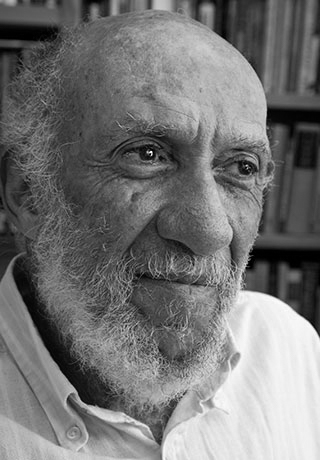
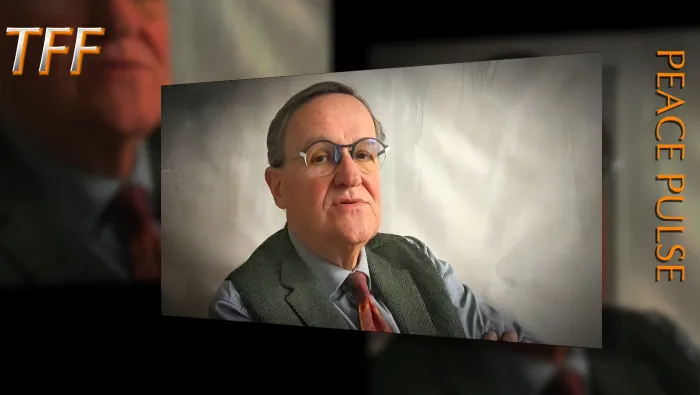
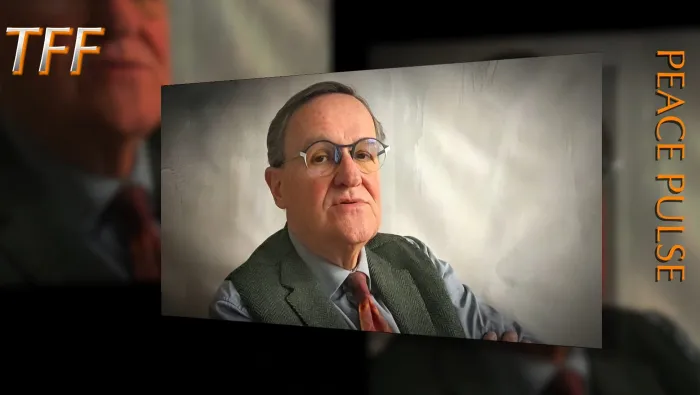
Professor Falk became an adviser to TFF when it was established in 1985.

Share

Leave a Reply

Your email address will not be published. Required fields are marked *

Related Posts

Peace is promoted by constructive proposals and dialogue Four preceding PressInfos have expressed concern over — and criticised — the ongoing, militarisation of the EU. Some will say: but there are no alternatives. We believe that there are always alternatives, that democracies are characterised by alternatives and choice, and that openly discussed alternatives will improve the quality and legitimacy of society’s decision–making. In addition, it is an intellectual and moral challenge to not only criticise but also be constructive. If we only tell people that we think they are wrong, they are not likely to listen. However, if we say: what are your views on this set of ideas and steps? — we may sometimes engage them in dialogue and sow a seed. Most people in power circles live their daily lives in in a time frame and a social space where certain ideas, viewpoints and concepts are just not...
Photos © TFF 2000 Read PressInfo 90 “Lift the Sanctions and Bring More Aid to Yugoslavia” See Pictures from Belgrade © TFF 2000 Please reprint, copy, archive, quote or re-post this item, but please retain the source.
Av FRANK SØHOLM GREVIL 16 augusti 2004  Vi er nu nået til tredje akt i det absurde teaterstykke, der i analogi med de store skueprocesser i Moskva 1936-38 er blevet døbt ‘Grevil-sagen’. Første akt bestod i min anonyme fremlæggelse af egenhændigt nedklassificerede rapporter i Berlingske Tidende i februar og marts. Andet akt udgjordes af min fremtræden med navn og billede i Information i april samt den efterfølgende mediestorm, som uden min direkte medvirken kostede en forsvarsminister taburetten samt en sigtelse for brud på tavshedspligten. Tredje akt bliver en retssag, hvor jeg står tiltalt for at have overtrådt straffelovens bestemmelser om uberettiget videregivelse eller udnyttelse af fortrolige oplysninger. Statsanklageren har ovenikøbet valgt at påberåbe sig særligt skærpende omstændigheder. Da jeg aldrig har modtaget betaling for at stille rapporterne til rådighed eller lade mig interviewe, må det skærpende bestå i, at “videregivelsen eller udnyttelsen er sket under sådanne omstændigheder, at det påfører...

Recent Articles

PressInfo # 141, December 21, 2001It’s time to prepare reconciliation between Albanians and Serbs PressInfo # 140, December 14, 2001Ibrahim Rugova’s decade-long leadership in Kosovo/a PressInfo # 139, 11. december, 2001En god nyhet: Jugoslaviens Sannings- och försoningskommission PressInfo # 139, 11. december, 2001Gode nyheder: Jugoslaviens Sandheds- og Forsoningskommission PressInfo # 139, December 11, 2001Good news: Yugoslavia’s Truth and Reconciliation Commission PressInfo # 138, November 8, 2001TFF co-founder PhD with thesis about young people with roots in other cultures PressInfo # 138, November 8, 2001TFF:s medstiftare doktor på avhandling om unga med ursprung i andra kulturer PressInfo # 137, October 17, 2001A new Marshall Plan: Advancing human security and controlling terrorism PressInfo # 136, October 15, 2001The UN and Annan really deserve it PressInfo # 135, October 10, 2001Preventing a terrorist mushroom cloud PressInfo # 134, 17 oktober, 2001Sverige og 11. september PressInfo # 134, October 9, 2001Sweden and September 11...
Peace is promoted by constructive proposals and dialogue Four preceding PressInfos have expressed concern over — and criticised — the ongoing, militarisation of the EU. Some will say: but there are no alternatives. We believe that there are always alternatives, that democracies are characterised by alternatives and choice, and that openly discussed alternatives will improve the quality and legitimacy of society’s decision–making. In addition, it is an intellectual and moral challenge to not only criticise but also be constructive. If we only tell people that we think they are wrong, they are not likely to listen. However, if we say: what are your views on this set of ideas and steps? — we may sometimes engage them in dialogue and sow a seed. Most people in power circles live their daily lives in in a time frame and a social space where certain ideas, viewpoints and concepts are just not...
Photos © TFF 2000 Read PressInfo 90 “Lift the Sanctions and Bring More Aid to Yugoslavia” See Pictures from Belgrade © TFF 2000 Please reprint, copy, archive, quote or re-post this item, but please retain the source.

TFF on Substack

Discover more from TFF Transnational Foundation & Jan Oberg.

Most Popular

PressInfo # 141, December 21, 2001It’s time to prepare reconciliation between Albanians and Serbs PressInfo # 140, December 14, 2001Ibrahim Rugova’s decade-long leadership in Kosovo/a PressInfo # 139, 11. december, 2001En god nyhet: Jugoslaviens Sannings- och försoningskommission PressInfo # 139, 11. december, 2001Gode nyheder: Jugoslaviens Sandheds- og Forsoningskommission PressInfo # 139, December 11, 2001Good news: Yugoslavia’s Truth and Reconciliation Commission PressInfo # 138, November 8, 2001TFF co-founder PhD with thesis about young people with roots in other cultures PressInfo # 138, November 8, 2001TFF:s medstiftare doktor på avhandling om unga med ursprung i andra kulturer PressInfo # 137, October 17, 2001A new Marshall Plan: Advancing human security and controlling terrorism PressInfo # 136, October 15, 2001The UN and Annan really deserve it PressInfo # 135, October 10, 2001Preventing a terrorist mushroom cloud PressInfo # 134, 17 oktober, 2001Sverige og 11. september PressInfo # 134, October 9, 2001Sweden and September 11...
Peace is promoted by constructive proposals and dialogue Four preceding PressInfos have expressed concern over — and criticised — the ongoing, militarisation of the EU. Some will say: but there are no alternatives. We believe that there are always alternatives, that democracies are characterised by alternatives and choice, and that openly discussed alternatives will improve the quality and legitimacy of society’s decision–making. In addition, it is an intellectual and moral challenge to not only criticise but also be constructive. If we only tell people that we think they are wrong, they are not likely to listen. However, if we say: what are your views on this set of ideas and steps? — we may sometimes engage them in dialogue and sow a seed. Most people in power circles live their daily lives in in a time frame and a social space where certain ideas, viewpoints and concepts are just not...
Photos © TFF 2000 Read PressInfo 90 “Lift the Sanctions and Bring More Aid to Yugoslavia” See Pictures from Belgrade © TFF 2000 Please reprint, copy, archive, quote or re-post this item, but please retain the source.
Read More
Imagen-thumbnail-The-Transnational-1
PressInfo # 141, December 21, 2001It’s time to prepare reconciliation between Albanians and Serbs PressInfo # 140, December 14, 2001Ibrahim Rugova’s decade-long leadership in Kosovo/a PressInfo # 139, 11. december, 2001En god nyhet: Jugoslaviens Sannings- och försoningskommission PressInfo # 139, 11. december, 2001Gode nyheder: Jugoslaviens Sandheds- og Forsoningskommission PressInfo # 139, December 11, 2001Good news: Yugoslavia’s Truth and Reconciliation Commission PressInfo # 138, November 8, 2001TFF co-founder PhD with thesis about young people with roots in other cultures PressInfo # 138, November 8, 2001TFF:s medstiftare doktor på avhandling om unga med ursprung i andra kulturer PressInfo # 137, October 17, 2001A new Marshall Plan: Advancing human security and controlling terrorism PressInfo # 136, October 15, 2001The UN and Annan really deserve it PressInfo # 135, October 10, 2001Preventing a terrorist mushroom cloud PressInfo # 134, 17 oktober, 2001Sverige og 11. september PressInfo # 134, October 9, 2001Sweden and September 11...
Imagen-thumbnail-The-Transnational-1
Peace is promoted by constructive proposals and dialogue Four preceding PressInfos have expressed concern over — and criticised — the ongoing, militarisation of the EU. Some will say: but there are no alternatives. We believe that there are always alternatives, that democracies are characterised by alternatives and choice, and that openly discussed alternatives will improve the quality and legitimacy of society’s decision–making. In addition, it is an intellectual and moral challenge to not only criticise but also be constructive. If we only tell people that we think they are wrong, they are not likely to listen. However, if we say: what are your views on this set of ideas and steps? — we may sometimes engage them in dialogue and sow a seed. Most people in power circles live their daily lives in in a time frame and a social space where certain ideas, viewpoints and concepts are just not...
Imagen-thumbnail-The-Transnational-1
Photos © TFF 2000 Read PressInfo 90 “Lift the Sanctions and Bring More Aid to Yugoslavia” See Pictures from Belgrade © TFF 2000 Please reprint, copy, archive, quote or re-post this item, but please retain the source.
Imagen-thumbnail-The-Transnational-1
Av FRANK SØHOLM GREVIL 16 augusti 2004  Vi er nu nået til tredje akt i det absurde teaterstykke, der i analogi med de store skueprocesser i Moskva 1936-38 er blevet døbt ‘Grevil-sagen’. Første akt bestod i min anonyme fremlæggelse af egenhændigt nedklassificerede rapporter i Berlingske Tidende i februar og marts. Andet akt udgjordes af min fremtræden med navn og billede i Information i april samt den efterfølgende mediestorm, som uden min direkte medvirken kostede en forsvarsminister taburetten samt en sigtelse for brud på tavshedspligten. Tredje akt bliver en retssag, hvor jeg står tiltalt for at have overtrådt straffelovens bestemmelser om uberettiget videregivelse eller udnyttelse af fortrolige oplysninger. Statsanklageren har ovenikøbet valgt at påberåbe sig særligt skærpende omstændigheder. Da jeg aldrig har modtaget betaling for at stille rapporterne til rådighed eller lade mig interviewe, må det skærpende bestå i, at “videregivelsen eller udnyttelsen er sket under sådanne omstændigheder, at det påfører...
Imagen-thumbnail-The-Transnational-1
Af Svenska Irakkommittén mot de Ekonomiska Sanktionerna (SIES) 13 september 2002 FN:s ekonomiska sanktioner mot Irak har nu pågått i tolv år och drabbat det irakiska folket med svåra lidanden. Enligt FN:s egna siffror har mer än 1,5 miljoner människor, varav ca 600 000 barn, dött som en direkt följd av sanktionerna. Dessutom har ett lågintensivt bombkrig mot landet pågått under dessa år. Av all denna förödelse- orsakad huvudsakligen av amerikansk och brittisk politik- har Saddam Husseins brutala och diktatoriska regim snarast stärkts än försvagats. Nu förbereder USA under president Bushs ledning ett storskaligt bombkrig mot Irak som kommer att innebära ett ännu större lidande för civilbefolkningen. Ett sådant krig kommer dessutom att ytterligare undergräva freden och säkerheten i världen. Att upprätta en demokratisk regim i Irak är det irakiska folkets angelägenhet och får enligt folkrätten inte ske med krigshandlingar utifrån. Folkrätten och FN:s stadgar måste respekteras. Vi vädjar till...